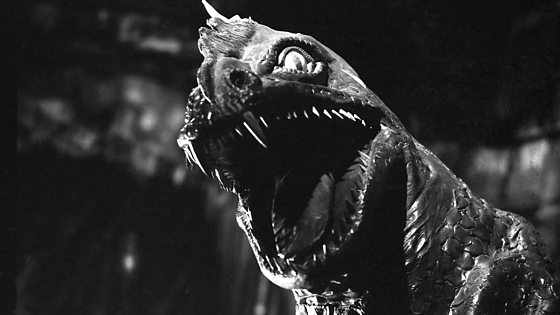
‘This is the world as it was before the great continental drift, two hundred million years ago. And these notes, well, they’re calculations on the age of the earth, with particular reference to the Silurian era.’
Let’s get this out of the way, the geological and evolutionary timeline of ‘The Silurians’ doesn’t really work at all, which means that scientifically speaking, that aspect of the story is almost complete nonsense. Some of this is because, well it was always nonsense and some of this is because it is now 50 years old and the science of palaeontology and our thinking about evolution and mass extinction events have changed massively in those years. Whole branches of science have developed in the meantime and so even if Mac and Terrance’s research had stretched further than a skim read in the library of ‘The Observer book of Geology’ and ‘The Boys Big Book of Dinosaurs’, then they would likely be wrong by now anyway, just not quite so wrong! Examples of changing in thinking between now and then include the wide scale acceptance of the K/T boundary mass extinction event and its link to the Chicxulub impact in the Yucatan peninsula (in the 1980’s and 90’s – ‘Earthshock’ really was a bit ahead of the curve in that regard) and the acceptance that certain types of feathered dinosaurs evolved into birds, rather than becoming extinct per se (in the 1990’s/2000’s).
The timeline of their backstory is wrong for three main reasons:
- The use of the name ‘Silurians’ for the reptile species, named after a geological period well before reptiles evolved
- The coincidence of the ‘Silurians’ and ‘apes’ in the same time period.
- The appearance of the moon prompting the hibernation of the Silurians.
There is no real way of reconciling these things and attempting to do so in subsequent stories has only made things worse if anything.
Their name, well I’ll come to that in a moment.
The idea of ‘apemen’ or even apes and dinosaurs living at the same time is the thing of Victorian fiction and wasn’t even scientifically correct at that time. It was popularised via the likes of Edgar Rice Burroughs novels and the adventure films of the 60’s and 70’s like ‘One Million Years BC’. In reality, they are the more than 60 million years apart in evolutionary terms.
The moon is around 4.5 billion years old and the latest thinking is that it was formed at that time as a result of a collision between the Earth and another body and so again the timeline aspect of Silurian history really makes no sense at all. If Mac had chosen the appearance of an asteroid or comet that the Silurians thought would strike the Earth, that would have made more sense and eventually fitted better with the theories on the ‘extinction’ of the dinosaurs, although not with Adric and the freighter appearing from nowhere. Unless maybe a passing time traveller popped back and warned the Silurians of the impending disaster?
Silurians/Eocenes/Homo reptilia and Earth Reptiles – What is in a name?

The name given to the titular species of this story is a bit of a red herring – it was chosen at random out a list of geological periods because Terrance and Mac thought it sounded cool. And that is fine, so long as there isn’t an attempt to link the two things, which to be fair, the story mostly doesn’t do – although the quote above does say ‘with particular reference to the Silurian era’. The Silurian period was named after rock formations in South Wales, in turn named after the Silures – an ancient Welsh tribe. So, in some respects the placement of ‘The Hungry Earth’ in the South Wales Valleys is really rather appropriate, like a homecoming for a species named after an area and period that they really have no right to be linked with. The Silurian stretches from 443-419 million years ago. As opposed to the age of the Dinosaurs – the Triassic, Jurassic and Cretaceous, which stretch from 251 to 66 million years ago. So again, in the quote from the story about ‘200 million years ago’ would place it in the Jurassic, rather than the much earlier Silurian.
The animal life present in the Silurian is characterised by the likes of molluscs and sea scorpions and also by the development of bony fish, whilst on land, vascular plants were evolving. In other words, it is quite early in the scheme of things when we look at complex life developing on Earth – there is multi-cellular complexity, but we are a long way from the reptiles depicted in this story. The latest thinking is that the earliest reptiles in the fossil records were still many millions of years in the future at this point – in the carboniferous period around 315 million years ago. The dinosaur of a type unknown to the Doctor, depicted in this could have evolved any time in the Jurassic or Cretaceous, at a push the Triassic – large predatory therapod dinosaurs of various types (Allosaurus, Megalosaurus, Tyrannosaurus Rex etc.) are present in at least one of these periods, but only just developing earlier in the Triassic.
If this is all a bit messy, then the attempt to correct this in ‘The Sea Devils’ with ‘That’s a complete misnomer. The chap who discovered them must have got the period wrong. No, properly speaking, they should have been called the Eocenes.’ doesn’t make any more sense. The Eocene stretches from around 56 to 33 million years ago, the paleocene epoch lies between it and the cretaceous (via the K/T boundary event). The continental land masses are much closer to their present positions than that of the globe that Dr Quinn has in ‘The Silurians’, which is much more in line with the globe as of the Jurassic. Whilst many of our current orders of mammals developed in the Eocene period, including primates, nothing that could be considered an ‘ape’ is present – that would be much later. The earliest fossils in the genus homo appear around 3 million years ago. The reptiles that are still present in the Eocene are those which are present today, including lizards, snakes, crocodilians, turtles and Tuatara – the large dinosaurs, pterosaurs and marine reptiles are all long gone as is the world of ‘The Silurians’.
Ape evolutionary history is not blessed by any means with a complete fossil record, but if we limit anything even vaguely ape like to say the last 10-20 million years (that is really stretching it), the chances of the Silurians/Eocenes encountering anything like apes, unless they had awoken from their hibernation in the very recent past, is zero. At best in the cretaceous they would have encountered small rodent sized, nocturnal, insectivorous mammals, the largest would likely have been the size of a domestic cat.
‘They’re not aliens. They’re Earth-liens. Once known as the Silurian race, or, some would argue, Eocenes, or Homo Reptilia.’
Later we have names like ‘homo reptilia’ appearing – which is nonsense scientifically – actually worse than the original name or Eocenes. Linnaeus would be turning in his grave over in the lovely small Swedish city of Uppsala. The Silurians should not be placed in the genus homo – that would imply they are mammalian and part of the order of primates – indeed it could be argued that humans should not be in homo either – rather pan with the bonobos and chimpanzees. Earth Reptile – is the more PC future nomenclature used in the New Adventures in the future – although the Earth has many reptile species, so I’m not sure how useful that actually is. Maybe asking them what they wanted to be called would have been a better idea?
Dozen degrees Liz and the Curious case of the Van Allen Belt.
And finally, we bring you the ‘Van Allen Belt’ – which according to Liz ‘surrounds the planet and filters out some of the sun’s radiation‘. Except it doesn’t and wasn’t thought to even in 1970. It consists of multiple layers of solar radiation, trapped in the magnetosphere around the planet – mostly solar winds caught by the magnetic field of the Earth.
BRIGADIER: What happens when it’s gone?
LIZ: It gets so hot, we will all die of sunburn on a cloudy day.
The ‘filter layer’ in the atmosphere is the ‘Ozone Layer’, which we found to our cost in the 1990’s as a huge hole in said layer appeared above the Southern Hemisphere, centred on Antarctica. This was caused by our usage of CFC’s (Chlorofluorocarbons) in refrigerators and similar devices. CFC’s were eventually banned under the Montreal Protocol on Substances that Deplete the Ozone Layer (1987). So, you see, we didn’t need the Silurians to endanger the survival of our species, by ‘destroying the filter layer’, any more than we needed them to introduce deadly viruses causing worldwide, largescale death, we are quite adept at it ourselves. Liz should know better though, with all of those degrees.
So, what does it get right?
Well not that much. It does introduce youngsters to some interesting ideas though.
Some reptiles do indeed have a parietal third eye (some lizards, tuatara etc.), so that is an interesting detail. It is associated with the pineal gland and is photoreceptive. It is normally placed on the top of the head though and isn’t usually visible. It is a nice idea though to make it a multi-purpose organ for the Silurians.
And a Dr Lawrence did invent the cyclotron and it is a proton accelerator. That is Ernest Lawrence, Professor of Physics at University California, Berkley. By 1970, the cyclotron wasn’t anything especially new, Lawrence invented it in 1929 and received the Nobel Prize for Physics for it in 1939. As a matter of interest, the first cyclotron was only 4 inches long! Of course, we do have large-scale underground particle accelerators – the Large Hadron Collider (LHC) at CERN is nearly 27 miles long and of course underground, as deep as 175m beneath the Swiss-France border. So, the particle accelerator in a cave system is a reasonable piece of science. I wonder if any children of the Pertwee generation now work at CERN as a result of this?
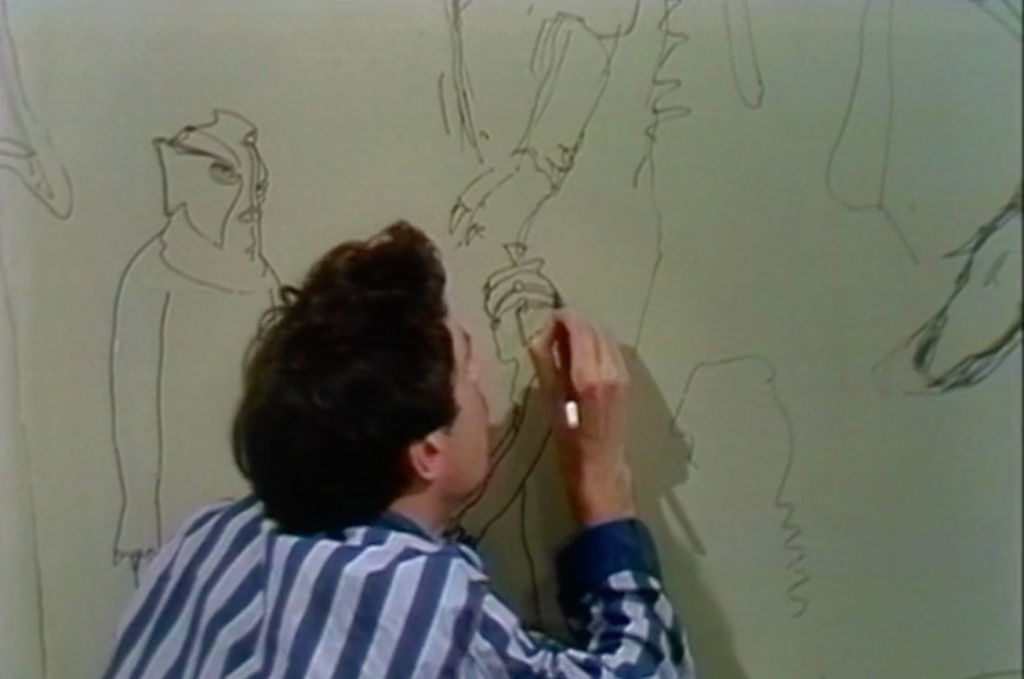
Race or genetic memory. Jung’s ‘collective unconscious’. Well the jury is still out on that as an idea or rather it seems it is no longer really much in favour. Behaviours are somehow ‘transmitted’ to offspring without social or experiential learning – otherwise species that invest no time at all in parental care (lots of invertebrates, a lot of amphibians and reptiles for example) would not know how to forage, where to migrate to, what to eat, how to navigate mate etc. without this. Take a Sea Turtle hatchling – it never sees its parent. Its mother’s role is done as soon as the egg is laid and she heads back to sea. It knows how to break out of the egg case, how to tunnel to the surface and head out to sea. It isn’t taught that – it is hard wired into it, if it is female it will instinctively know to navigate back to the same beach to lay its own eggs, assuming it is lucky enough to survive. Similarly, birds or butterflies that migrate huge distances alone – in the case of some butterflies on a generational journey that even their parents would not have made. So, there is some mechanism for ‘information’ to be passed between generations without experience or learning. That isn’t quite what this is about in the story though – here the genetic memory of a fear of the Silurians has been passed down through the generations. It has somehow been encoded in the genetic makeup of primates, passed down from our oldest ancestors, between species and is capable producing not just a response of fear and panic – but also a cultural response – in the form of cave art, visually representing the Silurians and a whole host of species that the artist cannot have personally seen.
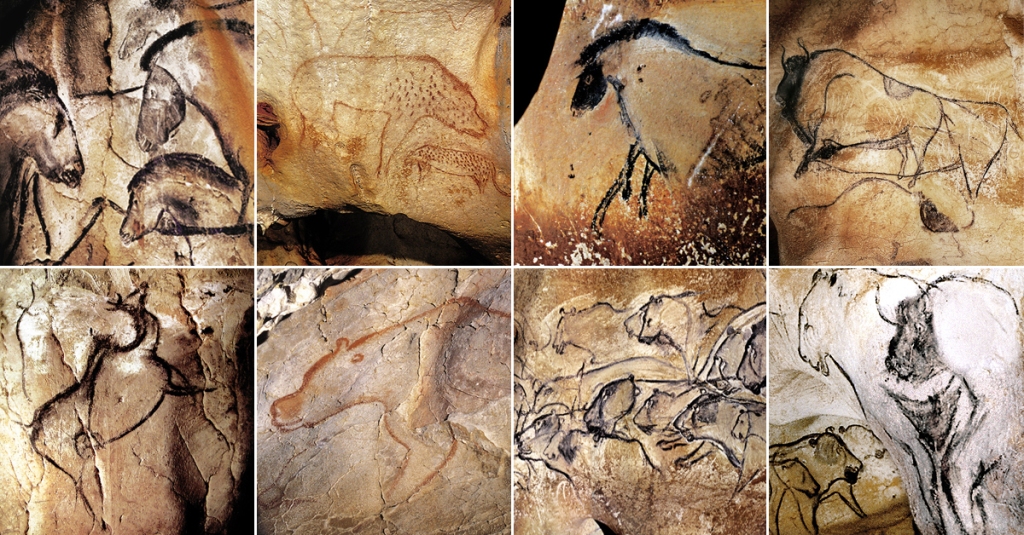
The simply stunning Palaeolithic cave art of Lascaux (referenced in Mac Hulke’s novelisation – “Doctor,’ said Liz, ‘aren’t those drawings like the ones at Lascaux?’ Liz had once visited the famous caves at Lascaux in southwest France. Those French caves had been discovered by four schoolboys back in 1942.”) and Chauvet in France date between 20 and 30,000 years ago. And so again, we have a discrepancy, most of the species depicted are relatively recent – from the Pleistocene epoch. A cold time, marked by glacial and interglacial periods, not that suitable in the most part, for reptile men. Some species depicted in those caves (or on the wall of. a medical facility at Wenley Moor) still survive (Red Deer or the Wisent – the European Bison) or survive in domesticated form (the Aurochs/cow, the horse). Some became extinct relatively recently (within 5-30,000 years) – the Mammoth, the Irish Elk, the Cave Lion, Cave Bear etc. I can’t remember any reptiles in European cave art though. Despite all of the discrepancies – this is a really great idea. Several future stories (‘Blood Heat’ and ‘Bloodtide’) make much greater use of the ‘race memory’ idea – in the case of ‘Blood Heat’ the Silurians have even honed it as a weapon.
And we have the idea of continental drift – a relatively old concept, theorised by Alfred Wegener in 1912, but surprisingly disputed until relatively recently – in the 1950’s and 60’s. Dr Quinn has a globe showing the Earth at the time when the Silurians lived (in who knows what geological era). That globe does resemble the world of the super continent Pangea, which started to break up in the Jurassic and Cretaceous and which by the Eocene would have been much more familiar topographically to us today through plate tectonics.
So overall, it is a really mixed bag really to say the least. However, it has to be said that there are some great ideas contained in ‘The Silurians’ – wrong (mostly) or right, if nothing else it is another example of the show engaging young minds in interesting scientific and moral concepts. And despite its many faults, none of them, it has to be said, annoy me anywhere near as much as the moon is an egg or that electric eels apparently exist in Scandanavia.
 A Journal of Impossible Things