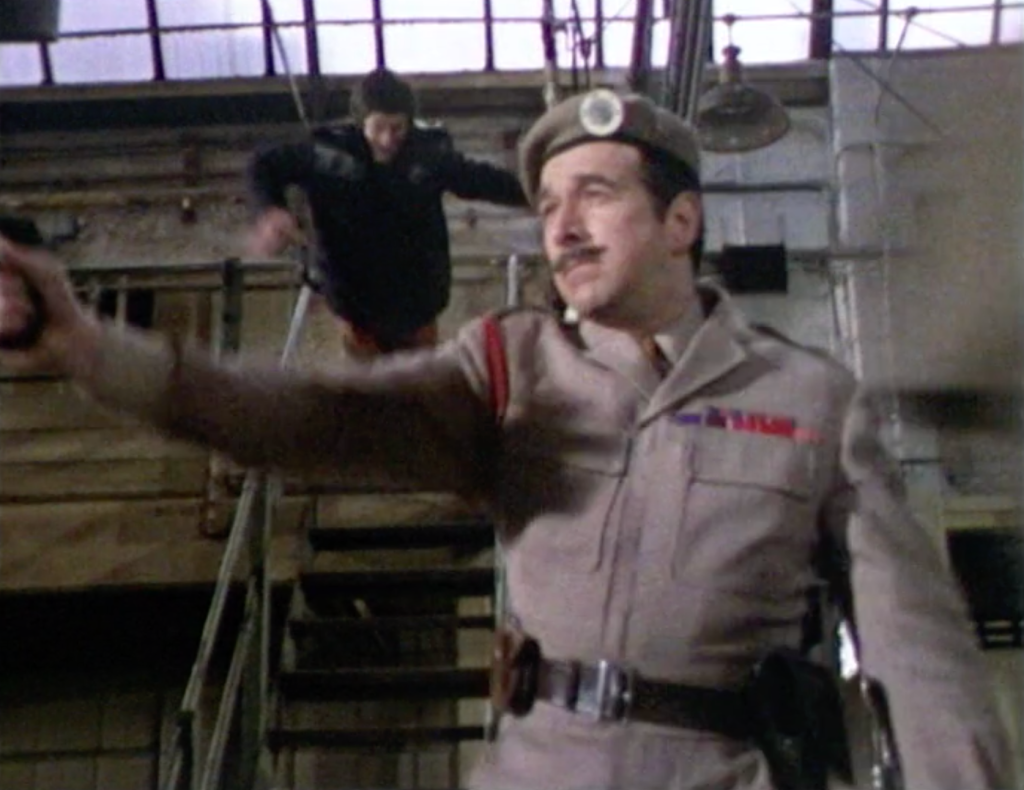
One of the things that becomes apparent when watching season 7 after the black and white years, is just how good the direction is. It is brilliant by classic ‘Doctor Who’ standards – the show has a real sense of pace and urgency, of dramatic tension, a mix of interesting shots and with great action sequences and really effective cliffhangers. It could be argued that the line up of directors for season 7 is never really beaten in the classic run of the show and all are at the top of their game.
An upward trajectory
The standard of direction in the show had already been on a bit of an upward trajectory since around season 5, but this season takes it to a new level. We had already had Douglas Camfield raise the bar of what the show could achieve in ‘Web of Fear’ and ‘The Invasion’. Likewise, Michael Fergusson had shown promise on ‘Seeds of Death’ in season 6. In that same season, we also had good work from David Maloney on ‘Mind Robber’ and ‘The War Games’ and he would go on to contribute better things in later seasons. It also looks like Hugh David did a great job on ‘Fury from the Deep’ in season 5, but that’s difficult to confirm without seeing more moving images. However, all of this reaches a peak in season 7, where we had Derek Martinus’ very stylish, filmic work on ‘Spearhead from Space’, Camfield and Fergusson back and finally, Timothy Combe’s work on ‘The Silurians’ . And it really does make a huge difference to the quality of the show.
Derek Martinus
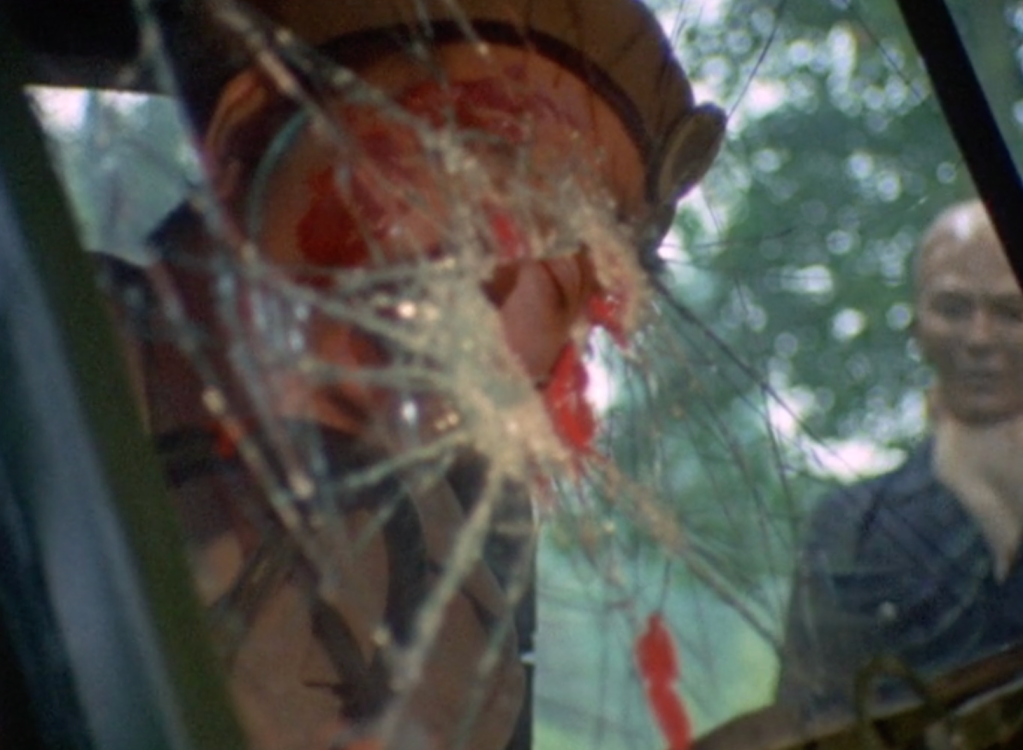
I had already waxed lyrical about Derek Martinus’s direction in my review of ‘Spearhead from Space’. It is a very dynamic, with hand held shots right in the faces of the Brigadier and Liz as they are surrounded by the press or the tracking shots following the Brigadier and Liz or Captain Munro. Or the brilliant shots as the jeep swerves to avoid an Auton in the road and the rather bloody aftermath. Or the Autons killing commuters early in the morning at Ealing Broadway. It is a shame it was his final work on the show, I’m not sure if there was a specific reason why. He carried on directing for series like ‘Z-Cars‘ and ‘Blake’s 7‘ for the BBC, but also worked in Scandinavia (his wife was Swedish) and in the theatre, often directing Strindberg plays – which was his true love.
Timothy Combe
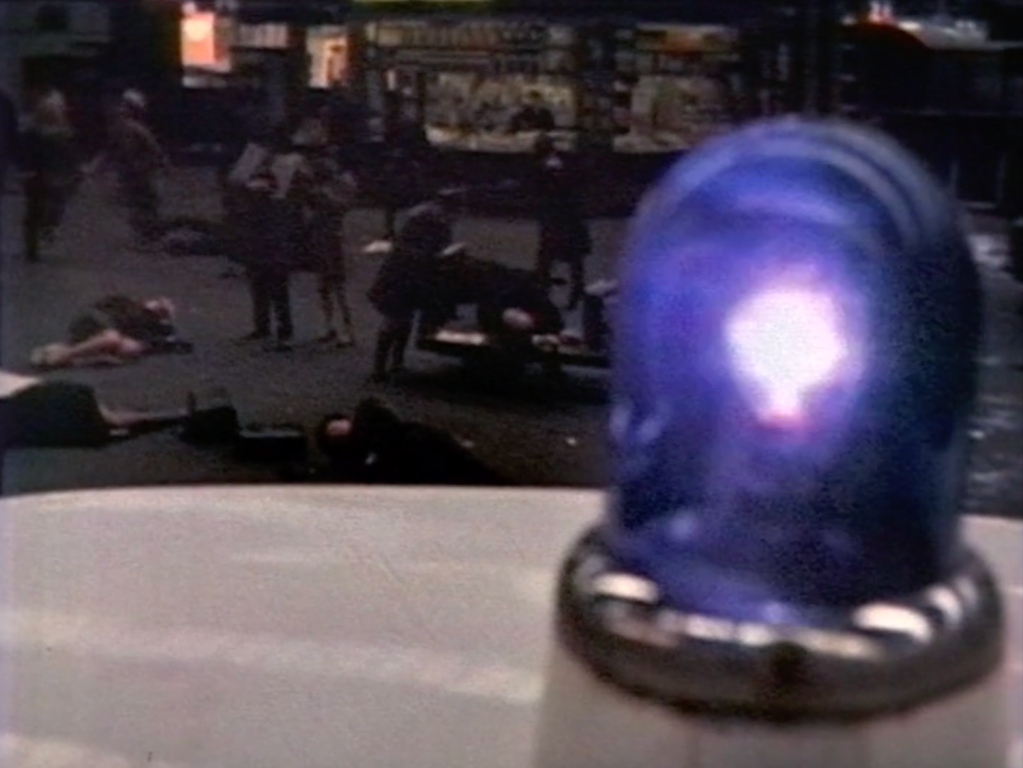
Timothy Combe is another good addition to the show. There are some brilliant shots in ‘The Silurians’ – POV shots from the Silurian perspective or emerging from the cave entrance into the sun, the high shots of the search of the moorland, the creature in the barn and the brilliant, almost documentary style work on the effects of the disease outbreak in London, Masters dying and the police arriving too late at the station as the passengers and ticket collector collapse. In that piece we even follow the ambulance into the station – camera strapped to the roof, siren blazing and light flashing. It is a very confident piece of work, his direction of the action sequences in ‘Mind of Evil’ confirm his talent, particularly the shots of the UNIT troops storming the prison. It is such shame he didn’t get to direct more stories after that – apparently Barry Letts declined to invite him back after going over budget on his last story. In the documentary on the DVD’s and in other interviews you can tell how much that saddened him, he still sounds hurt about it now. He left directing in the late 70’s to become an agent.
Michael Ferguson
Michael Ferguson’s work on ‘Ambassadors of Death’ is some of the best direction in the history of the show to my mind – up there with Douglas Camfield in terms of the 60’s/70’s. Even back in ‘Seeds of Death’ the shots of the warrior on Hampstead Heath are excellent – lumbering out the sun, something he uses to great effect with the space-suited ambassadors. Ferguson again went over budget in ‘Ambassadors‘, but went on to direct ‘Claws of Axos’ the following season. The quote about him only doing his job when pushing the action sequence to the maximum, whilst it being Barry’s job as producer to restrain him, sadly would become the model after this season. Terrance had worked out a cheap sequence for the hijack of the space capsule – which lets be honest would have been a bit shit – instead we get a helicopter attack with gas guns and stuntmen everywhere. Obviously it makes sense to write within your budget, but the show sometimes suffers as a result – those action sequences and the work by Ferguson and the HAVOC team really add a huge amount to the story. Ferguson had a long and successful career after ‘Doctor Who’, directing and then later producing shows like ‘Eastenders‘, ‘Casualty’ and ‘The Bill‘.
Douglas Camfield
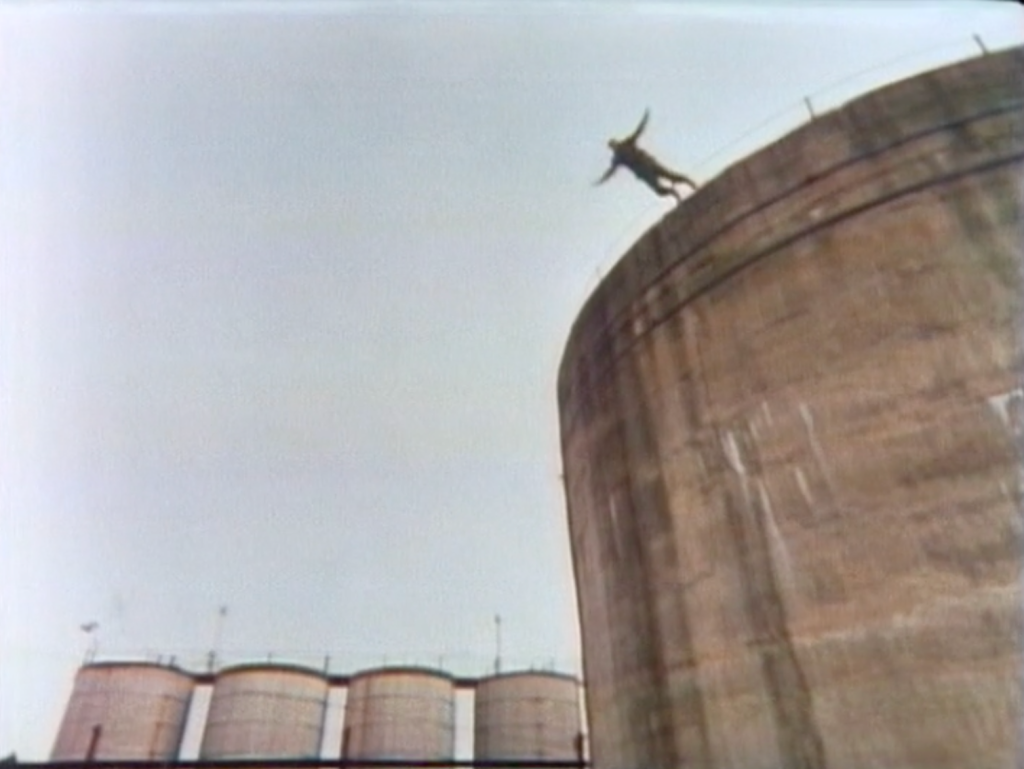
Douglas Camfield, what can I say – he is the best of the 60’s,/70’s directors – he does this consistently over a longer run of shows than his season 7 contemporaries. Like Ferguson, he directs things with a kinetic energy and pace, the scenes sing – you feel like this is a director who understands what is required for the medium. He can deliver action sequences, but also the character work as well. I wrote a fair amount about him in my review of ‘Web of Fear‘ and I will be returning again to his work when I review season 13 soon. His location work for ‘Inferno’ though is typically taught and action packed, with HAVOC providing the fight sequences and high falls from the gasometers. Camfield was back in a bleak industrial setting, rather like the sequences at the IE plant in ‘The Invasion‘ and the darkness of the fortress in ‘Web of Fear‘. It just sits his style somehow.
I am ashamed to say that when I met him as a very young fan in the early 80’s I didn’t really know who he was. There are questions I’d love to ask him now – as he had a hand in most of my favourite stories from the classic era and did some great work outside of the show. While directing ‘Inferno‘, he unfortunately he had a heart attack during the studio sessions for the story (the location work was complete) and Barry Letts had to take over. He seems to have gone back to work fairly quickly afterwards, but it would be 5 years before he would direct another ‘Doctor Who’ story – apparently his wife made him promise not to do any more after ‘Seeds of Doom’, such was the strain the show caused him, he died in 1984 aged just 54.
All four of these directors had already had a long association with the show – they had worked from the start as Production Assistants and Assistant Floor Managers or directors in the Hartnell years. Camfield worked with Waris Hussain on the first story and ‘Marco Polo’ and then directed from ‘Planet of the Giants‘ onwards – ‘The Crusade‘, ‘Time Meddler‘, ‘Daleks’ Master Plan‘, ‘Web of Fear‘ and ‘The Invasion‘ . Michael Ferguson worked as Assistant Floor Manager on ‘The Daleks’ and Timothy Combe the same role or Production Assistant on ‘Keys of Marinus’, ‘Reign of Terror’ and ‘Evil of the Daleks’. Derek Martinus had directed as early as ‘Galaxy 4’ and gone on to ‘Evil of the Daleks‘ and ‘The Ice Warriors‘, so they all had quite a bit of experience of how the show worked. They were also all directors who seemed to understand action/adventure – Camfield went on to direct the like of ‘The Sweeney‘ and “The Professionals’ – a world away from the directors who played it safe and delivered within the multi-camera world of the BBC. As a result the season feels like a melding of the world of ITC or the action-orientated thriller series and traditional ‘Doctor Who’ and is all the better for it.
The sterling action work this season, is something rather lost with these directors/ Michael E Briant does some great work on ‘Colony in Space’, ‘The Sea Devils’ and especially episode 1 of ‘Death to the Daleks’, however the UNIT stories are conspicuously lacking in this regard until Camfield returns in ‘Terror of the Zygons’. All of which is a shame as it is a feature of the era and they have a stunt team on hand to really improve this aspect of the show, just not really the directors to take advantage of it. I occasionally like to think of a Camfield or Ferguson directed version of ‘Planet of the Spiders’ – lets be honest, it is light years better isn’t it?
And on that point, unfortunately, the sheer quality of direction in season 7 (and some of season 6), really highlights the drop in quality in this regard, really from season 8 onwards. It is very noticeable, with a few exceptions. Directing (and writing) certain stories keeps Barry Letts happy and fulfilled – great, he’s a brilliant producer. However, as a director his work isn’t really in the same league as the season 7 directors. We also have the quite variable work of the likes of Paul Bernard and Lennie Mayne etc. I’m sure they all delivered on time/budget and were consistent, but it is all just a bit average really.
The loss of Camfield can’t be helped – he was ill with a life-threatening condition. However, losing Combe, Martinus and Fergusson could possibly have been avoided. Sure, both Fergusson (‘Ambassadors’ ) and Combe (‘Mind of Evil’) went over budget – but so what – the show really benefitted from what they did – get a budget increase. It isn’t a light entertainment series, more sequences on film and better directors make such a difference. Instead what we got was more video and cheap looking CSO. Albeit for different reasons, this is bit like JNT losing his best director in Peter Grimwade and instead endlessly employing Ron Jones and Peter Moffat. Everything on time and budget, without tensions – but the show really suffers as a result. Season 8-11 aren’t quite in that class in terms of lack of aptitude for the medium, but there is a real, noticeable drop off in the quality of the direction. Instead we get lots of consistent 8/10 stories when they could have been 9 or 10 with better direction. Another reason why season 7 feels like an opportunity that isn’t fully capitalised on.
 A Journal of Impossible Things