In which Steven meets a foe from his early years as a space pilot. And Matt Fitton does a very good John Dorney/Simon Guerrier impression!
To my mind, Big Finish have served fans of the 60’s era very well over the years, especially given the obvious issues of not having a Doctor from that era available. Instead they have focussed on the companions (at least until the arrival of David Bradley) and it has paid off handsomely. The early years of Big Finish concentrated on Davison/Colin Baker and McCoy – the Doctor’s that they had available, but with the introduction of the ‘Companion Chronicles’ and then the ‘Early Years’ ranges we’ve had stories for Susan, Ian, Vicki, Steven, Sara, Polly, Ben, Jamie, Victoria and Zoe. Many of the Companion Chronicles range in particular have really given the 60’s companions room to shine – both as characters and actors. We’ve had little additions to their history and backstories and explored their relationships with each other and the Doctor. Amongst these are some of my favourite ‘Doctor Who’ stories in any format – the simply brilliant Sara Kingdom trilogy, ‘The Rocket Men’ which I have just reviewed, the Oliver Harper trilogy, the older Zoe trilogy, the concluding trilogy of Steven Taylor stories and well, this story.
Steven Taylor is a favourite of mine, despite most of his TV episodes being rather unhelpfully junked by the BBC. That is all despite the fact that in the TV series, we find out little about Steven. Instead things are carried by an often great performance from Peter Purves and an obviously strong relationship with both his Doctor and William Hartnell himself. The character has little backstory beyond that we know he was a space pilot (which is barely used again), knows the Daleks and was captured by the Mechanoids – oh and he owned a toy Panda. We know him as decent, but headstrong, determined, sometimes quite aggressive, but loyal to the Doctor. From the future, he is sometimes lost in history in the likes of ‘Time Meddler’, ‘Myth Makers’ and ‘The Massacre’, but maybe along with a number of companions of this time he has little depth beyond that. As with a number of other companions, these stories flesh out his character and offer an opportunity for Peter Purves to stretch his acting muscles.
He is absolutely terrific on both narrating and acting duties in these stories (as his is narration work for the BBC audios and Target audiobooks) – revealing himself as quite the consummate performer. Also, for someone who once really disliked talking about ‘Doctor Who’, he seems to have transformed over the years, to the point where he is becoming an elder statesman for the show – his enthusiasm showing in the extras on these CD’s. His version of Hartnell is rather good as well – not as an impression – it’s far from that, it captures the essence of Hartnell rather than his voice. And that is a real strength of the range – as they are part narrated ‘audiobook’, part full cast drama, the limited casts (2 or rarely 3 people) have dramatic licence to re-create the rest of the regulars without us worrying too much about impersonations. Via the narration, they also allow direct access into the thoughts of these characters – exactly what is needed to really get to know them better than we had the chance to in the 60’s.
This story is really two stories in one – the story of a young pilot on his first mission and another linked story when Steven, the Doctor and Dodo meet an enemy from Steven’s past. The two stories meet in a clever, modern (almost Steven Moffat-like) and very satisfying way and through this structure, we get to appreciate Steven more. The Rocket Men again prove to an effective catalyst to explore what makes the First Doctor’s companions tick. Steven barely survives their first attack on his cargo ship as a young man, rescued from certain death at the hands of Van Cleef, by another Rocket Man. Later he encounters an old colleague on a colony world when travelling with the Doctor and Dodo. Faced with the Rocket Men again, he has a choice to make – whether to make a stand or flee. The decision is one that will take his journey full circle to that first mission as a young man and the person who saved his life. Steven Taylor makes a stand and saves his friends and the colonists. In the end they even want to name their world after him ‘Taylor’s Stand’, although he rejects this and asks it to be named after his old colleague who did so much to save the colonists. Steven is a principled, moral figure and the events of this story neatly prefigure his eventual leaving in ‘The Savages’.
The Rocket Men as a foe seem to work every well in bringing out moral dilemmas to illuminate the characters of these 60’s companions. They are both very much recommended and work as a very satisfying pair. These stories have had such a great impact, that I actually forget that they weren’t on TV – and that people who don’t listen to BF haven’t experienced them. Recently in another thread in this section, someone stated how little we know about Steven – and I was about to argue that point – when I stopped and realised that the rich, rounded character that the likes of Simon Guerrier, John Dorney and Matt Fitton have given us, isn’t the one that was presented on TV and without these, that assertion is definitely true. I really feel like I do know him now and I wouldn’t be without these stories for the world. Both Peter Purves and Steven Taylor have very much benefitted from Big Finish – I would say that they have had some of the very best scripts that the range has had to offer and Purves has made the most of them, he is a much underrated actor. Overall, this is excellent stuff, rich and satisfying, emotional and clever and as with many of the range, I loved revisiting them.
‘Investigating infernal incidents and cracking complex conundrums!’
‘We’ve battled dangerous denizens of the daemonic darkness together‘
If there isn’t a clearer statement of what Big Finish is great at than making a spin-off series from the TV show, more than 35 years after it was first mooted, then I don’t know what is! Before the 13 (yes 13!) largely wonderful series of ‘Jago & Litefoot – Investigators of Infernal Incidents’, we had this fantastic little Companion Chronicle story to test the waters. The Companion Chronicles are normally two-handers, a lead and a new character. Here we get three – our two leads, Christopher Benjamin and Trevor Baxter together for the first time since 1977, sharing the narration duties, each telling the story from their own viewpoint and we also have Lisa Bowerman (who also directs all of this with great flair) as cockney barmaid Ellie chipping in. I am assuming that the story was well received and a decent seller, as just over a year later the first boxset of the spin-off series launched.
Appropriately, we first meet Jago & Litefoot in a pub, sharing a pale ale (‘I appear to be spoiled for choice when it comes to ale’), an environment where Jago is very much the expert and a mentor to the more salubrious pathologist! Since the events of the ‘Talons of Weng Chiang’, it is clear that our two heroes have seen each other from time to time and shared adventures – even referencing in the manner of Conan-Doyle, an unseen case – ‘the case of the trained anteater and the aluminium violin’! In the intervening period Henry Gordon Jago has become even riper and more ribald, but unfortunately also slightly more down at heel and is now MC at the Alhambra Theatre. Christopher Benjamin’s voice has become even more fruity and ripe, while Trevor Baxter as Litefoot rather uncannily sounds exactly like he did in 1977. The story structure allows the two characters to rather beautifully interrupt each other’s stories and critique each other like very old friends. It immediately feels like they are characters that we have known for many years and have become old friends, which is very impressive, not least because of the relatively short period of time we originally spent with them and the intervening years. It is a tribute to both the two consummate actors and the excellent character work of Robert Holmes all those years ago.
‘The Mahogany Murderers’ is a wonderful concoction. It has a beautifully old-fashioned air – two old actors enjoying spending time with each other in their dotage (the interview extras are often as entertaining as the series), with a script that is both detailed in its Victoriana and redolent of an episode of ‘The Avengers’ or ‘Adam Adamant Lives’ – light, breezy and slightly (actually completely) daft. I mean this isn’t ‘Heaven Sent’ or ‘Warriors Gate’ or ‘Scherzo’, the plot involves a mad Dutch scientist (Dr Tulp) who helps hardened criminals escape the rope and Newgate by transferring their consciousness into exquisitely carved and realistic, working wooden mannikin replicas (available in a range of woods and finishes – mahogany being just the first discovered) – it’s all done with that wonder of the modern age – electricity (ermmm somehow!). It does however fit the tone of the piece perfectly and more than anything it is great fun and made with great love and care and well, there is a lot to be said for that. There are a few darker moments – Litefoot’s horror at the depravity and poverty of one of the London ‘rookeries’ and a really disturbing moment when one of the convicts has his mind transferred back to his old body and wakes in his grave. The darker side of the Victorian age is always evident in these stories, despite the humour and lightness of touch.
We may crave thematic depth and originality in the TV show and yes, I get where that comes from. However, there is also an element of ‘Doctor Who’ and certain other series (again ‘The Avengers’ is an example) where they provide a warm glow, wrap you up in a blanket by a roaring fire, put their arms around you and offer you some comfort that the world isn’t such a terrible place after all. A world in which a series where Jago & Litefoot investigate strange goings on in Victorian London gets made can’t be such a terrible place can it? My advice, on a dark winter’s evening, get yourself a nice single malt, stoke up the fire, put your feet up and listen to this little slice of perfection. It won’t shake your world, but will make it a happier place for a while. If you don’t love it, then I fear that the world must indeed be a dark place.
An experiment is an operation designed to discover some unknown truth. It is also a risk…
I just asked him to bring me something back
It is 1953 (64 years ago as I write this), Britain is still on rationing, Queen Elizabeth II has just been crowned at Westminster Abbey and Hillary and Tenzing have reached the summit of Everest. BBC TV is broadcasting live from Alexandra Palace. Sputnik and Telstar are still in the future and no human has yet breached the envelope of the atmosphere into space. Despite that perspective and context, it is still difficult to comprehend just how different the world was as The Quatermass Experiment aired – not just technologically – the jet engine was relatively new (it is referenced in the Comet flight to Australia here), the British Empire was right in the middle of it’s dissolution, Winston Churchill was Prime Minister, Joseph Stalin had just died, homosexuality was illegal and would be for another 14 years, the death penalty was still in use and swathes of Britain were still in ruins after the war. In the Soviet Union Sergei Korolev was secretly working on rocketry and the German V2 pioneer Werner von Braun had yet to persuade the US government that he was the man to lead the US into space. The swinging 60’s were still an absolute age away. The phrase ‘Cold War’ had only just been coined and it still had another 40 years left to run.
A writer for the new medium (at least in Britain) of television – Nigel Kneale, alongside the renowned TV director/producer Rudolph Cartier tried to imagine what an experimental space flight might be like, what might be out there and what might be ‘brought home’. Out of a gap in the TV schedule was born The Quatermass Experiment and it would prove to be hugely influential. It is year zero for British TV science fiction and provides the template for horror in Doctor Who. There are quite a few stories that I will be covering in these reviews that are fundamentally influenced by this story, not least Ark in Space. To my mind it a must watch (at least the episodes that remain) for anyone wanting to understand Doctor Who and its roots. It is also something that I love with a passion having first read the script book as a child, I have it here beside me now, slightly battered, but much loved. A few years later I would see the Hammer film version (somewhat shorn of the intellect of the BBC version), but it would be many years until I saw the remaining TV episodes and then the 2005 live BBC 4 re-make featuring David Tenant and Mark Gatiss. In the latter Gatiss recounts the joy of working on the Quatermass Experiment, as his friend told him he was going to replace Chris Eccleston as Doctor Who!
The Quatermass Experiment is not just massively important to Doctor Who or TV Science Fiction – it is hugely important piece of British culture full stop. It is one of the first original pieces of fiction written for BBC TV as such it was very influential. As a TV event it ran hand in hand with the coronation that year and helped shift the BBC to a TV corporation beloved of the nation as opposed to just a radio one in the eyes of the British public. It opened up the opportunities for other TV drama and particularly science fiction, as such Kneale is as important to the conception of Doctor Who as H.G. Wells. The TV audience was still quite small, despite the boost given the TV sales by the coronation earlier in the year, yet Quatermass notoriously brought the country to a standstill. It aired on a Saturday night, but unlike Doctor Who it was on at 8:45 and aimed at an adult audience. Years ago, I spoke to my parents about this, their memories of their reactions – they particularly spoke about how scary and exciting the opening music was (Mars, bringer of War by Holst) – startlingly similar to my own reaction to the opening Doctor Who theme in the 1970’s.
I will concentrate as best I can, on the original TV version. Unfortunately only the first two episodes were tele-recorded, the others were due to be recorded, but the quality of the first two was deemed too poor. If you think doing a Doctor Who marathon is hard work with the missing episode recons, spare a thought for anyone attempting a Nigel Kneale marathon – most of this serial is missing, as are The Creature and The Road and 1984 is still awaiting release. At least Doctor Who fans have the audio and if we are lucky telesnaps and the work of Loose Cannon. There are some photographs of this serial and someone has attempted an audio-free recon out on youtube. Anyway, I will primarily be relying on the script for the last 4 episodes – it is so involving I read it in one sitting.
Anyone approaching the surviving two episodes for the first time; will have a few hurdles to deal with. Firstly, it is 10 years older than An Unearthly Child and at times it really shows in performance style – not of the leads so much, but the supporting cast. This is particularly true at the site where the experimental, nuclear-powered rocket crashes. These scenes seem to have come from the Ealing Comedy school of cockney working class performances and are imbued with the very recent at that point London ‘blitz spirit’. One of the scientists – Judith Carroon, wife of Victor (one of the astronauts), is played in a very BBC RP way by Isabel Dean. She is as BBC posh as Sylvia Peters, the announcer The Wire (The Idiots Lantern) is based on and who can be seen at the end of episode two, announcing the next episode. There is a more modern twist though in that as prim and proper as she appears, she has been having an affair with the rocket group’s Doctor Briscoe and was planning to leave Carroon on his return from space (welcome home dear, jolly well done. By the way I’m leaving you, chin up darling!). Also rather modern is that she is shown as a working scientist in part one and later plays a major part in working out what has happened to the crew and is a key player in driving the narrative along.
So, it so more the trappings and performance codes that date this than the script per se – if you can stretch as far back as An Unearthly Child this is just one step further – but right back to the inception of British TV as mass media. There are also lots of Doctor Who alumni associated with the production – Paddy Russell and George Spenton-Foster behind the scenes and actors Paul Whitsun-Jones, Duncan Lamont, and Moray Watson (there may be more – is a surprisingly long cast list).
Kneale’;s script is fantastic, Reginald Tate makes a first class Quatermass (Andre Morrell was first choice) and there are some really rather horrific ideas and concepts at the heart of it. Kneale also uses almost every modern storytelling trick up his sleeve to depict the story – newsreaders, TV interviewers, a press investigation, a police investigation, taped playbacks (basically found footage and finally a TV broadcast from Westminster Abbey, scene of the coronation earlier that year. These techniques have become overly familiar over the years (particularly during RTD era Doctor Who), but are used to great effect here and contribute to the piece feeling quite modern in its scripting. We also get to hear testimony and opinions from the general public via these devices. Countering this though is the grandeur of achieving space flight – the astronauts see the earth from space at one point and through this the story echoes the pioneering times. It also reflects the creeping horror of the cold war, but the timeless theme of the piece is psychological and body horror and the story of what happens to the three British Experimental Rocket Group astronauts – Greene, Reichenheim and Carroon and that is the aspect that this review will concentrate on.
If you don’t know the plot, Quatermass’s British Experimental Rocket Group, launch the first manned rocket into space, the plan is to orbit the Earth twice and then return. Contact is lost with the rocket as it travels far further into space than intended. When the rocket crash lands on a house in Wimbledon, only Victor Carroon is on board – Greene and Reichenheim, his colleagues and old friends of Quatermass are missing. Carroon is seriously ill and seems changed somehow.
What happens next is really the skilful, controlled release of information in a series of horrific revelations across 6 weeks. Firstly we have the disappearance of Greene and Reichenheim and the revelation that their spacesuits are empty, but the linked inner layer has not been opened – they have just vanished out of their suits. Then we have the survivor Carroon, who is now able to speak German and provide answers to technical questions that only Reichenheim would have known. When offered food Carroon uses the German phrase nicht verstarken– do not strengthen. When Mrs Greene meets Carroon he calls her Lou – which only her husband called her. Then we get the really unnerving revelation from one of the BERG team, Paterson that he has found a jelly-like substance packed behind the panels of the space capsule – that is really, really quite nasty and very Nigel Kneale.
This is something that I quite miss from modern Doctor Who – the time and space to build a mystery – the bits of world building and dialogue that fuel the plot and reveal little character moments. It is rare that the modern show has time for this, but I grew up with this style ‘tell not show’ – the opposite of ‘normal’ film making and I like it a lot – to create a world out of words or imagination, rather than another CGI vista or effect. Doctor Who could easily operate in a similar mode as Quatermass in the modern era – Torchwood: Children of Earth did something very similar striped across a week – something I would have liked to see experimented with the parent show. Telling a bigger story in a more adult way, with more room to breathe and develop – Doctor Who could do that, but it possibly means temporarily leaving the younger audience behind and I’m not sure that would ever happen.
The first 3 episodes really build this mystery as Quatermass and his team, Lomax (the police inspector) and the press (primarily journalist Fullalove, played by Whitsun-Jones) try to find out what has happened to Carroon and the missing men. Then the serial switches mode and becomes much more involved in Carroon’s transformation and the search for him as he goes missing after a foreign power attempts to kidnap him. Carroon stumbles across a post-blitz London landscape of bomb sites. This is where the body horror starts to come more to fore. Carroon is changing, his skin coarsening, he absorbs a cactus into his hand/arm, before disappearing – leaving the body behind of a man who has had the life and energy sucked out of him. In the aftermath as the police organise a manhunt, Judith, Quatermass and Briscoe speculate on what might have happened in this scene:
JUDITH (slowly): We know the rocket wasn’t near any other planet or asteroid. Could a form of life exist somewhere in space itself? Just drifting? QUATERMASS: A sort of .. plankton of the ether? BRISCOE: It couldn’t be remotely like life as we know it. JUDITH: Does it have to be? Why not pure energy, without an organic structure? It’s at least conceivable, isn’t? In some sense there might even be intelligence. QUATERMASS: Think .. it’;s never approached the Earth, any more than a deep-sea fish comes to Piccadilly Circus. But when the rocket goes there … it, whatever it is, finds on board JUDITH: Three living specimens. Cell organisms. BRISCOE: And afterwards? After it invaded them? QUATERMASS: To occupy the resultant structure – even by accident, might be the perfect means of acclimatization to life on Earth. JUDITH: Yes. The resultant structure .. oh, my God! Lomax has stopped writing, is staring at them, appalled. BRISCOE: And then when it got here – to encounter other basic forms of life…
That is an amazing scene -three scientists trying to piece together what is happening, appalled where their deductions are leading them and the most horrific aspect -it is Judith – Carroon’s wife who drives the scene. As a scientist she is as fascinated and intrigued as she is horrified. Terrific writing.
BRISCOE: If what we found in the rocket was the residue of tissue that had undergone some transformation… and if the cellular structure of a plant like this could be subject to the same process… JUDITH: Then there might be some sort of union between them? BRISCOE: It’s unimaginable, that’s all. I can’t see how, and I can’t reproduce that breaking down of the cell-matter. Plant and animal.. it can’t happen? JUDITH: What’s possible or impossibly any more? Gordon it is the final nightmare when you wake from it and find that it still goes on. You drug yourself into an hour or two of what was meant to be sleep and just as you come out of it you think for an instant: ‘it was only a dream’. Then you remember…
FULLALOVE: You mean those three men? QUATERMASS: He looks like one of them, more or less. But if our theory’s right, what’s out there may represent the combined experience and .. scientific knowledge of the three.
Later Quatermass plays the flight recording of what happened to the crew, back to Carroon in an attempt to trigger his memories. It is quite horrible – a sound invades the space capsule and the astronauts try to fight being pulled apart – physically and mentally by the unseen intruder.
REICHENHEIM: Charles- what is it? GREENE: Can’t you feel it, can’t you? CARROON: What can we do? REICHENHEIM: Try to fight against it! Oh God it is tearing me apart! CARROON: Greene! GREENE: Save me , save me CARROON: Don’t give way or we are done! Hold on.. try to hold on!
In the later episodes, we see stages of development in Carroon’s transformation, sped up by chemical catalyst he has mixed in a chemist shop – we are never sure if this is the creature winning the battle or the astronauts attempting suicide. The final stages in the creature’;s development are in episodes 5 and 6. In St James’ Park the creature that was the astronauts leaves a living residue behind and the remains of dead wildfowl, basically just feathers strewn everywhere. Kneale describes this:
The cries of the waterfowl are loud here, close at hand there is a rustling among the undergrowth. Heavy, strained breathing .. then through the leaves crawls the soaked figure of Carroon. He is half-naked, dragging himself along on his stomach. He lies for a moment, panting. What can be seen of his skin is dark grey, with raised, gnarled patches. His right arm trails. Half a mile away, in another world, Big Ben starts striking the three-quarters, and at the sound Carroon looks about with his lost eyes, as if searching for some deeper shelter. He starts to move again, and as he does so swings his right arm up – a shapeless mass.
These scenes are similar to those used in Ark in Space with Noah or Seeds of Doom with Winlett. Later scenes where they examine the living, moving ‘grey moss’ that the creature has left behind, as it develops sporangia in an incubator are echoed in Fury from the Deep& and influence lots of other similar scenes in Doctor Who.
Fungi.. it took those first. Lichens, algae .. even cultures of bacteria. Now there’s nothing but this grey, pulsating..
No living thing on Earth could fight against it. There would be no time to develop any natural defences.
As things start to get out of control and it is clear that the creature that the astronauts have become threatens all life on the planet, Quatermass – moral, principled man that he is takes responsibility and decides to confess to rest of the world in a TV broadcast.
Three days ago .. I thought I had achieved a technical triumph for my country by directing the return of a fully manned rocket from space .. ..There is no question of credit now only guilt. I have .. brought upon the earth what appears to be he the most frightful thing ever known. What came out of that rocket was not a man. It had been men. A human amalgam, possessed by the .. being that had entered some million mils away and transformed them. It has found the means of adapting itself to existence on this planet, means that ensure that only it shall exist..
If the worst should happen, I ask for your, your forgiveness.
The essential part of it
We are going to meet intelligence. Still at least partly human
They’re not dead. If only they were! They’re the essential part of it
The final transformation and confrontation with the creature is reserved for Westminster Abbey and forms the entirety of the final episode. Technically the creature is Nigel Kneale wearing a pair of gloves covered in leaves and lichen that he and his wife made (children’s author Judith Kerr of ‘The Tiger who came to tea’ fame – like Rudolph Cartier she was a Jewish refugee – her from Germany him from Austria) pushed through a still photograph of the abbey. So the author also had to build and operate his own monster after the BBC design team told him to do it himself! There is one surviving photograph of this and it looks surprisingly effective, this image is something I will return to later when I cover ‘Seeds of Doom’. This provides a focal point for the physical horror (something badly missing in the 2005 version) – but the psychological horror is provided by Quatermass entering the Abbey alone to try to reason with the creature and to essentially ask his friends to commit suicide. And this is something I like about all of the Quatermass serials, as driven and risk-taking as the Professor is, he takes personal responsibility for his actions and is always seen as the voice of reason and civilisation. He is a very moral figure and after Project Manhattan and the new world of the Cold War, it is very much welcome to see a scientist depicted in this way.
This is the scene in the abbey as Quatermass calls on his friends to save the planet. It is recalled in The Doctor’s appeal to Noah in ‘Ark in Space’, but something not too dissimilar is also used in stories as tonally diverse as ‘Seeds of Doom’, ‘The Lazarus Experiment’, ‘Meglos’ or ‘Love and Monsters’. The creature itself echoed in the Krynoid or Nestene creatures in Doctor Who. The scene here has never been bettered for me and forms a terrific ending to the serial – it is one which the film ignores in favour of simply electrocuting the creature and is all the poorer for it. The TV version offers electrocution or the army with their flame throwers as potential solutions. However as in many a Doctor Who story the army is left powerless or on standby as Quatermass attempts an entirely different solution:
And through the arches of the triforium, high above poets corner … something is moving … a mass of grey leathery surfaces, all pulsating… tendrils that writhe downwards.
JUDITH: Those spores will spread by the million, wherever there is air and wind. In a few hours or days., every living thing on earth will have changed .. [she nods at the screen] .. to that.
Cut to the interior of the abbey. Quatermass can be seen only momentarily as vast glistening surfaces shift, blocking and unblocking the view. Huge trunk-like forms sway quivering towards him, and tufted tentacles writhe.
QUATERMASS: I am here… Quatermass. This is Quatermass. I am here alone. Am I, am I alone? Carroon… Reichenhem… Charles Greene. I am talking to you… I am not to be killed. That must not be done. Charles Greene … Ludwig Reichenheim.. Victor Carroon… I am speaking to you now. There is … something else here… but I am appealing to you. I want you to remember. When you were in the rocket…at the farthest point from earth. Remember! We worked together on this achievement. This is the time, Charles … this will be the achievement. Ludwig Reichenheim, this is no longer the unexpected. When the conditions are known, action can be taken. And Victor… remember now, in the rocket, you head something that you did not recognize… something that was easy to ignore… or to fear..
[Judith and Briscoe play in the flight recording…]
Carroon… your voice! Charles Greene! Reichenheim – now remember!
Charles! Save yourself! You are not to submit! You are fighting this thing – resisting it – now ! It shall not overcome a second time! You – must – be – free! You will overcome this evil. Without you it cannot exist on earth… it can only know by means of your knowledge… understand through your understanding. It can only exist through your submission.
… you are resisting this thing. Now go further… go further! With all you power and mine joined to yours … you must dissever from it… send it out of earthly existence! You … as men… must die! Greene! Reichenheim! Carroon!
The screeching rises to the limit of audibility… Suddenly the shrill note drops, broadens, loses its shattering concentration. It roars out in a ‘mighty rushing wind’. Quatermass shudders as if in the grip of icy cold. The sound drops lower in pitch…and slowly dies away.
In a documentary about Nigel Kneale, Kim Newman calls this an ’an editorial speech by Quatermass representing humanity …the monster is defeated by an Intellectual argument’ – and he is right it is a plea the humanity of the three astronauts, trapped horribly with the mass of the creature and it’s consciousness – as the Doctor says in ‘Ark in Space’ – more than a vestige of human spirit.
Coda
‘There is a police box down the road there, sir.’
Ah Nigel, never was a truer word written, there was indeed, about 10 years down the road. So what of the relationship of this programme and it’s creator to ‘Doctor Who ‘and other science fiction on TV/Film? Well the serial even has time to comment on this – deliberately distancing itself from it’s childishness of sci-fi at the time and planting it’s flag right in the heart of ‘serious’ drama instead – albeit one with science fiction trappings. Carroon meets a small boy in a scene which I think echoes the Universal version of Frankenstein – he is dressed in a ‘Captain Dallas’ space helmet and gun, who gets him into the Grand Cinema to see ‘Planet of the Dragons’ – in real 3-d. We even get a series of corny scenes from the film. That is straight from Nigel Kneale himself – his thoughts on science fiction in cinema at the time and is again reflected in his later (negative) thoughts on ‘Doctor Who’. Whatever his dislike of show and his annoyance when it ahem .. pays homage i.e. borrows liberally from his work – which you can’t argue with it really does – whole scenes sometimes (Robert Holmes again I’m afraid), it is difficult to argue with the extent to which it influences the programme. I will return to this theme again, not just with Quatermass Experiment (for example ‘Seeds of Doom‘), but also with the other serials – Quatermass II and Quatermass and the Pit – all of which exert equal influence on a number of Doctor Who stories. Here though, this is where it all began and as Doctor Who fans we have a lot to thank it and it’s creator for
What is in a name – To His Coy Mistress (with apologies to Andrew Marvell)
Had we but world enough and time…
Whilst writing the review of the next story, I was pondering the title of its’ first episode. I vaguely knew the source poem and had always assumed that it was partially a pun on the word mistress/missy. It also mirrors nicely both the Doctor and the Master’s relationship with Missy over many years, her coquettishness and each of them trying to persuade her to join them. Which of her prospective suitors will she go with? That wicked old ex for hers – representing the misdemeanours of her past self or her wholesome old, childhood high school crush – her past before she strayed or a potential new future?
The heart of this story is after all a twisted love triangle between three rather narcissistic, brilliant people – two of whom are aspects of the same person! Albeit, it is also a love triangle with added Cybermen, body horror, evil villains, multiple time zones, black holes, spaceships and explosions! In other words, prime Steven Moffat! Thematically, the poem, using as it does imagery of the passage of time to persuade a lover to bed, also works in the context of this story as a reference to the speed with which time passes on the ship. Appearing to move faster in Bill’s part of the ship in contrast to the end where the TARDIS lands, which is closer to the black hole. As the ship pulls slowly away from it and time dilates around it.
This isn’t of course, the shows’ first brush with Andrew Marvell. He is one of the more appropriate names in the list of Cambridge alumni that the Fourth Doctor recites to Romana, whilst punting on the Cam in ‘Shada’. Appropriate because they resemble two lovers languorously passing an Autumn day together, with all the time in the world. Romana as his (as opposed to K9’s) Coy Mistress.
Anyway, I wondered if I had missed some deeper meaning from the poem. And despite any qualification to do so, I decided to take another look. Commenting from the viewpoint of having no expertise whatsoever is of course de rigueur in the wider world these days! I’m sure someone will set me right, if due to my lack of expertise, I stray too far from the path.
Had we but world enough and time, This coyness, lady, were no crime. We would sit down, and think which way To walk, and pass our long love’s day.
The poem is written from a prospective lover to his ‘mistress’, urging her to return his love and live for the day carpe diem. This passage indicates that his lady’s coyness could be excused, if the author had all of the time in the world, but he doesn’t. In fact, the poem was published posthumously in 1681, Marvell died aged 57 in 1678. For all of the characters in this story time is indeed running out, just at different rates depending on how close to the black hole you are. A sort of scientific version of the ‘Tom’s Midnight Garden’ template that Steven Moffat adopted in a number of other stories – for example ‘The Girl in the Fireplace’.
The next passage explores the nature of the passage of time and how the author would spend many more years than his mortal span to eventually win her. The line Vaster than empires and more slow seems particularly apt here.
Vaster than empires and more slow; An hundred years should go to praise Thine eyes, and on thy forehead gaze; Two hundred to adore each breast, But thirty thousand to the rest; An age at least to every part, And the last age should show your heart. For, lady, you deserve this state, Nor would I love at lower rate.
But at my back I always hear Time’s wingèd chariot hurrying near; And yonder all before us lie Deserts of vast eternity. Thy beauty shall no more be found; Nor, in thy marble vault, shall sound My echoing song; then worms shall try That long-preserved virginity, And your quaint honour turn to dust, And into ashes all my lust; The grave’s a fine and private place, But none, I think, do there embrace.
The grave and ‘turn to dust’, forming part of the lovers escalating argument, what use is your virginity when you are dead, time is short, come on you know you want to! And ultimately it is to the grave that all three of the main protagonists in the triangle will go, Time’s wingèd chariot hurrying near. Despite everything that Bill goes through in this story, she at least gets to live on outside of time with her own love – transformed not into amorous birds of prey – but rather into sentient, lesbian puddles able to travel faster than light! Even Nardole looks set to grab a piece of life with Hazran while he still can, before the Cybermen return. However, for the rest The grave’s a fine and private place, But none, I think, do there embrace. And it is a lonely death for the Doctor – or at least appears to be on the floor of the control room or later alone in the wilderness amidst the snows of Antarctica. Missy dies alone in the forest, murdered by her ex and the Master, murdered by his future self and amour, presumably makes it back to die alone in his own TARDIS.
Now let us sport us while we may, And now, like amorous birds of prey, Rather at once our time devour Than languish in his slow-chapped power. Let us roll all our strength and all Our sweetness up into one ball, And tear our pleasures with rough strife Through the iron gates of life: Thus, though we cannot make our sun Stand still, yet we will make him run.
I don’t know maybe this is all a bit of a stretch and a pretentious one at that! It has also caused me to jump ahead to the ending of the story prematurely and well, we do like to look for patterns in things that don’t exist. Maybe Steven Moffat just saw the title on a Big Finish River Song/Sixth Doctor story that passed his desk in 2016 and was intrigued? Or maybe studied Marvell at University of Glasgow? Or just thought it sounded like a cool Bond film type title? But no, I think it is rather fitting and lyrical and instinctively feels like it fits thematically with the story and well it made me think for a few minutes, while I spectacularly fail to seize the day (it’s over rated!)
World Enough and Time
Pain. Pain. Pain. Pain. Pain. Pain. Pain. Pain. Pain. They are the cure, they are the future. To survive they are what we must all become
Let’s cut to the chase – this is brilliant and I absolutely adore it. It is also for me, the best series finale by a country mile. Right that’s out of the way – it isn’t a very interesting opinion though is it? So, here’s another opinion if that was a bit dull for you – as a ‘Genesis of the Cybermen’ story, ‘World Enough and Time’ isn’t as good as ‘Spare Parts’. It isn’t. Others may disagree, that’s fine, I prefer ‘Spare Parts’ in that respect – it is a more coherent and interesting world and doesn’t have Missy dabbing! This story does do something different though and contains so many wondrous things, including a plea for a kinder, more decent world, so let’s not worry about all of that too much. From now on this review will be entirely positive. However, I’ll leave the thought here though, that maybe it should have acknowledged its’ debt to ‘Spare Parts’ in some way, like Russell did back in 2006? Or maybe if I’m being very generous, it’s just a case of parallel evolution of function and body plan – a Dolphin to ‘Spare Parts’ Ichthyosaur?
Right housekeeping done, on with the rest of the review.
Folding food and inventing colours
Let’s take a quick look at the context of this story. By 2017, Steven Moffat had been contributing scripts for the show for 12 years (I make it somewhere around 40 episodes officially more or less – but many more as substantial or partial re-writes of others scripts). He had been showrunner for 7-8 years and had originally expected to leave with series 9, but ultimately stayed on to helm series 10, while the BBC waited for Chris Chibnall to become available. It is to his great credit that even at the end of his time (this was originally to have been his final story), for his last series finale and under very difficult personal circumstances, that he is able to pull something like this story out of the bag. He described it as ‘crawling towards the finish line‘, but it never feels like that – it is a triumph. A story that manages to be epic, exciting, entertaining, darkly funny and action packed, but also personal, emotionally satisfying, rich and complex. To the extent that even though some of the tricks and techniques might have become overly familiar over the years, it is still an interesting new blend of them.
And on that last point, by this time, we sort of know what we are likely to get from Steven Moffat. For some fans, familiarity had bred contempt and yes, again here there are familiar themes re-visited. At times (not in this story especially) it all begins to feel a bit like Billy Connolly’s description of Mexican food – it’s all the same, just folded differently. To think that way though, is to do an injustice to a writer who brought much originality and new thinking to the show and to my mind at least is the most important writer the show has had since Robert Holmes. And yes, we do revisit some old favourites here, but when it works, my it works well – what a writer. It reminds me of a review I once read of My Bloody Valentine’s ‘m b v ’ album, their rather good, but much delayed follow up to the miraculous ‘Loveless’, which addressed the complaints that it wasn’t as wildly and startlingly original as that album, more a progression in that sound, by quoting someone who said ‘It’s like they found a new colour. I don’t expect them to find another one.’ And that is Steven Moffat – he gave us so much that was distinctive and original and of himself, but you can’t invent something that is that brand new and startling every week for such a long, sustained period – how could anyone?
To my mind, the central conceit of this episode, is also a sort of distilled essence of Moffat. We get time running at different rates at different ends of a spaceship. In fact, the idea came from his son, who was studying physics and had completed an internship at CERN. The effects of gravity on time in the vicinity of a Black Hole, drives events in the first episode of this story. We also get parallel stories told from different perspectives, in different time codes, which goes all the way back to ‘Coupling’ – yes, in a sitcom about the sex lives of young professionals. We also get a story that is told slightly out of order, time paradoxes, companions dying and reborn, leaving with an immortal. The old start the second episode from a very different place than the ending of the first trick also reappears, taking ‘The Doctor Falls’ in a slightly different but satisfyingly linked direction. Even that location is another rural setting housed inside a spaceships We have children being defended from nightmare figures coming to take them away, hiding under the bed, the Doctor making a stand at a western style homestead, complete with barn. I could name the stories – but you already know them. If any of them are called ‘Hell Bent’ – well this is much better than that, so don’t worry about it, just pretend that one never happened. There are more repeated references and themes even than those – but you get the drift?
In the wider context of series 10, the themes that pervade the 2017 series, culminate in this story. From the start we had the Doctor and Nardole at St Luke’s University in Bristol, guarding something in a vault, which turns out to be Missy, rescued by the Doctor and Nardole from execution. The potential redemption of Missy is one the main story arcs, alongside Bill’s journey from serving chips in the university canteen, to tuition from the Doctor, to regular student, fellow traveller and friend. We also have Heather, the girl in the puddle/with a star in her eye, that Bill falls for in ‘The Pilot’, although until this story we don’t know that she will be returning, so that aspect isn’t so much of an arc seeded across the series.
Really though, for the roots of this story you have to go back further than series 10. ‘Tenth Planet’ aside, ‘World Enough and Time’, whilst working perfectly well on its’ own, also feels like a much more successful bookend to a story that started two series ago with ‘Dark Waters/Death in Heaven’. It has much in common with that story – themes of cyber conversion and body horror, mortality, Missy and her relationship with the Doctor, flying Cybermen (really not sure about that) and jet-black humour. It is a much more successful story than that previous finale though. It is also a story that feels like it comes from a very personal place. While writing the second half of series 10, Steven’s mother was seriously ill, dying in hospital, which apparently influenced the setting of the first episode and I will touch again on that aspect of the story later. Overall though, the story almost seems to have been designed to close this key piece of dialogue from Clara in ‘Death in Heaven’, as she contemplates killing Missy:
‘Old friend, is she? If you have ever let this creature live, everything that happened today, is on you. All of it, on you. And you’re not going to let her live again.’
My oldest friend in the Universe – The Master’s Tale
Time is running slower at this end of the review. I started raising my eyebrow last week and it is nearly there now….
In the last part, I started discussing the role of the Master in this story. Of the clemency shown by the Doctor to his ‘oldest friend’ and the consequences of that and that’s where I’ll pick things up again here.
Earlier in the season Missy survives execution through the intervention of the Doctor – he takes personal responsibility for her. Oh and then swans off on various jaunts because he just can’t help himself, that’s what he does. Oh and for good measure puts his two friends in direct danger, while he shows off, just to test her good intentions. Oh and eats crisps and acts like a dick. And guess what, yet again more people die and events are put in motion that will lead to the ‘death’ of Bill and the Doctor and lots of other people.
That particular plot strand has always existed between the two characters – the Doctor arguing for clemency for the Master when many wanted him executed following the events of ‘The Daemons’ for example or in ‘Last of the Time Lords’ when he wants to take the Master into his own custody – his own responsibility, rather than leaving him to face justice and those that he has wronged. This compassion is all very laudable and rationalised in this story as:
DOCTOR: She’s my friend. She’s my oldest friend in the universe. BILL: Well, you’ve got lots of friends. Better ones. What’s so special about her? DOCTOR: She’s different. BILL: Different how? DOCTOR: I don’t know. BILL: Yes, you do. DOCTOR: She’s the only person that I’ve ever met who’s even remotely like me. BILL: So more than anything you want her to be good?
And yet is it actually morally justifiable, given what happens time and time again? Is the Master actually redeemable – is this the lesson of this story? The Master’s actions result in a huge chunk of the universe being destroyed in ‘Logopolis’ – countless civilisations destroyed – all of which could have been avoided if the Doctor had let Bill Filer just shoot the bastard! Missy refers to the Doctor’s friends as snacks – in ‘Death in Heaven’ she kills Osgood just to annoy the Doctor and then Kate as well – only saved by someone else as the Doctor isn’t able to. This isn’t exactly a one off. It is an interesting moral dilemma – does he/she deserve the death penalty that many wanted in ‘The Sea Devils’ or shown in the TV Movie or at the start of series 10? The answer seems to be lock her up, but then that rarely works, actually neither does killing the character either for that matter – so maybe it is just a moot point?
There are a few moments across the years, where the relationship between the Doctor and Master are explored. The Doctor wanting to see the universe, the Master wanting to conquer it or watch it burn (‘Colony in Space’ for example). The Doctor wants the Master to change, to fulfill what he sees as his/her potential. In return the Master almost seems to want the Doctor’s attention or in some cases approval. I am thinking of ‘Mind of Evil’ where the Master’s worst fear is the Doctor laughing at him and looking down at him. This translates into the Master’s requirement to humiliate the Doctor, not just kill him – we see this time and again, ‘Deadly Assassin’ or ‘Last of the Time Lords’ for example. They are locked together and yet neither seems to want to let go, as if the need each other somehow, to relish the next contest, no matter the ‘collateral damage’. In that respect Clara is right to call the Doctor out on this and Bill and Nardole are right to be concerned at what the Doctor proposes in ‘World enough and Time’ – ‘she scares me’.
Missy appears to want to change or at least entertain the idea (how seriously we aren’t sure until the end of the story). And Michelle Gomez plays that ambiguity very well. Which is the highlight really of her contribution here. On the downside, we also get Missy being a bit irritating and all of that pointless ‘Doctor Hoo’ stuff and the dabbing. I should say that I really like both the character and Michelle Gomez. When she’s great, she’s dazzling, but when it goes off the rails oh my it can be annoying, in the same way that River Song can be. A little sometimes goes a long way. We get both extremes in this story, thankfully much more of the good stuff.
Ah, you see through my clever disguise.
And then we have John Simm. How glorious would that have been as an unannounced reveal? Such a shame – because it also slightly impacted on the character of Mr Razor for me. I recognized him pretty much straight away – that can be fun its own way – knowing more than the characters in the story, but that would have been a great end to the first episode. You see John Simm is very recognizable to me, he is a part of a generation of actors – the likes of Paul McGann, Robert Carlyle, Chris Eccleston, David Morrisey – careers I’ve followed from the start and who’s work I love. Without the announcement I am not sure I would have seen that twist and it would have been one of the great Who moments.
Here’s a thing – Steven Moffat writes this character much better than Russell. He’s glorious in this – both as Razor and the Master. Simm always said that he played the Master as RTD wrote him and asked him to – but there is an implication that he never felt that it was quite right. He also wanted a goatie beard as well! Here he is so gloriously smug and obnoxious – his default mode is smirking. There is a moment I’ll cover later as part of the fall of the 12th Doctor that is just glorious and brilliantly of this Master:
See this face? Take a good, long look at it. This is the face that didn’t listen to a word you just said.
I would have said that his portrayal of the role is the nastiest version, but recently Derek Jacobi’s ‘War Master’ has taken that crown – flipping effortlessly between charmingly plausible to out and out, utter bastard in an instant. Simm though is magnificent in this and bringing him back is an inspired move.
As his alto ego, Razor he gets some brilliantly dark comic moments:
RAZOR: You were sick, very sick. Broken. Heart-broken. New heart. Good, is it? BILL: I haven’t dared look yet. RAZOR: Is good. Is very good. Shiny. You can carry it off. Not everybody can. For some people, it all goes a bit, you know. BILL: What? RAZOR: Vending machine. Drink it while it is very hot. The pain will disguise the taste.
BILL: Ah, sorry, mate. Guess what I’m about to do. RAZOR: Do not. Do not do this. BILL: I’m going to ask you again.
RAZOR: When you hug me, it hurts my heart. BILL: Ah, sweet. RAZOR: No. Your chest unit. It digs right in.
BILL: Are you sure about the mask? RAZOR: Is burgling mask. BILL: Why? RAZOR: Just in case. BILL: In case of what? RAZOR: Shh! BILL: But it’s locked. (holds up a key) BILL: Where did you get that? RAZOR: I have burglary skills. They don’t let just anyone wear a mask like this, you know. BILL: It’s got your name on the label. RAZOR: I also have key to operating theatre. I clean up on Wednesdays.
It is a rubbish disguise on top of a rubbish disguise – very 1980’s Master, but slightly more entertaining than Khalid!
Is it wrong?
In the opening part of the review I looked at ‘To his coy Mistress’ the Marvell poem that gives the opening episode its title. I talked about the decision that Missy has to make between her ex (Simm) and her old school days crush (Capaldi). Missy meeting her past is echoed in the next story – where the Doctor comes face to face with his own past and has to decide whether he has a future or not. If her relationship with the Doctor is interesting – it is rather the relationship between her and her former self that is fascinating and illuminating. A choice between her old ways and potential new future. The relationship between the two Masters is very well done. I mean it is very Steven Moffat – sexual innuendo filled ‘(is it wrong that? Yes), but it also works very well. We even get a call back to Steven’s first story as Missy and the Master dance together on the rooftop to 1940s music and with a clock face – mirroring Rose and Jack in an echo of ‘The Empty Child’.
I will look at the end of Missy’s story, along with the Doctor later, but here we get a rather beautiful eulogy to her past as she kills him:
I loved being you. Every second of it. Oh, the way you burn like a sun. Like a whole screaming world on fire. I remember that feeling, and I always will. And I will always miss it.
He admires her style, but even as he dies, but he won’t allow her to join the Doctor – the past reaching forward to prevent a potential future. The past after all hangs over us all and informs all of our actions – here it is just made physical. The Master appropriately shoots Missy in the back, both appearing to die – Missy on the forest floor and the Master, laughing insanely as he descends in his lift, back into the lower floors – into a representation of hell, ready to create the future that Missy has just lived.
This is our perfect ending. We shoot ourselves in the back.
If that is the ending for the character (I can’t believe it will be), for the ultimate narcissist (actually that is probably Trump) – it is an appropriate one.
Genesis of the Cybermen – a case of parallel evolution?
People get the Cybermen wrong. There’s no evil plan, no evil genius. Just parallel evolution.
They always get started. They happen everywhere there’s people. Mondas, Telos, Earth, Planet 14, Marinus. Like sewage and smartphones and Donald Trump, some things are just inevitable.
It strikes me that the first and second parts of this story mirror the evolution of the Cybermen in the series. They start out as a creepy medical experimentation, with echoes of burns victims, built out of spare parts to survive in ‘World Enough and Time’ and end up in ‘The Doctor Falls’ as an ‘invulnerable’ marching army of robots, all lined up to be destroyed in a variety of ways. I’m not sure if that is deliberate or not, possibly it just serves to make both episodes distinctive and to offer more spectacle for the finale of the 12th Doctor, but it is quite clever if it is. The presence of the Master/Missy and the wrapping up of this Doctor, Bill and Nardole’s story also deprives a little bit of exploring their creation and expansion in any great detail, so in some ways it isn’t that satisfying as a ‘Genesis of the Cybermen’ story.
The story talks about the Cybermen and ‘parallel evolution’, appropriate for a story that seems to borrow a number of story elements and themes from other sources. Indeed, ‘World enough and Time’ does not exist in a vacuum, it is difficult to believe that it doesn’t come at least to some degree from ‘Spare Parts’, the world is so close to Mondas as envisaged by Marc Platt, down to the way conversion is used, the creepy hospital wards, the dark post-war feel to the city and the scary nurse figure. I don’t believe I have ever heard Steven Moffat talk about this, but it would be a massive coincidence if this degree of convergent evolution had occurred. I would maybe be more willing to credit otherwise, if throughout my reviews over the last few years that I hadn’t found lots of other bits borrowed (almost Robert Holmes style) from sources such as the Virgin New Adventures and Big Finish, which appear in his stories. Steven Moffat knows his stuff, he is a fan and consciously or unconsciously these books and audios are echoed in his work.
What Steven Moffat does here is very clever – he very nicely sidesteps this as an issue and avoids contradicting ‘Spare Parts’ or ‘Rise of the Cybermen’ or even ‘The World Shapers’ or the introductions to Gerry Davis’s Target novels. Instead, he inserts the idea that there isn’t one ‘Genesis’ rather they are an inevitability, recurring again and again. Here we don’t even know who is responsible for their creation, whether it is by accident or by design, gradual or rapid. It lacks the motivation, rationale or even basic detail of ‘Spare Parts’. It just isn’t that interested. On the plus side we don’t have a John Lumic on the downside we don’t have a Doctorman Christine Allan. Why are the Cybermen needed? We don’t really know. In ‘Spare Parts’ full conversion is required to work on the surface of the planet – to save Mondas, but the population has also become more reliant on spare part surgery – first organic, then artificial. Here they need conversion to reach the upper levels – why not just take the lift? It seems to work for Nardole and the kids? Again, this isn’t a detailed origin story – it has other things to do.
What it does do though, is gives us the most interesting, scary depiction of the Cybermen in the TV show at least, since the 1960’s. This was the task that Steven Moffat originally gave to Neil Gaiman for ‘Nightmare in Silver’ – but was lost for whatever reason as that story totally failed in almost every respect. Moffat gives us the creepiness of the ‘Tenth Planet’/’Spare Parts’ originals – the pain and loss and almost ‘low-fi’ origins of cyber-conversion. The body horror back again and the shadows of Kit Pedlar’s original fears about spare part surgery and cybernetic control systems. You have a series of very memorable images – the hospital wards, Bill as a Cyberman, the top-knot scarecrows in the fields. If you like the marching shiny robot version, well you have those again. Like the flying Cybermen? Have some of those for good measure. Really, it’s only the ‘Excellent’ 80’s version that we are lacking here. Although if you liked that era – well this has it’s equivalent of the Raston Warrior robot massacre from ‘The Five Doctors’ – this time with the Doctor as the main combatant, armed only with a screwdriver. This story even finds time to re-enact image from the back of the Target novelisation of ‘Tenth Planet’ as the Cyberman blasts the Doctor.
Bill’s story
Look, there’s Bill. Dead, dismembered, fed through a grinder and squeezed into a Cyberman. Doomed to spend an eternal afterlife as a biomechanical psychozombie. It was hilarious.
Oh Bill, I really loved you, you were a real breath of fresh air. Only one season, it seems so brief. At the time there was a rather predictable backlash against a black, lesbian companion – and yes, some could argue that it smacks of box ticking – actually almost actively trolling that ‘PC gone mad’ aspect of the audience. What that ignores though is that she’s a terrific character, beautifully played and her sexuality is for the most part used very well across the season – in the likes of ‘The Pilot’, ‘The Eaters of Light’ and in this story. In contrast to some of the clunkier attempts at this, there is a real lightness of touch displayed here – helped by a really winning, likeable performance at the core of this. Put simply Pearl Mackie is absolutely superb – another great casting win for Andy Pryor, I hope she goes on to achieve all that she wants in her career, because she has the talent to go far.
The relationship between Bill and the Doctor is reminiscent of a modern take on the seventh Doctor and Ace or the original intention for Leela, which is junked after ‘Talons’ – the Eliza Doolittle aspect of the Doctor mentoring her. It has a feeling of Willy Russell’s ‘Educating Rita’ – where Rita is obviously very bright, but hasn’t had the opportunity before she meets the university lecturer Frank to develop that. Whilst he acts as her mentor, in return Bill also brings out the best in Peter Capaldi’s Doctor. He ends up almost as her cool Grandad (although judging by ‘Knock Knock’ she is the only one who doesn’t see this!), a mentor, but mostly in the best sense of the word – not patronising or patrician – although he gets things very badly wrong in ‘World Enough and Time’ and can never quite make amends for that, although giving his life without knowing of her redemption and rebirth is cruelty enough.
Pearl Mackie gets some fantastic material in this story. She gets to be worried (rightly) about the Doctor’s plan and then stoically and with great humour deal with having a huge hole blown through her chest, being trapped in the city for 10 years, with only Mr Razor for company and a control unit embedded in her chest, mopping the floors and surrounded by the ‘Top Knots’ screaming in pain. She’s very likeable in those scenes and even more so in those heart-breaking moments in ‘The Doctor Falls’ trying to deal with the fact that she is a Cyberman and the reactions of others around her. Her humour never quite failing her:
NARDOLE: Young lady, you’re coming with me. No arguments. May I remind you I’m still empowered to kick your arse. BILL: You’d have to go back down there to that hospital and find it, then. NARDOLE: Look, Bill BILL: My arse got kicked a long time ago, and there’s no going back. All I’ve got left is returning the favour.
The scenes, beautifully shot by Rachel Tallelay, where we switch between Bill’s perception of herself as human and the reality of her as Cyberman – her hand acquiring a surgical glove are just heartbreaking.
Let’s be honest, the Doctor let’s Bill down very badly, even setting aside that it’s his fault that she ends up being shot. Lying to her:
Bill, I will fix this. I will get you back again, I swear.
And later:
BILL: You said. I remember, you said you could fix this. That you could get me back. Did you say that? DOCTOR: I did say that, yes. BILL: Were you lying? DOCTOR: No. BILL: Were you right? DOCTOR: No. Bill. BILL: We’re not going to get out of this one, are we.
I’ve said in a number of reviews that I really dislike the devaluation of mortality in the show – Clara coming back from the dead and any number of similar revivals for Rory and others. I get that the show is supposed to be optimistic and happy – I don’t personally need any companion to die, but it does slightly devalue the drama of those rare occasions when it does happen if it happens most seasons and is then reversed in some way each time. On this occasion however, I really like the fact that Bill gets a future with Heather exploring the universe. The concept of the pilot is very close to magic and a bit of a cop out – but I like Bill so much, that I am sort of happy to go along with that, hypocritical though it is. It is also very well done – the body of the Cyberman collapsing on the battlefield and Bill left standing there.
The scenes as she leaves the Doctor, dead on the control room floor are quite beautiful:
You know what, old man? I’m never going to believe you’re really dead. Because one day everyone’s just going to need you too much. Until then. It’s a big universe, but I hope I see you again.
Bill’s words here are a variation on Emma’s in ‘The Curse of Fatal Death’ and would have been a fitting epitaph for the character. Her tears, mirroring Sarah’s with Pertwee’s Doctor – Capaldi’s (and my) childhood hero remember. She was only around for one series, but Bill made a big impact I think. She’s up there with some of my favourites from the show’s history – a pity we didn’t have longer with her, something that I’d love Big Finish to address some time.
Nardole’s Tale
And of course, Nardole gets slightly short shrift in all of this. He’s the tin dog after all. Mickey Smith, Rory Williams, Harry Sullivan. But you know what – he just works for some reason, just as of those examples do. After lots of fraught seasons worrying about whatever ‘epic’ season arc Clara has evolved into, instead we have the lovely ‘exposition and comic relief’. Nardole might be the ‘comic relief’ to Bill’s ‘exposition’, but he is great fun and works (actually a lot like Donna) a lot better than we might have believed after his initial appearance. He adds balance to the Capaldi era that had at times been too serious and sometimes lacking in humour (at least humour that isn’t jet black).
And so unlike Bill or the Doctor or Missy/Master we don’t get a lot of development for Nardole (what was all that stuff about ‘If there’s more than three people in a room, I start a black market. Send me with them, I’ll be selling their own spaceship back to them once a week’ where did that all suddenly come from?). We do get a potential romance with Hazran – which is very nicely done (‘I’ll try anything once’!) and he gets to do cool computer stuff and blow things up and be a hero in the mould of the Doctor in ‘Time of the Doctor’ – protecting the homestead and the children. Matt Lucas plays him with a nice lightness of touch and is very entertaining – and although I can’t think of much more to say about him (‘I never will be able to find the words’), I really enjoyed having him in the show and he completed a rather fine series 10 line-up.
The Director’s Tale
I couldn’t wrap up things without talking about Rachel Talelay. I don’t often notice individual directors these days – most of them are of a pretty good standard, so they don’t get to stand out as much as the likes of Camfield or Harper back in the 60’s-80’s when things were a lot more variable. Her work on the show is really extraordinary though.
Quite amazing really – interesting shots (the camera rotating from the top of the TARDIS time rotor at one point), the wonderful lighting and grading and just getting beautiful performances from the cast – especially Peter Capaldi – he seems to just love working with her. Apart from the shots of Capaldi on the floor of the control room and the beautiful transitions between Pearl Mackie as Bill and her as Cyberman, it is the battlefield sequences that really stand out for me – they are just incredible – the action sequences with the Cybermen, the scenes as the Doctor falls and then as Bill/the Cyberman holds him.
In a series of farewells this series, Rachel Talalay is another – she is up there with the likes of Douglas Camfield, David Maloney, Graeme Harper from the classic era. I think probably Joe Aherne, James Hawes, Toby Haynes and Nick Hurran – as the best of the new series. I will review ‘Heaven Sent’ one day – but that story and this one really are the peak of the her work, with ‘Heaven Sent’ as possibly the best directed story of the entire run of the show. Along with Steven Moffat, she is a massive loss to ‘Doctor Who’.
The Writer’s Tale
‘It was like finding the bloodstained diary of the previous occupant of the scary house you’ve just moved into.’
Steven Moffat on reading RTD’s ‘A Writer’s Tale’!
So (nearly) farewell Steven Moffat. Another talent that is missed from the world of Who. It obviously took its toll on him over the years – famously the 50th nearly broke him. During series 10 he had to deal with personal loss and channelled that into his storytelling. This final story is dazzling in its’ construction and quite beautifully written.
The ‘top knots’ arrayed in lines along the hospital ward, attached to drips and audibly or silently when the volume is dimmed mouthing ‘pain, pain, pain…’ is one of the most haunting images in the show’s history. It is almost unbearable for anyone who had to spend time in a cancer ward, either receiving or watching a loved one get chemotherapy treatment. I have unfortunately (as a watcher rather than participant) and while this could have been in very bad taste (see ‘Death in Heaven’ and cremation), for some reason it never quite feels that way. Possibly because it comes from Steven’s own real-life experience? There is jet-black humour there, but for me it works much better in this story.
One of the key lines, that feels very personal to the writer, in this story is:
‘People plus technology minus humanity. The internet, cyberspace, Cybermen. Always read the comments, because one day they’ll be an army.’
I read this in conjunction with a number of interviews at the time and the Doctor’s own plea for kindness in this story as directly coming from the experience Steven had as showrunner. He talked about his children reading terrible things about him on the internet and the toll it took. Now no matter you think of the showrunner, current incumbent included, that sort of behaviour is simply unacceptable.
I am not sure I will ever be quite able to sum up what I think about Steven’s work on the show. In this story, ‘The Empty Child’, ‘Girl in the Fireplace’, ‘Blink’, ‘Silence in the Library’, ‘Day of the Doctor’. ‘Heaven Sent’ and many others he has given up some stellar stories – the very best. He has also delivered some things that I’ve really rather disliked or just plain confuse me. Maybe that’s all just par for the course? You can’t take risks without some of those risks not paying off. One thing I would say is that I would put up with a fair amount of ‘Hell Bent’ in return for those stories I’ve listed above. He came in with a fair bit of credit in the bank for me (‘Coupling’, ‘Press Gang’ and his Who stories) and left with even more in the bank. My favourite Who writer since Robert Holmes – and I don’t say that lightly.
Someone you loved –The Doctor Falls
Without hope. Without witness. Without reward.
Telos! Sealed you into your ice tombs! Voga! Canary Wharf! Planet 14! Every single time, you lose. Even on the Moon.
I miss Peter Capaldi. There I’ve said it. I didn’t always agree with the choices he made when playing the Doctor, I think both he and the production team got things wrong from time to time, the tone sometimes feeling off, things pushed too far in a particular direction in series 8. He was always interesting though, always pushing things and quite simply he is a consummate actor. One that I’ve loved since the 1980’s – ‘Local Hero’, ‘Neverwhere’, ‘The Crow Road’, the stage version of ‘The LadyKillers’, ‘The Thick of It’, ‘In the Loop, ‘The Devil’s Whore’, ‘Torchwood:Children of Earth’, ‘The Hour’, even ‘Paddington’! More than that though, he is a thoroughly decent, principled, thoughtful man and a fellow Who fan. As a fellow Pertwee fan, I salute him and the progression of his hairstyle as it mimics that of his childhood hero!
I hadn’t realised until recently just how much I missed him being the Doctor. I came across his performance in the video for Lewis Capaldi’s song about organ donation ‘Someone you loved’. The song isn’t really my sort of thing, but it really resonated with me at that moment. He still looks like the Doctor from this story in it. His beautifully sad, haunted face, lighting up from time to time with a sad smile, as if he had stepped out from his performance in ‘The Doctor Falls’. I’d never seen it before, but I think it appeared from nowhere on the news or BBC Breakfast or some sort of roundup of the year a few weeks ago. I had a really visceral reaction to it – one that almost reduced me to tears. The song is also used for Toby Hadoke’s 2019 in memoriam video, which starts with a piece of video of Terrance Dicks from 1977 saying ‘the Doctor is an old-fashioned hero’. I had been struggling to write this piece up until that point, but those two coincidences spurred me on to finish it. This often happens to me, I’m struggling to finish something, or even start and something left-field provides the impetus – unless I can find a way in I don’t start, I’m not writing this stuff to a schedule, so why rush it if you aren’t ready?
The Doctor Falls’ almost acts as a mission statement for this Doctor and showrunner. Personally, I don’t really understand whether the journey the character goes on, which mimics the First Doctor’s in some respects, was deliberate and planned or not. I suspect a bit of both, Steven Moffat certainly talked at the time at the tone of the Doctor in series 8 not being quite right – as words he would have written for Matt’s Doctor, in Peter’s hands became quite different – more ‘savage’. So, I think there was a case of adjusting things as they went on. By series 9, the Doctor is still occasionally acerbic and socially awkward, but this is much better balanced and there is a lot less the sort of the rather unpleasant nastiness that he exhibited towards Journey Blue or Danny Pink. And by series 10, a few exceptions aside (‘Thin Ice’ I am referring to you here), we have a very nicely fully-formed Doctor – by turns acerbic but also funny and with a side to him that actually can be loveable at times – in a grumpy sort of way. Throughout all of this Capaldi is excellent I should say, but sometimes the portrayal of the Doctor in that initial series doesn’t feel quite right to me. The professorial, eclectic university lecturer role of series 10 really suits him. I personally would have liked three series of that, but I suspect that might just be me. In retrospect, I find his performance the more extraordinary as time passes.
And then we come to this story, where we have a character pleading for niceness, decency and kindness. It means more somehow coming from him, as he hasn’t always been like that, he has been conspicuously unkind at times. The following speech to Missy/the Master almost acts as a manifesto for what Steven wants to say about this character:
“No! No! When I say no, you turn back around! (catches up with them) Hey! I’m going to be dead in a few hours, so before I go, let’s have this out, you and me, once and for all.
Winning? Is that what you think it’s about? I’m not trying to win. I’m not doing this because I want to beat someone, or because I hate someone, or because, because I want to blame someone. It’s not because it’s fun and God knows it’s not because it’s easy. It’s not even because it works, because it hardly ever does.
I do what I do, because it’s right! Because it’s decent! And above all, it’s kind. It’s just that. Just kind. If I run away today, good people will die. If I stand and fight, some of them might live. Maybe not many, maybe not for long.
Hey, you know, maybe there’s no point in any of this at all, but it’s the best I can do, so I’m going to do it. And I will stand here doing it till it kills me.
You’re going to die too, some day. How will that be? Have you thought about it? What would you† die for? Who I am is where I stand. Where I stand, is where I fall. Stand with me. These people are terrified. Maybe we can help, a little. Why not, just at the end, just be kind?“
And it prompts one of my favourite moments in the show’s history from John Simm, which I referenced earlier:
See this face? Take a good, long look at it. This is the face that didn’t listen to a word you just said.
And then feeds into the exploration of the relationship between the Doctor and the Master
DOCTOR: Missy. Missy. You’ve changed. I know you have. And I know what you’re capable of. Stand with me. It’s all I’ve ever wanted. MISSY: Me too. But no. Sorry. Just, no. But thanks for trying.
These two are forever entwined – aspects of the same character, both with more than a hint of Glasgow. Their fate is to die together or rather apart but linked. Missy seemingly at least partially a reformed character – a first for the Master and the Doctor for that matter – although killing her former self maybe indicates that the Doctor hasn’t been wholly successful!
I can’t think of ‘Twice Upon a Time’ as the end for this Doctor. For me, it is more a sidestep, an add on than the end, feeling to me more like the contractual obligation tour date. The Doctor dies caught in a blast of fire from an original Mondas Cyberman – a conscious echo of the Chris Achilleos image on the back cover of the Target book of ‘Tenth Planet’. His dying body is retrieved from the battlefield by Bill and Heather.
Lost and mourned for on the floor of the TARDIS control room. They leave him to explore the universe, as he lies dead, flying on through the universe, the ship his final resting place. The rest, well the rest is your canon, not mine, your story, it was time for me to let go.
‘Good evening, Mr Crewman. I’m speaking to you, on behalf of the central committee, in what must be the strangest telephone call ever. In moments you will step out of your capsule, the first man to set foot on the surface since our tiny world began. Strengthened by the finest technology the science factories can muster. You carry our future in your hands – our light in the endless dark. Good luck, Crewman.
Scream!’
The last tram has finished for the night, the Lyons Cornerhouse is boarded up, the picturehouse has shown its last film. The family are all home, eating their tea or at least what they can get on the ration and preparing for Christmas. All three of them – Dad, Yvonne and young Frank. The paddles in Dad’s chest unit keeping his blood circulating, Vonnie taking her pills for consumption. Only one person is missing – Mum. In her final days, Dad sold her for spare body parts to Thomas Dodd – a backstreet ‘private medical practitioner’ specializing in spare body parts of the organic rather than chrome-plated sort. The proceeds are keeping the family going (‘Your Mabel was quality and that’s a fact. She did very well for me.’). In the corner of the room, a caged bird sings – it is a Trillerby, an upmarket model – half real bird. It is the evening curfew. Outside the bobby is on his beat, on his armoured, half-converted horse, his face contorted with grafts, whip in hand. A truck is taking away the bones of the dead from the churchyard for use as raw materials in the conversion processing of the surface ‘work crews’. The streets of the city are deserted.
These are the final days of the last remaining city on Mondas, a few thousand people clinging on to life, surviving through mechanical implants and body parts salvaged from the dead. It isn’t really night – the lights have just been turned off to conserve energy and the cavern roof of the sealed biosphere is just about visible. The planet is drifting towards the Cherrybowl nebula, towards its destruction and a tragedy is unfolding that will lead to the creation of the Cybermen. Mondas is running out of time.
Rationing, trams, body parts and beetroot – the world of ‘Spare Parts’
In my review of ‘Ghost Light’, I talked about the ability that Marc Platt has to build a detailed picture of a world, which no matter how the logic of the world might be off-kilter, has a verisimilitude. Rather like Robert Holmes in that respect and the small details and the coherence of the world depicted are very important to stories like these. Here, Mondas is presented as post-war, austerity Britain – with a hint of Stalinist Soviet Union thrown in. A time between VE day and ‘The Beatles’ – dark and more than a bit grim, in stark contrast with the standard US depiction of the 50’s of a time of plenty, sunshine, colour, diners, big cars, rock and roll, TV and shiny new household appliances. Here, we have the trams and picture houses, rationing, a diet that largely seems to consists of beetroot, a Pathe news style newsreader telling stories of Ruby Craddock (‘This year’s Miss Beetroot factory!’) giving the work crews a send-off, the boarded-up churches, the central committee running things – central planning of every aspect of life, the state police on the street. But all wrapped up in the normality of putting the kettle on and preparing for Christmas or at least a very similar holiday. As a coherent world, it works so well and fits perfectly with the creation of the original Cybermen – not all sleek chrome and steel and plastic, more bakelite and home-made. Not so much silver-giants as something cobbled together by people just desperate to survive.
And Marc is in a way writing about a world he knows about, not Mondas obviously, but rather the Britain he grew up in. He is old enough to have seen the first episode of ‘Doctor Who’, he was born in 1953 and so grew up in 50’s and early 60’s Britain and he drew on that world to represent Mondas. Talking to my own family – that austerity lasted well into the 1960’s, even though rationing ended in 1954. The post-war world in Britain was in some ways worse than war-time, the rationing actually more stringent in the immediate aftermath of the war, with Europe to feed as well. My own parents grew up with very little, everything brown, bomb damaged, blackened with industrial pollution and regular smogs. Take that world and just push it further into the darkness and you have Mondas and the birth of the Cybermen. This is one of the most impressive pieces of world building that we’ve had in ‘Doctor Who’ and is every bit as coherent as the war-torn Skaro of ‘Genesis’, more so for me.
‘It’s all spare parts. All implants. Nothing human left..’
Winding back a bit. We live in a time when more than 5 million viewers in a primetime BBC1 Saturday night timeslot have watched the twelfth Doctor fall at the hands of cloth-faced, Mondas Cybermen as originally depicted in ‘The Tenth Planet’ (coming up next). And most people seem to agree that this original version, with connotations of surgery and bandaged burns victims, with surgical gloves and their synthesized sing-song voices, are terrifying or at least very creepy. But it wasn’t always like this. Before ‘Spare Parts’ they were widely regarded in fandom as a joke – cloth masks, eyes still showing through the mask, ‘handles’ held together by sellotape, real hands, names (Krang, Krail, Talon, Shav or Gern) and those funny sing-song voices. ‘Spare Parts’ changes all of that completely and to my mind without ‘Spare Parts’ we simply do not get ‘World enough and Time’. As much as I love that story (coming up soon) and I really do, ‘Spare Parts’ is far more than just an influence on two TV counterparts – ‘Rise of the Cybermen’/’Age of Steel’ also borrow elements from ‘Spare Part’s and were originally conceived to be much closer than the end product. It is very much its own thing and to my mind one of the finest ‘Doctor Who’ stories in any format. I would urge anyone coming to the story for the first time after already viewing ‘World enough and Time’ to view it in that way. It would make my top 10 of stories across any medium, to my mind it is that good. The equal of ‘World Enough and Time’, which has to be said borrows an awful lot from this story (without crediting it) and considerably better than the RTD era story.
A very personal ‘Genesis of the Cybermen’
To my mind, the most important aspect of this story is that it is a tragedy and more than that a personal one, played out not just in the palace of the central committee or the dark streets or the hospital wards where the recruits are augmented/converted, but in the home of the Hartley family – a very domestic horror. The piece hurtles towards an almost inevitable dreadful conclusion, but entirely by accident. No one is to blame, there is no evil genius at the birth of the Cybermen, just a Doctor trying to do her best – Doctorman Christine Allan (Sally Knyvette). Someone well-meaning, but flawed. No John Lumic or Davros-esque evil super villain, just someone under such strain that her only escape is in cynicism and the bottle. The few remaining people in this city just want to survive and live their lives, to do that, in their name, the Central Committee (more later) need ‘work crews‘ to break through to the surface of the planet and work there to fit a propulsion device to move Mondas away from the Cherrybowl nebula. To avoid going completely insane, the work crews require ‘full augmentation’ – the Cybermen are born purely out of a practical imperative – the survival of the last people on Mondas. Even the proto Cyber-commander Zheng isn’t always the villain of the piece, at times he sides with the interests of the people against the committee, but in the end for the people of Mondas to survive they need the Cybermen. Without the work crews, the planet is doomed, but the Cybermen won’t stop there – ultimately the only hope that they offer is through complete conversion of the whole population – of Doctorman Allen and Sisterman Constant, the Hartley family and Thomas Dodd. Into this world come the Doctor and Nyssa.
A good man…
The story is just made for the Fifth Doctor. A key lesson from the success of ‘Caves of Androzani’ is that this Doctor works very well when placed in situations where he can’t win, where things are just terrible and are spiralling out of control and all he can do is his best. He works so well as a ‘good man’, a beacon of decency when everything is bleak. Likewise, the as ever well-intentioned Nyssa – offering empathy and help to the Hartley family. They are the perfect pairing for this story. This is also personal. The story is placed between seasons 19 and 20, when the Doctor is travelling alone with Nyssa and the death of Adric is still very raw for both of them and at one point even the normally controlled Nyssa lets loose at the Doctor and he is audibly hurt.
DOCTOR: The infinity of Time and Space is all laid out like a huge game of consequences. Sometimes you play, sometimes you sit on the sideline, sometimes you run on afterwards with a stretcher… NYSSA: A pity that you didn’t think of that when it came to sacrificing Adric. DOCTOR: Ah… yes… Adric. So much that never gets said…
The Doctor even finds time, rather wonderfully to reassure a partially converted cyber-police horse:
‘What’s the matter? Bridle too tight? All of those implants biting into your head and limbs? You have a hard life… The whips are cruel, the feed is old and stale. The stable floor is hard under foot. But if we can get that bridle off you can sleep properly. And dream. Dream like a real horse … wild, galloping where the ground’s soft between the open sky and the sweet blowing grass…’
All that the Cybermen have lost summed up in a conversation with a horse, the equivalent of his ‘well prepared meal’ speech of ‘Earthshock’!
You need beacons of hope and decency in a story as dark as this – and that is the Doctor and Nyssa. She has a very strong moral compass and a sense decency and duty and wants to help the Hartley’s, pre-figuring her eventually leaving to help those afflicted with Lazar’s Disease in ‘Terminus’. He is reluctant at first to be drawn in, he has his suspicions from the start that they are on Mondas, but knowing the history, he knows that he can’t interfere too much, at least not directly. It is a less overt version of ‘Waters of Mars’ or even the moral dilemma faced by the fourth Doctor on Skaro. The ending of this story, more of which later, contains a horrible irony for the Doctor, one that justifies his reluctance to be involved in the story, it is a nasty twist given ‘Earthshock’, but also a terrific central idea, but his time here on Mondas has consequences.
Here, as in ‘Caves of Androzani’, the Doctor spends most of his time paired with someone of very dubious morals. Instead of Stotz or Jek, we have Thomas Dodds, Derren Nesbitt in a role that in every other story would be that of a villain. A seedy figure almost equivalent to a back-street abortionist in British films of the 50’s. He deals in spare part surgery – the backroom of his shop has a butcher’s freezer section full of body parts and organs – including presumably those of Ma Hartley. The queues outside of his shop mirroring those outside of butcher’s shops during rationing. In the world of Mondas, he is old-school, being put slowly out of business by the cybernetic body parts offered by the Central Committee. Splitting up the Doctor and Nyssa for the story works very well and allows us to see the Hartley family framed through Nyssa’s eyes, whilst the Doctor and Dodds confront Doctorman Allan and the committee.
A very domestic tragedy
The heart of the story though, is the Hartley family. Through them, Marc Platt makes ‘Spare Parts’ a very personal story. Mum might have been sold for spare parts and young Frank might be a hopelessly stroppy teenager, but they are played as lovely, Northern (Yorkshire) family, decent, well brought up and just trying to do their best in a world gone wrong. Mr Hartley, played beautifully by the terrific Paul Copley is the core of the family – a Mat catcher by trade – the Cybermats roam the streets, feral in packs feeding on electrical supplies. Yyvone is the emotional heart of the piece, a kind-hearted young woman working in the hydroponics centre. We later learn she only has a few months to live, suffering from the last stages of consumption, her ‘call up papers’ really her only option for survival. She forms a really strong bond with Nyssa, Nyssa helps her rescue her father and helps get his heart paddles working properly. In turn the family offer Nyssa shelter during the curfew and protection from the police and Sisterman Constant.
At times there are overtones of similar families in Nazi Germany or Stalin’s Russia, keeping their heads down and doors locked during the curfew as their neighbours are taken away or as the young people are selected for the work crews by the very creepy Sisterman Constant and her ‘nurses’ (again a character that is echoed in ‘World Enough and Time‘ in the nurse) who assess and recruits those destined for conversion. Frank is the source of conflict – he just wants to join the work crews – there are echoes of the 30’s and 40’s as Frank informs on Nyssa, but he later realizes as Yyvonne gets her call up papers that the truth behind the heroic images of the ‘work crews’ lies in the horror of cyber-conversion and eventually helps Nyssa. For all of this though, in all of the madness of this world, the Hartley’s are played as any normal family, provide the story its heart and ground it in the domestic, in a way that no other Cyberman story has. It is a clever move by Marc Platt and makes the conversion of Vonnie so very personal and all the more heart-breaking.
‘All laid out in the parlour’
In ‘Rise of the Cybermen’ we are asked to feel sorry for the bride to be, Sally Phelan, cyber converted, but with a broken emotional inhibitor, always cold – ‘He can’t see me. It’s unlucky the night before’ and it is a very effective scene. However, it is someone we haven’t spent any time with – later in the story the not particularly nice alternative universe Jackie and then in the season finale Yvonne Hartman (sound at all similar to Yvonne Hartley?) are converted. Again, we struggle to feel too much empathy as we don’t actually like them all that much. In ‘World Enough and Time’ we lose Bill to conversion and it is much more effective because we know and like her. Well, ‘Spare Parts’ does that just as effectively as the Capaldi story. We are told that Vonnie is dying of consumption by Sisterman Constant and without a cure, she only has months to live. So, this is a very personal representation of the ‘choice’ faced by the inhabitants of Mondas – to die as humans or live as Cybermen. I say ‘choice’, because I don’t think Vonnie knows she is dying and she also isn’t given the choice – her ‘call up papers’ arrive (another 50’s/60’s reference to conscription) and she is sent off for conversion. However, her ‘batch’ of Cybermen are in the middle of the mental conditioning part of the conversion process when the City’s power fails. They are left in a child-like state asking for their orders. Vonnie wanders back home, determined to show her family her new ‘uniform’. It is utterly heartbreaking, one of the most moving scenes that I have experienced in ‘Doctor Who’ in any of its media.
It’s all spare parts. All implants, nothing human left…
We realise that the lost, newly converted Cyberman that the Doctor and Dodds encounter (‘Disgusting, stank of antiseptic’, They’ve always done that’) is Yvonne as she leaves the scene … ‘Father must see my new uniform’. It is a shock, but the real realization comes in the scenes when the converted Vonnie arrives home:
NYSSA: It’s a Cyberman DAD: Sounds distressed to me NYSSA: It can’t be. They have no feelings DAD: Let’s take a look FRANK: Careful Dad NYSSA: Keep back
DAD: (gently) Now then in there, what’s all the fuss? CYBER: (Trying to articulate) Da.. D…D..a.. DAD: What’s that? CYBER: D..D..(long drawn out) Daaaaad DAD: Yvonne? Is that you? What have they made of you? What have they done to you? I can’t see your face. And they’ve made you so tall. Oh my little Vonnie .. Let’s get this horrid mask off…
Later:
NYSSA: The lights on the tree. She’s fascinated by them. FRANK: That’s my sister. What have they done to her? DAD: (very gentle). Come on, love. Let’s have a look at the tree. That’s right. Ooh your hands are frozen. FRANK: It’s horrible. Is that really her? DAD: Now remember what all this means, eh? Our dear old, scraggy old tree stands for the forests that once covered the surface of the world. The lights are the stars above the stone sky. And the baubles are the worlds we pass, winding our long journey through them lie the tinsel. CYBER: Ss..ss..star. DAD: And the star on top. That’s the old sun we left behind and one day we’ll get back to it.
DAD” No, don’t cry love. Don’t cry. We’re all back together now. Like a proper family…
There are some deleted scenes from ‘Spare Parts’, one of which I really wish had stood. One of these is an especially affecting scene where with great dignity, Dad invites his neighbours in to take part in the funeral of his daughter:
It is with deepest regrets that I have to announce that my daughter Yvonne has passed away. As you know she had only just been called up to the service of our central committee. She was a good girl and went to do her duty without any questioning. And now she has returned to us. Well you’d best come and see for yourselves. She’s all laid out in the parlour. So if you want to come and pay your respects… Is that kettle boiling yet, Frank? Best china now mind.’
Mondas doesn’t have a future
DOCTOR: Cybermen so bloated with mechanical parts, only cold logic stifles their natural urge to scream in agony. How can you do that to your people? ALLAN: Because we’re dying! That’s why we are screaming! We’ve been trapped down here so long, we daren’t even step out on our own planet’s surface. Just the thought of the vast, empty sky drives us insane. Only the Cybermen can go there and save us. DOCTOR: Save you? That means nothing to them. You’ve no idea what you are creating. ALLAN: No Cybermen, no life. Unless you have a better solution?
And so to the finale. There is revolution in the air as the inhabitants of the city discover what their fate is to be – heading to storm the committee palace lead by the Hartley’s. In a deleted scene they strap the Christmas tree from the square to an abandoned tram and attempt to ram the palace gates! And all the while, Mondas skirts closer to disaster – the proximity to the cherrybowl nebula. The closed biosphere is punctured and snow falls as the city freezes and an icefall from the roof pours down onto the hydroponics plant, destroying the city’s main source of food. As with something like ‘Waters of Mars’ there is a real sense that everything is falling apart very quickly and we are heading to inevitable disaster.
The committee is revealed to be a monstrous hydra of the 20 best minds on Mondas, connected together, shrivelled bodies and swollen heads. The committee and Zheng and his work crews have a decision to make – to concentrate efforts on getting the propulsion units working, to save the city and its inhabitants or to instead convert the rest of the population. In the hospital wards, Sisterman Constant is next to go for conversion along with her nursing staff. The horrible human machine hydra of the committee becomes the Cyber-planner – all internal dissent crushed and slaved to logic. Allan has hit the bottle, but she has a very nasty plan for the Doctor after he survives a massive electrical shock whilst restoring power to the city. She and Zheng scan the Doctor’s body print and she realises that the 3rd brain lobe of the Doctor’s Time Lord anatomy is just what she needs to stabilize the Cyber-conversion process and halt the tissue/organ rejection the converted suffer. She and Zheng complete the scan and Allan updates the Cyber-conversion process with the new plan. For a while it almost seems that Doctor has been converted, but as a new Cyberman enters – it becomes clear that it is Thomas Dodds instead. The committee orders conversion for the whole population.
The twist that the Doctor’s own biology has a hand in the creation of the Cybermen would be horrific enough, but when you realise that it is this Doctor – the one that lost Adric, it is even more horrific and cruel. The ending though manages to almost be uplifting – the committee is defeated by pouring Allen’s wine from the cellars of the old palace into its nutrient feed (a suitably darkly humorous fate which reminds of something Robert Holmes would write), whilst Zheng appears to perish as the work crews get the propulsion units working. Mondas is steered on its long way back towards Earth and away from the destructive Cherrybowl nebula. Allan is set to work reversing some of the processing and the inhabitants of the city try to get things working again. As ever though, it isn’t as clear cut as that and the Cybermen always survive, once the Doctor and Nyssa have departed, leaving the people of Mondas to rebuild their city, a badly damaged Zheng re-appears and tells Doctorman Allan ‘we begin again’. It is a punchline we all know is coming, there is no respite for Mondas – we’ve already seen it’s future.
So ‘Spare Parts’ is a fantastic Cyberman story, it builds a world that I instinctively know and understand, populates it with characters that behave in believable and often not unreasonable ways in a situation that is spiralling out of control. It is dark and sometimes unpleasant and macabre, dealing in body horror and the pain and loss of self of cybernetic surgery and the conversion process, but also beautifully balanced by the leads and the Hartley family, a tragedy involving a whole world but grounded in the domestic, where the morality of creating the Cybermen is balanced against that of letting the people of Mondas slowly die. It eschews super-villains and mad scientists and instead grounds the creation myth of the Cybermen in a tragedy that is more blundered into by accident than design. It beautifully ties up some of the loose ends from ‘Earthshock’, references ‘Tenth Planet’ in some very clever ways (one of the work crew recruits for example is Eric Krailford – ‘Krail’) and does more interesting things with the Cybermen than the TV series (old and new) has mostly managed in 53 years. I’ve known and loved this story for 17 years now and I’ve enjoyed writing about that love and sharing it with the good people of this section of the forum immensely. It’s up to you whether you want to try it for yourself, you may love it as much as I do, you might not. It will always be one of my favourite stories.
The tearing free and then the great blackness rushing through.
Approaching Ark in Space is an interesting prospect. As with other stories of similar standing, finding something new to say about them is the biggest challenge. These stories have been discussed, evaluated and analysed for years now. The story has an interesting place within the cannon – not quite in the very top tier, but close to it and very highly regarded (22nd in the 50th anniversary DWM poll and 28th in the Mighty 200 survey). It is also a favourite story of Russell T Davie sand Steven Moffat, both of whom have waxed lyrical about it in the past. As with a number of other well-regarded stories, it had a very troubled gestation. Robert Holmes had a couple of weeks to completely re-write a story that had already failed twice Space Station by Christopher Langley and secondly John Lucarrotti’s rather odd sounding scripts involving the fungal Delc, detachable heads and golf clubs!
Ark in Space is traditionally the moment where the Hinchcliffe/Holmes gothic era begins, where Tom establishes himself as the new Doctor via the ‘Homo sapiens’ speech, where the programme shifts back towards the stars (the ‘tearing free‘ of the quote above is actually very apt), aided by fresh, imaginative new designs from Roger Murray-Leach and a new TARDIS team; The Fourth Doctor, Sarah and Harry are born. In a chronologically ordered marathon – where the story is placed in context of those surrounding it, these changes would most likely form a hugely important part of the review and I will talk about all of those things. However, that isn’t what interests me about the story – what I am really interested in here, is the concept at the heart of the story – the remains of the human race being parasitised by an alien insect species as they sleep.
Metatmorphosis
As Gregor Samsa awoke one morning from uneasy dreams, he found himself transformed in his bed into a gigantic insect-like creature.
Franz Kafka Metamorphosis(1915)
Transformation of human into insect has a long history. For example, Metamorphosis, the Franz Kafka novella concerning a travelling salesman who overnight finds himself transformed into a giant insect. Then we have cinema and the most obvious example of the genre The Fly (based on a short story first published in Playboy in 1957), which was remade in 1986 by David Cronenburg. Metamorphosis makes the most of the absurd situation Gregor finds himself in, it isn’;t really concerned with the mechanism; rather the effects and what they reveal about Gregor, his place in the world and his relationship with his family and work. The Fly falls back on that staple of science experiment gone wrong; harking back to those classics Frankenstein: or the Modern Prometheus and The Strange case of Dr Jekyll and Mr Hyde; both of which I am sure will get further outings in these reviews. Ark in Space is quite different to both of these, for me it’s influences lie elsewhere.
God, the wasp and the scientist
I own that I cannot see as plainly as others do, and as I should wish to do, evidence of design and beneficence on all sides of us. There seems to me too much misery in the world. I cannot persuade myself that a beneficent and omnipotent God would have designedly created the Ichneumonidae with the express intention of their feeding within the living bodies of Caterpillars, or that a cat should play with mice
Charles Darwin (1860)
Where Ark in Space is different and I think very clever is the idea of the transformation of a human into insect form a part of the natural life cycle of a parasitoid species. Despite being realised as something akin to a giant earwig ; complete with tail pincer (cerci), Robert Holmes based the Wirrn on the ecology of ichneumonidae wasp family, of which there are tens of thousands of species worldwide, most of which are parasitoid. They lay their eggs in the caterpillars or grubs of other species, sometimes (not always) paralyzing the host in the process and as the young wasps hatch they consume the host from the inside; the host provides shelter for the developing wasps and also a food source as they hatch. Some even parasitize other ichneumon species.
Think that an insect species controlling and absorbing the mind of another species is far-fetched? Well, there are also studies indicating that some species of parasitic solitary wasp influence the mind and development of their victims; for example euderus set, the crypt-keeper wasp; which parasitizes species of gall wasp (themselves parasites of host tree species) by entering their body and then influencing them into excavating a route through the gall to the outside world, but crucially too early, so that the host gets stuck on leaving the gall. The crypt-keeper, which is smaller than the host, then eats its way through the gall wasp, erupting through its head to leave the tree. The crypt-keeper basically pilots the ‘zombie’ gall wasp larvae before consuming it.
Ever heard of the Eumenes? It is a genus of wasps that paralyses caterpillars and lays its eggs in their bodies. When the larvae emerge, they have a ready made food supply. Strange how the same life patterns recur throughout the universe.
Holmes re-purposes the life-cycle of the ichneumonidae as the stuff of human nightmare; substituting human bodies for those of the beetle, moth, wasp or butterfly species normally parasitized by them. The quote from Darwin is from a letter he wrote to a fellow scientist and reveals his doubts about his own religion and an intelligent designer/creator; why would such a God create the horror of parasitoid wasps or indeed The Wirrn? I’m not sure how Robert Holmes became interested in them – whatever reason, it is an inspired idea for a story and the concept is particularly horrific – I suspect that it horrifies us for precisely the same reasons as it did Darwin all those years ago.
But I’m here. I am Dune.
With Ark in Space; we have the added twist beyond the ichneumonidae, and even the crypt-keeper of the Wirrn absorbing the knowledge and experience of their host, such that Noah, once infected, also states that Dune (the chief engineer who the Wirrn queen lay her eggs in during the first scene of episode one) is here and present. This harks back to The Quatermass Experiment – where the surviving astronaut Caroon can speak German, because he has also absorbed his colleague Reichenheim’s knowledge – more of which later. Even the scene of Noah looking at his infected hand at the end of episode two mimics a similar scene where Caroon looks at his mutated hand. Quatermass is again invoked in the scene where the Doctor later links his mind to the cerebral cortex of the Wirrn queen and sees her journey to the Ark and Dune’s body – this time it is Quatermass and the Pit and Roney’s machine showing us the cleansing of the Martian Hive.
As for the body horror itself – the scenes of the metamorphosis of Noah into a Wirrn are some of the most horrific in the programmes history – certainly in terms of the concepts, writing and performance, if not necessarily a modern view of the execution of the effect of transformation. The show ventures into the body horror of the transformation – necessarily pulling its punches, despite Kenton Moore’s excellent performance – this is a TV show broadcast early evening (it was shown around 5:30!) and primarily aimed at children. We do see enough to realise the horror of the transformation and it’s impact on Noah – a character we don’t even like – the script and performance give us everything we need. There were also cuts instituted by Hinchcliffe and his head of department, notably Noah begging Vira to kill him. Although these sound really important, we don’t actually miss them – but read them here and imagine how the scene was played – I honestly think it could have been one of the great scenes in the shows history.
NOAH: Keep back! Don’t touch me! VIRA: Noah. NOAH: Keep back, I said! DOCTOR: Noah, tell us one thing. How much time do we have? NOAH: Time? DOCTOR: Before the Wirrn reach their adult form? NOAH: It feels near, very near. The tearing free and then the great blackness rushing through.
<< excised scene
NOAH:..Wirrn, Wirrn.. burning fire life ectasy! He rolls against the shutter, panting for breath, his voice cracked. NOAH: Oh Vira.. oh Vira! She stares at him VIRA: Are you in pain? NOAH: Pain? I’m in torment! These creatures! He throws the blaster at the Doctor’s feet NOAH: Vira. Shoot me! NOAH: Kill me! Please! NOAH: For pity’s sake, kill me! Noah is a convulsed, shuddering bundle. The Doctor’s jaw tightens. Vira passes a hand over the locking cell. The shutter slides back in place. A muted moan of despair from Noah . Then silence…
VIRA: I’m sorry. DOCTOR: I couldn’t have done it anyway Doctor picks up gun. VIRA:I showed weakness. But there is something that you should know. Noah and I .. Her eyes close for a moment, her only concession to emotion. >>
VIRA: Noah and I were pair-bonded for the new life.
Strong stuff, the end of the scene – which we do have, is beautifully played by Wendy Williams -cracking and showing emotion at last. What is interesting is that this scene was referred by Hinchcliffe to his head of department and yet similar scenes under later production teams made it through I’m thinking of Stengos begging his daughter Natasha to kill him in Revelation of the Daleks or even Stael’s suicide in Image of the Fendahl.
Do I have the right?
Homo sapiens. What an inventive, invincible species. It’s only a few million years since they’ve crawled up out of the mud and learned to walk. Puny, defenceless bipeds. They’ve survived flood, famine and plague. They’ve survived cosmic wars and holocausts, and now here they are amongst the stars, waiting to begin a new life, ready to outsit eternity. They’re indomitable. Indomitable!
So here is a question – what right does the Doctor have to interfere with the natural life cycle of an intelligent alien species – are only humans allowed to be indomitable? Take this scene:
WIRRN: Stay, Vira. Stay. Abandon the Ark, Vira. Take the transport ship. Leave now. If you stay, you are doomed. VIRA: That would be desertion. WIRRN: Then you must die, all of you. When the Wirrn emerge, you will be hunted down and destroyed, as you destroyed us. SARAH: We’ve never destroyed. What does he mean? WIRRN: Long ago, long ago humans came to the old lands. For a thousand years the Wirrn fought them, but you humans destroyed the breeding colonies. The Wirrn were driven from Andromeda. VIRA: Andromeda? So our star pioneers succeeded? WIRRN: Since then we have drifted through space, searching for a new habitat. The Ark is ours. It must be ours. DOCTOR: But the Wirrn live in space. You don’t need the Ark. WIRRN: You know nothing. We live in space, but our breeding colonies are terrestrial. DOCTOR: But you could leave the Ark and go on. There’s plenty of room in the galaxy for us all. WIRRN: In the old lands, senseless herbivores, cattle, were the hosts for our hatchlings. Now we shall use the humans in the cryogenic chamber. We shall be informed with all human knowledge. In one generation, the Wirrn will become an advanced technological species. We shall have power! VIRA: That proposition is genetically impossible. WIRRN: I already have all Dune’s knowledge. High energy physics, quantum mechanics. Every ramate in the next hatching of Wirrn will possess the sum of your race’s learning. That is why you must die. DOCTOR: Time to leave. WIRRN: Leave the Ark, Vira, or die with the rest of your race.
The Wirrn have been persecuted by humans who have invaded their galaxy and destroyed their existing colony worlds. In return they need hosts to lay their eggs in and human knowledge as a catalyst for the survival of their own species. That seems fair enough doesn’t it? The lifecycle of the Wirrn might seem alien to us, but the Doctor is supposed to have a broader universal perspective and after listening to the rather cold Vira and distinctly unlikeable Noah in episode two – I’d be inclined to let them tuck in. Maybe the Wirrn should be subject to conservation measures, rather persecution and maybe the Doctor is half-human after all? Also, how beautiful is that scene ? Holmes as ever tells us so much about the world of the Wirrn so effortlessly and artfully, that it never feels like info-dumping – just good storytelling. He also makes us think from the Wirrn’s perspective and even evokes some sympathy for a parasite species whose life-cycle instinctively appals us – very clever.
Better together?
Some things are meant to go together – Laurel and Hardy, Morecambe and Wise or Hinchcliffe and Holmes. Hinchcliffe is a galvanizing force here – he may have been guilty of manipulating Bob Holmes into doing a huge amount of extra work beyond that of a standard script editor (he did get extra fees for him), but the results speak for themselves. I’m not sure if Bob could have carried on with that work-load beyond season 14, but we have some terrific stories as a result of it – particularly the likes of ‘Ark in Space’, ‘Pyramids of Mars’ and ‘Talons of Weng Chiang’ – where Bob had to write scripts very quickly to replace stories that had failed to successfully deliver.
Baker, Sladen and Marter aren’t a bad combination either! I will talk about Ian Marter in another post – but I absolutely adore him as Harry and he gets some great stuff in this script. Tom is nothing less than magnificent here – unblinking, wide-eyed, mercurial – gravitas and lunacy all rolled into one. At this stage he is still an actor, rather than Tom Baker professional eccentric and is all the better for it. Lis Sladen, again I will talk about her more fully elsewhere, but she has never been bettered for me and she is terrific again – somewhere in between the headstrong feminist of season 11 and the Doctor’s best friend of season 13. This review is focussed elsewhere, but I promise I will return to all three of these actors another time.
We need to talk about bubble wrap
Let’s talk about loss of context. In 1975, I had never seen bubble wrap, green or otherwise. When I did a few years later, it was an amazing thing – a modern miracle and us kids spent many happy hours popping it. I still think that it just about looks OK here – in an archive TV context, particularly as the larvae trapped in the solar stack. So, guess what, technology moves on. Besides bubble-wrap – sliding doors, moving walkways and personal communication devices were also things of the far future in 1975 – take a look at Rose’s phone from 2005 to see how quickly things change. Here, the white set and lighting (earlier on before the power is cut) don’t help, but it does provide a really nice contrast between the sterile, technological setting of the Ark and the ‘infection’ of the Wirrn, so thematically it works, but the lighting should probably have been reduced earlier. The grub is a harder sell, but we’ve seen a lot worse in the series before and since. It might not be Alien, but it is OK and overall John Friedlander does a decent enough job on the adult Wirrn and the other effects. Given what he had already given the series and that he was about to give us Davros – I am happy to cut him some slack.
‘Awaiting the trumpet blast…’
Although the setting of a space station or a giant space ark harks back to the 60’s stories – The Ark, The Wheel in Space etc. Ark in Space felt shockingly new at the time and it is all done with so much conviction from cast through to design. It feels like a melding of the high concept 1960’s ideas of someone like John Wiles, but seen through the prism of the real world 70’s cynicism of Robert Holmes. Episode One in particular feels like a superior version of the regular cast exploring their new world from The Sensorites, Wheel in Space or The Space Pirates. It is far superior to all of these, mainly because it is written by Robert Holmes (OK Space Pirates) and largely set in the Cryogenic chamber and curved transom set designed by Roger Murray-Leach. It also somehow feels like the show taking its first steps into the wider universe, despite the fact that the Pertwee era had been doing that since 1971. Rodney Bennett’s direction also helps – for example the crane shot as Tom gives his ‘homo sapiens’ speech gives the whole thing gravitas. ‘More than a vestige of human spirit’
So to the ending. It is the sort of ending that I absolutely love. I loved it the first time around too – when Nigel Kneale wrote it in the Quatermass Experiment! When that decent, principled, moral scientist Bernard Quatermass appeals to the remnants of his friends – Green, Reichenheim and Caroon, still within the creature in the abbey and asks for their help to save the human race. Here the Doctor takes that role, appealing to Noah to save the human race.
DOCTOR: Noah, listen to me. If there’s any part of you that’s still human, if you’ve any memory of the man you once were, leave the Ark. Lead the swarm into space. DOCTOR: That’s where the Wirrn belong, Noah. Not on Earth, not where you were born. Remember the wind and the sun, the fields, the blue sky? That’s Earth, Noah. It’s for the human race. Don’t abandon it. WIRRN: I have no memory of the Earth.
That clearly isn’t true, as we later get:
VIRA: Space Station Nerva. WIRRN: Goodbye, Vira. Out-sitting eternity…
By the time the solar flares hit the Earth, I’m not sure how much of today’s flora and fauna will have survived to make it into the Ark’s animal and Botanic section – if I had to guess, sadly not much given the current extinction crisis. Balaenoptera musculus did well to survive the 20th century never mind make until Vira’s time. However, I hope somewhere amongst the collection, in a room adjacent to the cryogenic chamber, frozen in stasis, still spiting Darwin with their existence, is the Ichneumon Wasp section. Where new solitary parasitic wasps are awaiting a new life and new hosts – ready to out sit eternity – they are indomitable, indomitable!
DOCTOR: I have written down some of these dreams in the form of fiction. Not that it would be of any interest. JOAN: I’d be very interested. DOCTOR: Well, I’ve never actually shown it to anyone before. JOAN: A Journal of Impossible Things. JOAN: Just look at these creatures. JOAN: Such imagination. DOCTOR: It’s become quite a hobby.
Welcome to my blog – A Journal of Impossible Things. Taken of course, from one of my favourite Doctor Who stories – Human Nature by Paul Cornell. A favourite of mine in all its forms – book, TV and audiobook. Most of the articles and reviews here have been taken from posts originally made on the Gallifrey Base forum in a series of themed threads covering mostly TV stories, but also some books, audios and occasionally comic strips. They are collected, revised and organised here. I also write the occasional overview piece or article about a specific aspect of the show, that spans more than a single story review, again these are collected here.
More than that though, I wanted to expand the areas that I cover to include other archive TV – the works of Nigel Kneale, The Prisoner, The Avengers, Doomwatch and others. We’ll see where it takes us!


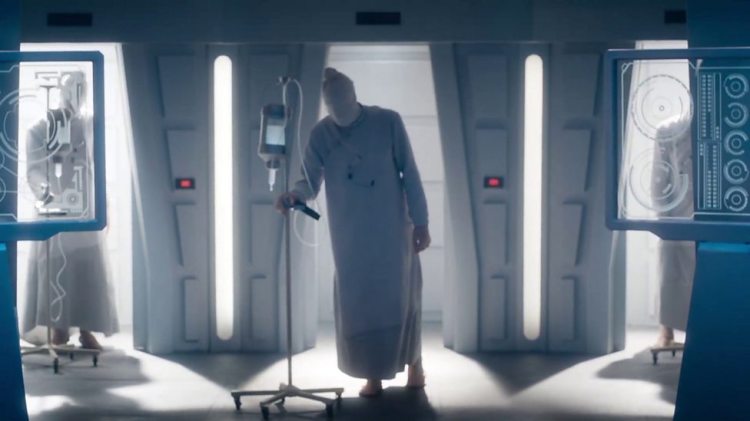
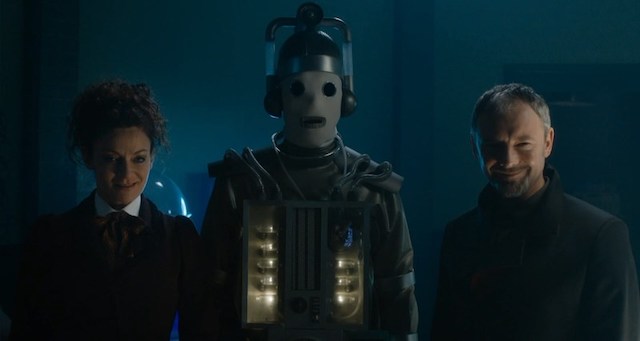
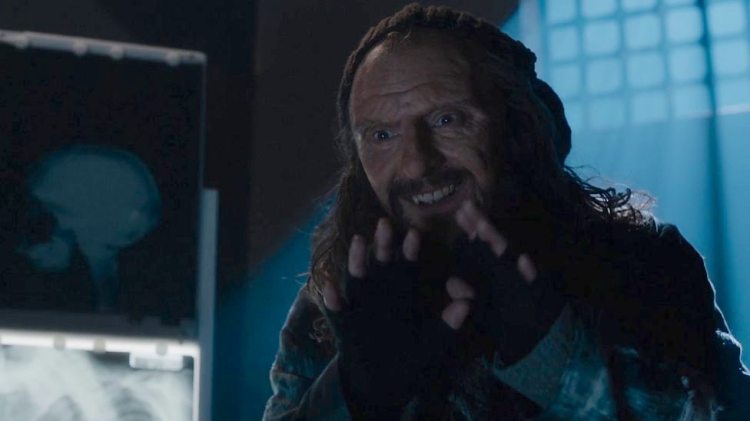
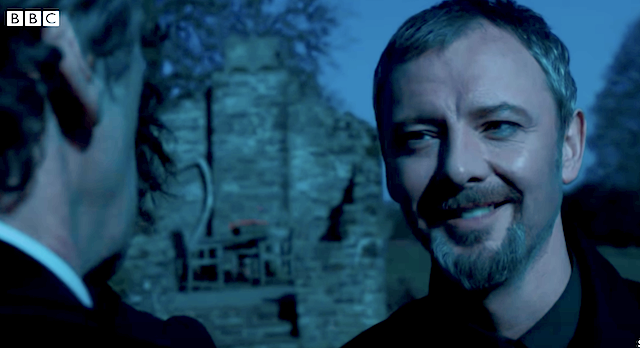


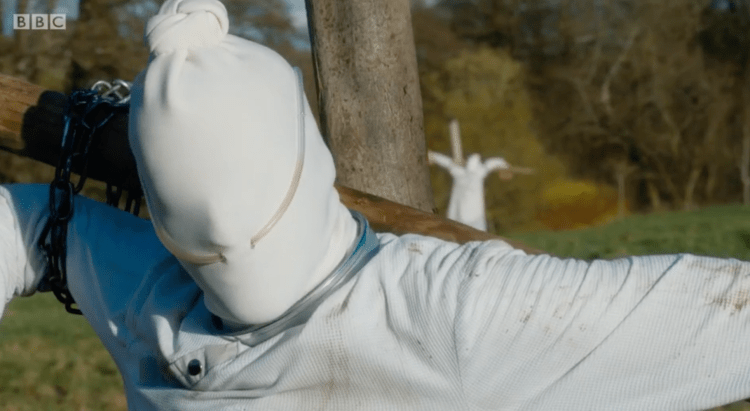
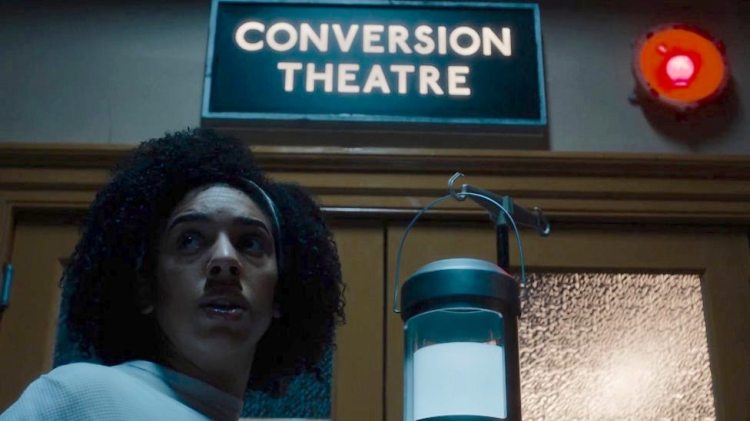


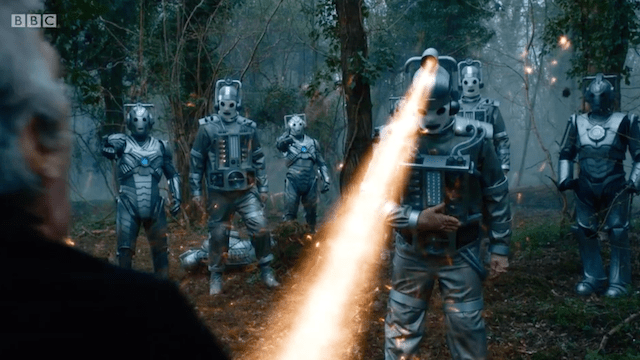
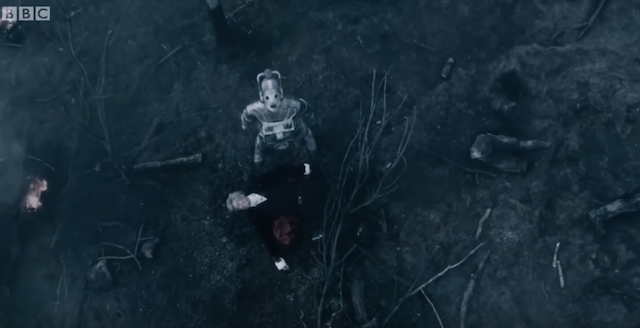

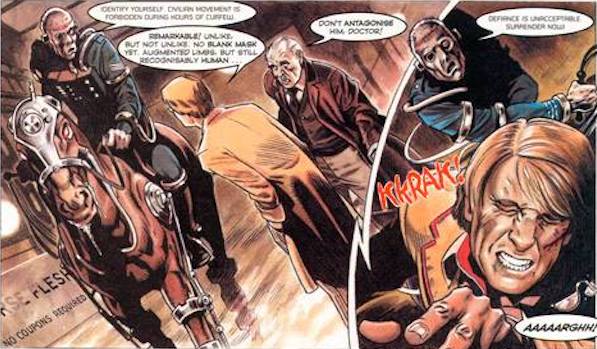


 A Journal of Impossible Things