These are, to say the least, interesting times to live through. I started writing this piece during the UK lockdown in Spring 2020 and as I finish the piece now, we are heading back that way, with parts of the country already under heightened restrictions. If you take away the uncertainty for the future, the millions of deaths and those who may suffer the long-term effects either physically or mentally of Covid-19 and the ensuing social isolation. Step back for a moment and look at us with a sense of scientific detachment – individually or as families or groups of friends, work environments or communities or as nations – and there surely must be something interesting to discover about our behaviour in these times?
Last year, I was in Svalbard – up as far North as I have ever been – huge, wide vistas, sea ice, fjords and glaciers, Reindeer and Polar Bear and Arctic Foxes. By the same time period this year – I had barely left the county, never mind the country. In fact, between March and July I hadn’t travelled further than about 7 or 8 miles – walking or by bike, the car unused and covered in a layer of lichen. It wasn’t exactly prison or solitary confinement, not by a long way, but it is a massive reduction in the scope and scale of the world that we usually inhabit. Not just overseas trips, but travel for work or leisure. Add to that in my case (and many others) a period unemployment and the removal of my usual role in life, well let’s just say it is a pretty big change.
So why do I bring all of this up?
Well, it struck me that this is exactly what the Doctor is faced with in season 7 – on a universal and existential scale. A huge reduction in the scope of his life, tied to one place and time. Not just a reduction in scale, but critically a huge reduction in the variety of his life – his experiences reduced to his lab at UNIT HQ and a series of research bases. Some of the behaviours he exhibits – baiting the Brigadier or laying into civil servants, politicians and bureaucrats are repetitive, almost stereotypical – the Doctor’s equivalent of excessive pacing. Given all of this, it is little wonder that by ‘Ambassadors of Death’ he can’t wait to volunteer to crew the recovery capsule and head back out into space. Or that he that he actively seeks and initiates contact with the Silurians and the alien ambassadors.
Zoochosis is a term usually used by animal welfare campaigners and is applied to animals kept in captivity –in zoos or wildlife parks or in some cases domesticated animals in our homes or farms. We all have ritualised behaviour patterns – they are ingrained in us – grooming, pacing, hand gestures or tics. When trapped, stressed or taken out of our natural environment, such patterns can become compulsive, repetitive, stereotypical – the behaviours no longer serving a useful function, rather just serving as signifiers of distress and discomfort or just plain boredom. In zoos and wildlife parks – such stereotypical behaviours have lead to the development of programmes of environment enrichment. Challenges – finding food for example, puzzles, toys, distraction behaviour, learning, play. All to occupy and stretch the animals and to try to mimic or replace their natural foraging behaviour, daily activities or social interactions.
Season 7 is obviously a huge change for the Doctor. He is trapped in one time and one place. He has a job and a car. In the Countdown comic strips, he even has his own cottage in the country. This is isn’t really explored to any huge degree on TV, except in a very light touch sort of way. I think the reasons for this, is that none of this is the rationale for his exile. His exile is for stylistic and economic reasons – cost reductions and a desire to tell stories in a more realistic setting, rather than it might be seen today as desire to see what happens to the Doctor as a character when placed in our own mundane, domestic lives. Even in modern times, series 10, with Capaldi’s Doctor stuck on Earth, doesn’t really explore his reaction to that – he gets to sneak off with Bill on adventures on other planets. Again, his period of ‘exile’ isn’t based on an exploration of his character, it is a plot arc point and an excuse to see him as a university lecturer and in a ‘Educating Rita’ type relationship – which in all fairness works very well. But one episode exploring him trapped in one place and dealing with the domestic and every day might at least have been interesting – a more realistic version of ‘The Lodger‘ for example.
When I thought about it though, the Doctor does bear some signs of zoochosis during his exile on Earth. It brings out his impatience and shortness – particular with figures of authority, of rules and regulations, petty bureaucracy. Pertwee himself obviously displayed those traits – he was kicked out of every school he attended for rebelling, even RADA. His Doctor is trapped within this small world, his lab at UNIT HQ in the 70’s (or 80’s) – with the Brigadier, even Liz to some degree. He yearns for the wider universe – it is why he seizes on the Silurians so fervently as a cause or is prepared to run off even during an invasion in ‘Spearhead from Space’. His behaviours, rubbing the chin or the back of the neck, impatiently pacing all display signs, if you chose to read them that way of compulsive, ritualised behaviours. The degree to which any of this deliberate or just performance choices by the actor are up for debate, but for me it feels like an interesting avenue to explore.
Throughout his imprisonment, he looks to enrich his environment – tinkering with Bessie or trying to fix the TARDIS, even though really, he knows he has no chance of escape until the Timer Lords decide to free him. There is also the compulsive building of gadgets – does that shed door in ‘Inferno’ really need an electronic lock, does Bessie really need a remote control? It reminds me of Alan Partridge. Bored one day in the Linton Travel tavern, taking apart his Corby Trouser Press! As season 7, moves into 8 he gains a family and ersatz daughter/niece/best friend, the Brigadier slowly becomes Alastair, he still gets to berate civil servants and politicians and be impossibly rude seemingly at random – but now his he has a new challenge – the Master. The Master enriches his environment – gives him a purpose, even joins him trapped on Earth for a while. By season 9, he has even joined him in ‘prison’. The Master is as much trapped on Earth as he is – his island prison even a mirror of UNIT HQ in an old country house. They even gain their freedoms at roughly the same time – end of season 9, into early season 10.
For my own part, I didn’t realise I was pacing in March and April 2020. I was though. Ok, my pacing was rather less obvious than a big cat in a zoo enclosure or cage. I paced for miles, walking for hours. Other people I know weren’t so lucky – they paced a single room. Some, like my friend recovering from cancer or a relative with an immune system syndrome had to be 2m apart from even the people they live with and share their life with – socially isolated within their social isolation. My other stereotypical behaviours included the rituals of making coffee – grinding of the beans, extracting the expresso and steaming and texturing the milk, perfecting the pour. Or cooking. My enrichment coming from books, learning new recipes or re-listening to music that I haven’t heard in years or growing fruit and vegetables or indeed writing these reviews and watching the show.
As exiles go, it wasn’t a bad one, not by any measure, at times I even enjoyed it. But. And there is a but. We are learning to live with our exiles, much like the Doctor did. Lives which if not severely impacted by the disease itself, are left as ‘collateral damage’ as a result of the pandemic and the measures to control it. It can’t be helped, but one day we can only hope that our own ‘exile’ will be lifted.
Sometime, I will pick up this thread over in my Audio review thread. By coincidence June 2020, saw the Eighth Doctor similarly trapped on Earth – in part 1 of the ‘Stranded’ series. He, Helen and Liv are trapped in London. His former Baker Street bolthole having been converted to flats, no UNIT to fall back on, no sonic screwdriver and a TARDIS that is just an empty box. There is no Covid-19 in this version of 2020, but his predicament – trapped in a much, much smaller world than his norm is curiously and accidentally, brilliantly of its time. It also explores his feelings at being trapped, in a lot more detail than was attempted in the Pertwee era or series 10 and looks at how he deals with society at large – not just UNIT or research bases or a university – but trapped with people he doesn’t know, who have everyday problems. So, whilst I will return the effects of exile on the Third Doctor as this thread progresses through to season 8, I will also look at his eventual successor and how he deals with confinement in a very different world.
Now that a bit of time has passed, I thought I’d attempt an assessment, good and bad of the last two series of the show. It is just my personal view, it doesn’t claim to be objective, but I have at least tried to provide some balance. It is rather warily and wearily that I tread this path, it is one fraught with danger and many a vehement, bitter argument seems to have been broken out along the way, with accusations on all sides. So, here goes nothing.
‘Doctor Who’ fandom can be a bit of a vitriolic place at the best of times. I’ve no real idea why that is – well I have, I suppose it is more that I just don’t really understand it. If I were to hazard a guess it is because fans are a bunch of very intelligent (or smart arse, take your pick!), highly opinionated people, sometimes with an interesting mix of personality characteristics. Both good and not so good. The best of people and well, the not. And well, they care, they care very much about the show. There is also a certain degree of angst amongst the older generations around fear of cancellation as a hangover from the 1980’s – although why I’m not entirely sure, since history shows that the series tends to survive well in whatever form – indeed personally, audio has almost surpassed TV as my medium of choice and the TV series itself has been back for 15 years now, so it is not exactly a bad run. Some of the negative voices have been politically unpleasant and the positives ones sanctimonious, high-handed and preachy. Not a lot of of it has been particularly edifying – but I refuse to believe it has to be that way or that it represents the majority.
Into this mix, you can add the general toxicity of public discourse at the moment. The politics of gender, race, sexuality and the tension between more conservative fans and those on the left or more progressive side. And something of a growing generational divide. All of which is of particular interest when applied to the ‘conversation’ within fandom around series 11 and 12. Forums and social media have deteriorated into a bit of sh*tshow in the last few years – or rather more of one. Personally, I’d just like to be able to discuss it as any other set of episodes of a TV show – which is what they are. That seems almost to be impossible, for some reason emotions run too high and attitudes are too entrenched on both sides. Not too many people have emerged for all of this covered in glory.
So, where do I stand on all of this? Well in a bit of an uncomfortable position, one which I have so far struggled with framing and have previously given up trying, really to avoid offence. The problem is, I don’t like series 11 or 12 all that much. I hoped I would, I’ve watched 20 episodes of Chris Chibnall’s ‘Doctor Who’ – I don’t think it is unremittingly terrible (mostly, although it really is at times), just not really good enough, the odd story aside, for me to actually want to watch it. A feeling I haven’t really had since the mid 1980’s, when I left the show behind for a while. Then I had the excuse of having better things to do – university, travel, music, sex. As we stand in lockdown and now in my 50’s only one of those applies, I’ll leave you to guess which!
The Good stuff
So, let’s start with positives. I really hate to kick something well intentioned, made by on the face of it by nice people, without at least trying to be even handed and there are some:
I like the use of history. That had been something that Steven Moffat was less interested in and I’ve generally enjoyed the historical stories – particularly ‘Rosa’ and ‘Demons of the Punjab’. I worried in particular that ‘Rosa’. might not be an appropriate story for British people to tell or for a sci-fi adventure series, that it might be crass. I needn’t have, it was handled very sensitively I thought. Both stories have their flaws, but they are by far the best of the two series so far.
Science and Engineering. I like the fact that the show has explored science and scientists – a real plus for me. Especially depicting women in science and engineering – something long overdue for me. I really like that we’ve had a story featuring Ada Lovelace for example, I would have preferred that she had her own story, but even so it is a story begging to be told. But we’ve also had the likes of Charles Babbage, Edison and Tesla. But also, the Doctor, as a woman doing science and engineering (building the sonic for example) and generally extolling the virtues of science. This was an area previously neglected by the show and is a real plus for me.
A female Doctor. This is a real problem for some people, but this seems an interesting move for me and one that took a bit of guts to push through – knowing that some parts of the audience really would not like the change. In my experience that applies to both men and women by the way and cuts across politics, some of the women in my life have been more vitriolic about the new Doctor than their male counterparts. Some of this is that people just don’t like change. They also often don’t like feeling like they are being told what to think. This impinges on both for some people. And some people just don’t think that the new Doctor is all that good – writing or portrayal or both. More later.
And I like the way that apart from when it makes plot sense (‘The Witchfinders’, ‘Demons of the Punjab’ etc.), they’ve largely ignored the change of gender. Someone like Steven Moffat would have really run with that, lots of smart, gender-based gags, which I’m not convinced would have been the way to go. It would have been funnier, but just getting on with it seems a better way of approaching it to me.
Moralilty. The series wears its heart on its sleeve, it generally isn’t afraid of clearly depicting right and wrong. A difficult line to walk in these times. The execution of this isn’t always particularly well done or hugely articulate for that matter, but it is well meaning and there is no way that I would argue against the show saying that racism is bad or that looking after the planet an awful lot better would be a good idea.
Visuals. It mostly looks quite nice, with some real caveats. I’ll just say ‘Orphan 55‘ here – though there are other not great examples.
I really like the version of theme music. That is an excellent piece of work.
Right that’s about it. I’ve done my best. Now the not so good.
The not so good stuff
Pacing. The pacing of a lot of these episodes is really off. Some stories (‘Battle of Ranskoor av Kolos’ I’m looking at you in particular.) are really rather dull. I’ve found myself looking at my watch, checking stuff on the internet, even falling asleep. All of which is new to me during ‘Doctor Who’ – normally everything stops for that. It doesn’t afflict all stories by any means, but there is something odd about the pacing. Even a pacy story like ‘ Resolution’ which builds up some real momentum, then has this killed stone dead by the café scene, which is interminable. In part I think it is a problem with the writing, partly editing and I think the lower key incidental music might also play a part. There are rare examples when it gets better (episode 1 of ‘Spyfall‘ for example), but really they are exceptions.
Dialogue. Some of the expositional dialogue is really painful to listen to. It really isn’t one of Chris’s strong points and really doesn’t play to Jodie’s strengths either. David Tennant could rattle off this stuff, but Jodie struggles a bit with it. Some of this makes me feel like someone is raking their nails down a blackboard. During my first watch of ‘Tsuranga’ I stopped iPlayer and just wanted to scream – ‘just make this dialogue stop!’. Another prime example was ‘Timeless Children‘, which felt like one long piece of exposition, with an explosion at the end. There are entire sequences that just feels like an actor is reading from wikipedia for minutes on end. The ‘comedy’ moments also quite often fall flat, or are explained for no real reason, ruining the punchline such as it was anyway. This all lends the stories a slightly deflated air, after the party.
Science Fiction stuff. Chris has a habit of zeroing in on exactly the sort of stuff I really don’t like in sci-fi and fantasy. It is almost unerring how he does it. It just feels like far too much ‘Star Trek’ , ‘Lord of the Rings‘ and ‘Star Wars’ in the mix – lots of people in robes, with staffs reeling off exposition and crap alien religions, wizard type figures spouting portentous crap dialogue. This is just a taste thing, I mean each to their own, but a lot of this really, really isn’t for me. I don’t like it in other TV, films or books, so there is earthly no reason why I should like it in ‘Doctor Who’. However, I might overlook some of it if the other things felt right.
The leads. They are all fine. By which I mean just OKish. The problem is in a show like ‘Doctor Who’, especially when the writing isn’t up to scratch you need much more than that. The leads need to carry the show, elevate it. It isn’t easy and not all actors, not matter how good are suited to it. The thing is though if you don’t love the Doctor and companions and want to spend time with them, for me the show is a bit f*cked. It is that fundamental. And yes, there are too many of them. In ‘The Woman Who Fell to Earth’ they tried to introduce and make us care about 5 new people. Russell T Davies would struggle with that, never mind Chris Chibnall. There’s a lot of standing around doing nothing much. And I just don’t really care much about any of them – even Graham whom I would guess I am supposed to identify with. Live or die – nope just checked I don’t really care. It’s a shame really.
Jodie is a decent enough actor. I saw her playing Antigone at the National with Christopher Eccleston. She was good, not spectacular, but good. But up against Christopher Eccleston as Creon. Plenty of people like her performance and what she is doing with the role – great, good for them. It isn’t really working for me though. Which is a shame as I’d rather like to like the first female Doctor. It makes me uncomfortable that I don’t all that much. But those are the breaks. That isn’t my fault or actually my problem. She wouldn’t have been someone whom I would have cast as a female Doctor, but you know that can work, casting something different, I was open to her being good and later on hopeful of her improving. I’m still hoping for someone like Rachel Stirling or Helen McCrory in the future, it’s unlikely and I won’t use that as a stick to beat Jodie with – it is just my preference. I also can’t split out the performance from the writing, without seeing what other writers – Steven Moffat, Russell T Davies etc. would have done with her. Maybe it would work better, maybe not.
Certain stories. Some of them have been dreadful – ‘Tsuranga Conundrum’, ‘Orphan 55’, ‘Battle of Ranskoor av Kolos’. Each series since the show returned have had weaker stories, I could name a few possibly as weak as those since the show returned – ‘Kill the Moon’, ‘Nightmare in Silver’ etc. Normally there are one or two excellent stories, a couple of good ones, a load of averagely good and a couple of not so good. However, the quality of the whole range of stories has slid backwards to my mind – excellent has gone to good, good to average, average to weak etc. It is like the whole bell curve of quality has been shifted backwards towards the weaker end of the axis.
Politics. Other stories have specific issues – “Kerblam!‘ for example which seems to exonerate the corporate culture of certain companies and place the blame elsewhere. The politics of it all is a bit strange, the progressive mixed with the reactionary. I’m fine with the show appealing to all sorts of people, but ‘Kerblam‘ though?
The TARDIS interior – it’s just rubbish!
‘Timeless Children’ – I hate this – almost every aspect of the story and especially the plot arc. With the caveat that I don’t know where it is going next. Which is also caveated by the fact that I don’t care where it is going. I could give details, there are so many things wrong with actual story never mind what it does to Who mythology, but that would mean me thinking about it again and I really don’t want to do that! I’d rather just forget that it ever happened and that I ever saw it. The damage it causes to the architecture of the show and how I perceive the fictional character who I’ve loved most all of my life, well it is sufficient alone for me to exit at this point. Others feel differently – well good for them. Reviewing is an inherently subjective and personal process, in that sense the opinion of others is only relevant as a counterpoint to that of the author, as a discussion point. There isn’t anything anyone could say to make me think differently, it feels like the end of something to me, the end of my interest in the show as an ongoing concern, I’m out.
That’s enough – you get the general drift?
Where next?
Overall, if I were to characterise things, if this hadn’t been called ‘Doctor Who’ I would have given up part the way through ‘The Ghost Monument’. I finally gave up after ‘Orphan 55’, which I really don’t like. Only to come back to watch ‘Fugitive of the Judoon’ a few weeks after it’s transmission as friends whose opinions I trust, advised me to watch it. I only saw three episodes of series 12 live, the first two and last one. I could easily have watched all of them live – I was home, but normally doing something else instead when it was on, but I just found it easier just to watch them weeks afterwards, normally in easier to digest chunks rather than in one go, previously unthinkable.
A TV series not doing what I want it to or living up to my expectations really isn’t the end of the world. Plenty of things going on right now are far, far more important. I just wouldn’t want people making assumptions about me and my attitudes to those more important things on the basis of me not liking it. Anyone who wants to judge me and does that, can frankly f*ck off and mind their own business. I could list my core beliefs in here, but that would just be me telling you what a nice person I am really, as if I have to be ashamed of my opinion. I’m not. I’d really rather like to like it, it makes me a bit unhappy that I don’t, that’s it. Again, these are just some episodes of ‘Doctor Who’ – nothing more. The sooner that the rest of fandom thinks of them that way, the better.
Where to next? Who knows, I think it’s too late for me for this era. The next? I suspect that it is probably on a course drifting away from me now. And maybe that’s right – it should appeal to different generations and I’ve had my go, for quite some time now. Given the changes in how people consume (hate that) content (hate that even more), maybe it just won’t be all that relevant any way. Or maybe it will have just one of its cyclical surges in popularity again, maybe it’s just around the corner. Who knows.
‘We are equipped to survive. We are only interested in survival. Anything else is of no importance. Your deaths will not affect us.’
Once upon a time…
Let’s travel back to a time when there was only ‘once’ and ‘twice’ was a long way off in the future. When this story only existed as a Target book with a claret and blue cover – which reminded me of West Ham or Aston Villa team colours – and the Cybermen depicted in Chris Achilleos’ artwork looked very different than the ones I’d seen in ‘Revenge of the Cybermen’. It makes me think about how I perceived and experienced the show from a young age.
I mean, I sometimes feel like I have the whole of TV ‘Doctor Who’ running simultaneously through my head. There are only a handful of stories that I haven’t seen or at least heard fewer than 5 times, some many times more. But personally, I don’t see the show as one long marathon running from 1963 until today. I can’t, I didn’t experience it like that, not many people have – not for the first time at least, coming to the whole run completely fresh, knowing nothing – it doesn’t really work like that apart possibly from a select handful who are still around today that tuned in to watch ‘An Unearthly Child’ in November 1963.
We all have a starting point and then we work forwards and backwards, sometimes both at the same time and our views of the past and of the future are coloured by what the show was like when we fell in love with it, as much as they are by own personal preferences, likes and dislikes. Your first stories might not be your favourites, you may reappraise them, but you can’t get away from the fact that they were the ones that drew you to the show in the first place or at least piqued your interest. A template planted in your head as to what the show is and can be. The version of the show that I have in my head as default, is probably quite different to yours and rightly so, there is nothing wrong with that.
I started watching in 1972 and watched it, with a bit of a wobble in the mid 80’s, until the present day. I became aware of what seemed at the time like the show’s long history, really through the Target books and ‘The Making of Doctor Who’ (1976). Take a look at just how many stories there already there by that point – clue – it’s a lot! I did see ‘The Three Doctors’, but really my first experience of the First Doctor was through Target books, which meant for the most part, the three Frederick Mueller reprints from the 60’s – ‘An Exciting Adventure with the Daleks’, ‘The Zarbi’ and ‘The Crusaders’. My experience of reading them was later mirrored when watching the first Doctor in ‘The Five Faces of Doctor Who’ series in 1981, followed soon after by the first Dalek story at a convention in 1982 – it was a bit disorientating.
The thing is, it didn’t feel an awful lot like ‘Doctor Who’, at least not the show that I grew up with, in contrast with the Troughton era books and episodes that I’d seen, it felt odd and old fashioned, the Doctor barely a hero of any sort – ‘An Unearthly Child’ in particular. There were exceptions though – ‘Dalek Invasion of Earth’ for one, which was a see change in the depiction of the Doctor, an invasion story, moving him front and centre to fight the monsters and save the day – just like ‘My Doctor’ did. The other exception was the book and then VHS of ‘Tenth Planet’ – it started to feel more like the show that I knew and loved. And the thing is that I still do feel a bit like that, rather like having two entirely contradictory views on this era running in my head simultaneously. As much as I love the Hartnell era, it’s variety and ambition and I really do, these first stories devised by Kit Pedler and Gerry Davis, to fit Innes Lloyd’s vision of a more contemporary show, still feel like the start of the show proper, or at least as I knew it in the 1970’s. The Doctor vs the monsters, saving the Earth.
I really rather love ‘Tenth Planet’, I know not many people say that, but I just have! I love a ‘base under siege’ (there I’ve said it again!) and I’m a sucker for an international cast in that lovely 60’s still optimistic about the UN and the future of space exploration sort of way, before the cynicism kicks in. ‘Tenth Planet’ also features, what I think is a really under-rated companion team – Ben and Polly. And whatever else, it is impossible to ignore the fact that it is also obviously conferred a weight, by being the first Cybermen story and of course the last story of the First Doctor and start of the second. Antarctica is where the Doctor was re-born and without this, we simply wouldn’t be here. The show would be an interesting piece of 60’s archive TV ephemera – like ‘Adam Adamant Lives’ or ‘The Corridor People’.
Putting the base in ‘base under siege’
One of the changes devised by Innes Lloyd and Gerry Davies, that I think made sense for entirely practical reasons, was the idea of a central ‘hero’ set that the action could revolve around. Where money could be spent and put on screen and with only a limited number of other, more functional sets surrounding it. This became known as the ‘base under siege’ format. In reality it is mostly an attempt to improve production values within the constraints of a severely limited budget. This particularly makes sense a year or so later when the show moved from 405 to 625 lines – the equivalent of the move to HD and could no longer quite get away with lots of locations and sets, cleverly consisting of painted backdrops of Tenochtitlan or redressing the same set every week to depict a different location in the ‘Journey to Cathay’ or across Marinus. In retrospect some of the ambition of the early Hartnell’s is lost, but the workload on the designers must have been massive and the sort of stories that change location every week must have been a nightmare to work on. So, while some people seem to assume this change is an artistic decision, in reality it is at least in part a budgetary one, with the side effect of inducing a sort of claustrophobia and ratcheting up dramatic tension.
The location or ‘base’ if we have to have it (it encompasses military bases, airports, monasteries, space stations, country houses, lighthouses, whatever else you feel like adding to the list) is almost like another character in the story. The ‘base’ in this story is indeed a base – ‘Snowcap Polar Tracking Station’ in Antarctica. It is a minimalist version of Cape Canaveral Space Centre or Houston, relocated to Antarctica. An international base controlling manned space flights and also housing the ‘Z-Bomb’ the ultimate nuclear deterrent. It is rather nicely drawn – men trapped in a single location without any women – not that unrealistic for 1986, never mind 1966. We even see Private Tito, with his ‘girlie pics’ stuck to the wall above his bunk, relaxing reading a comic and their reaction to Polly turning up, well let’s just say it is quite realistic.
Another useful feature of these types of stories for the production team, is that they tend to have a larger, often international cast. This has the benefit of allowing some the burden on the regular cast to carry the action (particularly the Doctor) and the amount of effort around learning often technical dialogue on the lead can be lightened. This was an almost year-round production schedule and the pace and turnaround of production was just punishing especially for the leading man. Unfortunately, in his last story, Bill Hartnell fell ill again and episode three, most of his lines are split between Ben, Polly and Barclay – proving this a case in point. It is just amazing that Hartnell or Troughton for that matter, stood the pace of these productions at all – much as we would want a full set of appearances from the lead in his final story, let’s be honest he deserves the break and it just confirms that he couldn’t have carried on in this way. Never mind the Doctor, Hartnell’s body was wearing a bit thin. He was an old man at 58, people were back then.
So, to bolster the cast we have the civilized, thoughtful scientist Barclay (the excellent David Dodimead), the rather useless whinging Dyson and then we have the base commander, General Cutler. Robert Beatty specialized in these roles – a Canadian living in the UK, getting to play Americans all the time. He’s pretty believable to be honest, it is a nicely judged performance in a role that could have been a cliché. Whilst at the same time, he wouldn’t have been entirely out of place in Stanley Kubric’s masterpiece ‘Dr Strangelove: or How I learned to love the bomb’ (1964) in which another American base commander loses his senses and launches a nuclear attack.
The story is really split into – the setup with the Zeus Four space mission, the appearance of the travelers and the new planet which sets up the mystery. Then the arrival of the Cybermen and death of the crew of Zeus Four. The defeat of the first Cyberman invasion at snowcap, then the revelation that a second capsule has been sent up. The worldwide invasion by the Cybermen and Cutler’s attempts to use the Z-bomb. Then the final act – the destruction of Mondas and the impact it has had on the Doctor playing out. It has really a rather nice structure and flow to it, the threat escalating – it is never boring and the finale ensures that it really ends on a high and gives the piece significance.
The Cybermen – jerseys, top knots and sellotape
I’ve already discussed the creation of the Cybermen at some length, but maybe I’ve talked less about what they were originally conceived to look like. Kit Pedler conceived them as humans with bits added basically – human faces, a skull cap or metal plate, the chest unit, but with the idea that the human shape would be broken up by limbs from the midriff, which were changed after it became clear that this couldn’t be easily achieved. His description of them in the episode two script is as follows:
‘They are tall, slim with one-piece, close fitting silver mesh uniform, their faces and hands are normal but under the hair on the head is a long shining metal plate stretching from centre hair line front to occiput. (this could be disguised by a hat). Their faces are all rather alike, angular and by normal definitions good-looking. On the front of their trunks is a mechanical computer-like unit consisting of switches, two rows of lights and a short, moveable proboscis. They all carry exotic side arms. At the shoulder joints there are small, ram-like cylinders acting over the joints themselves. Instead of flesh there is a transparent, “arm-shaped” forearm covering containing shining rods and lights, but there is a normal hand at the end of it.’
The compromise of the jersey mask and real hands, arms covered by a containment suit, rather than transparent as originally intended works fine and has some rather good unintended consequences. The first of which is a template for the blank mask of subsequent Cybermen – mouth slit and round eyeholes which would go on to become iconic. One aspect that shows up on the DVD release, but would have been lost at the time or on VHS was that the actors eyes show up behind the darkened eyeholes of the mask – which looks to my mind really very creepy and would be used again to good effect in ‘World Enough and Time’. Likewise, the ‘mouth’, it looks really odd and quite disconcerting to have that mouth ‘open’ and words to just spill out, as opposed to have the actors mouth the words. Again, it should look terrible and it is strange, but in a quite disturbing way – like an animated cadaver.
The DVD quality also unfortunately shows up the sellotape holding the head pieces together, so it isn’t all good!
This is their first story and so it really has to sell the concept of the Cybermen to a new audience. For most of us though, this isn’t the first Cyberman story we saw or read and so that is slightly lost – even in a marathon context – how many are experiencing the Cybermen or the Daleks for the first time in their original story? Anyone? Is that important, well probably not – my first was ‘Revenge of the Cybermen’ and it tells you very little about them, neither did ‘Earthshock’ or ‘Attack’ or ‘Silver Nemesis’ – so it obviously isn’t vital.
In this, their first story, we learn about their nature in a series of rather well written exchanges, that never feel like info dumping, as the humans are finding out about the nature of the Cybermen at the same time as the audience. In the following scene, Polly and Barclay get to question them, while in return Krail also learns about human nature:
POLLY: But don’t you care? KRAIL: Care? No, why should I care? POLLY: Because they’re people and they’re going to die! KRAIL: I do not understand you. There are people dying all over your world yet you do not care about them. POLLY: Yes, but we could avoid their death
KRAIL: We are called Cybermen. BARCLAY: Cybermen? KRAIL: Yes, Cybermen. We were exactly like you once but our cybernetic scientists realised that our race was getting weak. BARCLAY: Weak? How? KRAIL: Our life span was getting shorter, so our scientists and doctors devised spare parts for our bodies until we could be almost completely replaced. POLLY: But that means you’re not like us. You’re robots!
KRAIL: Our brains are just like yours except that certain weaknesses have been removed. BARCLAY: Weaknesses? What weaknesses? KRAIL: You call them emotions, do you not? POLLY: But that’s terrible. You, you mean you wouldn’t care about someone in pain? KRAIL: There would be no need. We do not feel pain. POLLY: But we do.
There is another key scene though, when we realise that they have lost more than just their physical form. It is a pivotal point for the Cybermen, introducing us to both their nature and to cyber-conversion:
KRAIL: You must come and live with us. POLLY: But we cannot live with you. You’ re, you’re different. You’ve got no feelings. KRAIL: Feelings? I do not understand that word. DOCTOR: Emotions. Love, pride, hate, fear. Have you no emotions, sir? KRAIL: Come to Mondas and you will have no need of emotions. You will become like us. POLLY: Like you? KRAIL: We have freedom from disease, protection against heat and cold, true mastery. Do you prefer to die in misery?
That last line – ‘Do you prefer to die in misery’ is really odd. As opposed to what – ‘live in misery’ in a containment suit, experiencing nothing? They have forgotten what it is they have lost – everything really.
A very British alien
One of the aspects I love of this generation of the Cybermen is their use of language. They have to be one of the most well-mannered and considerate monsters in the series:
KRAIL: That was really most unfortunate. You should not have done that. KRAIL: Name and occupation please KRAIL: Yes. We are going to take you all back to Mondas. Your age please.
They are certainly better brought up and considerably more polite than the likes of Cutler! So much so that each time I watch this, I almost end up rooting for them. They behave quite differently than even ‘The Moonbase’ variety only a few stories later. Odd and slightly awkward. Again, this feels like something that fits perfectly with Marc Platt’s vision of Mondas as austerity, post-war Britain. They removed all emotions, but kept ‘please and thank you’ – in that respect they are a very British alien – much like the Doctor himself.
The Tenth Planet
The story also sets up Mondas as the home planet of the Cybermen:
KRAIL: You will be wondering what has happened. Your astronomers must have just discovered a new planet. Is that not so? BARCLAY: Yes, that’s right. KRAIL: That is where we come from. It is called Mondas. BEN: Mondas? BARCLAY: Mondas? But isn’t that one of the ancient names of Earth? KRAIL: Yes. Aeons ago the planets were twins, then we drifted away from you on a journey to the edge of space. Now we have returned.
I’ve already written about Mondas in my ‘Spare Parts’ review and also the confusion – largely created by Gerry Davis in his Target novelisations as to whether their home is Mondas or Telos. We learn very little about it here – except that it is Earth’s twin and drifted away. In my mind though, it is the 50’s Britain of ‘Spare Parts’ and aped in ‘World Enough and Time’ – that world just feels like the right environment to create these very homespun, budget monsters, built from spare parts to survive. It isn’t clear quite how Mondas ended up back in the vicinity of Earth or how it remained unobserved, which is a weakness in the story, but you would assume that it hasn’t just slowly drifted back.
The effects of its return to its twin, are initially largely limited in the story to the impacts on the unfortunate crew of the two Zeus capsules. Later in the story though. the energy drain starts to impact the Earth and eventually the Doctor himself…
This old body is wearing a bit thin
I suspect that given the often haphazard nature of the show and in particular with regard to the shows leads after Verity Lambert and David Whittaker left – with companions joining and leaving often at random points in mid story, that it is a coincidence that the themes of this story are mirrored in the main event – the change in the lead actor. Both our lead and the main protagonists change their form to survive – their bodies wearing old and thin. The Doctor is ‘renewed’ and the Cybermen undergo conversion, augmenting their bodies with machine parts – immortality through cybernetic implants. Both lose and gain. The Cybermen survive and are physically stronger, but in the process lose their emotions, their organic bodies and ‘self’. The Doctor survives as a new man, but his old self is lost on the floor of his beloved TARDIS control room. A new, younger, more energetic man waltzes in and the worn-out old man, the one who loved the show so much and was beloved of a generation of children, wanders off into the wilderness or at least to a season in panto and then retirement.
The deterioration in the health of the show’s lead William Hartnell, is mirrored in the fictional journey of the character he played. He always had his ailments – as far back as his first season, for example in ‘Marco Polo’ when he discusses his ailments with Kublai Khan and suffers from ‘mountain sickness’, he was worn out by the climb in ‘Time Meddler’ or the effects of the Robotisation process in ‘Dalek Invasion of Earth’ or radiation sickness on Skaro. However, as the battle between John Wiles and Hartnell escalated there are a series of events, some minor, some major that impact on the character and were potential points where the actor could have been replaced. We have the effects of the invisibility in ‘The Celestial Toymaker’ – when Wiles wanted him to come back as another actor, the toothache of ‘The Gunfighters’ and so on. On a much larger scale the effects of the Time Destructor in ‘Dalek’s Master Plan’ and finally the draining of his life force and energy by Jano and the Elders in ‘The Savages’. Both of which surely must have impacted on the lifespan of the first Doctor. The line between the actor and character start to blur and the arteriosclerosis of Hartnell becomes fictionalized, culminating in episodes 3 and 4 of ‘Tenth Planet’, in which the energy drain from Mondas starts directly affecting the Doctor himself.
The second half of the story, the decline and fall of the Doctor, the Cybermen and Mondas, is basically a holding pattern as we wait for the destruction of Mondas and Ben, Polly and Barclay try to avert the use of the Z Bomb by Cutler or the Cybermen. I quite like that – the patience and wisdom of the Doctor pitched against the need for military action, against all scientific advice, of Cutler. Even then, the story intelligently gives Cutler a rationale for his acts – the danger to his son in the rescue capsule – his breakdown isn’t just that of a military lunatic. Also, in Hartnell’s absence, Ben and Polly get some good stuff – Polly standing up to the Cybermen and talking Barclay around and Ben taking the action and organizing the resistance. Ben even gets to show his regret at having to kill a Cyberman – a clear demarcation between him and Cutler. The main man himself though really is wearing a bit thin and disappears for most of his penultimate episode. It is still a lovely performance in this story and there are some great moments – particularly early on between him and Cutler, it is just that there isn’t as much as we’d like. As the Cybermen and their planet collapse, so does our hero, exhausted, stumbling back to the TARDIS across the snow, back to the sanctuary of the ship.
No great speech for this Doctor to mark his passing, his last words are very simple:
DOCTOR: What did you say, my boy? It’s all over. It’s all over. That’s what you said. No, but it isn’t all over. It’s far from being all over. BEN: What are you taking about? DOCTOR: I must get back to the Tardis immediately! POLLY: All right, Doctor. DOCTOR: Yes, I must go now. BEN: Aren’t we going to go back to say goodbye or anything? DOCTOR: No. No, I must go at once. BEN: Oh well, you better have this. We don’t want you catching your death of cold. DOCTOR: Ah, yes. Thank you. It’s good. Keep warm.
The first time I saw the first ‘regeneration’ was on ‘Blue Peter’ – part of a clips package that also included presenter Peter Purves in ‘Daleks Master Plan’ and the death of Katerina. I thought that it looked great and I still do. It is a bit of a miracle really, that grainy, white out mix and the match up in the features of Hartnell and Troughton. More impressive than the abrupt Pertwee to Baker one and the Troughton to Pertwee one that we are cheated of. Apart from the technical achievement, It also feels significant – a piece of TV history.
I wonder how the children who had grown up with ‘Doctor Who’ by 1966 felt? I think I can imagine – much like I did when I lost my Doctor and the disorientating wildness of Tom Baker in his first story mirrors that of Pat Troughton in his. The difference being that I at least knew that the Doctor had changed before, for that generation there was only one Doctor and they were losing him. And nothing much in the subsequent episodes does anything to reassure them that things will be alright, it is quite brutal in that regard. One image of his face once more in the mirror in ‘Power of the Daleks’ Episode 1 and Hartnell is gone. Banished from his own show, I think at least until his face appears in the clips sequence in ‘Day of the Daleks’ and then his appearance walking through that garden in ‘The Three Doctors’. The show he loved moved on without him and went in a different direction, but we are still here talking about him 53 years after ‘Tenth Planet’ – he might not recognise the show as it is now, but I hope he would be proud of that achievement and the generations of children since 1963 that have loved the character he created.
Finally a few thoughts on Antartica and bases under the ice..
Antarctica Starts Here..
It is the first of May – time to break out ‘The Daemons’. However, instead of folk horror in nearby Wiltshire, I’m thinking about snowy wastes, tundra and sea ice. This is partially because I’m reviewing ‘The Tenth Planet’ and reading the Target book for research, but also, I’m thinking of the Norwegian Arctic – Svalbard and the coast of East Greenland where I’m heading in a few weeks (well hopefully, I was thinking the same thing this time last year before a last minute change of plan…). Instead of an English spring, I’m thinking of Polar Bears, Arctic Foxes, Walrus, Belugas, Reindeer and Musk Ox.
Thinking about it, there is something very British about wanting to lose yourself in the icy, white blankness of the far north and south. As a nation, we have our stories of Scott, Shackleton and the disappearance of Sir John Franklin. I don’t think that we are entirely unique in that, I think that Mawson inspires similar feelings in Australia for example and the Norwegians have their own heroes – Nansen and Amundsen. However, we are somewhat lacking in space and wilderness in England (maybe slightly less so in the other nations) and the open expanses of the Arctic and Antarctic inspire a sort of longing to be lost in the vast emptiness of ice, at least in some of us – I’ve experienced this first-hand.
As I look across the room, my photographs remind me of that longing. They show King Penguins, Leopard Seals, Polar bears, Narwhal, Belugas and vast icebergs. I’m really lucky – I’ve travelled down from the Falklands, South Georgia, the South Shetlands and down the Antarctic peninsula and also up from Baffin Island deep into the Northwest Passage and the Canadian High Artic. I’ve seen landscapes and animals that I never dreamed I could possibly see as a youngster. Fifteen years ago, I made a vow to myself that I would see as much as I could of the polar regions while they are still there and since then, the pace of change has visibly intensified, such that I’m not sure what sort of state these regions will be in by the end of my life. All of which makes me incredibly sad – to think of a world without such incredible creatures as the Narwhal and Polar Bears of the Arctic and the vast Penguin colonies and whales and seabirds feeding on huge Krill blooms of Antarctica and the sub-Antarctic islands. All of which makes me all the more aware of the impacts that my own travels have had.
I can’t say that I have experienced the polar regions in any way close to the way that those early explorers did – I really haven’t, we are talking about ice strengthened expedition ships, not luxury, but even so it’s not hardship. However, I have seen the places where they lived and died, the graves of some of the Franklin’s expedition on Beachey Island, the location on Elephant Island where the crew of the Endurance overwintered and Shackleton’s grave and memorial cairn at Gritviken, raising a glass of Irish to the memory of the great man. In some ways it is surprising that, outside of the DWM strip, that Doctor hasn’t met Scott or Shackleton or that fate of the Franklin expedition hasn’t been revealed to be due to alien intervention. These events are embedded so deep in the national psyche – or at least were, I’ve no idea whether young people are still inspired by these expeditions in the way that I was – that surely budget can only be the reason for this?
Despite this, Antarctica does have a key part in a number of very significant stories – it is where the First Doctor died and the Second Doctor was born, where the Doctor first met the Cybermen and where the Twelfth learned to let go and regenerate. It was also the location used for the first two episodes of ‘Seeds of Doom’ – the base under siege in those episodes is a largely realistic version, at least going by the British and Polish Antarctic bases that I have visited. The scientific team in that story also feels quite realistic to me – similar to the ex-British Antarctic Survey members I’ve met. The Arctic also features as the location (largely unseen) for ‘Cold War’. Why is this? Perhaps, using the snowy wastes in Science Fiction is ingrained in us since Victor Frankenstein’s final encounter with his creation played out in the North Pole? In some ways it is where the genre was born. This is something that was strengthened by the use of a polar base as the location for Howard Hawks’ 1951 sci-fi horror file ‘The Thing from Another World’ (which was appropriated for ‘Seeds of Doom’) and its later remake ‘The Thing’.
‘Tenth Planet’ features the Snowcap Tracking Station as its prime location. The base is part civilian, part military – run by a general, with army personnel, but staffed by scientists. The base itself also has a dual civilian and military purpose – tracking and controlling the Zeus space programme and also housing functioning missiles and the Z-Bomb – the ultimate nuclear deterrent. Even in 1966 (never mind 1986) this would not have been allowed. The activities that signatory nations are allowed to undertake in Antarctica are defined under the terms of the Antarctic Treaty (1961):
Article I
Antarctica shall be used for peaceful purposes only. There shall be prohibited, inter alia, any measures of a military nature, such as the establishment of military bases and fortifications, the carrying out of military manoeuvres, as well as the testing of any type of weapons.
The present treaty shall not prevent the use of military personnel or equipment for scientific research or for any other peaceful purposes.
So, the base and the military personnel would be allowed under article 1.2, but the stationing of the Z-Bomb and missiles certainly would not be under 1.1. The base has a nuclear reactor, which would have been allowed. Indeed in 1961, the US installed a nuclear reactor at their McMurdo base on Ross Island. It was eventually de-commissioned after issues in 1972. I’m not sure where the underground design of the base comes from, I’m not aware of any bases built under the ice in Antarctica – most of them are designed to be moveable, for example in the event of a shift in the ice shelf. And I’m not sure practically how this would be achieved. It is closest to the missile base (‘Project Iceworm’) that the US built in 1961 under the Greenland Ice sheet (again with a nuclear reactor). The base only lasted until 1966 – the glacier was moving far more quickly than the designers had originally thought, the integrity of the base was threatened and the idea for a network of similar bases was abandoned. Denmark and Greenland are facing having to deal with this when the radioactive and other waste from the test base eventually surfaces through climate change.
I’ve been pondering a question while writing my review of ‘Spare Parts’ – one of a series of reviews I’m about to write about the Cybermen – what is it that makes monsters work? The more I thought about it, the more complicated the question became. Not least because monsters prey on our fears and concerns – some of which today would be viewed as ‘problematic’. The Daleks may arise out of their own ‘Dislike for the unlike’, but then so do many of our monsters – some, like the giant spiders are from our phobias, others from xenophobia and our fear of invasion by those unlike us. As monsters are based on our fears, I think these also change over time – not just with changing concerns in our world, but also as our own concerns and fears change through our own lives. What taps into your fears as a child, probably still lurks somewhere in the background of your adult psyche, but as you grow older, your fears change – other factors come into play – your sexuality in your teenage years or later concerns relating to parenthood and your children or later still ageing, disease, mortality or fears of losing your ‘self’ or just fear of loneliness. The monsters with longevity, I suspect change with you and are able to work for both adults and children.
The monsters of childhood are there to take you away from the protection of home or in some sad cases are in the home already – the father in the wardrobe of ‘Fear Her’, the toys coming alive in the closet of ‘Night Terrors’ or the monsters under the bed of ‘Girl in the Fireplace’ or ‘Listen’. But also, what attracts us to monsters as children is often I think the imagery and design – the Daleks, which are easy to draw or imitate or the Cybermen who are big, shiny, nasty robot men, marching en masse or any other array of monsters based on reptiles or insects or other familiar animal species. A repeated catchphrase might also be a factor – ‘exterminate’ or ‘delete’ (a late addition to the Cybermen is has to be said) or ‘don’t blink’, the aural equivalent of the vivid image.
I recently read a review of ‘Image of the Fendahl’ from an old DWM and the writer quoted some work by educationalist Cedric Cullingford on how children under 12 understand television, which he argues in the case of ‘Doctor Who’ is in the form of ‘a series of clear images’ in amongst the rather complex plot details. The children remembered what the Doctor looked like, the TARDIS and K9 and that the Doctor ‘fights monsters’. The thing that the children remembered from the actual episode was basically the image of the skull glowing and something happening to Thea – the plot specifics and details were completely lost – ‘about a skeleton. Skull changed into a woman’s head and back again’ was the most coherent of the memories. That this is also one of the final images of the story is significant – the cliffhanger and taps in to something the odious Mary Whitehouse complained about ‘Deadly Assassin’ – the fact that children were left with that image of the Doctor drowning. Those images are exactly the way that I remember ‘Doctor Who’ certainly from my early years (3-7) – the images of giant maggots, the spider on Sarah’s back, the Doctor and Brigadier driving a jeep underneath a Brontosaurus, a Dalek on fire and the Sea Devils rising from the sea. All striking images, I don’t remember much in the way of plot specifics from those early years, although I would argue that I did understand more of the plot a fair bit earlier than aged 12, but those early vivid images have stayed with me my whole life.
The monsters of adulthood are slightly different I think, more psychological in nature – there to take your children away or prey on the elderly or anything that renders you powerless – the state bureaucracy, work, disease or the common nightmare of being buried alive or being trapped in your own body. This is also I think the age at which body horror impacts you more. I grew up watching a period of the show that revelled in this – the Wirrrn, Krynoids, Zygon or android replicas, animated cadavers, brains in a jar (or on the floor!), genetic experimentation and numerous ghoulish villains afflicted with disfigurement of some kind (the Master, Greel or Davros). None of which scared me at all as a child, to my mind the ideas behind these stories are far more frightening as adults. They tap into largely adult concerns of what is happening to our bodies of disease and mortality. As a child I might have thought, ‘oh, that’s nasty’, when Winlett or Keeler are transformed horribly into a Krynoid, but the actual fear of it doesn’t arise out of a genuine concern as a child, as an adult the thought is horrific and parallels our own fears of what is happening in our own lives. I’m unlucky enough to have seen what cancer has done to people I know and love, seen what kind of transformation can occur in a relatively short period of time and what the end game looks like. That has to change your way of thinking – I can’t be alone in that surely? Likewise, the loss of self that you see when someone you love has dementia, I feel so sorry for anyone who has had to go through that, I’ve seen it, but more from a distance than up close, but to lose the core of you – your memories and personality, even intermittently is a hugely scary thought. These are adult concerns, possibly less so if you are in your 20’s and 30’s and you are lucky enough not to have witnessed this first hand, but the older you get, unfortunately encountering something like these situations is almost inevitable – I envy anyone who hasn’t.
Regardless of age, we all have our own sets of fears and demons. And sometimes these go deep into our unconscious and to some disturbing and unsettling places. Some relating to sexuality. Some relating to our own prejudices. How many monsters, particularly represent the ‘other’ or the ‘unlike’ – foreign vampires from the east coming to attack virginal young English women, monsters based on physical deformity, all of those invading aliens that represented communism in US Sci-fi in the 1950’s. If we look too closely into the most famous monsters in our culture, well we see things that we really might find unpalatable. Maybe that is why we have seen a move away from the monster in the show (Daleks, Cybermen and Weeping Angels aside)? The aliens in more recent series have been closer to those of the Pertwee era than Troughton or Hinchliffe/Holmes – more capable of moral ambiguity, rather than straight evil. The Zygons especially in Peter Harness’s storyline with parallels to the real-life backdrop to that year – asylum seekers/migrants and radicalisation and the Ice Warriors or Silurians where they are neither good nor evil. Or alternatively we have the whole malfunctioning tech angle of ‘The Empty Child’ or ‘Mummy on the Orient Express’ – where no one is to blame. Maybe, it is just easier and avoids going into potentially problematic areas in these more sensitive times. ‘Doctor Who’ for me though is fundamentally about the Doctor versus the monsters – those are the stories that I grew up with, the ones I read as Target books, what attracted me as a child to the show. You might think differently to me, but it feels to me that however modern and clever and nuanced you might want the show to be, the Doctor is someone who fights the monsters and that is still useful in these polarised times – someone who is decent, with a moral compass who stands up to evil.
Maybe the most successful, long-running monsters in our culture are those which stay with us from childhood through to adulthood, because they are complex enough to prey on adult fears and yet still designed to appeal to children? And I think that certainly applies to the show’s two main monsters – the Daleks and the Cybermen. With the Daleks, they have I think three elements that make them successful. The design, which is beautiful – a genuine 60’s design classic from a very talented designer in Ray Cusick and is crucially easy for children to draw and imitate. Then there’s the voice which is incredible – if you listen to a lot of audio, you will realise just how powerful that voice is on its own – the Daleks work perfectly well without being able to see them – something which indicates to me that the visual design is far from being everything.
And then there’s the writing. Now Terry Nation (and to a lesser degree Kit Pedler and Gerry Davis) come in for a lot of stick in these parts as ‘hack’ writers. I would argue the opposite – anyone out there who feels that they could do what they did – have a go. Go on, try to come up with a monster or any creation for that matter, which will last over 50 years and entrance generations of children and adults. How many of them are there in our culture? List them – Dracula, Frankenstein’s monster, zombies, werewolves, the mummy, variations on demons, ghosts and monstrous reptiles or chimera? Apart from that Wells’s Martian travel machines, the Triffids, the alien? I’m running out. From TV? Well I struggle here, Star Trek doesn’t really seem to have monsters as such – the Klingons to me seem fairly third-rate, the Borg – well they are just a re-badged Cyberman aren’t they? But then I’m not really a fan and I might be doing them an injustice. However, the overwhelming majority of people growing up in the UK, will know what a Dalek is or a Cyberman, possibly even a Weeping Angel. It is as true now as it was in the 1960’s or when I grew up in the 1970’s. That is a massive achievement – to create a genuine long-lasting cultural icon to match those created in mythology or the Victorian gothic. And think about it – for all of the talented writers who have written or run the 21st century show and all of the effective design work and superior effects technology, what have they added to the list of top ‘Doctor Who’ monsters I would have written down in 1984? The Weeping Angels and possibly the Ood and that is about it, I’d really be stretching things to add the Slitheen or Silents. But still the Daleks and Cybermen are there at the top of the list looking a long way down.
I would argue that you could lift the Daleks and Cybermen out of the series and put them in say ‘Star Trek‘ or ‘Blake’s 7‘ and they would be just as effective. They even work perfectly well on their own – the Big Finish series ‘Dalek Empire/Dalek war’ and ‘Cyberman’ proved that to me. Sure, they need human protagonists as well, but they work well enough as a concept without the Doctor to define them. Why is that? Well because the writing and the definition of the concept is a vital element. If you compare say the robots of ‘The Masters of Luxor’ with ‘The Daleks’ – only one of those stories and protagonists gets you to 55 years and counting and it isn’t the Anthony Coburn script or ‘The Perfect One’. I suspect that many people in the general audience don’t necessarily know that or think about the fact that they are anything other than robots (likewise the Cybermen), but they are enhanced massively by knowing that inside the casing is a green blob of fascist hate, engineered to survive a nuclear war and genetically manipulated to not only survive, but believe they are the ultimate species in the universe and should destroy everything else until they are the sole survivors. Of course it taps into the zeitgeist of World War II and fascism, eugenics and the ‘master race’, how could it not – the creatives in involved in bringing the Daleks to life where all growing up during the war. In that respect, they are at least as much of the 30’s and 40’s as the 60’s, the cold war and threat of nuclear war.
As an adult, I don’t know how many hours I’ve spent in the company of the Daleks, an awful lot if I take into account the hours of output on audio – as we speak I’m listening to a rather fine Dalek audio ‘The Dalek Occupation of Winter’ a first Doctor story with Steven and Vicki. They still work perfectly well for me all those years since (46!) since I first saw ‘Planet of the Daleks’. The body horror aspect of them isn’t generally played too high in the mix. We have Stengos inside the glass Dalek in ‘Revelation’, the human/Dalek Hybrid of ‘Evolution of the Daleks’, the recent use of the mutant outside of its case and controlling relationship with a host in ‘Resolution; and of course Davros himself. In some ways though, the most effective use of this with the Daleks was on audio in BF’s ‘Dalek Empire’. In one of the series we hear a young, bright, woman slowly being converted into a Dalek – we are privy to her thoughts as she slowly transforms – it is truly horrific and genuinely disturbing.
With the Cybermen, they have always been below the Daleks and I think always will be, it’s built into them. They are built for survival, not to be the supreme being – they believe they are superior through their strength and logic, but they haven’t been programmed to specifically hate everything else in the universe – they have just had their emotions removed to survive the conversion process. However, I find that at least in their original conception they resonate far more with me than the Daleks. As we will see with ‘Spare Parts’ or ‘World Enough of Time’ their creation is a tragedy – worlds that have slipped slowly into a nightmare. A step that a desperate population takes almost without thinking, just in order to survive. A population sleep walking into horror and de-humanisation. That feels to me all too plausible, my parents and grandparents and a generation of ‘Doctor Who’ writers all saw the effects of Germany falling slowly into such horror. In my lifetime a country that I visited in the early 90’s Yugoslavia, which seemed perfectly ‘normal’, slowly fell into genocide. The same applies in Syria or any number of places – societies that slide imperceptibly into increasingly horrific acts perpetrated on the general population, but also perpetrated by members of that population. Mondas or Telos or Planet 14 or the colony ship – all fall that way, into tragedy.
They are a product of the concerns of the 1960’s, but spare part surgery and Cybernetics as a concept are only likely to become more relevant to the population. Through stem cell research and cloning, we have moral choices to make – growing replacement organs on ‘donor’ animals for example. Whilst in the realms of technology, right now, we have devices that we cart around with us – hand held, blue tooth ear pieces, on our wrists and not least medical prosthetics of the kind envisaged by Pedler. How long before these devices start to become implanted instead or designed as extensions of our own bodies? How long before robotics, AI, cybernetics and even genetic manipulation start to become the norm and even a part of us? We are in 2019 – the year of ‘Blade Runner’, but we still have a way to go. The nightmare future foreseen by amongst others, Kit Pedler, Gerry Davis and Terry Nation has only been delayed I’m afraid and our societies will have to draw their own lines in the future about what is morally acceptable. The Cybermen represent the crossing of those lines. We have two aspects of these technological developments depicted in the Cybermen – the gleaming chrome and steel, conceived in the ‘White Heat’ of Wilson’s 1960’s technological revolution – basically what we see from ‘Moonbase’ onwards. And then the earlier version, the one that feels born out of austerity, this is accidental rather than by design – making a virtue out of the budget limitations of the show, but it also works brilliantly in retrospect – more 1950’s in feel, made with an earlier technology more bakelite than chrome – conceived on a world falling apart – an impoverished world closer in feel to blitz-torn Britain of the 1940’s or the dark post-war days of austerity and rationing. The world of ‘Spare Parts’.
‘Mondas Passing’ is a rather lovely, bittersweet little short story from the original ‘Short Trips’ collection from BBC books (1998). The author reunites Ben and Polly on New Year’s Eve 1986, meeting in a hotel room, away from their respective partners, while down in the South Pole, their younger selves are fighting the Cybermen and watching the Doctor change.
How to say this? 1986, the year in which ‘Tenth Planet’ is set, hmmm. To paraphrase the Doctor in ‘City of Death’ – not even a table wine, more a bottle of meths really. I wonder what the youngsters of the swinging sixties – young people like Ben and Polly and indeed the youngsters watching the show, thought it would be like? All shiny and gleaming, jetpacks, moonbases and flying cars? The reality near where I grew up, looked more like ‘Dalek Invasion of Earth’! I’m sure by the time that generation got to 1986, many thought that it was all a bit disappointing really, the dreams of the 60’s not fulfilled. This story looks back at the fictional events of 1966 from the vantage point of a middle-aged Ben and Polly at end of 1986.
I’ve feel like I’ve known the two of them for a long time, well at least since the 1970’s- the grounded working class cockney sailor and the middle class secretary about town – ‘Duchess’ to Ben. ‘Doctor Who’s’ own Terrance Stamp and Julie Christie. It’s odd, but some companions I still feel slightly differently about, just because they were in Target books of my youth – Ian and Barbara (‘The Daleks’, ‘The Crusaders’, ‘Dalek Invasion of Earth’, ‘The Zarbi’), Ben and Polly (‘Tenth Planet’ and ‘The Cybermen’) , Jamie and Victoria (‘Tomb of the Cybermen’, ‘The Abominable Snowmen’, ‘The Ice Warriors’, ‘Web of Fear’) – whereas the likes of Zoe or Steven were just in lists of companions or story synopses that I’d read. I didn’t really know them properly until the VHS and audio releases in the 1990’s, by which time I was an adult – or at least a rough approximation of one.
Anyway, I’ve thought about them a lot over the years, even as I was discovering the others. I think I’d always imagined that Ian and Barbara married after ‘The Chase’. They were so well suited to each other and were obviously in love. Ben and Polly though, I’ve never thought that it would work out between them. Ben slightly had a working class chip on his shoulder and you always imagined that Polly moved in very different circles. You could imagine them starting something after leaving the Doctor, but it not really working and them just slightly ‘missing’ each other – which is something that just happens in life, somethings just don’t work out. That is the scenario explored in this book. Both are married to different people and haven’t seen each other for years. There is clearly still unfinished business between them though and the connection that harks back to that first meeting in ‘The War Machines’ is still there.
In this excerpt, Ben waits for Polly in a hotel room and thinks about the year that is about to pass and the passage of time since his younger self was at snowcap base:
‘He couldn’t believe how quickly the year had gone, moving inexorably towards December, the time it had all happened – or rather would happen. The Zeus spacecrafts had started their launches early in the year. He’d even seen the Snowcap base and General Cutler on the news. Poor old Cutler…
The thoughts sent chills through his whole body. Ghosts from his past enacting events that were really only just happening. How many times had he had the nightmare of the Cyberman advancing on him in the Projection Room? Waking up in a sweat shouting, You didn’t leave me no alternative! Hard to explain to the wife… And if it wasn’t that, there were the dreams of ‘her’. He could hardly tell the wife about that, could he? Of course, he felt guilty leaving her alone tonight, but he just had to be here.
He told himself it was stupid: he knew the Cybermen didn’t win in 1986, just as they wouldn’t win on the Moon in 2070. Twenty years ago he had helped to save the world he lived in today. Now he was middle-aged and world-weary. His eyes had lost a lot of their cocky self assurance, and his expression now constantly seemed somehow troubled or slightly hurt.
God, he wanted his youth back. Wanted her. Somewhere at the South Pole around now they were together and he ached for that time. He couldn’t be sure exactly when it was; he remembered only that the calendar had said December 1986. But there had been no mention of a tenth planet lately, no reports of any energy drains, so it couldn’t have happened yet. Unless it had been covered up. Yeah, maybe.’
It strikes me, as a middle-aged man, that this is an entirely realistic reaction from Ben. It is difficult not to empathise with him here, a longing for younger, glory days and a young, beautiful woman you used to spend time with, but lost or never quite got together with. Regret, nostalgia, loss of youth and anticipation.
In this next excerpt, the detail of Ben holding his stomach in as he opens the door to Polly is rather cruel, but a very clever piece of character writing and sadly realistic. I wonder how many fans have done that instinctively when meeting Anneke over the years?
‘The knock came again, a presumptuous knock, familiar still after all these years. Breathing in deeply, stomach held firmly in, he opened the door.
‘Hello, Duchess.‘
‘Ben!’
The warmth of Polly’s hug surprised him. Maybe she had been dwelling on things as much as he had. Or maybe this was how she greeted everyone now; he hadn’t seen her for years… Her hair was still long, and almost the same colour blonde – must be dyed now, of course, he mused. And she smelt the same. That scent had brought so much warmth to the cold sterile air of the TARDIS. She’d kept her figure well, too – better than he had anyway. She was still the same Polly.
In the middle section of the story, Ben and Poll reminisce about their adventures and wonder what happened to Jamie and the Doctor. Wondering of their travels were all just a dream:
‘He walked over to the window and stared out into the clear, dark night. No tenth planet glowing and pulsing in the sky… ‘Course, you might not be able to see it from here anyway, being in the northern hemisphere… ‘Is it there, Mondas?’ Polly’s voice sounded almost childishly timid. Ben answered with reassuring brashness: “Course it ain’t. We ain’t heard nothing, ‘ave we? It’s been and gone, we sorted it… with the Doctor.‘ ‘Just before he changed… yes.’ She joined him at the dark window and idly doodled on the huff she breathed on to the cold glass. ‘Did it ever really happen? Any of it?’ ‘Guess so, Poll.‘
The Moon stared down at them, meeting their suspicious eyes with a baleful glare. Polly continued, almost dreamily. ‘Have we really walked on the Moon?’ Ben looked at her. ‘Dunno… How could we have? After all -‘ He attempted a broad Scottish accent: ‘The Moon is up in the sky!’
Ben has a slight note of bitterness and regret at their parting in the 60’s, which Polly admonishes him for. But as the evening progresses and they talk, they grow closer together. However, the moment is lost as midnight strikes and they are interrupted by a drunken reveller, perhaps for the best.
‘Duchess -‘ ‘It’s over, Ben. It’s the past.’ She smiled, a little sadly. ‘We’ve only just saved the day out there at the South Pole, haven’t we? We can’t do it again now… not twenty years later.’ She picked up her bag from the bed and moved silently across the room. ‘You’re going?’ She nodded. ‘We can look forwards now.’ ‘Will I see you -‘ Polly shook her head and opened the door. The noise of the partygoers flooded in, as if to emphasise the silence that had deadened the room. Pausing in the doorway, she turned to face him.
‘Somewhere out there, Ben, we’re still together. Still having those narrow escapes.’ He nodded, dumbly. ‘And, Ben…’ He looked up from the floor and into her eyes as she spoke. ‘…none of those escapes was any more difficult than this one.’
As the door clicked shut behind her, Ben walked back to the window. ‘What a bleedin’ melodrama!’ he muttered. The missus would be in floods if this was a film.’
I really rather love that, a beautiful little character-based story of the regret of lost love and youth that feels to me a bit like a “Doctor Who’ equivalent of ‘Brief Encounter’ all woven around the events of ‘The Tenth Planet’. A rather touching coda and the sort of gem, that the books, comic strips and audios occasionally provide.
‘Ahead of him now was a new year, together with all the promise it brought. Suddenly he felt very tired. It was only just gone midnight and he was tired! He grimaced. ‘I must be getting old…’ He closed his eyes. ‘See ya in 2070, Duchess.’
As we move into Spring and into the 1980’s proper, I though it was time to brighten up this gloomy old thread, throw open the windows and let some light in. And so now in glorious Technicolor – Peter Davison’s debut in the Tides of Time.
So, some scene setting, it is February 1981 and Doctor Who Monthly issue 61. I am 12, but still young enough to still be running down to the newsagent to excitedly buy my comic each month. The cover of the comic (sorry magazine) famously declared that Peter Davi(d)son was the Doctor, overlaid over a rather boring photograph from Four to Doomsday, so boring they could have used it one of infamously tedious Davison Target book covers. The new Doctor wearing, well as Terrance Dicks would put it Edwardian cricket garb or as the actor Peter Davison puts it – a sea of beige. The Tides of Time, however was anything but dull.
The story opens with the Doctor playing cricket in the village of Stockbridge, where he seems to have been spending quite a bit of time, the story references him having set up home there – and Stockbridge as a base for the first 3 stories (Stars Fell on Stockbridge, The Stockbridge Horror) works really well. Despite what the actor supposedly thought, Dave Gibbons captures him beautifully here, in what unfortunately would be one of his last strips for the Doctor. As the bowler runs in and releases the ball it turns mid-air into a World War II hand grenade, whilst in the 1940’s a grenade turns into a cricket ball and the adventure begins. Roman soldiers appear in the woods and the Doctor is charged by a medieval Knight on horseback. The story is almost Steven Moffat-eque in its restlessness – switching from Stockbridge to Gallifrey, to the matrix in a series of increasingly surreal images before returning to ruins of the church in Stockbridge for the denouement. The speed of movement means that this never becomes dull and the surreal aspects never start to become weary.
Beside the new Doctor, there are two heroes of the piece – Shayde, a shadowy Time lord agent, with a black sphere for a head and Sir Justin, a medieval Knight that the Doctor meets in the woods in Stockbridge. Justin makes for a pleasantly uncomplicated companion for the Doctor – brave and resourceful. He takes everything in, almost without question, seemingly regarding everything as a miracle. The contrast with the crowd surrounding him in Castrovalva is palpable. Sometimes it is just amazing how well the show works when the Doctor is paired with someone who wants to be there, has a spirit of adventure and doesn’t whinge. Shayde will become an intriguing ongoing character in the strip and provides some memorable images here – appearing out of shadows and at one point having his head removed.
The main thrust of the story concerns a demon Melanicus breaking through into our universe and taking over the Event Synthesiser (a sort of giant bio-mechanical musical organ) from the Prime Mover, which governs the flow of time. Arrayed against him are Rassillon, who uses the Doctor and Shayde as direct field agents and the other ‘High Evolutionaries’, including Merlin. Now I am not a huge fan of wizards and fantasy, but it all does work well here in this context and Merlin’s involvement is mercifully brief. The middle section, takes the Doctor and Justin to Gallifrey and the matrix and from there into the domain of Melanicus, a surreal landscape involving the Doctor meeting a giant rubber duck and the TARDIS journeying down a giant plughole, before arriving in a fairground, where the Doctor meets someone who looks very like Zoe and culminating in a rollercoaster ride into an image of hell!
Earth is plunged into a war between timezones – tanks against horses against fighter jets. After a journey into a white hole to meet the higher evolutionaries who link their minds to temporarily halt time. The Doctor and Sir Justin arrive back at the ruins of the church in Stockbridge. After Shayde shoots Melanicus on the roof of the church, Sir Justin bravely dies, plunging his sword into Melanicus, through the stained glass window of the church and falling in the process. Time is set back onto its correct path and the Prime Mover installed back in charge of the Event Synthesiser.
The story ends with the Doctor reading the inscription from Justin’s memorial at the church in Stockbridge:
‘The Journey has not ended here, For his spirit claimed, By death-knells chime, Lies waiting still, To cross once more a sea of stars, And Sail the Tides of Time’
As he wonders who knew to inscribe the memorial, the ghostly shape of Merlin appears behind him. And then back to the cricket match, the fate of the universe hanging on the same ball from the first page. This time the cricket ball is jus that and the Doctor hooks it for four runs, to a boundary where Shayde lurks watching in the shadows.
As an alternative introduction to he new Doctor the Tides of Time is just fantastic – blending the epic with the mundane life of an English village. I normally dislike fantasy and wizards, but here those elements are blended with science and the outright surreal and make far more sense in a comic strip setting. I rather like these events impinging on the Doctors life in the village as an English gentleman of leisure – this is addressed in a later strip (the Stockbridge Horror). I also like the story being explicitly tied into remembrance – the memorial for Justin and the name revealed at the end – St Justinians church and the legend of George slaying the dragon. Even better is the doubt that Justin ever existed – the Doctor isn’t sure whether he was alive or just a consequence of the disruption to time – a statue brought to life. He certainly felt real, more real than the Doctor TV companions at this point. Exciting, clever, often surreal and strangely moving, the Tides of Time is a great introduction to the new Doctor.
You know I could have you torn to bits by my guards, yes? Yes. I could feed you to my pet octopus, yes? Yes. Well you have sense of humour. I too have sense of humour. I need men like you. You come with me, yes? I come with you.
You’re not turning me into a fish!
It is 1982 and a very youthful version of me (barely a teenager) is sat in a lecture theatre at a Polytechnic (remember them?) in central London. It is the first time I’ve been in a lecture theatre (very grown up!) and my second ‘Doctor Who’ convention. I’m on an away day down to London from Liverpool Lime Street and I’m a mere slip of a lad. It was a day dedicated to Patrick Troughton’s Second Doctor and the guest of honour was Michael Craze. The previous year, we had learned via the DWM Winter Special, of the parlous state of the BBC archives with regard to 60’s (and in some cases 70’s) ‘Doctor Who’. There was barely anything of the Target stories I’d grown up reading for this Doctor – ‘Web of Fear’, ‘The Abominable Snowmen’, ‘The Cybermen’, ‘The Ice Warriors’ and ‘Tomb of the Cybermen’. Today, I was also going to see some fragments of what remained – ‘Underwater Menace 3’, ‘The Moonbase 4’, ‘Web of Fear 1’, ‘Enemy of the World 3’ and ‘The War Games 10’. And some say the Troughton era lacks variety.
At that time, I only knew ‘The Underwater Menace’ from a paragraph in the ‘Making of Doctor Who’ and a few photographs of the Fish People in ‘Doctor Who Monthly’. In the convention booklet episode 3 was temptingly described as ‘one of the poorest episodes still in existence of the Troughton Years’! Praising only Troughton and the scene where Sean persuades the Fish People to strike and lambasting Joseph Furst as the worst thing about the story. The lights went down and we entered a world of high camp, a lot of tat, a good measure of 30’s Saturday Morning serial leftovers and a great deal of laughter. Especially the Fish People ballet and I might be ‘remembering’ this in hindsight – gales of laughter at ‘Nuzzink in the ze werld can stop me now’!
I came away thinking ‘well that was fun, but a bit shit’ – I probably would have used the word hokey, if I’d known it back then. Actually, what I mostly came away thinking was that ‘Web of Fear 1’ was one of the best episodes of ‘Doctor Who’ I’d ever seen and ‘War Games 10’ wasn’t too shabby either. But back to the story in hand, as I sat down in 2014 to watch the DVD including the (relatively speaking) newly returned ‘Underwater Menace 2’ I thought largely the same. As I sit down again to watch this once more for this review, my view hasn’t changed – this is a load of poorly written, badly made tat, almost an explosion in a leftover tat factory, replete with a fair old side of ham, but still somehow enjoyable nonetheless. Like a ‘Doctor Who’ holiday special where everyone has taken leave of their senses and that doesn’t have any budget left – just some drapes and whatever is in the dressing up box. I doubt that I’ll be able to explain why I largely enjoy it despite all of that, but I’ll try anyway.
How we got here
Winding back, this story shouldn’t have been made. If William Emms hadn’t fallen ill while working on ‘The Imps’, it is doubtful this would have been, it was in the process of being quietly shelved. Director Hugh David turned the story down, realising he couldn’t make it look convincing on a BBC budget – he went as far as talking to a friend at Pinewood who had worked on ‘Thunderball’ to get an idea of the costings to do the underwater scenes properly. And then opted to direct ‘The Highlanders’ instead. Gerry Davis wasn’t really that impressed and it required a fair bit of rewriting at short notice from both Orme and Davis himself. The cast largely thought it was rubbish and even more so when they saw the sets and costumes. So it was a pretty unloved thing, which it has to be said doesn’t really come across – it rockets along in a sort shonky, madcap, drunken sort of way, a sort of Pogues 1980’s live performance sort of story.
Geoffrey Orme is an interesting writer, he starts out writing comedy films in the 30’s and 40’s – for he likes of Old Mother Riley, Arthur Askey and Flannagan and Allen. Variety pieces really. Later in the early 60’s, he wrote for some adventure TV series, episodes of ‘Ivanhoe’ and an early episode of ‘The Avengers’. ‘Underwater Menace’ is his last TV work and he would only write one more script for a film after it. He died in 1978. He was one of the oldest ‘Doctor Who’ writers at the time (possibly the oldest?) – he was born in 1904 and was 62 when he wrote the script. With a few exceptions born in the 1910’s – most of the core writers of the show in the 60’s and 70’s were born in the 1920’s and 30’s and later and their key influences were the Second World war and the emerging Cold War. Orme would have instead have grown up during the First World War and was in his late 30’s/early 40’s when he served in the RAF in the Second. For a comparison he was four years older than William Hartnell. His age is of interest only really because it potentially implies a different set of experiences and influences than the other writers working on the show in the 1960’s and might explain why this feels slightly out of kilter with the series as a whole.
The plot, such as it is, is a mix of leftovers from 1930’s early morning Saturday serial ideas – ‘Flash Gordon’, ‘King of the Rocket Men’ – ‘mad scientist destroying the world’ stuff from a base made out of a load of old silver tat. It has a dash of Verne and Rice Burroughs in there. And makes no real sense. Which is fine, if you like that sort of thing. On top of that, there’s an awful lot of running about in the middle of it, mostly in a market square, which if maybe not the size of a postage stamp, wouldn’t amount to many if laid end to end. It is the sort of story that forgetting the plot, which everyone clearly does is actually beneficial.
And we have an awful lot of hammy thesping going on. I’ll come to Joseph Furst in a minute, he’s in his own special category. It is in the pantheon of mostly 60’s Who stories, where middle-aged theatrical actors are forced to wear togas or go bare chested or bare armed, with ludicrous headdresses and makeup and dignity is in short order! There are a couple of performances here that I didn’t realise had been in other Who stories – Noel Johnson, who isn’t great as Thous, was later very decent as Sir Charles Grover in ‘Invasion of the Dinosaurs’. Also Peter Stephens who adds a fair slice of ham to Lolem in this, was also Cyril in ‘The Celestial Toymaker’. It is sad that this is the only Who performance (‘K9 and Company’ aside) for the usually reliable Colin Jeavons – there isn’t much for him and like the others he is lumbered with those rather ludicrous bushy eyebrows.
A fishpersons arse
Julia Smith’s direction isn’t actually bad, there are some interesting shots, but nobody could make this work in any serious sort of way. For example, the Fish People ballet looks like everyone’s been at the dressing up box at an amateur dramatic society panto. There are people flapping about at random on bits of wire. Trying to do half-hearted somersaults wearing wrinkled stockings, with their arses stuck in mid-air! It’s like a cheap (actually cheaper) version of Vortis on ice. I mean it was never going to be good, I don’t know whether to weep with laughter or applaud their sheer ‘couldn’t give a f**k’ attitude about the whole thing. Actually I’ll just do both.
Rigsby meets Stan Laurel
Elsewhere, it is a mixed bag for the regulars. Troughton is a bit all over the place, as he is in these first few stories. He is weird, not necessarily in a good way – there’s something almost slightly disturbing about him, shifty in a ‘Rising Damp’ Rigsby sort of way. He is manic one minute and almost childlike innocence like Stan Laurel the next. At times I think he’s great here, the next I just think he’ll be OK in a couple of stories time. Ben and Jamie do OK, despite pretty much occupying the same space and having to share the lines. Polly fares less well, she has a couple of decent moments – ‘You’re not turning me into a fish!’ – but otherwise it is poor stuff for the character and Anneke who deserves a lot better and did get it in other stories.
And there are just some seriously odd things. The aborted operation on Polly is all a bit disturbing and creepy, in a similar way to the disturbing scenes of life force extraction in ‘The Savages‘. But then played for laughs as the Doctor pulls the plug on the lighting and looks innocently at everyone for all the world like Stan Laurel. And we have the Doctor dressing up in the market square, like a fortune teller wearing sunglasses and playing a tambourine – what? While bare chested kids and people in leotards stand around and are pursued by men in rubber. Then he blows some sort of powder through his recorder at Zaroff. It is all just bizarre. I know it is 1967, but at times it feels like a full blown acid trip.
Bang! Bang! Bang!
Going back to the review in my 1982 convention programme, one thing that they definitely got wrong in my opinion, was to heap blame for all of this on the performance of Joseph Furst. I’m pretty clear in my own mind now that this would be utter horseshit without Furst. I mean there is nothing to this, it is thin gruel and his performance at least had me laughing all through episode 3, probably more so than in any other episode of the show. In comparison, with something like ‘Horns of Nimon’ I can imagine a version played straight, with some conviction as there is a strong basis for a story there and some decent ideas. It shouldn’t need the size of Crowden’s performance to elevate it really, that adds a different energy to it. Here I can’t see a way of playing this stuff straight. Without Furst it would be firmly in bottom 5-10 stories territory. You could almost have saved on the electricity bill for this and wired him up to the mains in studio, such is the manic, wired energy of his turn here. It is kind of manic zeal. That gleam in his eye is as scary as it is funny. He reminds me of Gene Wilder in ‘Young Frankenstein’. In fact, now that I think of it there is a hint of Mel Brooks about all of this. Furst isn’t the death knell for this, rather he’s it’s saviour.
DOCTOR: But Professor? ZAROFF: Yes? DOCTOR: Even supposing you succeeded, you know what will happen, don’t you? ZAROFF: You tell me, Doctor. DOCTOR: Well, the water will be converted into superheated steam, the pressure will grow, and crack the crust of the Earth. Destroy all life, maybe even blow the planet apart. ZAROFF: Yes. And I shall have redeemed my promise to lift Atlantis from the sea. Lift it to the sky! It will be magnificent. DOCTOR: Yes. ZAROFF: Bang! Bang! Bang, bang! That’s all. DOCTOR: Yes. Just one small question. Why do you want to blow up the world? ZAROFF: Why? You, a scientist, ask me why? The achievement, my dear Doctor. The destruction of the world. The scientists’ dream of supreme power!
I think Zaroff sees some of his own manic, unhinged energy in the Doctor, such that when it is clear that the Doctor intends to defeat him, he almost sounds affronted?
So you’re just a little man after all, Doctor, like all the rest. You disappoint me.
Before that I could almost picture them as Shockeye and the Doctor going on the town for a slap up meal in Seville! Can you imagine that – a buddy movie featuring early Second Doctor and Zaroff? Where they travel the world doing weird science stuff with their pet Octopus and get to dress up in increasingly odd hats.
You see, I have anticipated every situation. There was always a possibility that someone would try to keep me from my ultimate moment of triumph. Now no one can get through this, and all the controls are on this side. Now all I must do is press the plunger when the needle of that dial is over the thousand mark. Simple, no? I tell you, so that you may share the last, great experiment of Zaroff!
And the ending. Well you haven’t quite anticipated every situation professor, our heroes basically kill Zaroff and in the process a few others – f**k ‘em. Atlantis is a bit drowned, but they are used to that. And they all decide that religion was to blame rather than science – and entirely rational view which I heartily approve of, but one I’d find difficult to defend purely on the basis of this story and Zaroff!
No. No more temples. It was temples and priests and superstition that made us follow Zaroff in the first place. When the water’s found it’s own level, the temple will be buried forever. We shall never return to it. But we will have enough left to build a new Atlantis, without gods and without fish people.
To tie this back to that screening in 1982, the DWAS reviewer concluded ‘forgettable’. My thoughts on that would be that that’s the very last thing it is. Whatever it may be, it certainly isn’t easy to forget. So, ‘Nuzink in ze werld’ could be further from the truth. Anyone who thinks otherwise will be fed to my pet Octopus.
I was still laughing as I screen captured the images for this review. It really is funny as f**k! I want Big Finish to do ‘The Adventures of Young Zaroff‘ now – I’d buy it! My ideal casting would have been Rik Mayall, but he’s sadly gone, who could replace Joseph Furst?
The sad news arrived today that Diana Rigg has died aged 82. What an amazing actor – I was so lucky to see her on stage twice – in ‘Humble Boy’ (2001) at the National and as Ranyevskaya in ‘The Cherry Orchard‘ at Chichester in 2008. She had an incredible presence on stage, formidable and hugely impressive. A very stylish actor, possessed of huge charisma – the sort of actor who just has ‘it‘ and to whom your eyes are just naturally drawn.
I think I first became aware of her as a youngster, watching her as Emma Peel in the repeats of ‘The Avengers‘ that Channel 4 showed in 1982/83. I just sort of fell in love with her, a hopelessly smitten teenager. Personally, it feels incredibly sad that the news of her death arrived at almost exactly the same time as my blu-ray of ‘The Cybernauts‘ and Marcus’ Hearn’s 50th anniversary book about ‘The Avengers‘ arrived in the post. ‘The Avengers‘ is a series that has been much in my mind recently, I watched quite a few series 4 and 5 episodes during lockdown – and Diana was as much a part of what made those so special as Patrick Macnee. Apart from their incredible chemistry, Diana brought an intelligence and playfulness to Emma Peel, combined with her ability to match any man in combat, her flirtatiousness, incredible charisma and striking beauty – it was an extremely potent combination. Intelligence, independence, and sexiness – that was a real rarity for female parts in the 1960’s and Diana really broke the mould in that respect.
She brought many of the same attributes to Tracy, the woman that James Bond fell in love with and married in ‘On Her Majesty’s Secret Service’, alongside a vulnerability which was little seen in “The Avengers‘. Largely because of Diana Rigg it is my favourite Bond film – if I am entirely honest, I’d rather Tracy had lived and Bond died in the gunfire at the end though.
Beyond that, in later life she was in two of my other favourite series – ‘Doctor Who‘ in the ‘Crimson Horror‘ as the horrific Mrs Gillyflower, with her brilliantly talented daughter Rachel Stirling, in a part especially written for her by Mark Gatiss. She again played mother to her real life daughter in ‘The Detectorists‘ – Veronica a bit of a middle class old horror, but whom eventually comes good for her daughter and her husband – the rather hapless Andy. She was terrific in both roles and was doing great work right up until her untimely death. She will be greatly missed.
Although she will always be the incredible, indomitable Mrs Peel to me. I’ll leave the final line though to James Bond, best read while listening to ‘We have all the time in the world’ sung by the great Louis Armstrong:
‘It’s all right. It’s quite all right, really. She’s having a rest. We’ll be going on soon. There’s no hurry, you see. We have all the time in the world.‘
Recently, I was looking for something fun, entertaining and clever to watch and review – something uplifting in these somewhat challenging times and away from the sometimes vitriolic world of Doctor Who fandom. I had been listening to the radio series of ‘Last Chance to See’ with Douglas Adams and Mark Carwardine travelling the world back in 1989 to tell the stories of endangered species. And, well as I was thinking about Douglas, it struck me that I was due a re-watch of my old favourite the 1981 BBC TV adaptation of ’The Hitchhikers Guide to the Galaxy’
The TV version was my own personal introduction to the world of Hitchhiker’s. I’d seen the book on the shelves of Sci-Fi section of bookshops when looking for ‘Doctor Who’ books in the late 70’s/early 80’s, but hadn’t really known anything about it. I know for some people that the radio version is the definitive version of the story, but I only heard that years later. I didn’t know that Douglas had been the script editor of ‘Doctor Who’ recently at that point or that he’d written ‘Pirate Planet’ or ‘City of Death’ or that he’d been an unofficial Python. I’d simply seen the adverts for a new TV show and though it looked interesting and funny and gave it a go. I was at that age when I was soaking up new things like a sponge – high concept drama and TV comedy especially – things likew ‘Not the Nine of Clock News’ and so this fitted in perfectly between that and my love for ‘Doctor Who’.
Elsewhere, I previously posted my own tribute to Douglas Adams, written when reviewing the animated release of his lost ‘Doctor Who’ story ‘Shada’ a year or two ago. He is an important figure in my life – clever, funny, literate, with a great turn of phrase. Importantly, he was also a great advocate of wildlife conservation and for science in general. He would be the first to recognise his own limitations as a writer and in particular with the act of writing and his somewhat loose relationship with deadlines! It is though, his startlingly original imagination, combined with an extraordinary gift with words that he will be remembered for. ‘Pirate Planet’ and ‘City of Death’ might have been my unwitting introduction to his world, but this version of ‘Hitchhiker’s’ was really the thing that made me understand who he was and what he was about. He is still much missed, as much for his world view, his advocacy of science and reason and the work he did for the conservation of endangered species, as for his writing.
To provide some context to the series, 1981 was a pretty good year for Sc-fi on British TV. When this first aired, Doctor Who Season 18 was in full flow and the current story was ‘Warriors Gate’ – we were about to get a new Master and a new Doctor. And also a series of a repeats, including the very first story in ‘The Five Faces of Doctor Who’ which would air in November. Late the previous year, BBC’s Play for Today strand had shown the excellent ‘Flipside of Dominick Hide’. Later in 1981, we would get the equally excellent BBC version of ‘Day of the Triffids’, Holmes and Camfield’s adaptation of ‘The Nightmare Man’, season 4 of ‘Blake’s 7’ and of course not forgetting that classic of the genre ‘K9 & Company’! It was a formative period for me, marking my transition to a fully blown fan, stretching my young imagination and providing the foundation of a lifelong love. Douglas and his work were a pivotal part of that, for which I will always be grateful.
Next up: Episode one. Arthurs’ home(s) get demolished, but ‘Don’t Panic’ help is at hand from his friend Ford and a certain book.
For those with some arcane knowledge of 60’s West Coast pop, so sang John Sebastian of the Lovin’ Spoonful. ‘Doctor Who’ supposedly has an ‘indefinable magic’, but magic in the programme itself? Not for me. We all have our own pet hates and bugbears – this is one of mine.
Inspired by the recent DWM Steve Lyons article on the supernatural in the programme and by various comments on the GallifreyBase forum about the nature of the Doctor, this is my view on the subject. The Doctor isn’t a wizard, or a god or a super-hero, he is a polymath scientist and explorer, who happens also to be a good man, someone who just does the best he can when he encounters iniquity and tyranny. Apart from his morality, his defining quality for me is his cleverness. It is what attracted me to the character as a child, as I suspect it did many a school swot, in the same way that Sherlock Holmes or Bernard Quatermass did later or any number of real life scientific heroes. Without that cleverness, he wouldn’t appeal to me at all, magic box or not.
So, here’s the rub, I am not in the slightest bit interested in magic or wizards or elves or faeries. The nearest I get to C.S Lewis or Tolkein is occasionally having a pint at the Eagle and Child in Oxford. So I’m not having any of that ‘he’s a wizard with a magic box’. If that’s what he is, then I’ve wasted a far amount of time and money over the last 40+ years (probably true anyway to be honest) and I’d be better off spending my time somewhere else. The Doctor I knew growing up was explicitly a scientist, he was UNIT’s scientific advisor, he would tell anyone he met that he was a scientist, he would counter anyone offering magic or the occult or the supernatural as an explanation (Jo, Miss Hawthorne, Leela etc.), with a rational, scientific reason, even if that is based on a science that is beyond the current level of human development. If that hadn’t been the case I would have abandoned the good Doctor when I should have, back when I was 14.
The DWM article talks a lot of about Clarke’s Third Law – ‘Any sufficiently advanced technology is indistinguishable from magic’. Whilst that is likely true when a highly advanced technological species comes in to contact with one which is much less so, to me that isn’t the important thing, it is the fact that within the fictional universe that everything is explicable by science, even when it flirts with the supernatural. The fact that current science can conceive of time travel or a box with the interior dimensions large than the exterior, because the doorway is a threshold to different dimension is enough for me in the context of the show. Science can’t currently detonate a star and turn the subsequent black hole into an energy source to power time travel and may never be able to, but it can conceive that black holes exists and that time travel is theoretically possible. I don’t need the programme to be perfect, to always get all of its science right even, the writers aren’t scientists although simple use of a search engine these days would at least help with the basics. I just need science to form its basis, for the ‘supernatural’ to be explained away scientifically (even if those are in made up terms) and for its hero to be amongst other things a scientist and not a wizard. For the programme to be seen to be for science and against ‘magic’ and superstition. It is a simple case of enlightenment versus darkness, the explicable versus the unexplainable.
In a world where increasingly facts (and the truth) are merely something to be openly laughed at and basic things like empirical evidence and qualified expert scientific opinion no longer seem to matter, I personally think that we need a rational (if eccentric), clever scientist with a moral streak as a hero to children more than ever. Any wizards reading this can shove their magic wand where the sun doesn’t shine. So no, I don’t believe in magic.
The magic of the rational mind
Question: When is a magic wand not a magic wand? Well when it isn’t just a piece of wood that somehow has ‘magic’ properties. When it is a complex technological device with both hardware and software componentry. When its engineering, capabilities and design have clearly been augmented by its owner over the years – from a simple metal pen-like device that uses sound to manipulate screws (hence Sonic Screwdriver’) in ‘Fury from the Deep/War Games‘, to a device that seemingly can do anything when it needs to or not if the plot requires it not to – ‘it doesn’t do wood?’. ‘even the sonic screwdriver won’t get me out of this one!’. It can’t compete with Captain Jack’s digital squareness gun, it just assembles cabinets. Does it fulfil the same role in the fiction as a magic wand, well sometimes, but that isn’t the same as it actually being a magic wand. If it were there wouldn’t be a plot and the Doctor would just turn up, wave his wand about and we could all turn over to ‘Britain’s Got Talent’ or ‘Celebrity Wrestling’ or whatever. ‘Doctor Who’ at its worst uses it in this way. However like the ‘psychic paper’ it works in the new series 45minute format to shortcut all of that capture/have a chat in a cell/escape stuff that we used to have in 6-parters. So the temptation to use it is greater. The show survived its first 5 years without it and most of the 80’s, the Doctor found his way out of or into locked rooms, it just took longer – in the case of ‘The Aztecs‘ 4 weeks.
Question: When is a magic cabinet, not a magic cabinet? When it’s a technological wonder partially built and partially grown by one of the most technologically advanced species in the universe. A species that has mastered time travel, stellar and dimensional engineering. Where the internal dimensions are almost infinite, because they exist in a different dimension from the exterior box and the architectural configuration can be manipulated by software. Where the magic box disappears because it enters space/time and reappears elsewhere. Where the technology is so advanced that the magic cabinet is sentient and understands the whims and requirements of its owner and is his best friend or even his ‘wife’. My God that’s clever, stuff, so, so clever and a brilliant bit of enduring design and imagination. But it is still presented as advanced science, with a rational explanation, just science beyond current human understanding – such that it needs to be explained by analogy – images on TV in the living room, larger boxes held further away than smaller etc. That’s far better than a simple magic box – that’s easy to write and really a bit rubbish. What we have is far more magical and far, far more imaginative. So, again take your magic and shove it.
Question: When is a wizard not a wizard? When he stands for the rational, for exploring and gathering knowledge, not the supernatural. Does that mean that he can’t appear ‘magical’? Of course not, he is far in advance of our current knowledge – a right show-off too. And a ‘boffin’ in the tradition of the British gentleman scientist.
Question: Does that mean that the programme can’t absorb fairy tale, the supernatural, horror stories, ghosts, demons, the magical into its makeup? No of course no it has dealt with all of those things over the years, many times. It can use the trappings of them and does so in many of the best stories. However when it does adopt and re-purpose them it deals with them in it’s own way – ghost are aberrations in time or stranded time travellers (in ‘Doctor Who’ ‘ghosts’ are from the future or the past), demons are creatures from other dimensions or technologically advanced alien species worshipped as gods, psychic powers can be developed by proximity to tears in the fabric of space/time, Mummies are servicer robots, Vampires are just alien species. All we need is a plausible concept, one that can be imagined – we are looking at science from our own future or from far more advanced species. Doctor Who isn’t hard science fiction, I don’t much care for that anyway – it is fantasy – a mixture of H.G Wells, John Wyndham, Nigel Kneale, Conan Doyle (Holmes and Challenger) and many more besides – including horror and fairy tale. I like it that way. The show gets to have its cake and eat it too, the best of both worlds.
Take ‘Castrovalva‘ – there’s a castle on a hill (so what castles are real?) and a magic healing box (actually it is more like an advanced immersion tank – cutting the patient off from the rest of the world, reducing complexity and distraction and allowing the post-regenerative synapses to heal). It has the air of a fairy tale. That’s fine, nothing wrong with that. It is a world built out of pure mathematics, where the people find out that they aren’t real and their history is a forgery, but they are still people, the have free will and the most intelligent (Shardovan, Mergreve) discover the truth. A world created out of pure mathematics – far better than a mere fairy tale and a magic spell. You get the trappings of a fairy tale, plus the recursion of Escher, plus equations that create a world and all its people and a people learning that their existence is a lie and deciding to do something about it. That is far, far better – far more magical and far more intelligent. Very ‘Doctor Who’ in fact – the show for brainy kids. The Rainbow is unwoven just a little bit and it is all the better for it.
Question: Are there things in this world that science cannot currently explain? Yes there are lots of them. I’ve worked in some of those areas myself – there are huge gaps in our knowledge. Science does however strive to fill these gaps and it is rare in ‘Doctor Who’ that there isn’t a scientific, rational explanation for the events in stories or at least a hypothesis to be tested. Even if it seems just like technobabble, sometimes that’s fine – the stories sometimes project far in our future and far beyond our current capabilities. When there isn’t a rational explanation, it is conspicuous by its absence – transmigration of object for example is an aberration – it stands out. Or it can be a deliberate choice – in ‘Impossible Planet/The Satan Pit’ it is a deliberate choice to present the Doctor with something earlier than the known universe, beyond his comprehension. The Doctor shouldn’t always know everything – that would be boring, but he should always seek a rational, enlightened, evidence-based, scientific explanation. Because that’s what a scientist does. And the show should present the world it builds as being capable of being explained by science. That’s the important thing to me.
Question: Is he just a scientist? Well first of all there is no ‘just’ about being a scientist – give me Edward O Wilson, Richard Feynman or Charles Darwin over any fictional wizard any day of the week. But no of course he isn’t – he is a traveller, explorer, historian, bon viveur, lecturer, philosopher, expert on any number of subjects – an all round renaissance man and clever clogs. Simultaneously a snob and ‘man of the people’. Someone once said to me they didn’t really understand why I loved the Doctor so much – unlike Superman or Spiderman he didn’t have any super powers or special ‘magic’ abilities. He has one super power though – he is really, really clever. He appeals to the swot, the bullied, the geek, those somewhere on the spectrum, those who are a bit different. He is cleverer than the bullies – not simply more magical. If he were that would be rubbish.
The day that the Doctor no longer offers a rational, scientific. enlightened view for the seemingly’ magical or supernatural and just becomes Harry Potter or Gandalf, is that the day I sadly say goodbye and walk away, happy memories and all – it is that fundamental to my enjoyment of the series. It is absolutely a core part of the programme for me – a renaissance man in increasingly dark times, where expertise, knowledge and facts are starting to become old fashioned. The magic of being clever. That will do for me.

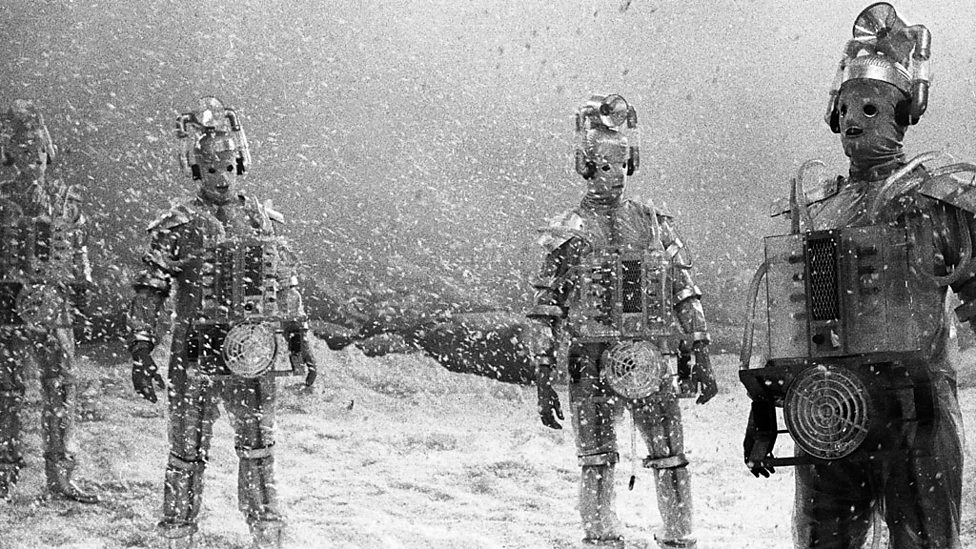
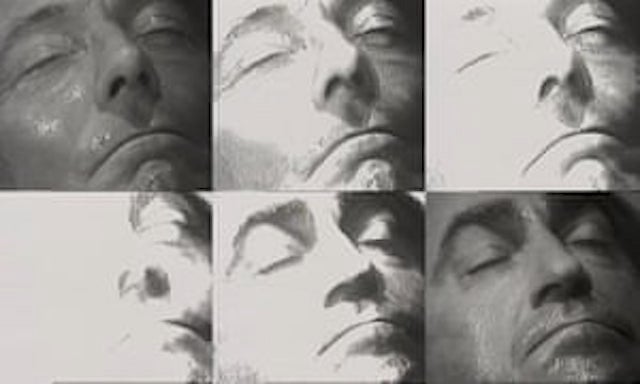
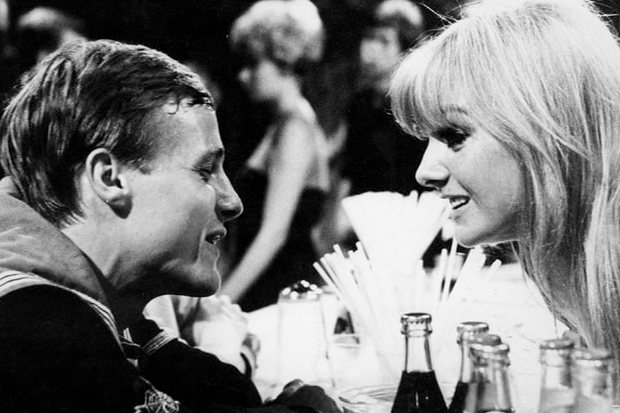
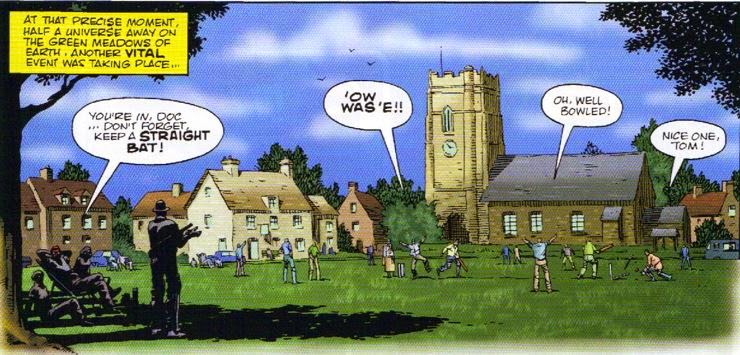


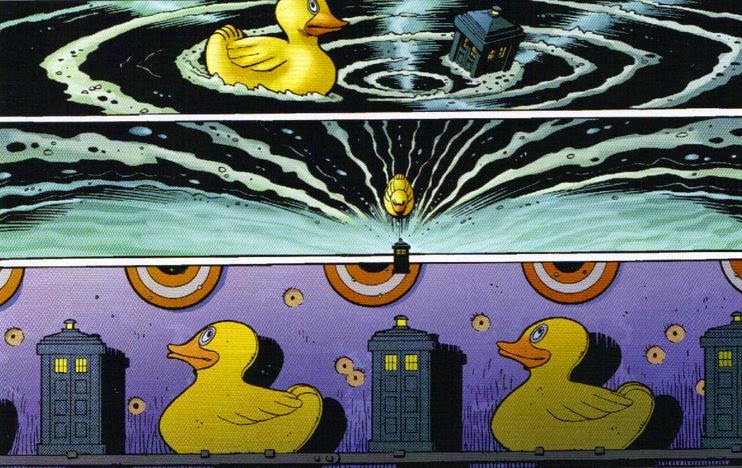


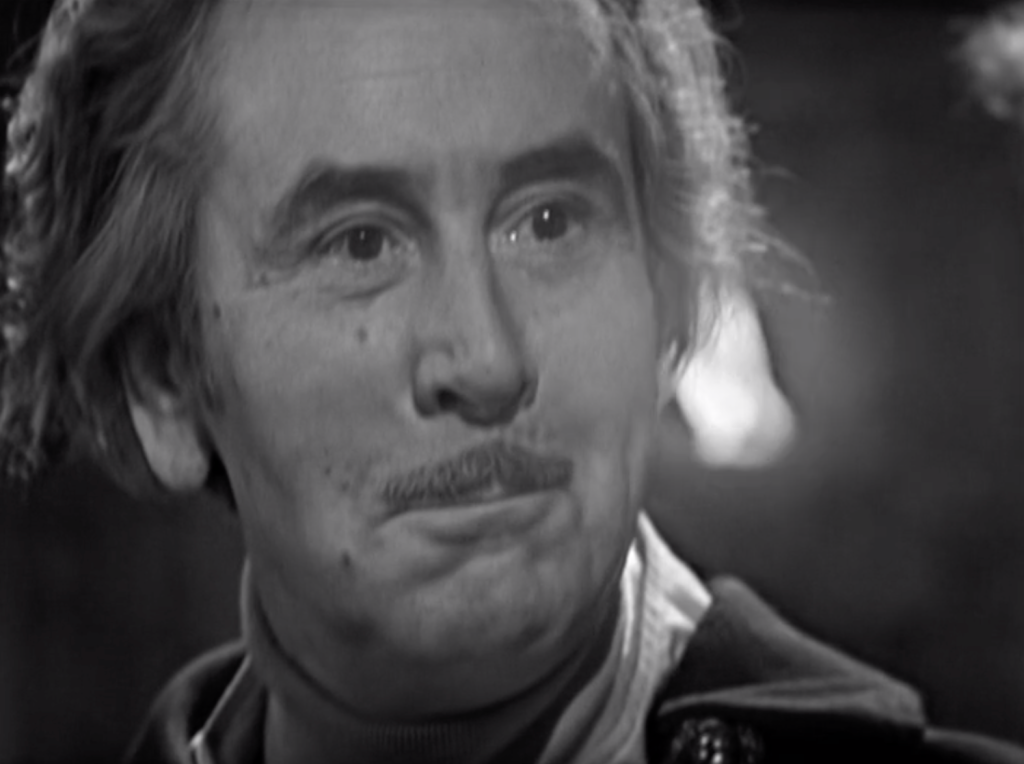
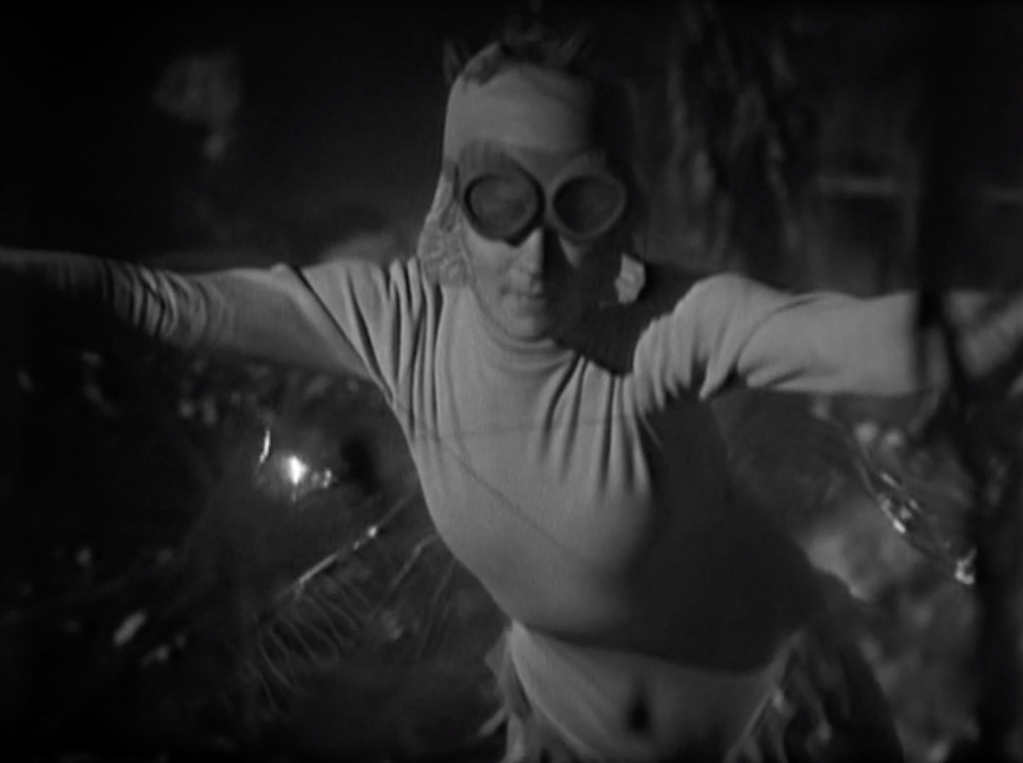
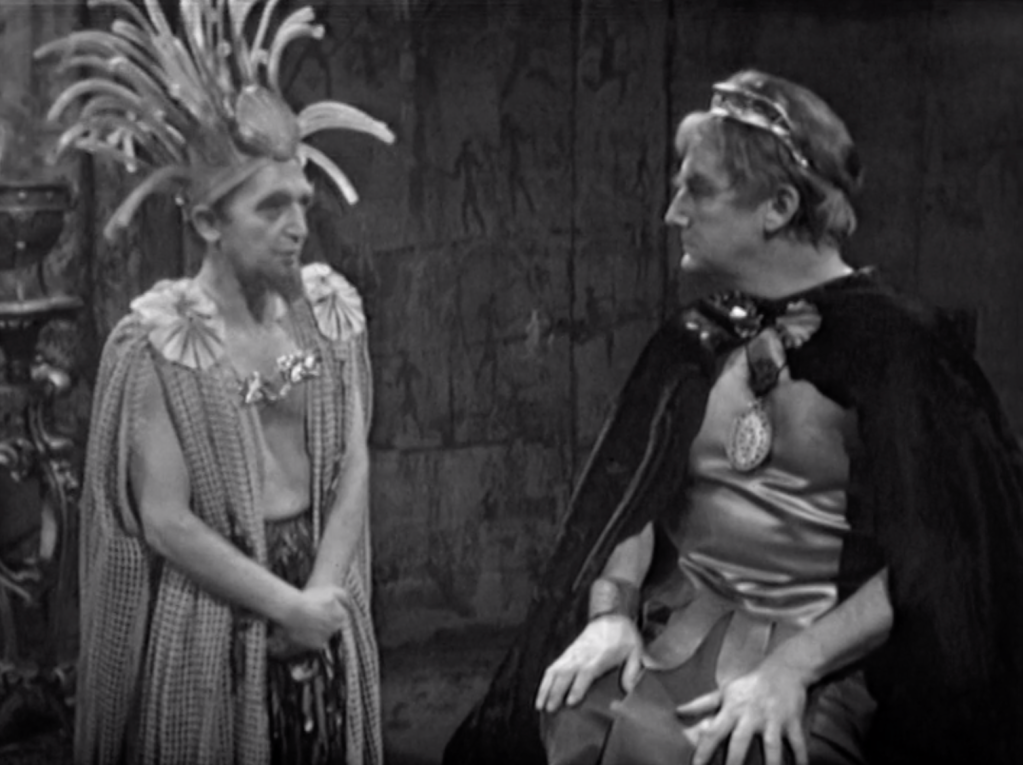
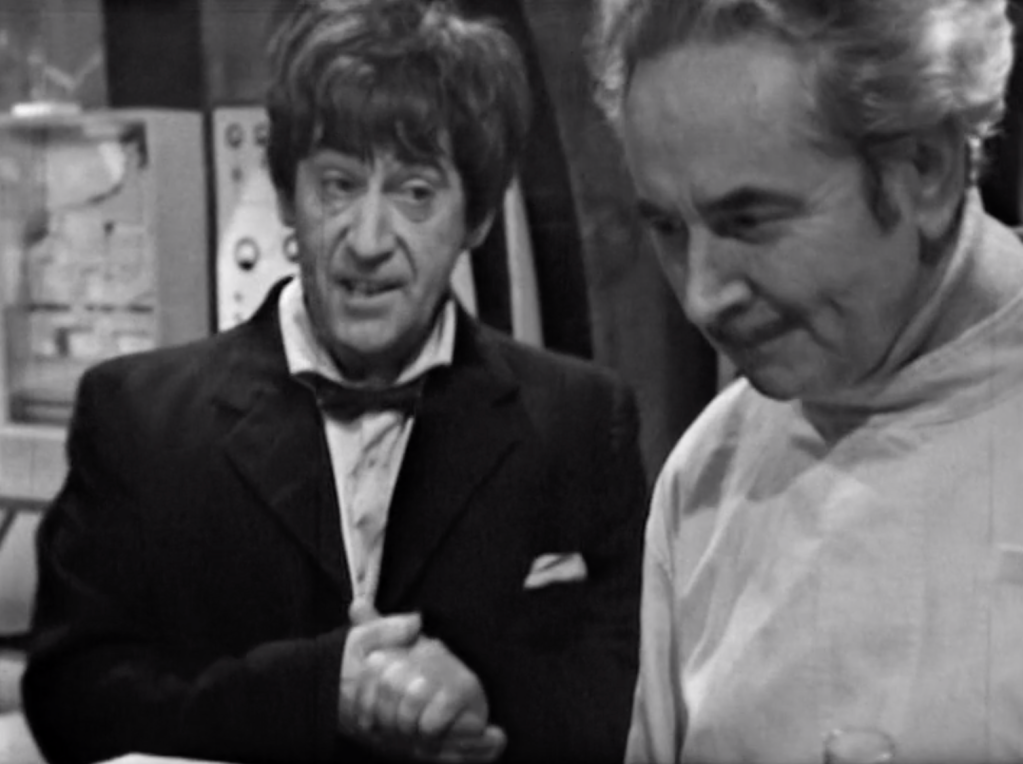
 A Journal of Impossible Things