So by 1989, ‘Doctor Who’ had died a slow death, more by a 1000 cuts and neglect from those in power than anything else. Those making the show had done their best to come up with original, distinctive stories in the face of indifference and neglect from those above. It couldn’t keep up though, despite all of their efforts the budget just wasn’t there to match the imaginations of the likes of Cartmel, Aaronovich, Briggs and Platt. So the show ended up sometimes looking like a corporate training video. That’s sad, it doesn’t lessen the stories in my eyes, but it is a difficult sell to an audience with changing expectations. We were about to get Star Trek: Next Generation, X-Files and Buffy – well I wasn’t, I don’t much care for any of them, but the point is what was expected of sci-fi/fantasy drama in terms of production values was about to change seismically – a change culminating in the TV Movie.
In this time period – between Survival and Rose (about 15-16 years), British home grown fantasy and sci-fi TV production must have been at an all time low – all I can remember is Neil Gaiman’s ‘Neverwhere’, ‘Invasion:Earth’ and ‘Gormenghast’. Then slightly related series like ‘Ultraviolet’, ‘Spooks’, ‘Bugs’, ‘Crime Traveller’, ‘Jonathon Creek’, ‘Strange‘ and the remake of ‘Randall and Hopkirk Deceased‘. All very earthbound, mostly short-lived, some good, some not so good.
Doctor Who’s Next Generation was actually waiting to batter the doors down, about to infiltrate TV and was just having to bide their time. This was my generation (and the one slightly older) – they had grown up on Jon Pertwee and Tom Baker and Target Books, Terrance Dicks, Mac Hulke and Robert Holmes. Many were the right age to be inspired by Andrew Cartmel and his team and their attempts to further the mythology of the show and broaden its outlook. By 1991, hopes for a new series were fading, but their first vehicle for world domination was about to launch – The Virgin New Adventures. Virgin Publishing had acquired WH Allen (which owned Target) in 1989. Doctor Who was to form the bulk of its output (the rest was mostly erotica), as it acquired the licence to publish original Doctor Who stories after all of the TV stories had been novelised.
The idea was that this would be the official continuation of Doctor Who if the BBC didn’t want to make it. The editor was Peter Darvill-Evans – the brief he gave to the new writers – to create ‘stories too broad and deep for the small screen’ – encouraging and fostering new talent was also part of that brief. The writers were encouraged to collaborate with each other – technology was about to make that much easier. The range launched in June 1991 with John Peel’s first instalment of the Timewyrm 4 part story arc – Timewyrm:Genesis, the arc included a story written by Terrance Dicks and ended with the first published work by Paul Cornell Timewyrm:Revelation. It ended (at least for Doctor Who)with the publication of ‘The Dying Days‘ by Lance Parkin in 1997 just after the TV movie aired.
In June 1991 I was far away and so was ‘Doctor Who’. I was in Australia, I’d worked for a while, saved up some money and set off around the world, ‘Doctor Who’ was a million miles away from me and my thoughts – I was sat on a beach in Queensland listening to Nirvana and Sonic Youth. I travelled right around the world that year starting from Greenwich, through Asia, Australia and New Zealand and back through the US and Canada. Without any of the connectivity of today, but I did have a couple of books, a Walkman, about 6 tapes, a packet of 3 and a spirit of adventure – a whole new world to discover. So I suppose in that sense, some piece of the Doctor was still with me,
Anyway, back to the matter in hand – the New Adventures. Mostly when I write about Doctor Who, I write from a position of either having lived through it or at least having had years of accumulated knowledge via the Target Books, VHS, DVD’s, audios, documentaries, books and likes of Andrew Pixley’s archives. Sure, there are others who know a lot more that I do, but I do feel like I understand it – it is part of me – all that useless knowledge. So even those stories transmitted in the years before I was born I feel I know pretty well, they’ve been in there since the ‘Making of Doctor Who’ in some form or other in my brain. Even the stuff I’ve seen least, I’ve seen at least 5 times probably more. The missing episodes, well I’ve heard every audio many, times. Big Finish, well I’ve been there from the start, I have gaps – how could anyone not have there is so much, but I feel I know my way around the range pretty well.
However there is one strand of Doctor Who where I get to feel like a new viewer coming into the series with a whole new world to discover – a bit perplexed and not knowing where to start and that is the New Adventures. A bit like the Ninth Doctors advice about visiting Paris (‘You can’t just read the guide book, you’ve got to throw yourself in. Eat the food, use the wrong verbs, get charged double and end up kissing complete strangers.’), you just need to just dive in and get lost. That is the feeling I had when sometime in the aftermath of the TV Movie I picked up some of the Virgin New Adventures in a second hand book shop in Hay-on-Wye (the place in Britain for second hand books) in the late 90’s/early 2000’s. I first bought ‘Love and War’, ‘Human Nature’, ‘The Left-handed Hummingbird’, ‘The All Consuming Fire’, ‘Bloodheat’ and ‘Nightshade’. It turned out to be a very good choice – they are all stories that I really like. I picked up most of them over the years and it is remarkable how astute that original choice was, given my knowledge of the range was virtually nil. Rather like when as a 7 year-old I looked along a shelf of Target Books in a bookshop in Liverpool and selected ‘Web of Fear’ to be the first book I ever bought.
It is a great feeling having a whole new world to explore, not knowing which stories are supposed to be good and which ones you aren’t supposed to like. Not knowing who anybody is, how the continuity works, how all of the pieces fit together. It does mean that even years later I don’t think that I have the expertise to sum up this era of Doctor Who – I haven’t even read all of them, I know which writers that I mostly like, but I have only a sketchiest idea of the discussions and battles and backgrounds to all of these. Even the season of the TV programme that I’ve watched least (at a guess 23), I could talk about with some degree of authority and tell you what I thought about it. This range well I don’t think I can. I like some of them and don’t like some of the others – normally those that wandered just a bit too far to actually seem like Doctor Who any more. Which is fine, it is part of the aim of the range along with fostering new talent On the other hand they really did stretch what was possible in Doctor Who (love and death and sex and drinking and drugs and all of that emotional stuff) and the new series reaped some of the dividends of that.
Each spring or summer I like to read one or two of the books sat in the garden. I can’t say I fully understand all of the complexities and continuity of the range and do not profess to be any sort of expert on Looms and ‘The Other’, puterspace, Kadiatu Lethbridge-Stewart, Adjudicators and all of that stuff. So I’ll just have to do my best. There are even stories featuring a literal depictions of death personified as a being or entity – Timewyrm:Revelation for example. However all of that ‘Times Champion’ stuff, Death and Pain and Time, the eternals etc. doesn’t do much for me. So instead I’ve picked few that I find interesting and in particular those that I feel influenced the direction of the new series, when the show came back.
So let’s set our clocks back to the 90’s, on the cusp of a new world of email, message boards, AOL, PC’s and mobile phones. To a time when virtual reality was a new, cool idea. The soundtrack to this part of the thread should be some brilliant early 90’s Indie music (there’s lots to chose from – I’d suggest ‘Loveless’ to start with) and possibly that strange screeching (wheezing/groaning?) sound that a modem made as it connected you across the phone line.
‘A town is full of buildings – some tall, some short, some wide, some narrow. The buildings are flats and houses and factories and shops … do you live in a town?’
‘Mary, Mungo and Midge live in a tall block of flats – right at the top, in the flat with the flowers growing in a window box. They have a large sunny room to play in…’
When the universe was less than half its present size or rather just felt that way, there was a BBC Children’s programme called ‘Mary, Mungo and Midge’ about a young girl, her dog and a mouse living in a tower block. Back then my family lived in a semi on a housing estate built for working class people moving out of inner-city Liverpool. I grew up surrounded by the families of electricians, plumbers and welders – no one was well off, but it was all nice enough. ‘Mary, Mungo and Midge’ however offered the gleaming tower block and the excitement of going up and down all day in a lift, all of which seemed impossibly glamorous at the time. The programme was made at the tail end of the 60’s and represented the optimism of the decade and post-war housing policy. In fact it was almost propaganda for government housing policy for children – ‘Build high for happiness‘.
A Design for Life
It was the gleaming concrete of modern, brutalist, concrete towers, le Corbusier’s dream – ‘Towards an Architecture’ made real. People, my family included were being moved en masse from the communities based around terraced ‘slum’ housing, often damp, cramped houses without indoor toilets or anything in way of the modern facilities. Places where the large working class extended families of the 20’s and 30’s (my grandparents included) had had to sleep 6 children in one bed, tin baths once a week, back yards to run the gauntlet of in the middle of the night just to get to the toilet. By the 40’s and 50’s these had been raised to the ground, first by the Luftwaffe and then by the much-feared town planners. In contrast, the optimistic concrete vision of the future was open and light, airy and modern – ‘Machines for living in’ and set against green fields. They looked great in artists impressions. Even then though, the cracks in the white concrete were beginning to show.
There are two British TV shows that highlight this time perfectly for me – the first ‘Our Friends in the North’ shows the corruption and mismanagement of the housing projects and the direct impact on those living in the conditions that resulted from that. If you haven’t seen it, well it’s a hard watch sometimes, but it is an amazing piece of work – the story of our lives in Britain from the 60s to the 2000s, my family and others in the post-war era – the story of what went wrong. The ‘bent’ housing developer was something very familiar in the North West of England where I grew up – one even went as far as to use the waste dug up from his latest housing development to build a dry ski slope, funded by the council, only one problem it was allegedly constructed facing the wrong way – directly onto the motorway – an unpleasant end for any unsuspecting skier. Unsurprisingly it never opened, the surface started to break up and there were fears it would collapse onto the motorway anyway – not even 1970’s planners were that insane.
The other programme is ‘Whatever Happened to the Likely Lads’ – a comedy by Clement and Le Frenais, dealing with the social changes in the late 60’s and early 70’s. One half of the duo (the aspirational Bob) embracing change and moving to the Elm Lodge Housing estate, slightly more upmarket than where my family moved to, but pretty recognizable none the less, the other (Terry) stuck in the past mourning the terrace houses, old pubs and dance halls being pulled down and replaced by concrete towers. The sitcom also shows the move from the large extended families of the old working class communities towards the more middle-class ‘nuclear family’ and the ensuing loss of social cohesion.
By 1987 when ‘Paradise Towers’ was transmitted, the wheels had well and truly come off. A few miles (might as well have been a million) away from where I grew up, was an estate of tower blocks, which by this time had percentage unemployment rates over 50%, youth unemployment over 80%. People had been forcibly moved out from Liverpool and dumped somewhere with nothing to do and not much in the way of transport links – no thought had been given to anything other than the blocks themselves. And by the 1980’s the accommodation itself was falling apart, graffitied and vandalized and heroin was rife, resulting in dealing and crime. In amongst it all though, there were good people. I don’t want to name the estate, as I’m an outsider looking in and have no first-hand knowledge – but good people also came from there, better than the ones running the country at the time – or now for that matter. They talk fondly about it and a recent documentary on the area provoked a real backlash from residents talking about the community spirit and the good things about growing up there. So, as ever, things aren’t simply black and white.
When J.G Ballard wrote ‘High Rise’, the source text for ‘Paradise Towers’ in the mid 70’s, a series of scandals had already broken. He knew a couple of the key ‘New Brutalist’ architects. Another inspiration was Erno Goldfinger, who like Anthony Royal the architect in ‘High Rise’, briefly moved into the apartment on the top floor of Balfron Tower in the East End and threw parties at the top of the tower. Ballard’s work though comes from a different place than the social housing projects and belongs more in the gleaming world of 80’s Docklands redevelopment. In the real world the opportunity that the horrors of war had given the country to transform the lives of its people had been well and truly squandered. The depredation of one type of neglected housing was replaced by another, but one where too often the sense of community and extended family had been broken as well. One by one the towers started to come down. Years later, in 2017 the blackened remains of Grenfell Tower in West London shows the world that those lessons still have yet to be properly learned.
All of which has neatly put off having to talk about Paradise Towers…
Paradise Lost
I’ve been thinking about this for a while now. How best to write this? I generally have a positive attitude to most of ‘Doctor Who’ – there isn’t much of it that I don’t like or can at least find some good in. The show is something that I love and cherish – I don’t especially like criticising it. Also, I don’t like to piss on other people’s chips – it isn’t nice having someone say how terrible something you love is. Why would I deliberately crush the cherished childhood moments of others, the thing that made them fall in love with the show in the first place? Also, why would I waste my time writing about something that I don’t love? Another factor is that when it comes to Doctor Who I’m also a trier. I don’t consciously give up on something, especially something that some other people seem to like. I periodically re-watch ‘Twin Dilemma’ or ‘Timelash’ or ‘Time and the Rani’, hoping to get something new out of them. I haven’t yet, but it hasn’t stopped me until now. I’ve seen all of these quite a few times now and it is time for me to admit that for me there isn’t really anything more to find, I just don’t think they are that good. If other people like them good for them – they win. That’s my loss.
I also like to talk about stories from a personal perspective, but here that presents a problem. Between seasons 23 and 24, I barely watched the show and I couldn’t really tell you what I saw live and what I didn’t watch at all. It is all a bit of a blank. I do know I saw enough of ‘Time and the Rani’ to decide that it wasn’t for me. Beyond that I know I recorded ‘Remembrance’, ‘Fenric’ and ‘Ghost Light’ and mostly liked them. So, I have no stories to tell, just a space when I was doing the things I was supposed to be doing while I was a student.
Anyway, my theory is that I can routinely overlook failings in the show – how could you not – it was made cheaply and quickly and the same manner as soaps and sitcoms. When it works really well, it is because of the great imagination and refusal of individuals to allow these circumstances to stop them delivering the best results they can. It is a testament to the professionalism of the people working on the show and at the BBC at the time and it is frankly amazing that we have so many great or good stories, not that some fail. The show was mostly made with love and anyone who watches archive British TV should know how well the show stands up against other TV of that time across a range of measures.
Having said that, almost all stories have faults – for example great direction really stands out by exception across the 60’s, 70’s and 80’s, but the things that are ‘cheap’ to do well – acting, script, costume etc. generally make up for other production weaknesses. When a story completely fails, for me it is not because of one aspect of the production, but more because multiple aspects fail at the same time – script, acting, design, effects, direction. I can overlook multiple failings, it isn’t ideal, but when almost every aspect fails – then we are into bottom 10 territory. We may not agree on the list of those stories on this section of the forum – but taking the pulse of fandom, via surveys and polls, the usual suspects are ‘Time and the Rani, ‘Twin Dilemma’, ‘Timelash’ and the like. This story I would say while it polls very poorly, also divides opinion and has its strong advocates, I’m just not one of them.
Anyway, ‘Paradise Towers’, I’m struggling with this one to think of a single aspect of the production that is adequate. It is pretty poor television – something that ‘Doctor Who’, on death row at this point really couldn’t afford. However, I am reviewing it here for a reason, partially because aspects of it fit the theme of the thread – but also because something about it just intrigues me. I struggled for a long time trying to work out what that was, but now I think I’ve nailed it – is trying to make ‘High Rise’ for kids a terrible idea or the work of a twisted genius? I had a hard time deciding, so once the review is out of the way, I’ll concentrate on that aspect of the story because that is what interests me about it.
So, my original thinking behind this was that possession or body horror is typically played to be psychologically disturbing and horrific, but occasionally it can also be played for laughs. In my wisdom I thought that I would cover ‘Paradise Towers’ at this stage, after a few stories that I really like, to highlight this. On watching the story again though, I realised that this wasn’t the aspect of change or transformation in the story that interested me and I had really nothing interesting at all to say about it, only negative comments. The change that is interesting unfortunately we don’t even get to see – more of that later. Another factor in covering this one is that I am aware of my threads, is that since I chose which stories to cover across TV, audio, books and comics, that can lead me to just chose stories that I like or interest me. That isn’t entirely a healthy situation, so I thought covering one that I don’t think much of, but which has aspects that still intrigue me, would be an interesting thing to do. In retrospect I’m not so sure about that now – you tell me. I think that I would always prefer to post out of love, I’d rather read a review from someone who loves ‘Paradise Towers’ and articulates why I should love it too, than one that just trots out all the things that are crap about it.
Acting up…
Talking of which, let’s start with acting – something that most ‘Doctor Who’ stories do pretty well on, the odd performance aside. The guest cast here are universally poor. This applies to even decent actors who I respect like Clive Merrison, who isn’t great – his performance though feels like a reaction to the ‘size’ of the chief culprit in this story – more of that in a minute. The Kangs are BBC posh drama school students cast as feral street kids – the BBC really doesn’t do ‘street’ that well at this point in time, nobody is terrible or all that good either. I won’t go on, I’ll concentrate on the worst offender, who is without shadow of a doubt Richard Briers.
I have no problem with a ‘Doctor Who’ performance with some ‘size’ and after his performance as Martin Bryce in ‘Ever Decreasing Circles’ the casting actually makes sense, but his performance is so bad – both before and after his possession that it is embarrassing that he was paid for it. I actually feel annoyed that any of my licence fee or royalties from my VHS or DVD purchases went to him. I’ve seen him on stage, doing good, subtle work and that makes me even more annoyed – he isn’t just someone who can’t really act or aren’t actors like Leee John, who at least are trying their best, Briers made a decision to play the part this way – even going so far to ignore the edict of the producer and director. Even worse is his performance after being possessed by Kroagnon – which he plays like someone who simultaneously has ¤¤¤¤ his pants and has problems pumping blood to the important parts of his brain. Meanwhile some hopeless, time serving berk has painted his face silver – he’s like a robot you see… It is an awful, embarrassing performance and I honestly think JNT should have just sacked him, maybe if he wasn’t a star turn at the time, guaranteeing some publicity, he would have.
Normally in a Doctor Who story at least the regulars or at least one of the regulars is decent. I can only think of a handful of times where that isn’t true. Here though – well Sylvester is still at the stage where he isn’t really an actor, more someone learning on the job. At this point he is a children’s entertainer who someone has given one of TV’s leading acting jobs. And before I get lots of stick for this, I do actually like his Doctor and yes that approach can work – it just doesn’t at this stage for me, he improves as the season wears on and comes back stronger after the break after a bit of help and guidance from the script editor. There are glimmerings of what he might be capable of, but mostly he looks like someone floundering, without support or clear direction. Bonnie, is well Bonnie, she does that well, she’s slightly like an over-excited child after drinking too much tartrazine-infused orange drink, if you like that sort of thing, it isn’t really my thing and I just think it probably belongs in a West End musical rather than Doctor Who. And that is unfortunately where she has pitched her performance. More a matter of taste than any issue with Bonnie herself, I quite like her older performance as Mel in the Big Finish audios – but to my mind those aren’t that much like her efforts here.
Corridors of uncertainty
The overall production ranges from the poor to vaguely adequate. For example, the direction from Nick Mallett is perfunctory at best, amateurish at worst. The production design work doesn’t really work either. Aspects of it do, but each of the design teams work almost completely against each other. Mel’s horrible polka dot costume clashes completely against the chintz of the Rezzie’s apartment, which should be an oasis of bright kitsch in a dark world. As it is she simply out-chintz’s them. The cleaners don’t look like they are designed for or belong in this world. The world simply isn’t coherent, which is the sort of thing I would easily forgive if a lot of the other aspects of the production also weren’t so poor. Another example – the colour co-ordinated Kangs – matching hair colour and outfits – they are supposed to be feral street kids. Or poor, cheap production design – Kroagnon’s light bulbs for example.
So, the actors can’t act, the director can’t direct and it looks pretty bad. So, if the production is terrible what about the script. I had a theory that the script actually might be quite good. Well to strip the effects of the awful production, I decided to read Stephen Wyatt’s novelisation. Unfortunately, it wasn’t all that good either and it didn’t really help, I simply decided that I vaguely liked the idea, but not really any aspect of its execution.
Struggling for positives outside of the central concept, I quite liked the ending. Not in a sarcastic sort of way, just for some unfathomable reason I quite enjoyed watching the last episode. I can’t really articulate why, which isn’t helpful for this review. Don’t get me wrong I don’t think it is that good, but I think it might be possibly because the ending is ‘Who-ish’ and positive and whilst poor old Pex dies and is cowardly up until pretty much the end, he does get his redemptive moment.
Overall, it feels like a tentative step towards something new, but one that is hamstrung by the baggage of the recent past, BBC senior management that had stopped caring about the show and also a producer who whilst supporting and encouraging his new script editor maybe wasn’t ready for the show to be pushed too far in this new direction. I think an issue with it within the context of season 24 is that to do a story like ‘Paradise Towers’, off-beat, grotesque and absurd, well you need to earn the right first I think. That means getting the trust of the viewing public, get them to the point where they are willing to go with you. So, for example Russell T Davies waits until towards the end of series 2 to unleash ‘Love and Monsters’, by then the viewers trust him to deliver a show, they know even if they don’t like this week’s show, next week’s will probably be good. Here, this comes on the back of the hiatus, the Trial season and a pretty poor opening story for the new Doctor – if the team had hit the public with ‘Remembrance of the Daleks’ and other popular stories and then pulled ‘Paradise Towers’ out, then this might work better. As it is, the heightened, grotesque, absurd performances and theatrical set design probably just felt like ‘Doctor Who’ looking a bit cheap and the poor performances part of the myth of ‘rubbish acting’ and cardboard, wobbly sets.
So up next and in some senses another positive for this story, it made me read J.G.Ballard’s ‘High Rise’, which was an interesting experience and re-watch ‘Brazil’ which is superb. ‘High Rise’ is the source text for the piece and I am going to have a look at the relationship between the two stories. Maybe that is it – maybe the positive I am looking for in ‘Paradise Towers’ is that it inspired youngsters to read Ballard and watch ‘Brazil’ when they were older – who knows, I only have a sample size of one and I’d seen ‘Brazil’ before ‘Paradise Towers’ anyway. If it achieved that, well that is something worth celebrating.
Build high for happiness – ‘High Rise’ and ‘Paradise Towers’
So, I had one last theory about ‘Paradise Towers’ – that it was really good idea for a Doctor Who, just poorly executed. In some ways, season 24 isn’t the easiest of seasons to get anything done well in, new inexperienced script editor, tired producer who wants to leave, new young writers and directors, change of lead actor imposed in the team, no budget etc. The poor execution of things maybe isn’t all that surprising, it could have all been an injection of new drive, or just a lot of people without any experience fumbling about in the dark or more likely a bit of both.
To test that theory, I thought I would go back to the source material – ‘High Rise’ and see whether I thought that there was a good basis there for a ‘Doctor Who’ story. The novel and the film ‘Brazil’ had been the starting point of the conversation between Cartmel and Wyatt after all. I think when ‘Doctor Who’ works best with a clear source text, it often converts (or subverts) it into something overtly ’Whoish’ in the process – sometimes by adding a second or third ‘borrowed’ element or possibly for example by taking something supernatural and grounding it in a rational, scientific Who universe explanation. So, there is absolutely no reason per se why ‘Paradise Towers’ should slavishly adhere to its source (I don’t see how it could in his case anyway) and just be a junior lite version of ‘High Rise’. I think a more interesting examination is whether the things that make ‘High Rise’ tick are used well in ‘Paradise Towers’ and if they aren’t whether the story replaces them with something equally as interesting.
What I found when reading ‘High Rise’ was that almost everything I liked about it was missing from ‘Paradise Towers’. The transformation or change that is fascinating about the story isn’t the chief Caretaker being possessed by Kroagnon, but rather the transformation from the brave new world that the architect has designed into barbarism and social collapse. We don’t see that at all in ‘Paradise Towers’, it has already reached its end-state. We are given only a few clues to how it might have happened – as far as I can see an entire age class (caretakers aside although they are supposed to be old men, just the director seems to have forgotten/not given a ¤¤¤¤ about it) has been removed to go and fight in a war. In ‘High Rise’ the tiny annoyances and disputes that start the erosion, leading to full scale assault, rape, murder and eventually cannibalism IS the story. The story is about the problems of living in close proximity to so many other humans and having to get on with each other and share living and leisure space. I can understand that – confinement, without nature, surrounded by so many others would drive me insane. To the inhabitants of High Rise it is also attractive – they eventually stop going out to work because the barbarism is more fascinating than the order of their professional lives, they realise that there is yearning to strip away the veneer of civilisation. In ‘Paradise Towers’ we join the story after most of the interesting things have happened.
‘High Rise’ itself isn’t perfect, I actually think a weakness is that it finds itself with nowhere really left to go about three quarters of a way through, the ending is almost inevitable. The middle-class, well to do residents of the building, have descended down the path of human civilisation to clans based on groupings around the floors of the tower and finally to small, discrete family groups eking out an existence, basically living in caves. Human social evolution stripped away. Most of the interest is then over. There is no more horror left to mine – what is worse than murder, rape, cannibalism, incest and using human remains as art? There isn’t anything left in the tank, so it runs out of steam. The thing is ‘Doctor Who’ can’t show any of this – well we have murders by the cleaners and some comedy attempts at cannibalism, but a core part of the story cannot be addressed in a ‘Doctor Who’ on TV in 1987 context. It doesn’t have the time to depict the descent anyway – so all we have is a tower block gone wrong. And we don’t really know how or why.
I actually think that Ballard choosing a middle class, exclusive apartment block is very astute, it removes the story from its source inspiration and stops it being just another story of a working-class area gone bad. Instead it is about human nature, how thin the veneer of civilisation is and how close we all are to acting barbarically given the right stimuli. It is also about how this can sometimes be appealing – breaking free from all the restraints that civilisation creates that hold us back. The residents choose to stay throughout the madness of ‘High Rise’ – what is going on in the tower is more interesting than their middle class high-achieving lives outside. This also provides the opportunity for the black comedy of accountants, lecturers, journalists, physicians and airline pilots going off the rails and joyfully going primitive.
This makes the point that human nature is classless – in the camp in China where Ballard was imprisoned by the Japanese during the war, wealth and social status counted for nothing – the de-humanisation and humiliation applied equally to all – class was stripped away. I can’t see that ‘Paradise Towers’ has nothing to say about class, there are 3 divisions – Kangs, Caretakers and Rezzies, if anything it feels more about disaffected youth. However, this is the BBC in the 1980’s and it really doesn’t do that well – either in portrayal (everyone is a bit posh stage school) or by pursuing this angle with any sort of conviction. This is a lost opportunity really, especially given the state of things back in ’87 – but not that surprising given the politics surrounding the BBC at the time.
And that is the thing that beyond the execution issues, I don’t really know what “Paradise Towers’ is about. With many stories that wouldn’t be an issue – think of the stories with similar literary or film roots – they are just great action adventure stories, gleefully using source material with abandon – there are lots of examples across the years – at random mashing up ‘Thing from Another World’, ‘Day of the Triffids’, ‘Quatermass Experiment’ and ‘The Avengers’ to give us ‘Seeds of Doom’ – which isn’t about anything really – but I love it. So why does it matter for me with ‘Paradise Towers’ – it shouldn’t? Well, I think in this case given the context, it feels like it should have something to say, even in the lightest touch way, about society, about housing, about youth, about Thatcher’s Britain, about anything. Can someone tell me as to what it actually trying to say? The nearest it gets is a vague comment form the Doctor to Kroagnon:
‘Anyway, I’d heard so much about Paradise Towers I thought I’d come and take a look and, believe me, I’m very disappointed. It displays exactly what everyone says is your usual failure as an architect. Not making allowances for people.’
That last point is a valid critique of post-war housing policy, but it is thrown away – that should be the whole point and needed emphasising. Also we aren’t really shown in what way ‘Paradise Towers‘ has failed its occupants – just that it has. So, a children’s version of Ballard – yes I sort of get that – what is it about though? I also understand the limitations imposed by JNT, but why do this, if you can’t say anything useful? Also, regardless of personal preferences, many of those other stories are well written, acted and directed, but if as with ‘Paradise Towers’ you are going to do something really rather poorly, then you at least you’d better be about something, have interesting to say and have a good central idea at the core of things. At least then I could say, well the execution wasn’t great, but what a great set of ideas, in another season that would have been brilliant. I’m struggling slightly with that here – it needs far greater clarity than it displays – but there at least is a germ of decent, different idea in there – I’ll give it that, it is just underdeveloped.
So, ‘Doctor Who’ is generally pretty good when it takes source material as an inspiration and absorbs and transforms it. However here the original writer wrote that particular story for a specific set of reasons. In Ballard’s case the trigger of post-war housing, but really his experiences of being in a Japanese camp during the war, where he saw human beings stripped of all semblance of civilisation, really informs his work, an aspect that it is lost necessarily here. However, the inspiration of the 60’s/70’s housing policies still very much holds true in 1987, Britain was still reaping the ‘benefits’ of post-war housing policy. That sense of humanity being stripped away is lost, it is almost as if the trappings have been kept (the tower), a bit of cannibalism, a swimming pool, but the whole point has been lost in the process. So, here it isn’t telling the same story, which would be fine if it were transformed into something else equally as interesting, but more Doctor Who-ish. However, it isn’t for me, the world isn’t well enough defined, built or presented in ‘Paradise Towers’ and so it doesn’t really work.
Another example, something else that ‘High Rise’ does very well is have the tower block itself become a character in the story – it has a sense of place, but more than that is a really oppressive presence in the story. Ballard manages to convey the feeling of the weight of the building bearing down on its residents, particularly those on the lower floors. Not just the building itself, but the weight of humanity of all of the floors above – the ¤¤¤¤ and waste and rubbish all flowing downwards. The geography of the building is important in ‘High Rise’, the higher achievers are in the upper floors, closer to clear air and the roof garden, these residents have dogs and no children, in the lower floors live the families with children and others like air stewardesses, still middle class, but maybe not as wealthy or successful as the higher floors. At the top of the tower is the architect looking down on all he surveys – like Erno Goldfinger, in this Kroagnon is buried in the basement – which I guess sort of works in a creepy ‘Doctor Who’ sort of way – but again the class aspect is lost in this context.
So, in ‘High Rise‘ clusters of grievances start to grow around floors, those in the middle caught in the extremes of the upper and lower floors. Broken lifts, blocked rubbish chutes, dog ¤¤¤¤ in the stairways, bottles dropped from parties above– all the grievances of too many people living too close together – even in supposed luxury. Again, all of this is lost in ‘Paradise Towers’, it has no real sense of place at all, no geography, no thematic unity. Instead there are just really odd vestiges of ‘High Rise’. The most obvious being Mel’s sudden and rather odd obsession with swimming pools – if you don’t know ‘High Rise’ that is just a really strange aspect to the story. Now in ‘High Rise’ some of the pivotal moments are around the tower’s two swimming pools – the first death (a dog), the disputes of children’s access and access times and various assaults, murders and liaisons. The pools are a status symbol, of luxury – they are important in that self-contained world and are fought over. In ‘Paradise Towers’ Mel just randomly fancies a swim, even after she’s seen the state of the rest of the towers, it is just plain weird and another way in which the world built in the story just doesn’t quite work– it doesn’t even manage to be properly dysfunctional.
I used to think that ‘Doctor Who’ does ‘High Rise’ was an inspired idea, but poorly executed. Now I think I have refined that opinion, it might be a great ‘Doctor Who’ idea, but not necessarily for TV and especially not the ‘Doctor Who’ on TV in 1987. It would make a terrific Doctor Who comic strip (I’m thinking of the ‘End of the Line’ the Doctor Who Weekly strip) – a character like Pex works much better in that context as would the Kangs – stripped of their 80’s BBC does Yoof culture aspect. I could also see it working as a novel, maybe a New Adventure with the time to build up the social collapse, adding the back-story and maybe the ability to add some of the horror required from an enclosed situation where the population have descended into barbarism. Even just a more accomplished production would help, even if it had been made a year or two later it would probably have been more successful. As it is, for my money it just doesn’t really work. A shame really, I should love it.
Bureaucracy, the grotesque and absurdism, Brazil and ‘Paradise Towers’.
I once had a conversation about Industrial sociology with an ageing alcoholic, Marxist Scouse lecturer – think Ricky Tomlinson and you are half way there. He was nicotine-stained veteran of the strikes of the 60’s, 70’s and 80’s from the docks, to Ford at Halewood to the Miner’s strike. This was 1987 – the year that ‘Paradise Towers’ was broadcast. He was on his way out, he was getting on a bit, alcoholism wasn’t doing much for his career and his face just didn’t fit much any more. He bore the scars of too many battles lost and by that year (a bit like now in that respect), it felt like the war itself was lost. And worse of all, his hand shook with the telltale signs of the DT’s. I’ll always be grateful as he gave a list of books to read – all that I would ever need to read if I wanted to know about state and corporate bureaucracy – books to arm yourself with – lemon against the CS gas. Some, I’d already read some and some were already on the list for future reading – in the end I read all of them. I can’t remember them all now – but well they included the likes of ‘The Trial’, ‘Catch 22’, ‘1984’, ‘One Flew over the Cuckoo’s Nest’ – and films like ‘Brazil’, ‘Doctor Strangelove’ and some of the film versions of the books that I’ve already mentioned. Some I’d seen or read already, but some were new to me.
I don’t need to use a much bigger budget film to hammer the clearly much underfunded ‘Paradise `Towers’ – I mean that just isn’t fair. Any more than using Ballard and ‘High Rise’ to beat it with is either. However, it is an interesting comparison – like the book, it was a key influence on the story given by the author and script editor. And I really rather love it – it is one of my favourite films – so what is it that makes me love one and not especially the other? If nothing else it is interesting to look at roots of something and revisit the themes, writing and performance codes.
‘Paradise Towers’ in some respects, like ‘High Rise’ and ‘Brazil’ represents the dystopian future of the likes of 1984. Amongst the pick and mix of elements in the story, it also tries to incorporate state bureaucracy in the form the Caretaker’s and their slavish adherence to the rulebook, in spite of the absurdity and pointlessness of it all. However, rather like the story of the societal collapse within the tower block, it really fails to address this with any real conviction, much less so than one of its forebears in these respects – ‘The Sunmakers’ and also less successfully than Graeme Curry’s companion piece from the next season – ‘The Happiness Patrol’. To my mind that is a much more successful production (despite often looking just as cheap) and piece of story-telling, but in some ways because of that it is maybe less interesting to write about.
What we are left with in ‘Paradise Towers’ is dialogue like this example, which while fine, amounts to nothing much more than them tiresomely quoting the rulebook:
DOCTOR: You can’t condemn me without trial, without evidence, without proof. I mean, I don’t even know who this Great Architect is. CARETAKER: The three two seven appendix three subsection nine death, I think. DEPUTY: Three two. Very good, Chief. CARETAKER: Oh, that would happen just now. Yes? Oh dear, oh dear. Poor Caretaker number three four five stroke twelve subsection three. What, now? Yes, all right, all right, there’s no need to quote the rule book at me, Caretaker number five seven nine stroke fourteen subsection eight. I’ll come. DOCTOR: Anything the matter? CARETAKER: Nothing that isn’t under control, thank you, Great Architect. An unfortunate accident has happened to Caretaker number three four five. I am required by the rulebook to go and investigate. The three two seven appendix three subsection nine death will be postponed till I return. In the meantime, you will guard the Great Architect here with your lives. Understand? DEPUTY: Yes, Chief, no problem.
It quickly becomes quite tedious stuff and is very wearying after a while, with Briers in particular adopting a dreary monotone voice, redolent of TV jobsworths. Taking the already ‘Martin Bryce’ performance and dialling it up to eleven. I mean it does the job in the broadest sense, it is shorthand for ‘Little Hitler’. Really all that was needed was a heightened, more grotesque version of his character from ‘Ever Decreasing Circles’, not something off the scale – Briers is a decent comic actor – he should know how to pitch these things.
However, what it really lacks is a central thread of state bureaucracy that pulls this all together and drives the plot – the rulebook is just window dressing. While in ‘Brazil’ or some of the other texts I mentioned (‘Catch 22’ for example, ‘The Trial’ or even ‘One Flew Over..’) the bureaucracy drives the story and has consequences for the characters. In ‘Brazil’ an insect crawling on a typewriter causes the change of a name on an arrest order from Archibald Tuttle or Archibald Buttle. The terrorist plumber Tuttle (rather wonderfully Robert de Niro) is left to operate, whilst our hero (Jonathan Pryce) sees his neighbour arrested and killed. All of which results from a bureaucratic mistake and causes a chain of events that will eventually lead to the torture and lobotomisation of our hero. Something like that would work well in the context of this story, not as extreme, but something maybe as absurd – for example that the whole situation had been caused by an admin error – there was no war or maybe an inversion of the Golgafrincham B Ark plot in ‘Hitchhiker’s Guide‘ – the Caretakers have sent all of the useful people away so they can create their own bureaucratic paradise, free to be jobsworths pushing around the young and elderly – something useful to do with the bureaucracy and rulebook aspect of the piece, which would also beef up the premise of the malformed nature of the society of Paradise Towers.
Now Sylvester’s Doctor – like Troughton’s is almost the perfect figure to put in a rampant bureaucracy – to subvert and undermine it. At this stage he is an anarchic figure, similar to early Troughton. He should be like throwing a bomb into this world – similar to McMurphy in ‘One Flew Over..’. We do get a bit of that – but nowhere near enough, even a year later, a more confident McCoy and creative team would do that aspect better. It is almost there – the ingredients are all in place – but for me it isn’t sharply written enough or well enough played, at this point, his Doctor isn’t well enough formed or well enough played to carry this production. Conversely, his companion isn’t ‘normal’ enough to stand out in this world of grotesques, rather her performance and costume are just as heightened as the rest of the characters.
On that last point, the story also has the absurdist sense of grotesque that ‘Brazil’ has – the mother with her horrific plastic surgery, turning every younger and eventually acquiring a coterie of young male admirers. Then we have her even more grotesque friend who’s face starts to fall apart. These feel like they provide some of the inspiration to the rezzies, the chintzy cannibals of ‘Paradise Towers’. Whilst the state employed bureaucratic killers and torturers of ‘Brazil’ (Michael Palin and Bob Hoskins) clearly influence the Caretakers.
‘Brazil’, like ‘High Rise’ has a very well developed sense of place, the world fits, all the component parts feel part of the world – even though they range from the baroque plumbing of our heroes apartment or his office at work (tubes delivering paperwork) all the way to the swanky restaurants that his mother frequents. The performance, design and writing all complement each other and work together, which they never quite do in ‘Paradise Towers’.
Again, one is a major film, written by the likes of Tom Stoppard (a master of this sort of writing) and directed by Gilliam with a stellar cast and adequate funding. ‘Paradise Towers’ has none of these things going for it – although the cast list is pretty impressive for a TV show – but somehow that hasn’t stopped ‘Doctor Who’ before. My brain is capable of editing out those bits and subliminally replacing them with better effects etc. it is part of being a fan of ‘Classic Who’. No, for me it’s back to my view that to do this sort of thing successfully, the writing and performances need to be sharper and better pitched than on display here and convey a coherent world to set the grotesques in.
Overall, ‘Paradise Towers’ is a story that interests me greatly – largely thanks to its influences, but always disappoints me. This viewing just served to cement that view, much as I enjoyed writing about it.
‘The sound of trumpets echoed up the misty valley, a harsh challenge, unworldly and defiant. The possibility of fresh snow spiced the air. Leaning on his stick, the adventurer picked his way between the rocks and down the mountainside. His ship sat behind him, a black casket squat against the snow line. Again the clarion echoed out of the mist (elephant trumpets sound!), and then the adventurer saw the army, grey shapes emerging from the mist. Like an armoured serpent bristling with spears, riders and foot soldiers marching six abreast, and great alien beasts, ears flapping with wooden turrets on their backs, glinting with more weaponry.’
There are different ways to rebel, different ways to thumb your nose at the future that other people have mapped out for you and different ways to explore the universe. One way is to leave, get away and wander. Another is instead to become a writer of scientific and historical romances – An Adventure in Space and Time in fact – to wander a virtual universe from the comfort of home. A universe of the mind, where you could research the history of a planet like Earth and write stories of an adventurer who visits there to meet Hannibal Barca and his Carthaginian army on an alpine pass, but maybe, since you are he author of this world, you could just improve or embellish the story ever so slightly – for example to encompass talking Elephants…
So before there was a new series of Doctor Who, when the old one was 40 years young, there was an anniversary year that sometimes felt more like a wake. Mark Gattis spoke recently about going earlier that year to the Dapol exhibition in Llangollen, sitting in a slightly dilapidated Bessie and hearing a child asking what a Dalek was – and thinking that was that. Well it was at least until Friday, 26th September, 2003 when the BBC confirmed that the programme would be coming back. Filling the gap ably this year was Big Finish, who had first obtained the Doctor Who licence in 1999. 2003 had some great releases – ‘Jubilee’, ‘Omega, “Master’, ‘Davros’ and ‘Scherzo’, but also a highly anticipated, but ultimately disappointing anniversary release – ‘Zagreus’ following in the wake of ‘Neverland’ from the previous year – where the story of the Eighth Doctor and Charley Pollard came to what seemed like a shattering conclusion.
That year they decided in addition to their usual schedule to cast their own Doctor’s in a series of ‘Unbound’ plays. The series starts brilliantly (this story, ‘Sympathy for the Devil’, ‘Full Fathom Five’ and ‘Deadline’) and tails off alarmingly (‘He jests at scars’ and ‘Exile’ are both dreadful). The idea of the series is essentially a ‘what if?’ – in this case ‘what if the First Doctor never left Gallifrey’. The alternative first Doctor is played by the late, lamented Geoffrey Bayldon of Catweazle, the Crowman and Organon in Creature from the Pit. Long a fan favourite for the role and someone who apparently was in line for the part back in 1963 and turned it down – so the casting is a ‘what if?’ as well as the story. Despite being only being 40 back then he was used to playing old men – by the time ‘Auld Mortality’ was recorded he was already the perfect age for the First Doctor.
Adventures in Space and Time?
So for me the very essence of the Doctor is that he left Gallifrey to see the universe, to travel. I really don’t really need more than that, he felt stifled and limited by his home world and saw an opportunity in a rickety, wonderful old TARDIS to escape and see the wonders of the world outside of the capitol. That is actually good enough for me – I understand that, it appeals to wanderlust that I also have within me, that has taken me to some amazing places. The mystery, well I find that I actually don’t care too much about that. Lungbarrow does a decent enough job of showing the Doctor’s home and why he might want to escape it, so does Deadly Assassin – in fact every time we’ve seen Time Lords (since the Monk at least), you can see why he’d want to leave the boring bunch of stuffed shirts – whether they are like crappy sci-fi gods or like a cross between the old men of the Vatican, University of Oxford or Langley, Virginia. I understand wanting to see the universe, running away from responsibility and boredom – that will do for me. I’ve never understood the need for the mystery of the ‘Cartmel Masterplan’ (not that I actually mind it, I really don’t – it is at least interesting and “The Other’ is a satisfying and suitably complex version of ‘before the Doctor’) or all that guff about ‘The Hybrid’ or heaven forbid ‘Timeless Children‘. He left home to wander the universe and see it, The Master left to conquer it or watch it burn – there you go – works for me.
Anyway, where ‘Auld Mortality’ is very clever – is that in this alternative timeline the Doctor stays at home – but even then he still finds a way to explore the universe even when denied his exit, escaping the confinement of Time lord society in a different way. Although a reclusive writer living in rooms beneath the capitol, he uses a ‘possibility generator’ to explore alternative versions of events – walking into other worlds to research his books. ‘An adventure in possibility and imagination’ instead of ‘space and time’ Where Marc Platt is really, really clever here – is that the Doctor walks into what could have been one of his own adventures from the early 60’s – meeting Hannibal on an Alpine pass as he heads into Italy to attack Rome. He also adds the twist of the Doctor being able to use ‘artistic licence’ in this world – in some ways a critique of the lack of historical accuracy in fiction and Doctor Who. So the Gauls have the wrong hair colour, it snows too early in Hannibal’s trek and rather wonderfully his aide de camp and confidante is a talking elephant called Surus. I cannot tell you how much I love that – Surus is brilliant, he’s been with Hannibal since he was a youngster and has been by his side since then, like a gruff Sergeant Major mirroring Badger’s relationship with the Doctor.
The possibility tree
‘Look down there. Do you see the fires of the Aurora Temporalis? The anvils of heaven from where all time springs. And down there – the frost fairs of Ice Asgard, the Winter Star, where you can skate through the sky and carve sculptures in the clouds. And there, glittering torchlight on the canals of Venice – murder, intrigue and madrigals. Cities and jungles, alien kings and alien creatures, always darkness and light in perpetual battle. It draws you in – the possibilities blind you with diversity. Far safer to stay at home.’
‘There are other Gallifrey’s that I’ve seen too. Gallifrey’s where the rulers are as steeped in blood as we are steeped in .. dust. Where the world was cursed and the children died or sorcery ruled instead of science. But always, always Gallifrey watched, always did nothing while the universe burned.
And once like a mirror I thought I saw myself, spiralling between worlds in an old TARDIS, just as I had thought to do so long ago.Imagine that, but I can’t can I, they won’t let me?’
So, a lot of ‘Auld Mortality is about the choices we make, the alternatives and possibilities – not just for the Doctor, but also Susan and even Ordinal-general Quences (the Doctor’s dead relative from ‘Lungbarrow‘). There is a moment when the Doctor asks ‘supposing I had turned left, rather than right’ – sound familiar? This also bleeds into the world of Hannibal – in the scenes where he asks the Doctor’s advice on which one the 6 Alpine routes to take – each one potentially leading to victory or disaster. In the end Hannibal survives, but loses a lot of his army (14,000 men and half the battle elephants) in the crossing – blaming the author for these events and the choices made.
‘Another two star systems have fallen to the Thalek empire’
And it isn’t just Gallifrey were choices have been made and different routes taken. In this universe on Skaro it is the Thals instead of the Dals or Kaleds who have become ‘Thaleks’, without the Doctor they are creating their own empire and the Doctor regrets the fact the nobody has done anything about it. The universe still very much needs the Doctor.
More than just choices though – the story is about possibilities and imagination, the ability of a writer to create worlds and images and characters and stories. The author is the ‘possibility generator’ – the device at the heart of this story. There is a glorious moment when the Doctor realises that the black casket he thinks is a TARDIS is just an empty box – ‘ a literary conceit to get my adventurer from one place to another’. The author becomes aware of creating his own world and in thinking it through, transports himself and Susan from the Alps to his own scented Rose Garden – maybe where me meet the Doctor in the ‘Three Doctors and “Five Doctors’. Reality and imagination become blurred to the point that we often no longer know which are ‘real’ and which imagination or fiction– perhaps none of this is real.
What of the Doctor himself? Well Geoffrey Bayldon is superb. There are a few echoes of Hartnell – more so than either Richard Hurndall or David Bradley. He has the lightness of touch that Hartnell also had – we get the fussing and the indignation and the gleeful chuckling of delight at his own cleverness – for example when he first hears Surus speak having forgot that he’s written that. He is also his own character though – an insight into what Bayldon’s Doctor might have been like. The story also allows us some beautiful scenes between this Doctor and Susan. He hasn’t seen her since she was very young and he left and disowned his family and the house. She was the only family member that he really loved and saw potential in.
So although ‘Auld Mortality’ encompasses elements from Lungbarrow (Quences, Badger etc.), Susan is very definitely the Doctor’s granddaughter here – not ‘The Other’s’ – so it is even an alternative version of Lungbarrow. She forces her way into the possibility generator, into the Alpine pass, to speak with the Doctor and there is a beautifully played scene where she talks with the Doctor and explains he is now a great grandfather. This is echoed in a later play that I will hopefully cover soon. The Doctor explains that he wanted to take her away and had his eye on an old TARDIS to escape with, but realised he couldn’t – just lovely.
‘Robes of night that drink the light’
Ordinal-General Quences from ‘Lungbarrow’ is still hanging around like a bad smell, representing cloying, oppressive tradition and old Gallifrey. He is still a ghostly image of his long-dead self (Susan went to his interment in the family vault many years ago) and has transferred his mind into Badger (the servant he gave to the Doctor) rather than the matrix, to carry on influencing and trying to run the Doctor’s life from beyond the grave. He still regrets the loss of prodigy ‘The Doctor’ – the only family member with potential while he was alive, but the fact that it is Susan who is close to becoming President herself has passed him by – he realises that he backed the wrong horse all along. Quences is also the ‘Auld Mortality’ of the title – the shadowy Time Lord in the background in presidential inauguration ceremonies, tasked with reminding Presidents of their own mortality and frailty, such that they don’t get to big for their boots. In this guise, in his black robes – he is a direct representation of death and mortality. Darren Nesbitt is wonderful in this and a very apt link to the First Doctor via Tegana and ‘Marco Polo’ – a story that is echoed in the story via Hannibal’s journey towards Rome.
‘The possibilities are limitless’ or ‘An exciting adventure with the Thaleks’
Oh the ending – it is just wonderful. Reality and imagination become jumbled up and during Susan’s presidential investiture, Hannibal and his elephants, fresh from victories at Ticinus and Trebia rivers, gloriously invade the capitol! Surus slays Badger (pity I rather liked him) and Auld Mortality/Quences fades away – freeing the Doctor and Susan from his malign influence. The Doctor’s rooms (like Chronotis’s years later) are revealed to be the TARDIS that he was about to escape in before Quences stopped him – he has been there all this time, stopped at the very moment of his escape. Choices and possibilities again – now free of Quences, the Doctor can escape once more, Susan can too – she might go with him or stay as president – a touching goodbye before years of responsibility or the freedom of a whole universe to travel?
The end sequence where the Doctor sees all the possibilities stretching out before them is so beautifully evocative of Doctor Who in the early 60’s that it is very affecting. We have ‘a merry Othermas to all of you at home’ – I don’t need to explain that reference do I? Also ‘It was a foggy night on Barnes Common’ – where presumably Ian Chesterton has snagged his best sports jacket on his way to an interview at Donneby’s the rocket component company in Reigate (will be mentioned again soon)! I love this idea – where Doctor Who could be an eccentric British inventor from the 1960’s or the Third doctor could be living in a cottage and driving a car called Betsy or where Jo Grant joins him in a story called ‘The Doomsday Weapon’ or where the Doctor and Jamie meet walking scarecrows or Doctor Who travels with his grandchildren John and Gillian battling ‘The Trods’ or the Doctor travels with Sharon or Evelyn Smythe or Erimem or Charley Pollard or Izzy or Sir Justin. All of those possibilities…
‘Auld Mortality’ is a beautiful story – imaginative, lyrical, clever, moving and silly – Doctor Who really. It is beautifully acted by all concerned and a shout out for the sound design – the music is wonderful and the trumpeting of elephants that herald Hannibal’s army arriving is so evocative. The story strikes a chord with me right now – vanishing into world of fantasy and infinite possibilities with no responsibility is a tempting prospect. There is a line in ‘The Prisoner’ (‘Dance of the Dead’ – Mary Morris from Kinda is talking to No. 6) where No. 2 says ‘if you insist on living a dream you may be taken for mad.’, ‘I like my dream.’, ‘Then you are mad.’ Maybe it is time to travel for a while or maybe retire and keep bees or radio-tag sharks or maybe write my own scientific romances or not. Which way to turn, so many possibilities? Maybe while I think about it, I’ll have one more cup of tea and watch an episode of ‘City of Death’…
I’ll leave you with the ending as narrated by all the cast members in turn– showing all the infinite possibilities and alternatives. If you love the First Doctor in all his forms, I challenge you not to be moved:
‘And with the wheezing sound of an asthmatic elephant, the ship dissolved like vapour in the breeze. … The teachers stopped the car and the headlights lit the name on the gates – I.M.Foreman … Time opened like an eye to the departing ship, light surged around it as it cut a path through the void … It was a foggy night on Barnes Common … Then the Doctor saw the opposing Thalek Armies, silver against black, and the air between them was full of fire – “Annihilate! Annihilate! Annihilate!” … “Cigar, Doctor?”, “Not for me, thank you, Winston!” … and the ship was now disguised as an old tree stump, a golden minaret, a wardrobe, revolving doors, an ancient black sarcophagus … “and a Merry Othermas to all of you at home too!”
Goodnight all. Where to next? Maybe take the long way round, all those possibilities, we’ll see.
‘Yes, well, well, there was no such thing as, as socks or smartphones and badgers until there suddenly were. Besides, what else could they be? They’re not holograms, they’re not Flesh Avatars, they’re not Autons, they’re not digital copies bouncing around the Nethersphere. No, these people are literally, actually, dead. Wow. This is, it’s amazing! I’ve never actually met a proper ghost.’
‘Under the Lake‘ is a ghost story, but one shorn of its usual trappings. Rather than setting it in a haunted house, Toby Whithouse chose an underwater base (‘The Drum’) in a lake in Caithness. A lake next to the flooded remains of a recreation of a Soviet era Russian village, formerly used as a military training base. This makes for a distinctive setting – an oppressive underwater, algae mottled oil base, populated by an interesting mix characters. Add in a mysterious alien craft salvaged from the lakebed and crew members dying one by one and returning to haunt their remaining colleagues. Well it all feels instinctively like ‘classic’ ‘Doctor Who’.
Which is odd. as it is written by someone who is maybe not quite as immersed in this world as a lot of the other new series writers. Toby Whithouse though seems to get how to do Doctor Who in a remarkably consistent and successful way. He also seems to be able to adapt his style to the showrunner, several techniques deployed here are straight out the Steven Moffat playbook, whilst School Reunion fitted beautifully into RTD’s era. It is a story that delves into paradoxes and is split between past and ‘present’ time-zones (at least in the second episode Before the Flood) and has a mind-bending resolution that requires a flow chart to fully understand – sound familiar at all?
This is the heartland of Doctor Who, scary, funny, clever, a base under siege, possession, death. It is not quite in the very top rank of stories, but rather in that sweet spot that a lot of enjoyable Doctor Who occupies – well-made, well-written, mostly unfussy stuff. I’m not damning this with faint praise- I genuinely love these type of stories. Toby Whithouse is no stranger to this zone, I would say that most of his stories occupy this space and I’d argue that it is a pretty good place to be.
The cards. Ahem. I’m very sorry for your loss. I’ll do all I can to solve the death of your friend slash family member slash pet.
The other thing that Toby Whithouse is good at is sketching the regulars and their relationship to the world and characters he builds. Capaldi is now properly the Doctor, his spikiness and lack of social skills are nicely balanced with humour, he still needs to be reminded by Clara to use the cards to help with social niceties, but he is having fun and is at least likeable. He is still spectacularly rude, in the way that Pertwee was and very funny with it. However, he is no longer the arse that he sometimes was in season 8, something that I still can’t help thinking was mismanaged by all concerned. Here is is clever, wise, acerbic and well, quite lovable in his own gruff sort of way. He is. a brilliant Doctor by this point. If nothing else, his running style always makes me laugh. Clara is however heading slightly in the other direction, whilst mostly very appealing here, her recklessness has a big flashing light associated with it ‘Insert story arc here’. Their dynamic though works so much better and I actually enjoy spending time with them both again.
The other characters are an interesting bunch. Toby Whithouse has proved capable of writing interesting characters in an ensemble before, for example in the God Complex, particularly Rita, but also in his other series – No Angels and Being Human. Here we lose Moran and Pritchard (basically Burke from Aliens) early in the piece, but we still get O’Donnell (Morven Christie) who could have been annoying, essentially a Doctor/UNIT fan, but is very appealingly played, the bright but slightly forlorn Bennett (Arsher Ali) and finally Cass (Sophie Stone) and her signer Lunn (Zaqi Ismail). Cass is interesting in that she is a character who is deaf, in part this is treated as just a character who is very bright and in charge and who just happens to be deaf, but it is also used to provide the story a few effective and quite distinctive moments. The most obvious of these being the scene where the ghost of Moran follows her with the axe scraping along the ground, we hear it, but she is oblivious until the last minute. Her lip reading skills are used to decipher what the ghosts are saying, which proves crucial.
The cliffhanger to Under the Lake, I think genuinely deserves to be remembered amongst the greats – the ghost of the Doctor appearing through the gloom of the lake. To open the next episode with the Doctor giving a lecture to camera about the bootstrap paradox and the music of Beethoven is straight out of Steven Moffat’s toolkit. This works for me, as does the Doctor using the stasis chamber as a method of surviving the flood, bursting out later in the episode, back in the ‘present’. The sleight of hand and use of holograms again is a typical Moffat-style feint, from the same school as the Teselecta.
Anyway, ghosts, real? Really? Well not really as it turns out, it just makes a big show of that and then later mumbles something about electromagnetic stuff and transmitters by way of an explanation. Reminds me of some big tabloid headline that turns out to be complete guff and then a few weeks and a court order later they publish a retraction and apology at the bottom of page 17 in the small print. I am glad that there is an explanation here, but I am not sure that it all hangs together that well. The ghosts, creations of the Fisher King, a supposed corpse, although rumours of his death are maybe exaggerated, utter:
‘The dark. The sword. The forsaken. The temple’
Which is a very cryptic set of instructions for finding the Fisher King. Why not some galactic co-ordinates or something even vaguely useful? What of the symbols inside the spaceship (a hearse, piloted by a Tivolian undertaker) that set these events in motion? Turns out these are an ‘earworm’:
DOCTOR: Everything we see or experience shapes us in some way. But these words actually rewrite the synaptic connections in your brain. They literally change the way you are wired. Clara, why don’t I have a radio in the TARDIS? CLARA: You took it apart and used the pieces to make a clockwork squirrel. DOCTOR: And because whatever song I heard first thing in the morning, I was stuck with. Two weeks of Mysterious Girl by Peter Andre. I was begging for the brush of Death’s merciful hand. Don’t you see? These words are an earworm. A song you can’t stop humming, even after you die. CLARA: Okay, so, the spaceship lands here. The pilot leaves the writing on the wall so whoever sees it, when they die, they become a beacon of the coordinates, while he slash she slash it snoozes in the suspended-animation chamber DOCTOR: Waiting for his slash her slash its mates to pick the message up. My God. Every time I think it couldn’t get more extraordinary, it surprises me. It’s impossible. I hate it. It’s evil. It’s astonishing. I want to kiss it to death.
The ear worm is planted in the mind of the intended victims on reading them and when the die they become ‘ghosts’ – transmitters to send the distress signal back out to the stars, so that he can be rescued.
You robbed those people of their deaths, made them nothing more than a message in a bottle. You violated something more important than Time. You bent the rules of life and death. So I am putting things straight. Here, now, this is where your story ends.
The Fisher King himself is both successful and something a failure. He is genuinely creepy creation, massive in size, skeletal and spikey like a modern-day Koquillion, towering over Capaldi in their head to head scenes. Ultimately though we don’t get to know that much about him, possibly this is an attempt to make keep him as an enigmatic creation? I am assuming that this is deliberate approach, but if it isn’t there isn’t much excuse over two 45 minutes episodes. The final image of him standing in the soviet village looking up as the dam breaks and the water sweeps him away is really very striking though.
Lost in Translation
Amongst the running around, ghosts and paradoxes it deals with love and loss and grief. At first the crew’s loss of their friend Moran, made explicit when the Doctor is getting a bit carried away about the ghosts. Then Bennett’s loss of the woman that he loved, O’Donnell, but didn’t have the courage to tell until it was too late, staring forlornly at her eyeless ghost in the Faraday cage:
BENNETT: What do I do now? DOCTOR: I don’t understand. CLARA: I do. You keep going. You have to. Take it from me, there is a whole world out there. A galaxy, a life. What would O’Donnell have wanted?
Clara reflecting there on wisdom gained from her own grief and the loss of Danny. Finally we have Cass discovering via Bennett’s words and Lunn’s signing that her love for Lunn is reciprocated:
BENNETT: Lunn. Will you translate something to Cass for me? LUNN: Of course. BENNETT: Tell her that you’re in love with her and that you always have been. LUNN: What? BENNETT: Tell her there is no point wasting time because things happen and then it’s too late. Tell her I wish someone had given me that advice.
Her childlike look of joy when she realises and the way she almost jumps on him is really rather lovely and quite moving. It isn’t a big showy emotional moment, it is small and intimate, it isn’t needed, but adds another layer to this splendid story.
This is just very good Doctor Who – with a set of interesting characters, scary, thoughtful and intelligent. It is also slightly like pick and mix Doctor Who – base under siege, time paradox, ghost story. If not quite as good as something similar like the Waters of Mars, it isn’t too far off it and the excellent character work raises it above the norm.
We have the power to do anything we like. Absolute power over every particle in the universe. Everything that has ever existed or ever will exist. As from this moment are you listening to me, Romana?
My will to finish this review waned by the episode, so forgive this lacklustre half-hearted attempt – in some ways appropriate for a set of episodes that struggle painfully to reach episode 6 and the finishing line of ‘The Key to Time’ story. It isn’t the glorious finale that it really should be – more like watching an Olympic long-distance runner reaching the stadium, only to have their legs turn to spaghetti on the home strait.
To my mind, the best thing by far about ‘The Armageddon Factor’ unfortunately happens in the opening 2 minutes. We watch a film of the man leaving his wife to go to war for Atrios – perfectly stiff upper lip in a Noel Coward World War II propaganda film – ‘In Which We Serve’. All speeches and ‘I have to leave my dear’ against blue skies. This then switches – after a detour to a very tatty looking TARDIS console room that manages to look smaller on the inside – to a black and white screen of the film being played in a grimy, insanitary hospital wing being bombed. The propaganda fantasy and reality of war side by side. Which is then picked up later as the true parlous state of the Atrian war effort and home front becomes all too apparent.
It’s all downhill from here though. The money has run out, the script isn’t special enough to complete the ‘Key to Time’ season with the big bang it needs and well everyone seems to have run out of steam. The episode one cliffhanger is an exciting close up of some breeze block, which pretty much tells us the territory we are in at this point. Everyone seems a bit bored and there is nowhere near enough story to go around. Part the way through episode two, I thought how on earth are they going to pad this out to six episodes. And in truth, they don’t. The introduction of Drax is a blatant attempt to liven things up and drag the whole thing out a bit longer – it doesn’t work. The story also suffers from ‘Underworld’ syndrome where everything (deliberately) looks dreary, drab and a bit knackered, but there is nothing there to lift the thing. The change of location doesn’t help kick the story on – as there isn’t much to choose between Atrios, Zeos and the Shadow’s domain – they all look quite similar – a bit brown and grim and in my slightly bored daze around episode 3, I lost track where everyone was anyway.
To be fair, there are some interesting ideas about war, especially war by proxy and machine and mutually assured destruction – but really, I’m clutching at straws. The twin twists of Zeos being run by a computer and Astra as the final segment and the ensuing moral dilemma are nice ideas – although Kroll was a living thing and I don’t remember too many doubts about converting him to a chunk of quartz – just because he was green and massive and liked eating people doesn’t mean he was necessarily a bad squid. It is shame that this is the last hurrah for Bob baker and Dave Martin together – although without the steadying hand of Dicks or Holmes, it ends up full of their mad old nonsense ideas that hit the production office script bin in the glory days of the 70’s.
Whilst the script isn’t great, it is the production that really struggles to deliver. Kudos to the ‘Doctor Who’ production team for picking out Lalla Ward as potential companion material, as there is nothing much in her performance here to suggest that she would be suitable – she’s nice enough, but I suspect that she wouldn’t have entered the pantheon of ‘nearly companions’ we all feel the show missed out on. Even the usually splendid Mary Tamm looks like she’s already booked her holiday, picked out her summer reading list, packed her bags and is mentally on the beach already. I can’t say I blame her. John Woodvine is decent – he always is – but his weary performance as the Marshall adds to the lethargy and maybe an insane, over the top performance from an old ham like Crowden might have lifted things – I actually can’t believe I’m writing this as I tap away at the keyboard. Stop. Read it back. Yes, I actually did say that.
I had no idea what the actor playing The Shadow was trying to do, so I looked up who it was – and was surprised that it was William Squire – Hunter from the excellent ‘Callan’. He had a very respectable career – although I’m really not sure about what he does in this. He also married Juliet Harmer – the lovely Georgina Jones from ‘Adam Adamant Lives’ – so he did alright for himself. But here, skull mask and black tights over his head, well he isn’t quite the villain that the story needs. I did wonder if it might have been better to bring back Peter Pratt’s Master to give this whole thing a kick, as The Shadow really is third-rate fare. Finally, on the cast, I spent most of the story distracted, marvelling at the performance of Davyd Harries as Shapp, trying to remember what he reminded me of – and then it clicked – Terry Scott – he looks like he’s accidentally wandered of the set of ‘Terry and June’ and walked straight into the number 2 job in the Atrios war effort – no wonder they were ¤¤¤¤ed! The scene where he is shot in the transmat booth and falls on his back, legs in the air, gun erect is straight out of a low rent 70’s ITV sitcom. It really is piss poor.
And, so to the ending. Well Valentine Dyall turns up (sadly without a crow on his head) and booms a bit in negative, Tom goes a bit mad (well madder) and they split the segments up again – the cosmic rebalancing apparently done and Astra back in the arms of the earnestly dull Surgeon Marek. Although we don’t realise it, we say farewell to Mary Tamm, which is sad – especially in retrospect, but will at least pay off in the next season when Tom and Lalla hit it off. Rather like Caroline John, as a one season companion on TV, it was nice that Mary did another series for Big Finish with Tom and rather good she was too.
And so ‘The Key to Time’ ends – I really don’t care – I was never that interested or engaged with it as an arc. I suppose it was an attempt to do something different but as ever Bob Holmes was right. Overall, I’m left with the thought – is that it? Week after week of this stuff and that is it? Two themed seasons 16 and 23, united in failing to deliver on their original premise, no wonder such themed arcs were in short supply in the original run of the series. My take would be that it was difficult enough to deliver workable stories from 1963-1989 without trying to tie up some long-running overarching theme and that the production teams that tried to deliver both of these were probably some of the least equipped to do so. Dicks/Letts or Hinchcliffe/Holmes after 3 seasons under their belt might have made the concept of a linked season work, but perhaps they were too experienced not to realise what an albatross around the neck of the team they are.
Season 16 is a nice enough season, with some lovely ideas and a sometimes pleasing tonal shift to the fairy tale and more feminine, but it will never be amongst the top echelon for me. It suffers from some of the production issues that afflict seasons 15 and 17 (Shrivenzale, Taran Wood beast, cheap sets, the Kroll split screen effect etc.), although to my mind it looks better than those surrounding it. I know the budget was gone along with the stability of the British economy, but even given that, the Williams era often throws light on the production miracles that the Letts/Hinchcliffe eras managed to produce. What I will remember it for is the variation in story-telling and well the ambition it showed, often against all sense.
It was a world of water.Lagoons the size of seas covered most of its surface, so that the swampy, low-lying land masses were in constant danger of flooding. Water streamed from perpetually overcast grey skies, in rain showers which ranged from the mildest drizzles to torrential downpours. Even when it wasn’t raining, water seemed to hang in the air in an ever-present haze. It was no place for men—but men lived there all the same.
‘Progress is a very flexible word. It can mean just about anything you want it to mean.‘
‘Well, I’ve just done a routine scan of the bottom.‘
Ah ‘The Power of Kroll’ – a mixture of the ludicrous and the rather marvellous (at least for me). Where we realise that the cynicism of Robert Holmes, like many of us, is borne out of his idealism. Where our sympathies lie with the dispossessed, exploited and pushed about, when you realise that at heart he wasn’t that much different to Mac Hulke – both ultimately disliked authority and being told what to think – and my reading is that those that try to portray them as opposites are fundamentally wrong. Read the two Target novelisations of ‘Dinosaur Invasion’ and Dicks’ version of ‘Kroll’ and the references to ‘Red Indians’ are striking –
‘We shall found a settlement. We have seed, tools, and enough provisions to keep us going for a year. We’ll be like the Pilgrim Fathers who went to America.’
‘What about the present inhabitants of the planet? I don’t think the Red Indians liked the Pilgrim Fathers very much. Maybe these people won’t like us.’ ‘We shall treat them kindly and decently,’ Mark insisted. ‘We’ll guide them, and make sure they don’t make the same mistakes that were made on Earth.’
‘Originally, the Swampies had been the native inhabitants of Delta Magna itself. When swarms of colonising Earthmen had over-run their planet, the Swampies had been shipped off to one of its satellites. Delta Three was a desolate watery planetoid, then thought to be useless. The Swampies had been de-ported there, much as the Red Indians of Earth had been sent off to reservations in America. They had been promised that the little world should be theirs, and theirs alone. But the scientists on Delta Magna had found a use for Delta Three after all, and the Refinery had been set up. If it was successful, there would be more refineries and still more, until Delta Three was as industrialised as Delta Magna itself, and the Swampies would be homeless once again.’
I am guessing that this reflects the change in a generation who grew up with the version of the American West peddled by Westerns, changing to a more sympathetic view in the 1970s with the publication of books such as ‘Bury My Heart at Wounded Knee’ and films like ‘Little Big Man’. The treatment of Mensch also reflects British colonialism and the use of ‘natives’ as servants. The message of these might seem clumsy now – especially when the ‘natives’ are painted green (!), but do represent a pretty big about turn in the awareness of what had been done in the name of progress over last 200 years. I grew up with these messages, my father grew up with the westerns – cowboys good – Indians bad, that is progress of sorts.
Robert Holmes and the shopping list of doom..
Anyway, it is sad to think that ‘The Power of Kroll’ could have been the last story from the pen of Robert Holmes. If Eric Saward hadn’t been so persistent in convincing JNT to bring him back, persisting even after Bob pulled out of ‘The Six Doctors’ it would have been his epitaph on the show. On one hand I’m glad it wasn’t – we got ‘Caves of Androzani’ and I wouldn’t want to lose that, on the other hand ‘Mysterious Planet’ and the events surrounding it are a less fitting end – sadly both to Bob’s time on the show and his life. But something has always puzzled me about Robert Holmes and his relationship with the show – why people seemed to be obsessed with telling him what to write? To my mind, nobody writes ‘Doctor Who’, at least in the classic era, better than Robert Holmes, so each time this happens he is effectively being told what to write by lesser talents. Unless all of this is a back-handed compliment and they assume he can write anything so why not give him a shopping list, it doesn’t make much sense. He was the best writer the show had, all of the evidence points to him doing his best work when left to his own devices. It can’t be that difficult to grasp surely?
Bob, we need Five Doctors – or it might be 4, and loads of companions, but we don’t know which ones and we’ll keep changing them until the day we start shooting – and the Master, oh and Cybermen for Eric. Bob? Anyone got Uncle Terrence’s number?
Bob, we need a story set in New Orleans, two Doctors, the Sontarans, oh better make it Seville instead for no apparent reason.
Bob, can you write one that includes the Master, the Rani, the Autons and oh set it in Singapore? Oh, on second thoughts don’t bother we’ve been cancelled.
Bob, we need an opener for this great idea I have for a trial, you’ve got to make it funny, Grade really wants it to be funny – got that? Sorry Bob, can you make it less funny, Powell doesn’t want it to be funny. Bob, Bob are you still there?
Graham Williams and his big idea (part two)
Not content with his big idea about the guardians and the quest for the key to time. Graham has had another! This story starts it’s life like this:
GRAHAM/TONY: Bob, can you write us a story with the biggest monster in ‘Doctor Who’ history? BOB: For ¤¤¤¤s sake, are you really sure Graham, that sounds like a very bad idea to me? Are you sure you can make this? GRAHAM/TONY: Sure Bob, my crack design team, fresh from ‘Play School’ have told me it will be great, they’ll even throw in a countdown clock, roughly hacksawed out of some stock sci-fi flattage. Oh and some wobbly sets just so we can confirm that old bloody cliché that people will keep rolling out endlessly in 1990’s cheap ‘I love 1978’ type shows. BOB: Oh all right, I’ll do it if I have to, but can I make it fart a lot? Don’t worry I’ll cover it up in some scientific terms about methane.
Every producer seems to have this moment of madness and none of them quite seem to look at the past and learn this lesson – Verity and Vortis, Barry Letts and the dinosaurs, Philip Hinchliffe and the rat/loch ness monster, JNT with the Myrka and lots of other examples. It is all rather endearing really, Graham seems afflicted with this more than most – the big idea, with no budget and never really learning – it is as if the production team were memory wiped every year. One ting he isn’t lacking in is ambition and you have to admire that.
Despite all of that…
Anyway, despite all of that and someone on the production team deciding to paint the Swampies green (they aren’t in the script) and making the extras and a very put-upon John Abineri wear very short skirts, I actually quite like the ‘Power of Kroll’. I mean I wouldn’t want to watch it with anyone who doesn’t love this stuff, but to my mind at least there is actually a very capable script in the middle of all of this, despite it being Bob’s least favourite. On top of that the cast is really top notch – the aforementioned John Abineri, the always excellent Philip Madoc (who does look a bit miserable – almost as if he really wanted to be playing Thawn…) and Neil MacCarthy. The wetland setting is also pretty different for the show – it looks terrific. And then there is that nostalgia factor, which I can’t separate out when formulating my opinion of all of this.
Bob Holmes does effortlessly build a world again here, including an array of convincing neologisms (Baygule for example) and technical terms to describe it – as ever with his writing the detail just convinces you. In some ways, the script is actually fairly similar to ‘Caves of Androzani’ – corporate greed and exploitation of the by-product from a species (bat/squid) and hardened gun runners working for the other side than first appearances suggest. It doesn’t have a character as fascinating as Sharez Jek, but it does have the added dimension of the parallel to the treatment of first nations peoples in the Americas. The crew of the refinery reflect each view – hatred of the Swampies (Thawn), indifference (Fenner) and indignation at their treatment (Dugeen – representing the views of the ‘Sons of Earth’ pressure group – including environmentalism and the treatment of the Swampies). The character of Mensch allows us to see how they are treated first hand:
DOCTOR: And just the six of you here? THAWN: No, five. DOCTOR: Oh no, I make it six. One, two, three THAWN: Oh, you’re counting Mensch. He’s a Swampie. DOCTOR: Doesn’t he count? THAWN: No. DOCTOR: Ah . Why are his friends attacking you? THAWN: Because they’re ignorant savages. DUGEEN: They were the first on Delta Magna. FENNER: I don’t think we owe them very much for that. DUGEEN: We took their planet. Now they’re afraid we’ll take what they’ve got left. FENNER: You know there are times, Dugeen, that I think the Sons of Earth have got at you. HARG: Two minutes to shot. DUGEEN: When we put ten full scale refineries in here, there’ll be no room for the natives and they know it.
Just what kind of squid is Kroll anyway?
And well onto Kroll. For a start, he doesn’t look or behave much like any squid species I know – and I’ve spent a long-time contemplating squid. I have entire books on squid here in my library of natural history books (library might be a bit grand – it’s a set of shelves in the entrance to the cottage and an armchair for reading them whilst having a snifter!). Anyway, cephalopods fascinate me, partly because they are intelligent in an almost alien way and some species bio-luminesce in quite beautiful ways – I remember Richard Dawkins talking in ‘Un-weaving the Rainbow’ about how similar the cells are to pixels and potentially being able to play moving pictures on their skin with correct stimuli. They are also prey for quite my favourite animal species – Sperm Whales and the species of Beaked Whales. Both are deep diving species – they travel kilometres down into deep sea canyons and slopes of sea mounts hunting squid.
I’ve also spent a fair bit of time down in the Sea of Cortez and have a number of times encountered the frankly terrifying Humboldt Squid. In one encounter with them, a large group were at the surface in daylight, savagely hooked orange tentacles flailing in a huge pulsating mass. One of the oddest natural spectacles I have ever seen – quite alien looking. The theory is that they are moving range north with warming and to occupy the ecological niche being left vacant by the mass removal of shark species in the Pacific for the Chinese shark-fin market. They sometimes attack en-masse and in a frenzy, divers who work with them have to wear chainmail. So, squid can be really scary. Just that Kroll doesn’t look much like a squid (the body plan and mantle are completely different) or act much like one either – he is an alien, mutant squid I suppose – he actually he looks like a giant green celeriac with tentacles. But he must be massively mutated, as after his conversion back to the segment, what is left over are lots of much smaller squid, that look like Earth species and are no longer ‘Sci-fi monster green’ (I’d love that to be on a colour swatch of paint from B&Q). Knowing the luck of the swampies – someone on Delta Magna is probably planning a calamari fishery…
What Kroll does do, is to tap into a mythological and literary tradition of giant squid or octopi menacing mariners from the legend of the Kraken, through Jules Verne to the Ray Harryhausen variety that used to pop up to attack the likes of Doug MacClure in the films of my youth. Kroll, well I do actually find him rather scary, the model itself is actually pretty good (is that just me?), OK I know the CSO is rubbish and that horizon line is horrible and the wobbly methane refinery model is equally terrible, but the idea of something so big that can just plough through a settlement and pull people down into the swamp is pretty terrifying. I might be alone in that though…
Kroll as a god
Kroll also represents an interesting take on religion. Normally in ‘Doctor Who’ a religion on an alien planet is based on myth or a misinterpretation of scientific or historical fact. Here the religion is actually correct in pretty much all respects – Kroll is a god within the world of Delta Three and to the Swampies. He is as massive and powerful as the legend (half a mile across in the script), he did swallow a symbol of power and the high priest and is quite capable of wiping out the Swampies and their enemies. Within the world of Delta Three, he is to all intents and purposes god-like. And the Swampies written and oral history is correct – even with the feint of the false version of Kroll at Romana’s sacrifice – their god has just slept for a while. The voice of free-thinking pragmatism and cynicism (representing Bob himself?) against the local religion – Varlik, who loses his faith across the story is right in respect that Kroll doesn’t protect or care about the Swampies, Ranquin is wrong in that respect – but that doesn’t change the fact that the basis of their religion is in fact correct.
So, there is more going in here than just a big, methane producing monster and some ‘natives’ painted green. I might be stretching it a bit, but with a slightly more competent production, this one would probably be my favourite of the season. Where is Dougie Camfield when you need him?
Ps. Whilst reviewing this I also read Terrence Dick’s novelisation, Admittedly, it didn’t take long, but it was a bit of a revelation, I mean it isn’t great literature, but I had always had his end of Tom-era books as very short and churned out as quickly as possible with the minimum description and additions to the script. I actually rather enjoyed some of his descriptions and the way he quickly drew the world and it’s characters, maybe he made more of an effort for Bob Holmes, I haven’t read any of the others since the early 80’s, so who knows.
ROMANA: Where are you going? DOCTOR: Fishing. ROMANA: Fishing? What’s fishing? DOCTOR: Fishing? It’s an art, worthy of the knowledge and practise of a wise man. Isaak Walton ROMANA: Look, we haven’t got time for you to practise anything. We’ve got to find the fourth segment. DOCTOR: You find it. I’m taking the day off.
These days I have a great deal of sympathy for ‘The Androids of Tara’. It feels completely out of time. I’m struggling to remember the last time I saw anything even remotely like it on mainstream TV. It is beautifully of another time, but that time isn’t even 1978, more 1898. It is a historical, adventure romance from the late 19th century (Anthony Hope’s novel ‘The Prisoner of Zenda’), processed via the 1937 and 1952 film versions featuring the likes of Ronald Coleman, Madelaine Carrol, Douglas Fairbanks Jnr, David Niven, Stewart Granger, James Mason and Deborah Kerr. Despite the androids and electric rapiers, it is all very much Ruritania and Rupert of Hentzau and moustache twirling villainy.
Back in 1978 though, stories like ‘The Androids of Tara’ were commonplace. I grew up on the BBC Sunday Classic serials or watching repeats of old films and TV series of classic literature. Reading the likes of Alexander Dumas or Robert Louis Stevenson. Growing up with the Musketeers, ‘The Man in the Iron Mask’, ‘Ivanhoe’ and things like ‘The Flashing Blade’ – all swordfights and daring-do. The BBC adapted ‘The Prisoner of Zenda’ in 1984, towards the end of the ‘classic serials’ strand (I seem to remember Grade cancelled the series?) – Barry Letts produced, the cast includes the likes of Jonathon Morris, John Woodvine and Derek Ware. It was apparently due to be directed by Douglas Camfield (he would have been a perfect fit), unfortunately he died before work started on it. I remember watching it, I even read the book, although I think that was before the serial, but after I’d seen ‘Androids of Tara’.
So, watching this in ‘real-time’ as a 9-year old, this story didn’t feel like anything new or different. Quite the opposite it felt like ‘Doctor Who’ was just doing something on a Saturday night that other things were already doing on a Sunday night. It even feels educational, we the young, mixed class demographic of the BBC audience for ‘Doctor Who’ were being instructed on how to be a gentleman, even an unconventional, bohemian (appropriate given the geographical location of its counterpart in the Anthony Hope novel) one like the Doctor. At the start of the story, the Doctor wants a holiday, after playing chess with K9, he then proceeds to go fishing, using a rod he last used with Isaak. Chess and fly fishing, all gentlemanly pursuits. As the story progresses, this becomes even more apparent – it even feels like it is based on the template of the sports in a modern pentathlon – a gentleman escaping from a castle – shooting, fencing, horse-riding, swimming the moat etc. We even get ‘one man in a boat and K9 too‘ (Jerome K Jerome reference for the kids..).
Of course, the modern spin on this (the androids etc.) and the unconventional brilliance of Tom’s subverts this to some degree, but at its heart it is still the sword play and daring-do of a historical romance – Tara as ‘Ruritania’. It even dares to touch on romance – between Princess Strella and Prince Reynart and in particular the tragic, unrequited love of Lamia for Grendel (‘She’s prejudiced, my dear, just because I once showed her a certain courtesy. That’s the trouble with peasants these days. They don’t know their place any more’). This is something that wasn’t all that common in the very much boys-own adventures of the show I had grown up with – it re-occurs in ‘Armageddon Factor’ before the season is done and again in season 17. As befitting a fairy tale, historical romance of Princes and Princesses it has a more feminine feel at times (certainly more than the much more masculine seasons 12-14). This is more prevalent this season – even just through simple things like Romana carefully choosing her clothes each trip. After Leela, it feels like the Doctor’s new girlfriend has moved in and all of sudden scatter cushions appear and the Doctor has to have opinions on every new outfit. In this story, Strella and Romana even bond over cross stitching. Great, just the sort of thing you love when you are 9-year old boy who just wants to see Sea Devils rising from the sea, giant maggots or Cybermen breaking out of ice tombs. Needless to say, at the time I thought this was all utter bollocks. Talking of which…
Who thought that the Taran Wood Beast was fit to be broadcast on TV? Unless evolution on Tara has conspired to produce a creature whose face exactly matches a small child’s papier mache representation of a monster and whose body is exactly like a joke shop gorilla costume (is it an Aggeddor cast-off?). I am pretty sure saw it once ‘in the flesh’. I think (can’t prove it unfortunately) that it was part of an auction at the 1983 Anniversary celebration at Longleat. Assuming I’m not making all of this up or it was a strange, cheese-induced dream, I seem to remember the barely concealed disdain from Peter Davison as he held it up for bids.
Anyway, it definitely was sold for £1250 last year by Bonhams at auction:
‘A mask in the formed as scaled face, protruding eyes and teeth, of synthetic fur, papier-mache, foam, latex, plastic and polystyrene, with tieing straps, with body/ jump suit, of synthetic fur effect fabric, and foam, with detachable section to reverse, with padded hands, and attached claws, house on a wicker mannequin, together with a reproduction image featuring the piece, head width approximately 20 inches (51cm)’
I would call it ‘complete ¤¤¤¤e, one of the most half-arsed contributions by anyone in the history of the show’.
There isn’t much more to say about this story other than that really. It is mainly enjoyable because Peter Jeffrey as Grendel simply believes himself to be the star villain of the show – not the Black Guardian or the Master or any of those inter-galactic super-villain types, just a ‘complete count’ from the rural backwater of Tara. In his own world he is as evil and scheming as those plotting universal domination. He even departs in style diving from the ramparts into the castle moat and away with the wonderful last line ‘Next time I shall not be so lenient’! Somewhere on Tara he’s having a great time living his own black-hearted, swashbuckling, mighty-nosed adventures, plotting to get his lands back and his seat on the throne of Tara and revenge on the long-departed Doctor.
Oh and they’ve lost K9, oh not to worry he’s been left floating on a boat in the moat. Cue laughter all round. The sheer late 70’s loveliness of that, brings a warm glow to my jaded old heart.
On with the quest – the next one sounds great – apparently, it’s got the ‘biggest Doctor Who monster ever’ in it – what could possibly go wrong – ‘The Horror in the Swamp’ indeed’!
‘From Ogros, their home planet. That’s in Tau Ceti. Repulsive place covered in great swamps full of amino acids, primitive proteins which they feed on by absorption. Hence their need of globulin. Which is the nearest equivalent on Earth, hence the blood sacrificed on the stones.’
If ever a ‘Doctor Who’ story could be given the football cliché ‘a game of two halves’ it is ‘The Stones of Blood’. It spends 2-3 episodes trying to convince you that you are in a Hammer Horror film for kids – all human blood sacrifice, stone circles, lords of the manor dabbling in the dark arts, corvids and demonic figures. Add in mobile, sentient, standing stones that pulse with life and drain their victims of blood, it doesn’t really sound much like Graham Williams reducing the horror and violence in the series does it? Sounds more like it should feature Christopher Lee and Ingrid Pitt.
I wonder what Mary Whitehouse thought of the infamous scene where two apparently post-coital lovers emerge from their tent in a state of undress and are attacked by the Ogri? The female camper has the life sucked out her – her hand turning into a skeleton as the screen turns a lurid red. Luckily then two thirds of the way through it turns into a comedy courtroom drama in space! Of course it does, why wouldn’t it? English folk horror to knockabout fun in hyperspace is a familiar enough story progression isn’t it? Just to make it clear that it isn’t meant to be taken too seriously, they’ve painted the alien villain silver for no real reason, Tom’s wearing a lawyers wig and we have some annoying flashy light legal computer type-things.
Whether this all works or not is really a matter of taste I think. I imagine some like the folk horror, some like the silliness, some like both, but either way it is one of the strangest story transitions (more like leap in the dark) in the show’s history. I’m not sure it works personally, but then I’m not the biggest fan of such tonal changes – for me, they have to be really well written and directed and much cleverer than we have here. I think on reflection I’d rather just have a story that does one thing well than compromises two different things. Whilst this story is mostly quite entertaining, I think the issue for me is that the scary bits – the camper’s scene aside – aren’t quite scary enough (the druidic lot look like they have wandered out of a BBC sitcom – Terry and June’s’ Sir Dennis or the cast of ‘Ever Decreasing Circles’) and the hyperspace scenes aren’t really funny enough. It is all quite good fun though, without ever really threatening to be in the top table of stories.
It does have one ace up its sleeve though…
EMILIA: In the cause of science, I think it our duty to capture that creature. DOCTOR: How? Have you any plans? (Pulls out a truncheon!) EMILIA: We could track it to its lair! DOCTOR: Come on!
And so we come to the highlight of all this – Beatrix Lehmann as Professor Emelia Rumford. She is a joy to watch. It is a brilliantly scatty performance, possibly because the actress herself is forever reaching for the lines somewhere in back of her mind… I think it was when Chris reviewed this story last year, that I did some research on Beatrix, I knew she had a connection with Christopher Isherwood and sure enough there she is in ‘Goodbye to Berlin’ – it is dedicated ‘To John and Beatrix Lehmann’. Isherwood is an observer of life in Berlin – ‘I am a camera with its shutter open, quite passive, recording, not thinking.. Someday, all this will have to be developed, carefully printed, fixed’. He knew her brother John, who was a poet and publisher who was also a friend of the likes of Auden and Spender. John and Beatrix’s older sister, novelist Rosamond were part of the Bloomsbury set (she had an affair with Cecil Day-Lewis) and so Beatrix moved in literary and theatrical circles. She spent a lot of time in Weimar Berlin with her brother and Isherwood and was there as the Reichstag burnt down and the Nazi’s took over. She really had quite some life, no wonder the likes of Tom and John Leeson were so enchanted by her. One thing I hadn’t noticed is that she died in 1979, a year after filming ‘Stones of Blood’, how terribly sad, she lights up this whole story with her presence.
There are some rarer beautiful images of her at the National Portrait Gallery links below:
Anyway, back to ‘Stones of Blood‘! I should say however that, the camper scene aside, she is the most memorable thing about this story by a long way. Of the rest of the cast, Susan Engel is mostly fine as Vivien Fey/Cessair of Diplos/Cailleach – but she veers into pantomime villain at times, this happens before she is painted silver, but it goes a bit into overdrive after that, it all feels slightly ‘Blake’s 7’ season 2, which a lot of people love, but the level of campery is just a bit much for my taste. Her character is one of a series of female villains over the season 16 and 17, according to David Fisher largely because he had a lot of aunties that he didn’t much like and so based the likes of Vivien and Lady Adrasta on them!
Elsewhere the production is pretty decent. Darrol Blake does a pretty good job of directing this I think. Even the Ogri – moving stones are relatively well handled. They are quite effective, pulsing with light, apparently the original intention was to have actors dressed up in costumes, but what we have here is more distinctive. The director even manages to get K9 going, positively shooting along when looking for Romana! There is a lovely bit in the lead up to that scene when Tom says ‘you’ve always wanted to be a bloodhound’ – and in the background all you can hear is John Leeson contradicting him – ‘negative master, negative’! It all looks a bit less cheap than ‘Pirate Planet’, although the location work looks very soft, I am assuming that it is OB, not film.
Talking of which, I am rather fond of the Rollright Stones, I first went there years ago, when I moved to the area. Last time we went that way was on a diversion when driving back from Warwick late at night after the road we were on was closed and we ended up driving past them by accident – it was a full moon and it was still all a bit spooky – I think that scene with the campers stuck with me after all these years! I’m really not sure why the show hasn’t used more of these neolithic locations over the years – the ridgeway or Avebury or the likes of Silbury Hill would have been perfect for the show. All we have are some long barrows from ‘The Daemons’, this story and Stonehenge in ‘The Pandorica Opens’.
Anyway, ‘Stones of Blood’, I like it, love aspects of it, dislike some aspects of it, it is fun – pretty much par for the course in the Williams era. Oh and somewhere on the way they collected another segment, which isn’t really that interesting.
‘Excuse me, I’m looking for a planet called Calufrax. It’s about fourteen thousand kilometres across, it’s an oblate spheroid and it’s covered in ice. Excuse me, excuse me. Has anybody seen a planet called Calufrax? Funny, nobody’s seen it.’
‘What are you doing it for, Captain? It doesn’t make sense and you know it. I can understand the life of a full-blooded pirate, the thrill, the danger and the derring-do, but this? Hidden away in your mountain retreat eating other people’s perfectly good planets, where’s the derring-do in that?’
‘Appreciate it? Appreciate it? What, you commit mass destruction and murder on a scale that’s almost inconceivable and you ask me to appreciate it? Just because you happen to have made a brilliantly conceived toy out of the mummified remains of planets. What’s it for? Huh? What are you doing? What could possibly be worth all this?
Part of the way through ‘The Pirate Planet’, I realise that almost imperceptibly it has changed from a silly old story about a blustering, cybernetic pirate and his parrot, into something much cleverer, basically ‘Great Expectations’ in space, with physics and stuff. It manages to do this without a huge narrative leap or flashy tonal shift, rather organically in a way that I rather like. In the process, ‘The Pirate Planet’ becomes the story of someone trying to hold back change and to halt time – time dams keeping a frail, fragile old body alive moments before death, entire planets crushed to a husk just to keep an insane woman alive, looking young and beautiful and above all in power. It is ‘Great Expectations’ – Miss Haversham (Xanxia) in the time dam still in her wedding dress (crown and finery), while Estella (the Nurse) acts as her avatar in the world outside of her room (throne within the time dam). It would be stretching it to paint the Captain as Magwitch. The eye however is cleverly drawn throughout the earlier episodes to the blustering Captain, with his electronic parrot and fawning, Uriah Heap style sidekick – Mr Fibuli. The Nurse stands in the background, all passive aggression, slowly though through the piece it becomes apparent that all is not quite as it seems.
So, this is our introduction to Douglas Adams – a brilliant, mercurial talent. In some ways, he is like one aspect of Robert Holmes – the clever, ripe dialogue and larger-than-life characters. The Captain and Mr Fibuli in particular are a Holmes double-act if ever I saw one. What he lacks is the balance of Holmes – the scares, the cynicism and the sense of the grotesque. He does however make up for this with plethora of brilliant ideas, this story is packed full of them – the planet that materializes around others, the Queen ravaging entire worlds just to preserve her life and stay young (a sort of ‘Countess Dracula’ with planets instead of nubile virgins) and the blustering villain who turns out just to be a puppet – who can be switched off by his nurse via a remote control. It struck me that if you took the ability to draw interesting, funny characters of Holmes, with the mad idea generation of Baker & Martin, you pretty much end up with what Douglas is doing here. It is a blend of Dickens and fairy-tale picture book – all Pirates with parrots and evil Queens, all combined with Newton and mad physics.
However, just to step back for a moment…
Meanwhile over on planet Tom, the story so far…
Graeme MacDonald, Head of Serials is worried about one of his programmes. He is effectively Exec producer on ‘Doctor Who’ and has a leading man, one of the most recognisable figures in Britain by 1978, who is starting to veer out of control. To appease Mary Whitehouse, Graham Williams has been brought in as producer. Now Graham is a decent man, but Tom has scented blood and is using the change to throw his weight about and Tom isn’t an easy man to deal with – eccentric and mercurial, sometimes brilliant, but also physically imposing, a drinker with a quick temper and despite being a hero to generations of children, I think a bully at times. He is also really easily bored. All of which manifests itself in the show in the form of changing any lines he doesn’t like, throwing scripts about, insulting writers (Chris Boucher could have cheerfully strangled him), bullying directors and increasingly coming up with lots of comic ‘business’ – mugging, pratfalls, dashing in and out of scenes, breaking the fourth wall etc. Now Douglas Adam’s script turns up and well, it offers plenty of opportunity for Tom and the rest of the cast to play up further, MacDonald worries about the credibility and authority of the lead character in the show and orders changes to the script to avoid this.
All of which oddly results in a story that feels like it should be, but isn’t actually all that funny – it is fun I hasten to add – just not that funny, especially since the sort of physical comedy that Tom introduces is pretty rubbish, sub-Crackerjack (a BBC comedy show for kids at this time) level stuff. In comparison with ‘City of Death’ or even ‘Shada’ I didn’t really laugh at all this time around and it just feels a bit lacking in wit and style. I’m sure with all of this Tom also changes things for the better, he just doesn’t really have a filter and woe-be-tide anyone who disagrees with him or that he just doesn’t like. Look, some people don’t like Tom, some love him, some love the Hinchcliffe era, some the Williams era and some the funereal Tom of Bidmead’s season 18 or various combinations of these. My view is that he is brilliant and I absolutely love him, but he is also flawed and after season 14, he loses the balance of his first 3 years – when he played the part with such conviction, convincing the audience that he was wracked with pain or fighting for survival, but then could turn in an instant into a charming, silly, eccentric, funny best friend of Sarah and Harry.
The Tom of season 16 more often disarms and diffuses the menace instead of trying to sell it – which is fine when it is funny and witty, but quite often it isn’t much. Doctors have done this before – but Troughton got away with this, he was small of stature and played the part mostly as if things were out of his control, so despite the humour that he and Frazer Hines often added, the menace usually towered over them and was usually credible (Quarks aside!). In comparison, Tom is big and imposing, strident and domineering, when he treats the whole thing flippantly and doesn’t care about the menace, well it is just diminished, everyone is left trailing in his wake and we get that sort of thing a lot in these years. In this story though, he does successfully flip things at the last moment with his brilliant playing of the ‘but what is it for’ speech, but this seriousness and righteous anger is far less frequent than in his early years. If you want a lighter programme (Graham William’s remit) then this approach works and it is often fun, but it loses an awful lot of the tension and drama in the process. Each to their own, but for me at this point Tom is starting to forget that he is an actor and actually believes he is Time Lord. I don’t think he ever quite recovered and neither did many of the poor sods who had to work with him.
Dreary rebels and space cars
My main problems with ‘Pirate Planet’ though aren’t the script or dialogue, which I think are decent, it is more some of the realisation. A familiar problem is the depiction of the local populace. Especially coming after well-realised world of ‘Ribos’, the people of Zanak are a dreary lot, classic ‘Doctor Who’ is liberally sprinkled with them. The performance of Ralph Michael as Balaton in particular is redolent of 60’s stories like ‘The Ark’ or ‘The Dominators’ – highly theatrical (almost a male Jenny Laird – he has a decent CV so maybe this is a one off?), the rest of them aren’t much better either. This crept back in to some extent with season 15 (I’m thinking of things like ‘Underworld’) but the last lot of rebels/villagers as poorly realised before this were probably in ‘Planet of the Spiders’. This lot won’t be the last unfortunately. The main cast playing the Captain, Mr Fibuli, the Nurse/Queen are pretty reasonable – we’ve had better, but also a lot worse.
Some of the effects are very neatly done (the main model of the bridge for example), others less so. In particular the decision to try to depict the air car (a concession to ‘Star Wars’?) flying up to the bridge is a step too far. Talking of which, I do love the fact that it is obviously just a speed boat with a few bits added to it! It reminded me of British quiz show Bullseye, where working class blokes competed at darts to win the mystery prize, often a speed boat – obviously just the thing that was missing from their lives. Equally baffling is the decision to keep the segments of the key to time in an old fridge… Also, I always forget how much of the story was shot on location – in my mind it always feels studio-bound. It really isn’t, but the locations chosen don’t feel like they belong to the same world as the city and the Bridge. In fact, they look suspiciously like South Wales and the inside of a nuclear power plant. They do however give the thing a bit of scale. Of Pennant Roberts’s stories, ‘Face of Evil’ is probably the best looking, I quite like what remains of ‘Shada’, but whereas the cast all seem to like him, for me he is very much in the bottom tier of 70’s directors. His work here isn’t that great, but it is pretty much par for the course for the Williams era, at a time when we lose most of the show’s best directors from the previous 10 years – and of course the money runs out.
To balance this, the central ideas from Douglas are of course brilliant. The Captain who isn’t quite what he seems, the twist of the Nurse as the despot clinging to life, the concept of the crushed planets on display and the revelation that the 2nd segment is the planet Callufrax. The idea that if it looks like an economic miracle, it probably isn’t and is based on the misery of others, which is a recurring theme of the show (see ‘The Savages’ for example) – also a useful lesson for life. We also have quite a bit of fun on the way – the battle between K9 and Polyphase Avitron (Avatron? it seems to be spelled two different ways) is something that I remember enjoying when I was a youngster and if you have a daft robot dog, why not have some fun with it? It is the physical comedy – the anti-inertia corridor, Tom climbing from underneath the door between two guards to announce himself on the bridge etc. that is a lot less funny than Tom thinks it is. I don’t think it even seemed funny when I was 9.
So, like parts of ‘Trial of a Time Lord’, I don’t think it is the best realised of stories, despite having a strong set of central ideas. I think where it wins out though is that the script/dialogue is stronger, Tom despite his excesses still far surpasses Colin’s performance and Mary Tamm works well with him. The guest cast whilst a mixed bag, are strong enough for at least the main roles. I suspect that I don’t like this one as much as some do, but it was a pleasant enough way to pass some time. It was enough to make me want to seek out the novel, which also includes a lot of Douglas’s unused ideas from the earlier draft versions of the script. So, it would be interesting to see how much was lost in the editing process and at the behest of Graeme MacDonald.
By the way, I spent most of the time watching this trying to work out where I’d seen the actor playing Mr Fibuli before. As I’m writing this, I’ve given in and looked on imdb, he was Colin’s boss in Mel Smith’s BBC sitcom about an aspiring horror writer who works for the British Rail Complaints Dept – ‘Colin’s Sandwich’ – anyone remember that – or is it just me?
You wouldn’t understand. For years, I was jeered and derided. I began to doubt even myself. Then you came along, and you told me I was right. Just to know that for certain, Unstoffe, well, is worth a life, eh?
Of all the episodes to miss back in the 1970’s, ‘Ribos Operation’ episode one was probably one of worst. Not only did I have a very limited idea of what was going on in the story, but also the entire series. I didn’t really have a clue what was going on, which is sort of a problem when you lived in a world without iplayer, video recorders or DVD’s and highlights a bit of a flaw in the whole idea of linked stories at this point in time. The first time I saw episode one was 1997 – 19 years later! Back in 1978, I didn’t really know what the quest was or who Romana was. I think I might have thought she was Rodan from ‘Invasion of Time’ – although I don’t think I could remember anything much from that story apart from the Sontarans turning up. Luckily for most of these episodes all you really know is that they are searching for something that is disguised, but I’d never seen the Guardians and didn’t know who they were, which is a bit of an issue later on.
What I did see of the story, I wasn’t very impressed. It was really, really dull. The only monsters were the laughably duff Shrivenzales, which look like they are left over from a Punch and Judy show and it mostly consisted of people standing around talking in the cold. Watching now, as an adult I really rather like it. It is similar to ‘Mysterious Planet’ by the same author, in the same slot for the ‘Trial of a Time Lord’ season, in that it is a bit of a slow start, meandering in an endearing sort of way, instead of getting things going with a punchy opener. It is a much stronger production though with better cast (the Seeker and some really unfunny mugging by Tom aside), sets, costume and well, scripts. In normal seasons the less than punchy opener wouldn’t matter – for the most part there wasn’t much of a structure to seasons in the 60’s-80’s. Maybe Barry Letts would have the Daleks or three Doctors together to kick things off, but mostly a season just started with any old story that was ready and ended similarly. In a structured, themed season like this though – you need to kick things off and end with a finale that wraps things up and explain what it was all about – don’t you?
Graham WIlliams’ grand idea
The opening sequences (at least for those who saw them..) set up the conceit of the quest for the segments of the ‘Key to Time’ and the high concept ideas of the god-like White and Black Guardians. This is Graham Williams big idea for the season. I’m not hugely convinced any of it is needed though, especially not the Guardians – what exactly do they add to the show? I do think the sequences with the White Guardian are rather well done though – Tom like a contrite naughty schoolboy in front of the Head, who appears to be dressed somewhere between Colonel Sanders and an elderly character from a Chekhov play in a reflective mood sat outside his dacha.
That’s the new assistant...
And then.. well Mary Tamm appears and is gloriously, effortlessly superior. The moments when she arranges her hair or runs her finger down the console looking at the dirt, tell you all you need to know about the character. She looks absolutely stunning as well, an ice-maiden in white as the camera tracks up from her feet. Even Tom looks impressed (the look he later gives as he says ‘Really? You’re in wonderful condition’ leaves us in little doubt of that). And it is just a great idea to pair Tom with Mary/Romana at this moment in time, she is there to effortlessly put him back in his place when he gets too big for his boots, I suspect in real-life as well as on screen her presence might have prompted slightly better behaviour than he managed with Louise.
Their relationship works so well because although she is at least as clever, she has no experience of the universe beyond Gallifrey – it is as if the Doctor has been assigned a graduate trainee to help him out, one of those smart Oxbridge ones that companies like KPMG hire, that are hugely confident, quick to learn but have absolutely no practical knowledge whatsoever. She gets to puncture his pomposity, but he gets to bluster and show off his instinct (with the exception of being caught in the animal net) and experience, knowing the name of their destination without looking for example and so he wins the odd round of their sparring. It is a variation on the sort of relationship you see in the films of the 30’s and 40’s – Spencer Tracey and Katherine Hepburn etc.
Ice Time and Sun Time
Ribos, the world they emerge into, is beautifully drawn by writer Robert Holmes and the set and costume designers. Holmes specified the medieval Russian premise and the designers apparently watched Eisenstein’s ‘Ivan the Terrible’ to get the look and feel. Whilst theatrical, the sets are effective, as is the dark, winter setting. Through the script, we are artfully told about its religion, level of development, climate, seasons, wildlife and society. It is a world that is a long away from the levels of development that would allow alien contact, yet we see it through the eyes of 3 sets of highly developed alien outsiders. It is a world without even a basic understanding of the stars and planets or i’s place in the universe, the townspeople of Shur even knowing little of the other settlements on Ribos.
Worth A Life?
All of which brings us to the best thing about the ‘Ribos Operation’ – the scenes between Unstoffe and Binro the Heretic. Binro lives out his life in a squalid hovel, unwashed and wearing rags and furs, his only crime being to theorise that the lights in the sky might be other planets like Ribos, in a society that hasn’t yet developed the telescope. His redemption via his friendship with Unstoffe is one of my favourite plotlines in history of the show, beautifully played by Timothy Bateman and Nigel Plaskitt. I am going to quote the whole scene here, because it is utterly beautiful:
UNSTOFFE: Thank you. Thank you for helping me escape. BINRO: Oh, it was nothing. UNSTOFFE: Why’d you do it? BINRO: Well, I know what it’s like when every man’s hand is against you. UNSTOFFE: Binro the Heretic. BINRO: Oh, you heard that. Well, it wasn’t much of a heresy, my friend. Just a little thing. UNSTOFFE: What? BINRO: Oh, it was m any years ago now. Have you ever looked up at the sky at night, and seen those little lights? UNSTOFFE : Mmm hmm. BINRO: They are not ice crystals. UNSTOFFE: Go on. BINRO: I believe they are suns, just like our own sun. And perhaps each sun has other worlds of its own, just as Ribos is a world. What do you say to that? UNSTOFFE: It’s an interesting theory. BINRO: What? Hey, a broadminded man. Perhaps in the north, they are a different people after all. You see, my friend, I have taken measurements of those little lights and of our sun, and I can prove that Ribos moves. It circles our sun, travelling far away and then returning. That’s the reason we have our two seasons, Suntime and Icetime. UNSTOFFE: Nobody believed you. BINRO: Nah, those blockheads. They prefer to believe that Ribos is some sort of battleground over which the Sun Gods and the Ice Gods fight for supremacy. They said that if I did not publicly recant my belief, the gods would destroy our world. UNSTOFFE: And did you? BINRO: In the end. See these hands? Useless for work now. That’s why I live here. UNSTOFFE: Binro, supposing I were to tell you that everything you’ve just said is absolutely true. There are other worlds, other suns. BINRO: You believe it too? UNSTOFFE: I know it for a fact. You see I come from one of those other worlds. BINRO: You? UNSTOFFE: I thought I should tell you, because one day, even here, in the future, men will turn to each other and say, Binro was right.
It is a wonderful thing that the story can stop for a moment to reflect on a single life, a man tortured and ostracised just for using his brain and well just build the detail of a world where science and logical deduction is still heresy. ‘Worth a life, eh?’. This was back in the days when a story had time to meander for 4 or 6 episodes, introduce us to lots of well-drawn characters and an entire new world. A time when kids had nothing better to do and not too many other options to watch on TV. And I miss that, that pace, the detail. Of course the show didn’t always use that time wisely, but this season is crammed full of interesting characters and worlds
Holmesian double acts in abundance.
Ribos is maybe at the slower end of the scale in its pacing, but to compensate we at least have the pairings of Garron and Unstoffe, the Graff Vynda-K and Sholakh and of course Binro. All have a life, relationships with each other and reasons and motivations for being there.
In comparison with Glitz and Dibber in ‘Mysterious Planet’, Garron and Unstoffe are much stronger creations, more finely drawn and well, much better acted. Iain Cuthbertson is obviously larger than life, but plays it nicely, large enough to give Tom a run for his money, but not too broad to become pantomime.
Likewise, the Graff and Sholakh, Paul Seed’s performance is just the right side of over the top, sometimes over, sometimes under, but quite nicely judged for a ‘Doctor Who’ villain, even when looking into the camera and breaking the fourth wall. I love his relationship with Sholakh, who has fought beside him so often. As Sholakh dies, the Graff closes his eyelids and kisses them. It is to be the Graff’s final campaign and ignoble end, but his love of Sholakh is strangely moving and gives his character a depth that it wouldn’t otherwise have.
GRAFF: So you’re the last of my guards, eh? The last of my Levithian Invincibles. All the rest are dead now, even Sholakh. Were you with me on Skarrn, soldier? DOCTOR: No, sir. GRAFF: So many battles, Skarrn, the Freytus labyrinth, Crestus Minor. Now there was a fight! I remember Sholakh planting my standard in the very heart of the Crestan general! So many battles,
In his fantasy world as he dies, he even calls for Sholakh:
All but one of us! Sholakh. Sholakh? Sholakh! To me! To me! Charge! Onwards! Onwards! Push their attack back! Onwards! Onwards!
Of course, none of this fancy world-building and character stuff matters when you are a kid and you want monsters, invasions, scares and explosions. But I’m not a child any more (OK a bit of me still is) and nowadays ‘Ribos Operation’ is a rare treat. In some ways it is rather like a slow-motion version of ‘Caves of Androzani’ with all of the action and pace and dynamism removed, mixed with the twin conmen/showmen of Holmes’s ‘Carnival of Monsters’ or ‘Mysterious Planet’. Even the cliffhangers, such as they are, are thrown away by the direction, tension is really is not a strength of this story! It is like a rest-cure for the traveller weary of the sturm und drang of a new series finale. Now in my dotage, when a cup of tea and sit down are the highlight of the day, I really rather like it. ‘Doctor Who’ for the over-50’s?


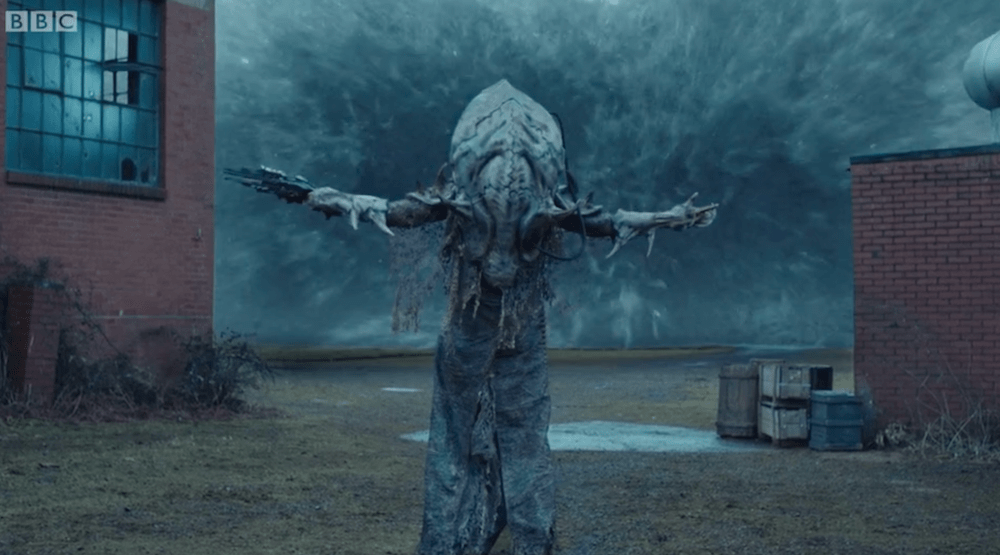

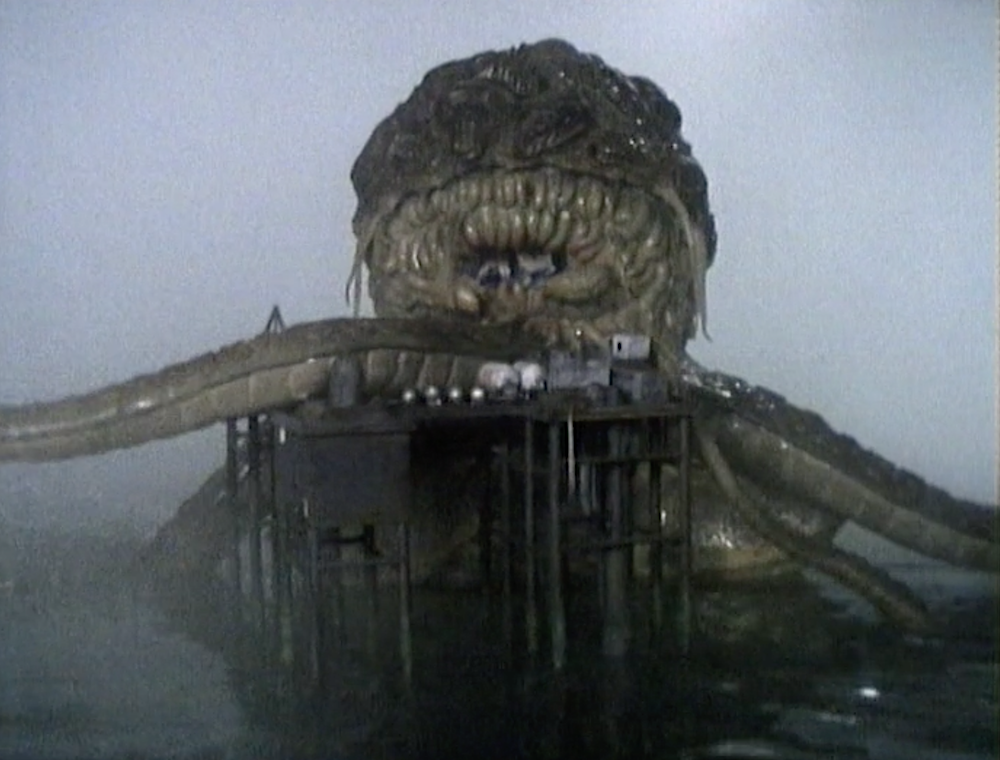
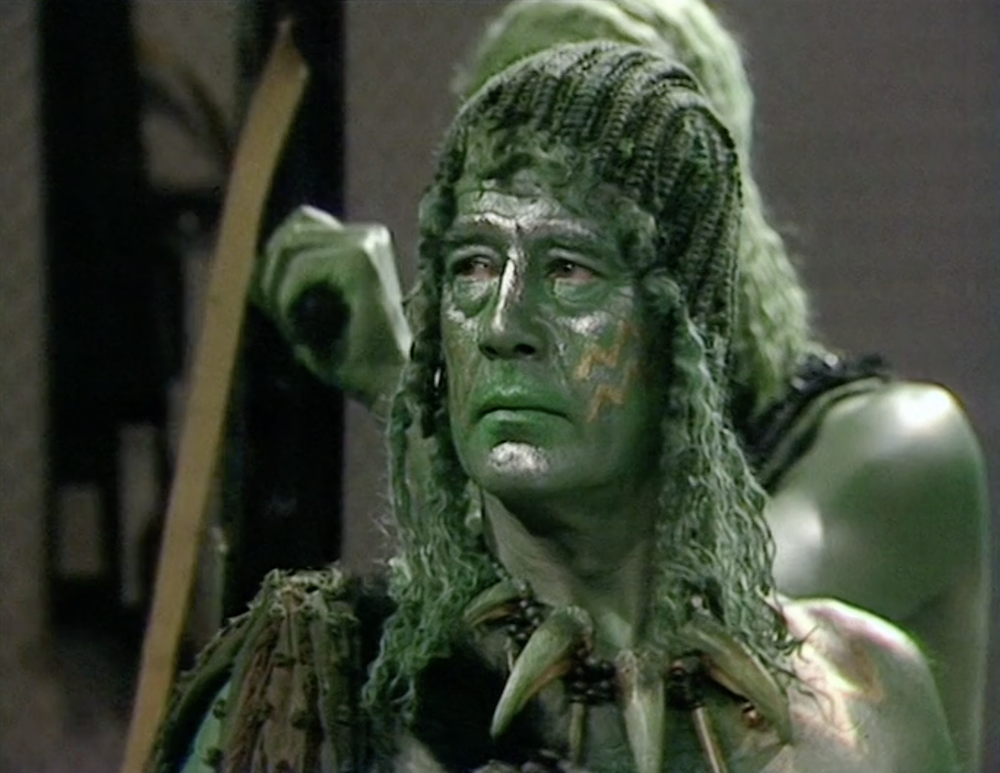
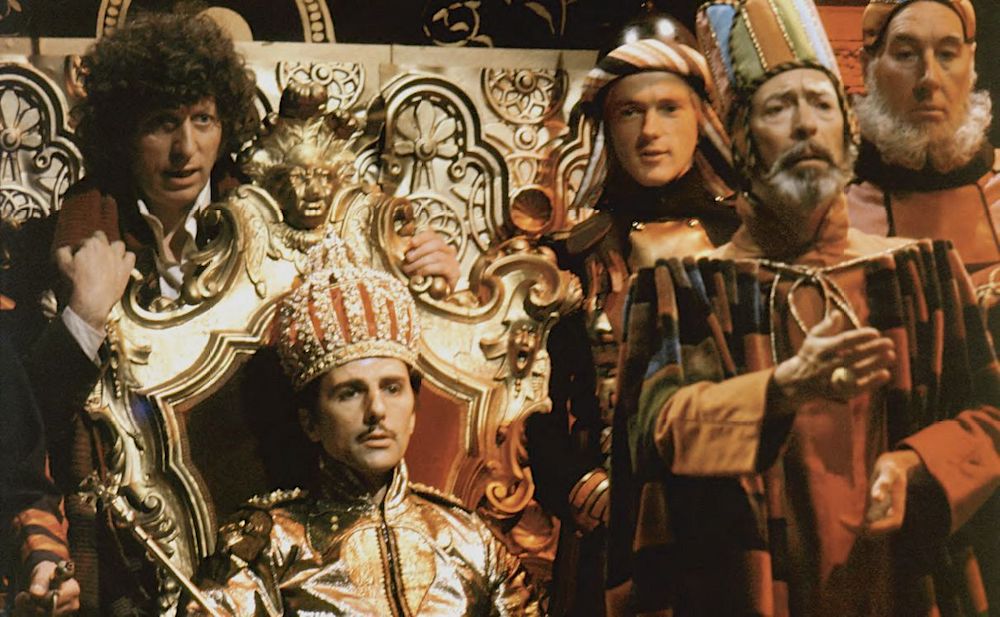

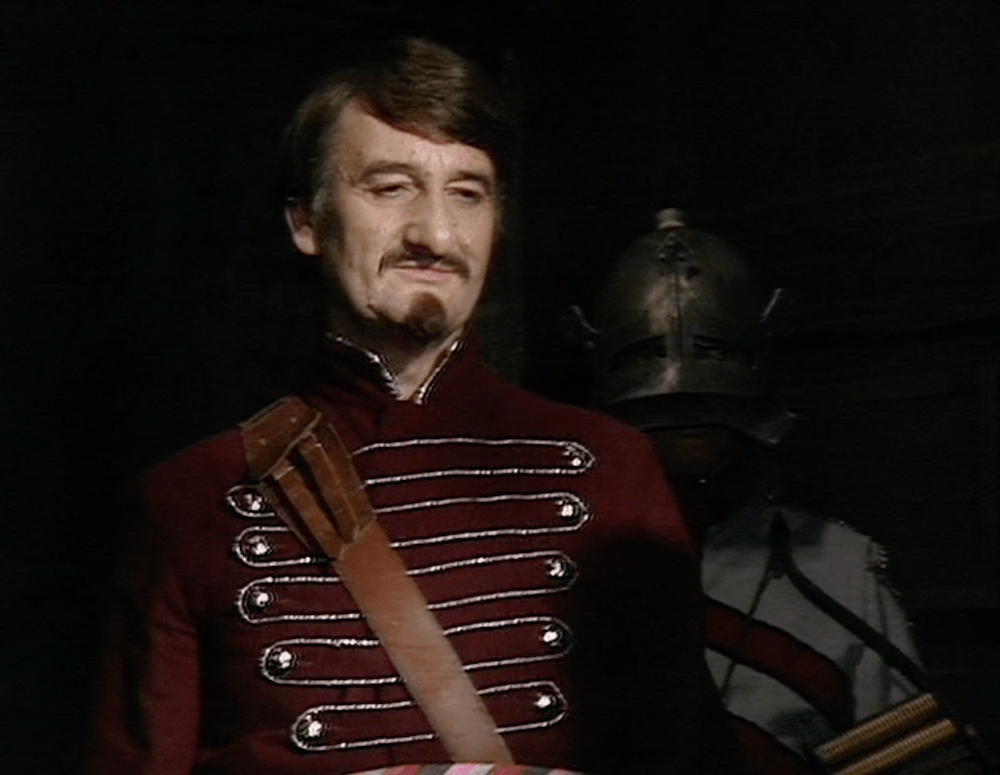

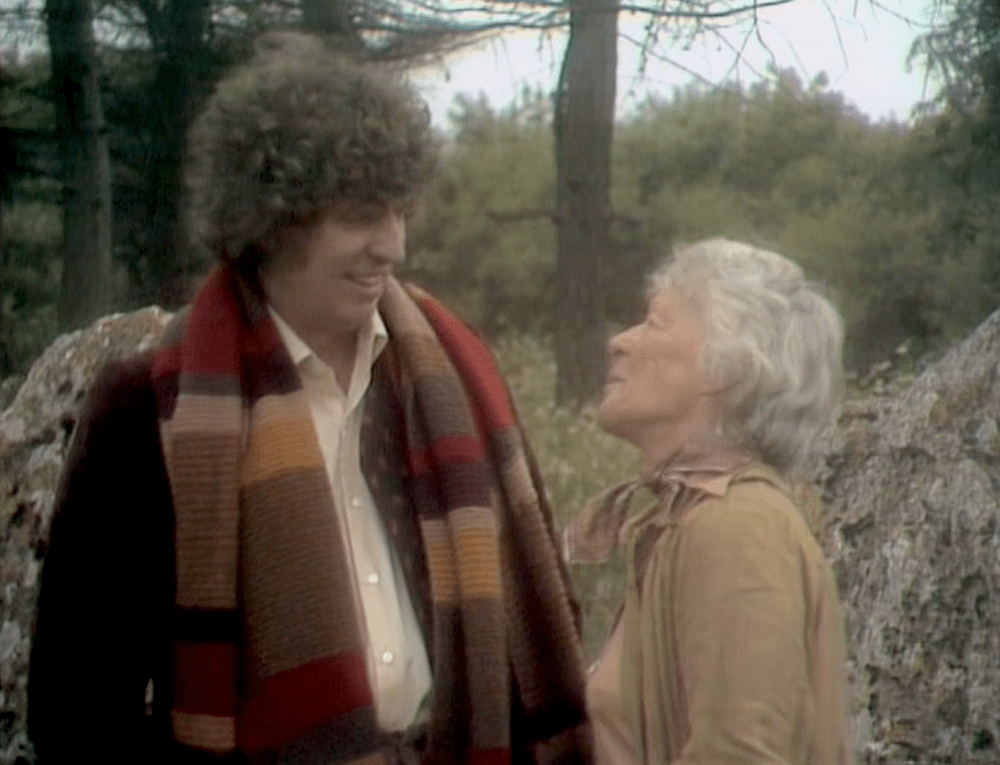


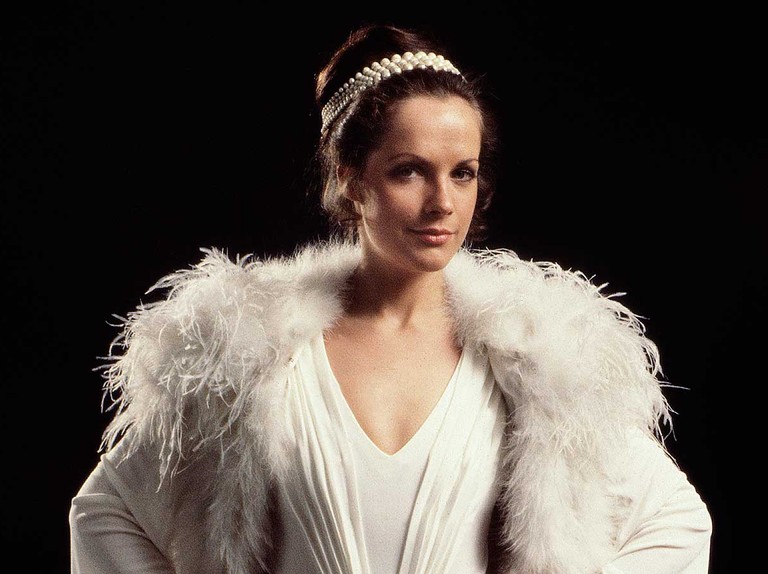

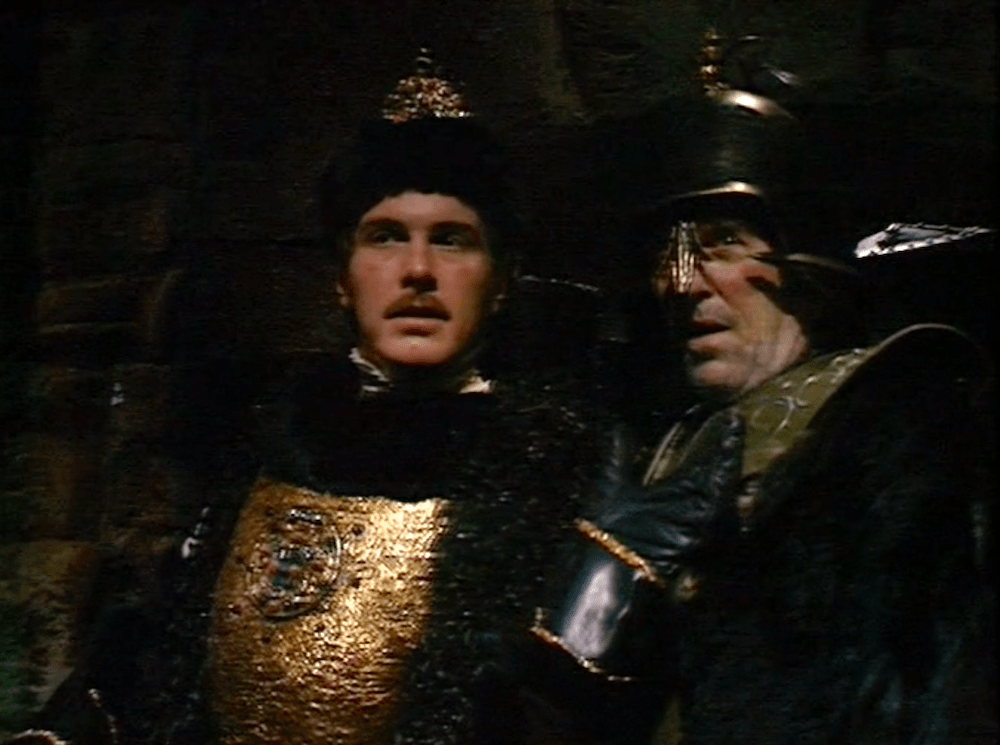
 A Journal of Impossible Things