‘The little I know about them doesn’t impress me. Cutting out people’s hearts.’
‘Oh, that was only one side to their nature. The other side was highly civilised.’
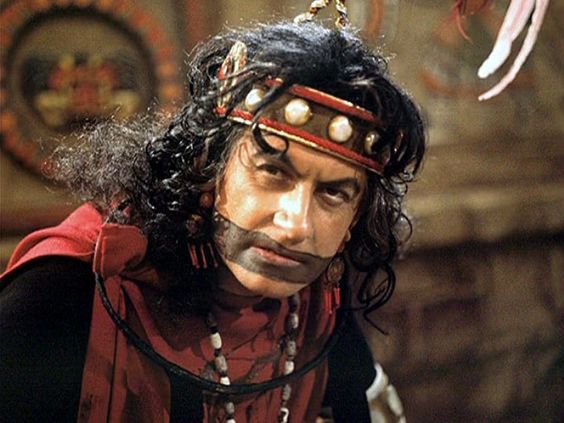
‘A vision is with us and shall stand before them. And I, in supplication to the Rain God, shall offer human blood. The rains will come. No more talk against us that the gods were against us and brought drought to the land. The rains will come and power shall again be ours. ‘
‘I tell you the rains will come with or without sacrifice.’
This story deals with death as a part of culture and tradition – state and religious sponsored – used on a sometimes breath-taking scale to cement power, exert control and as a method of execution of captured enemy warriors, similar to The Massacre in some respects. The main protagonists are Tlotoxl the High Priest of Sacrifice and Autloc the High Priest of Knowledge. They are emblems for the twin pillars of Aztec society – death, sacrifice and ruthless military conquest (Ixta the warrior is also on this side as is Tonila and the perfect victim) against culture, philosophy, architecture and civilisation (Cameca also represents this pillar). Into this clash come our travellers who have to negotiate this maze of politics, ambition, religion and death just to survive. Barbara has higher aspirations – to change things for the better to help their civilisation survive Cortes – some hope. It also features the original ‘Doctor in love’ plotline, years before Human Nature or Girl in the Fireplace, if not quite in love and ready to live life in the slow lane with Cameca, he at least appears quite smitten with her.
Anyway, it is Tenochtitlan, the capital of the Aztec Empire built on an island in the middle of Lake Texcoco and the site of the modern-day Mexico City, some years before 1520, a One-Reed year when the bearded pale skinned god Quetzalcoatl was due to appear and instead Cortes and his Spanish Conquistadors arrived and began the destruction of the Aztec empire. The TARDIS arrives in a tomb, atop what I think is supposed to be the Great Pyramid or temple (Templo Mayor) – shared between Tlaloc (the god of rain who presumably Tlotoxl sacrifices a victim in Epsiode One) and Huitzilopochtli (The God of War – more on him soon). Tenochtitlan is represented here largely by a series of backcloths showing the temple complex receding into the distance, which is easily forgiven here given the limitations of 1964 (not sure if this was Studio D Lime Grove, TV Centre or Ealing – all seem to have been used in this story) and in the ‘theatre on TV’ early 60’s played out on low resolution tiny TV screens, but is something that for some reason wouldn’t be forgiven quite so easily even a few years later. The whole piece is overtly theatrical and I’m not just referring to John Ringham’s performance as Tlotoxl mimicking of Laurence Olivier’s Richard III – I am absolutely fine with that. Given the obvious limitations, the design work is excellent. As with other serials of this era you have to admire their ambition – why chose this era (actually I know – John Lucarrotti had already written about the Aztecs and Marco Polo for Canadian TV) when there were lots of others – Elizabethan England or Victorian Britain for example with plenty of available existing sets and costumes. Anyway they didn’t make it easy on themselves.
Tlotoxl, I believe is one of the great villains in Doctor Who. His villainy makes sense – he is a wily political operator preserving his position of power and the Aztec way of life. Once Barbara has sided against him (trying to stop a sacrifice to bring on the rains), he systematically sets about to destroy her, first directly, probing for any weaknesses and finding none, he then picks off her companions one by one – pitting Ian against Ixta, isolating Susan and then forcing her into a position where she has to reject the wishes of a sacrificial victim to be and finally tricking the Doctor into inadvertently helping Ixta to defeat Ian. It may be a highly theatrical performance – but he really is terrific.
To counter Tlotoxl, Barbara is one of the great companions – she is magnificent here. We all know that her attempts to change things are futile, the Doctor tells her as much, but her attempt to make things better is just magnificent. There are accusations of cultural imperialism from some people in regard to this, frankly that is just rubbish – the Doctor argues that human sacrifice is part of their culture, but the programme is just as much against Robespierre’s Reign of Terror, the massacre of Hugenots or the English treatment of the Jacobites after Culloden. Human sacrifice, religious persecution and slavery are just wrong whether that is in meso-America, Rome, Britain, France or Skaro. There is one scene that sticks in my mind. It is after the Doctor has inadvertently helped Ixta to poison Ian with a cactus thorn, who then defeats him in combat and is about to kill him – Barbara grabs Tlotoxl and holds an Obsidian knife to the old butchers throat:
‘If my servant dies then so does Tlotoxl’
Another terrific scene is where Tlotoxl and Tonila attempt to poison Barbara. There is some unintentional comedy, with Ian waving frantically in the background to stop her accepting the drink. She is absolutely devastating here:
TLOTOXL: I come before Yetaxa in humility.
BARBARA: Such quiet words do you credit.
TLOTOXL: We have both spoken hot words and thought black deeds, and I must be the one to find a common ground.
TONILA: End this conflict.
TLOTOXL: Drink this draught with us as a symbol of our new friendship. Then I will serve you, and whatever words Yetaxa speaks, I shall echo.
TONILA: I am the witness.
BARBARA: Then I accept.
TLOTOXL: I hear your words and I rejoice.
BARBARA: Tlotoxl, you do believe me to be Yetaxa?
TLOTOXL: I shall proclaim you when we stand together before the people.
BARBARA: Then I would have you perform one small service. For as I prove my faith in you, so must you prove yours to me.
TLOTOXL: Tell me quickly, that I may obey and all the past be forgotten.
BARBARA: Drink first.
TLOTOXL: What?
BARBARA: Drink it.
BARBARA: So this is your friendship. You defile this temple. Get out of my sight. Go!
What a woman! Ultimately though there is great deal of truth in Ian’s perception that Autloc is the odd man out – the rest are like Tlotoxl and accept or embrace human sacrifice as part of every day life. She fails to save Aztec civilisation or even the sacrificial victims to he rains or the return of sunlight after the eclipse, but she changes one man, possibly not even for the better as he ends up out in the wilderness,
‘A garden of our own…’

Amongst the themes of life and death and sacrifice, the Doctor finds romance with a younger woman. Well almost. Hartnell was around 56, qualifying for the garden of peace (52 was the required age) but Margot van de Burgh was only about 29, presumably she qualifies as a widow. This particular strand is quite difficult to read, he is obviously very taken with her and she is wise, clever and well their friendship is really rather touching. In some ways she is not dissimilar to Reinette – an accomplished, intelligent woman whose wisdom is sought by others and she’s even a gardener. This gentle, slightly comedic romance though is from a different age than the Girl in the Fireplace, owing more to the gentler romances of Brief Encounter or Remains of the Day, even Mainwaring in the ‘Mum’s Army’ episode of Dad’s Army. He obviously likes her a lot, but ultimately for all of his gentleness and care, he is really just using her to get back in to the tomb and the ship.
DOCTOR: Why are all these people here?
AUTLOC: It is our law that all who attain their 52nd year shall pleasurably pass the remainder of their lives free from responsibility and care.
DOCTOR: Poor old souls, they must be bored to tears doing nothing.
AUTLOC: We often seek the accumulated wisdom of their years.
DOCTOR: What about?
AUTLOC: All manner of things. Each person here has served the community in one way or another. He was a weaver of priestly garments, she was a woman of medicine.
DOCTOR: And what about her?
AUTLOC: Cameca? Of all those here, her advice is most sought after.
DOCTOR: What did you say her name was?
AUTLOC: Cameca. You will find her a companion of wit and interest.
In a beautiful set of scenes he insist on preparing cocoa – ‘a token of my esteem’ and inadvertently proposes to her. She has rather cleverly set this chain of event in motion and looking back at the story the Doctor is pretty much outwitted by all of the Aztecs – Ixta, Tlotoxl and even Cameca!
DOCTOR: Happy days, my dear.
CAMECA: The happiest of my life, dear heart. Was ever such a potion brewed? In bliss is quenched my thirsty heart.
DOCTOR: Very prettily put, my dear.
CAMECA: Oh, sweet-favoured man, you have declared your love for me, and I acknowledge and accept your gentle proposal.
Hartnell then gives one of his trademark comedy looks of surprise in close up to the camera. He plays comedy very well indeed and for my money is a very accomplished screen actor – he has his limitations, but he just fantastic as the Doctor – particularly when his more gentle and comedic side is allowed to co-exist with the forgetfulness and bluster and fury. There is another priceless scene where he tells Ian about his engagement:
IAN: Where did you get hold of this?
DOCTOR: My fiance.
IAN: I see. Your what?
DOCTOR: Yes, I made some cocoa and got engaged. Don’t giggle, my boy, It’s neither here nor there.
There is even a moment when the Doctor and Cameca seem happy in each other’s company and contemplate life together.
CAMECA: Yes. He was never seen again. But all this is a long time ago, and I now look forward to a life of bliss with you.
DOCTOR: And I with you, my dear.
CAMECA: Peace and contentment.
DOCTOR: Serenity.
CAMECA: We must have a garden of our own.
DOCTOR: Yes, why not? A garden of our own.
The end of their time together is also very touching. I think she probably knew that he was always going to move on:
DOCTOR: There you are, my dear, it’s nearly finished.
CAMECA: As is our time together. I do not know what its purpose is, but I’ve always known it would take you from me.
DOCTOR: Yes. I’m sorry, my dear.
CAMECA: Tomorrow will truly be a day of darkness.
DOCTOR: For both of us.
..
CAMECA: We are a doomed people, my dear. There’s no turning back for us.
DOCTOR: You’re a very fine woman, Cameca, and you’ll always be very, very dear to me.
In the end history is left unchanged, every line of it and the travellers move on after a brief interlude to explain what a pulley is (which I love by the way!). Tlotoxl is still alive, sacrificing his victims so that the sun may return and the rains appear- their still beating hearts ripped from their chests by obsidian knives in increasing numbers.
BARBARA: Oh, I just want to get out of here as quickly as possible.
DOCTOR: Hmm, and the history?
BARBARA: Remains unchanged.
DOCTOR: No rewriting?
History might not have changed, but one man has, Autloc leaves for the wilderness.
BARBARA: We failed.
DOCTOR: Yes, we did. We had to.
BARBARA: What’s the point of travelling through time and space if we can’t change anything? Nothing. Tlotoxl had to win.
DOCTOR: Yes.
BARBARA: And the one man I had respect for, I deceived. Poor Autloc. I gave him false hope and in the end he lost his faith.
DOCTOR: He found another faith, a better, and that’s the good you’ve done. You failed to save a civilisation, but at least you helped one man.
The Aztecs is a terrific story, rich, clever and nuanced, the horror of human sacrifice balanced against the civilisation of the Aztecs and the comedy and romance of the Doctor’s story. The other thing that I love about it is it’s educational aspect- it has inspired me (even though I was born 4 years after its transmission) and hopefully others to read further about meso-american cultures and even to visit some of the surviving temples. And even if it only inspired a handful of people to take an interest, that is worthwhile and I suspect would make Sydney Newman and his creative team very happy.

