‘The chase. To hunt in the morning and live till evening. Run out of the light, and slip into the dark. Smell the blood on the wind. Hear your blood in your ears. Die at last, with your enemy’s blood in your mouth. With your enemy’s blood in your mouth’
“This planet’s alive. The animals are part of the planet.”
A few years ago, I saw a cycle of plays at the National Theatre of Scotland during the Theatre Festival – the James Plays, covering the lives of James I, II and III of Scotland. I’d heard they were excellent and decided to see them all and indeed they were. And then almost as an afterthought I realised that they were written by Rona Munro – author of ‘Survival’ the last story transmitted in the original run of TV’s ‘Doctor Who’. Her career has come a long way since she met Andrew Cartmel at a BBC event (‘Ladybird, Ladybird’ for Ken Loach being another highlight) and was the only writer who didn’t give him a wide birth when he said he was Script Editor of ‘Doctor Who’. By this point the show’s star had fallen very low indeed and only the very green or very committed (or likely both) seemed interested in making a contribution during these ‘Dying Days’. Rona was a fan you see, like Marc Platt she had watched since William Hartnell, but really fell in love with Patrick Troughton’s portrayal.
‘Come hunting, sister’
The obvious point to make about Rona’s contribution is not just that it is significant by virtue of being the final story, although ‘Ghost Light’ was last to be made, but rather that it is one of the few stories written by a female writer in the original run. Elsewhere we have Lesley Scott co-writer of ‘The Ark’ – although she might not actually have written any of it, Jane Baker putting the Jane in Pip n’ Jane, Paula Moore – although that story appears to have been written by Eric Saward and Ian Levine and last, but definitely not least, the wonderful Barbara Clegg contributing ‘Enlightenment’ – but inexplicably having a series of story ideas, including the brilliant ‘Point of Entry’ turned down. Unless you believe that the Earth is flat and Kate Bush actually wrote ‘Kinda’ then that’s your lot. When Rona wrote this, I doubt whether anyone would have guessed that it would be nearly 20 years before another woman would write a TV ‘Doctor Who’ story or indeed anyone for 7 years.
Is this important? Well it sort of is, despite the masculinity on display in ‘Survival’, evidenced by Sarge and his band of male teenage wrestlers(!) and the themes of survival of the fittest, there is definitely a feminine aspect to the writing, in the Cheetah people and in particular the developing relationship between Ace and Karra . Something that is rather nicely played, especially by future Big Finish stalwart Lisa Bowerman. I am not really qualified to talk about the use of feminist symbols – the moon reflected in the water, the cat etc. in this piece, I would feel that I was writing way out of comfort zone – despite spending a proportion of my student days reading Virago books – OK, I’ll admit it that was purely to impress girls! The obvious reference is Karra addressing Ace as ‘my sister’. One reading might be Karra welcoming Ace to the sisterhood, or I expect that somewhere there is a lesbian reading of their relationship, which somehow made it past JNT. Whatever the truth, it does feel quite different and is an interesting aspect to the story, I’m just not the right person or gender to write an interesting piece on it!
‘Survival of the fittest. The weak must be eliminated so that the healthy can flourish.’
The story fits rather well in a cycle of stories in season 26 based on change and evolution – overtly in the case of ‘Ghost Light’ and to a lesser degree with the Haemavores (an evolutionary dead end) and the possession of Judson and in ‘Fenric’. Here the phrase ‘survival of the fittest’ is deliberately bandied about in the usual way that it is misinterpreted by the intellectually challenged. Just as in ‘Ghost Light’ we have the misuse of Social Darwinism, here we have the idea propounded by Sarge and indeed the Master, that ‘survival of the fittest’ refers to physical fitness and strength, it doesn’t or rather that may or not be an important factor in the process of natural selection. If physical strength was the sole factor, then the stronger Neanderthal Man – evidenced by Nimrod in the previous story, would have outlasted Homo Sapiens, rather than falling to a combination of extinction and inter-breeding.
‘Fitness’ only refers to being well adapted enough to survive long enough to pass on your genetic material to another generation – it doesn’t even mean you have to be highly adapted and specialized, often generalist, adaptable species fare best. They mostly do in our degraded world today, with highly specialized species, well enough adapted for survival for 40-50 million years longer than Homo Sapiens meagre time span on the planet, in danger of extinction as the environment that they are adapted for changes. This is why the term ‘natural selection’ describes the mechanism of Darwinian evolution better – ‘fitness’ is too easily associated with physical condition, which is only one of the factors that might be important in an individual’s ability to pass on their genes. So, the larger brain of Homo Sapiens wins out long term against the Neanderthal– although as evidenced here that capability in our own species also varies greatly. The ability to plan, to come up with a strategy for survival, to mentally adapt to a new situation is sometimes more important than the ability to throw rocks at an assailant. That is a basic lesson of this story, but also ‘Doctor Who’ isn’t it – our hero isn’t Superman, he is Sherlock Holmes and Quatermass and Challenger and all those other clever scientist/explorer heroes rolled into one.
The change and transformation aspect of ‘Survival’ is also a strong running theme – the transformation into Cheetah People of those brought to the planet – of the Master, of Ace, Midge and Karra. Also, the change undergone by the unnamed planet as its inhabitant’s fight. The planet changing but not for the better, volcanoes erupting, its death accelerating as the cheetah people battle each other or as the Doctor and Master’s fight at its ending. Whether that works or not is up to you, as ever in this era it is a clever idea, but maybe not fully realised, but new ground nonetheless. The nearest I could think of it in concept in the original run being ‘Zeta Minor’ – the Jekyll and Hyde planet from ‘Planet of Evil’ – another case where the planet itself is almost another character.
Every Day is like Sunday
‘You had to pick a Sunday, didn’t you? You bring me back to the boredom capitol of the universe, you pick the one day of the week you can’t even get a decent television programme.’
That quote sums up one aspect of my childhood. Everything important happened on Saturday – Football, ‘Doctor Who’, ‘Swap Shop’, visiting my Nan and Grandad. And then Sunday – there was nothing, absolutely nothing to do, nothing to watch – even the Sunday morning children’s show was a piece of religious indoctrination! These days imagine being bored for long stretches of a day – if you can, that was Sunday on loop. I remember one Sunday, just sitting in a chair, watching the motes of dust moving in the light through Brownian motion as the clock ticked loudly, on and on and on.. Now Sunday is ‘Doctor Who’ day, well occasionally, the shops are open, there are multiple football matches and children have any amount of exciting things to do or watch. No excuse for being bored now. But I understand what Perivale on a Sunday in 1989 might have felt like.
‘Survival’ is set and largely filmed in Perivale. Rona Munro isn’t from around these parts though – she’s from Edinburgh. She assumed that this was going to be set in gritty urban inner-city London, it really isn’t. It is suburbia, maybe not the upmarket suburbia of the Leadbetters and the Goods of ‘The Good Life’, rather working class, lower middle-class suburbia on the edge of the capital. I don’t know Perivale personally, but I know places close enough to it to recognize the streets depicted here. Apologies to anyone who lives nearby and loves it, but to me these places are too close to London to be happy and too far from London to be happy commuting in. All the downsides, but few of the benefits. Perivale is a former village (as referenced in ‘Ghost Light’) caught between Greenford and the Hanger Lane Gyratory system (sounds more interesting than it is!), bounded by the A40 heading west out of London. Back in the day, not so very long after ‘Survival’ when I used to have to drive to London for work, heading west out of London along these roads back towards the Cotswolds was a particular joy. When talking about the location, the cast and script editor speak of ‘the streets’ and council estates, but that isn’t really what is depicted here – Midge’s flat aside, we are mostly in semi-detached ville.
As such, Perivale actually makes for a more interesting location, suburbia, being so little used in the show at this point. We instinctively know Perivale – not much happens, blokes wash their cars, old women shoo cats from their garden, there’s a neighbourhood watch busybody, kids hang out on the common and muck about, because aside from getting on a tube or bus and going somewhere else, there isn’t that much to do. We also have a milkman – the universal symbol of suburbia, kidnapped and savaged on an alien world – see ‘Invasion of the Dinosaurs’ and ‘The Stolen Earth’. Bizarrely a job where you deliver milk for an electric milk float that can’t manage 20mph, is actually one of the most dangerous jobs to do in ‘Doctor Who’ – up there with being a previously unseen UNIT private or being Rory.
Anyway, to these eyes at least, this isn’t Thatcher’s dead-end urban Britain that you might read in some reviews of this story, unemployment rife, you’d have to look elsewhere for that in 1989 – to the North West or North East of England, South Wales, Glasgow. This is a place with employment, largely unscathed by the 80’s, but just a bit empty and sad. The sort of place that provided the policemen drafted in to break the miner’s strike in places like Orgreave or that produced the sort of football ‘fans’ who waved their fivers in the air to taunt Liverpool fans with their wealth – Harry Enfield’s character ‘Loadsamoney’ their hero and role model. This is all evidenced by Midge’s transformation to a yuppie wannabe, spouting the following Thatcherite crap:
‘It’s common sense, right? It’s just the way of the world, right? Survival of the fittest. Get rid of the deadwood, let the wasters go to the wall, and the strong will inherit the earth. You and me. Do you hear what I’m saying? Do you know what I’m talking about?’
Thatcherism and Social Darwinism mixed – Victorian values every bit as offensive as those displayed in ‘Ghost Light. It is less Thatcher’s Britain – than Thatcher’s heartland. A sad, soulless place.
Puss in Boots?
‘The hunt. Smell the blood on the wind. Hear the blood in your ears. Run, run beyond the horizon and catch your hunger!’
This wouldn’t be the McCoy era without some story elements that just don’t work and some really duff production values. The location filming works a treat – the hot June of 1989 really adding to the piece, along with the guitar stings in the incidental music. Rather some of the effects fall flat – the animatronic Kitlings and in particular the Cheetah People masks. Now I have to admit I don’t really mind them – they aren’t good obviously, but I’m not so sure the alternative of some people wearing plastic fangs and going miaow every so often is any better. However, every time I see them I think of the conversation between Andrew Cartmel and JNT on the subject, culminating in sometime Pantomime entrepreneur JNT saying:
JNT: We’ll be alright so long as we don’t get Puss in Boots!
See’s Cheetah People
JNT: For ¤¤¤¤s sake!
Anyway, despite all of this that are an interesting creation and conceptually strong, so as with many ‘Doctor Who’ stories you just ignore the depiction and use your imagination instead! While watching this I was also reminded of an Eighth Doctor book by Kate Orman (a Who author whose work I rather like) called ‘The Year of Intelligent Tigers’, which I haven’t read I many years, but I rather liked at the time and shared some of the themes here.
The worst aspect of the production though I think is some of the very much Children’s TV standard acting of some of Ace’s mates – particularly Will Barton as Midge. The BBC wasn’t great at depicting young people, well contemporary working-class young people at least, at this point in time and it is sad that the performances aren’t that brilliant – we are in ‘Grange Hill’ territory. Despite that, the script feels different in this regard, like it is heading towards the sort of fiction that is now labelled ‘Young Adult’ and that the spin-off series ‘Class’ ventured into. The motorbike challenge though manages to trump even Midge’s efforts though. It is almost unforgivably crap and pointless. The only good thing I can say that I like is the aftermath when the Master finds the Doctor upside down, arse in the air, head first in some bin bags.
Cat-Flap
It seems the creatures of this world can’t take us away from here, they can only bring us to this place.
Yes. They can only return home with their prey.
The story was originally called ‘Cat Flap’, which is a beautifully apt title – given the two-way nature of the door open between the planet of the Cheetah people and Perivale. As a concept – the creatures able to move across the universe to hunt, bringing their pray home through their own cat flap is really quite clever and plays out at the end of the story rather nicely.
On top of this we have the Cheetah people themselves, representing wildness and freedom – the nature red in tooth and claw aspect to match the ‘Survival of the fittest’ rhetoric used by protagonists in the story. Cheetah’s themselves have an interesting social ecology – females are usually solitary, except when with cubs. Males can be solitary, but often form coalitions – especially in groups of 2 or 3 brothers. So, in some ways, they aren’t a great choice as a basis for a species that lives in large groups or exhibits ‘sisterhood’ – for that Lions would be the obvious choice, but as a representative of wildness and ‘the hunt’ they make a nice choice. I’ve only seen Cheetahs once, in the Kruger National Park – a solitary female chasing a warthog – the speed, grace and agility was extraordinary. They are really quite beautiful and not at all ‘puss in boots’.
‘This place bewitches you. If we stay here, we’ll be like the people who built these. They thought they could control the planet, the wilderness. They were the ones that bred the kitlings. Creatures with minds they could talk to, eyes they could see through the way I do. It only led to their corruption. We shall become like them.’
Stuck the other side of the ‘cat-flap’ of course is the Master. This is one of the more successful appearance of this incarnation, the feline, purring aspect really rather suits Anthony Ainley’s portrayal and he is on good form again here. It is rather nice that he is present at the end of the 19080’s and of the old show, battling for survival with his old friend/foe. He gets some memorably nasty moments – culminating in the scene where he enjoys stabbing Karra with a canine tooth. He is like a Thatcherite svengali here – leading Midge into the dark path of yuppiedom – capitalism without a conscience – red in tooth and claw. Almost the opposite to Sylvester’s hippyish uncle. This is a role that rather suits the Master – at this time he would have been Margaret’s special advisor – a sort of less evil version of Norman Tebbit. His yellow cats eyes are a memorable image – and a nice link to our next sight of him – his cats eyes in the opening scenes of the TV Movie.
Where to now, Ace? Home. Home? The Tardis. Yes, the Tardis.
With regard to season 26, I’m still not entirely convinced by the order of this, diving into the waters and the release of ‘Fenric’, feels a more suitable ending to arc to me, clearing out all of the angst, reconciled with the memory of her mother and ready to move onto the next adventures. Here we have a return to Perivale again, although in her own time as opposed to the past events of ‘Ghost Light’. The neatest part of it is that the nature of the cheetah people – returning home through the cat-flap allows us to see where Ace views her home to be – in the TARDIS with the Doctor, her time in Perivale done – happens to a lot of us, friends and people move on, we find new lives elsewhere and her future is out there amongst the stars or rather would have been if season 27 hadn’t been cancelled.
So, Ace’s story ends here in Perivale, at least on TV – apart from her future charity work revealed in the Sarah Jane Adventures. She had far worse to come in the Virgin NA’s in some particularly tortuous story arcs and plot lines, we also saw her death in a battle with the Lobri in the DWM strip and a number of different plot strands, some good, some not so for Big Finish.
To end this piece, I thought I’d quote from Rona Munro’s novelization, it rather neatly sums up the spirit of the wild that Ace finds in Karra and wraps up the story – Ace burning Kara’s body on a funeral pyre (omitted from the TV story at JNT’s request) – an echo of Manisha’s flat being burned in ‘Ghost Light’ or her setting fire to Gabriel Chase.
“Karra lay on the wrecked bikes, her hands crossed across her chest. Midge’s knife had been removed and placed between her hands; Midge’s body lay at her feet. Karra looked young, wild and beautiful as she lay there. The wind from the fire blew her hair over her closed eyes just before the flames leapt up and hid her from view.
Ace stood watching the pyre, a petrol can dangling from one hand. She was remembering, remembering the feeling of the planet, the power, the wildness. It was dangerous and brutal but it had no malice, a power that had made her as free as Karra. And Karra must once have been a young woman like her.
She heard footsteps behind her. The weight of a familiar hand rested on her shoulder. She smiled, her whole body relaxing in relief, but she did not turn her eyes from the flames. She reached behind her and gave the Doctor back his hat.
‘Felt like I could run for ever,’ she said softly. ‘Felt like I could smell the wind and feel the grass under my feet and just run for ever.’
‘You can never completely leave the planet because you carry it with you inside yourself,’ said the Doctor.
Ace smiled. ‘Good,’ she said. Her face was wet again as she watched the pyre. Smoke and tears blinded her.
‘Let’s go back to the TARDIS,’ the Doctor said gently. Ace looked up at him. He smiled at her. ‘Let’s go home, Ace.’
Arm in arm they walked away.”
Of course, they didn’t just walk away, Rona Munro based the novelization on her own scripts – we have Midge being kicked to death, Hale and Pace transported to the planet of the Cheetah people, Ace’s story about getting older kids to buy her cans, Ace’s retort about the power of one finger (!) all cut form the original at JNT’s request and also missing of course the last line of dialogue, written at the last minute by Andrew Cartmel. The show has been cancelled or rather the BBC and Peter Cregeen, in knowledge of what happened last time they cancelled the show, shrewdly and in some ways in a manner quite cowardly for a publicly funded body responsible to licence payers, decided not to announce it as cancellation rather that there would a slightly longer gap while they looked at independent companies to make the show. It wouldn’t be until Alan Yentob’s time that the BBC became serious in this regard and it would be 1996 by the time the TV Movie aired, even then as a one-off rather than a series. The ‘Doctor Who’ production office at TV Centre would be closed for the first time in 26 years and would never re-open in the same fashion. The ghosts of the likes of Verity Lambert, Barry Letts, Philip Hinchcliffe, David Whittaker, Terrance Dicks, Robert Holmes and Douglas Adams still pacing the corridors. The next time a ‘Doctor Who’ production office would open, it would be in Vancouver and again many years later in South Wales. Until then, Andrew Cartmel leaves us with these words, which evoke memories of William Hartnell’s speech in ‘An Unearthly Child’ about touching alien sand and seeing strange birds wheel in an alien sky:
‘There are worlds out there where the sky is burning, where the sea’s asleep, and the rivers dream. People made of smoke, and cities made of song. Somewhere there’s danger, somewhere there’s injustice, and somewhere else the tea’s getting cold. Come on, Ace, we’ve got work to do!’
Bringing down the Government
Since this is the end of my run through season 26 and the year 1989 (started last July!), I thought I’d wrap up what happened next. Andrew Cartmel and his band of young writers didn’t manage to bring down the government, they couldn’t even manage to avoid the show being cancelled. Thatcher was brought down the following year, but as is traditional in the Conservative party by being stabbed in the back by her own ministers. I remember being in Liverpool the day she resigned, we went out for a pint and the city was buzzing in the way that would normally be reserved for a Liverpool European Cup win.
Life went on, just without ‘Doctor Who’, 1989 ended and we moved into the 1990’s – I wrote about what happened politically in my review of the Virgin New Adventures book ‘The Dying days’, but the party of 1989’s ’Second summer of love’ carried on into the early 1990’s – grunge, shoegazing, indie dance and all sorts of other scenes in between came and went and Brit-Pop rose in the dying days of the Tories rule. Personally, I finished university, worked, saved some money, went travelling for a bit, worked, did a Masters degree and worked again. It wasn’t until the mid-90’s with the release of the show on VHS that I would even really think about ‘Doctor Who’ again – I couldn’t resist buying ‘Spearhead from Space’ and ‘Terror of the Zygons’ – I think I felt a debt to my younger self who would never have forgiven me if I hadn’t. It was a fatal move, here I am more than 25 years later, still writing about a show that I fell in love with 48 years ago.
‘A chance action by Ace brings the TARDIS to Earth in the early 1940’s: Coventry in the Blitz, black rain falling out of thesky and pulverising all hope and humanity.
But it was no accident brought them here – just as it was on accident that carried out Ace off to Iceworld in a time storm, where she met the Doctor. They were moves by the Doctor’s nemesis in a terrible game played between the Doctor and his nemesis. The game has been played before and it will be played again. This time it is being played with Ace…
The contest is not the mere struggle between Good and Evil. The Doctor and his nemesis go beyond that. This is the eternal contest between Life and Death. The Doctor is Life; his nemesis is Death. Neither can win – the conflict is eternal, to be played out at different times in different places – but for the Doctor and the innocents who get caught up in it are more than just pieces in a board game.
A winner can only emerge if one of the players default, and this time, his nemesis skilfully manoeuvres the Doctor into the position of having to choose between treating people as pieces in the game, or abandoning the game.’
Story proposal for ‘Powerplay’ by Ian Briggs
So, from the original story outline it is clear that for his second script for the show, that Ian Briggs had in mind a high concept drama, with a central image – the chess match between Life and Death taken from Bergman (‘The Seventh Seal’) – so you can’t fault his ambition. In some ways it reminds me of a Bob Baker and Dave Martin story outline, in particular their original proposal for the ‘The Three Doctors’, that the Doctors should battle against the personification of Death. So, like many of the ideas of the ‘Bristol Boys’, Ian Briggs’s outline is high on concept and ambition and yes, pretension, short on recognition of the state of the budget of the show. However what emerges from the scripting process I think is really rather good, yes it has some moments that feel slightly cringeworthy and some that are overblown and a bit pretentious, but I overlook or rather accept these because, well I really rather like the story. For me, it successfully manages to marry a new and different approach with a traditional Who story of monsters rising from the sea in a remote, cut-off location.
The switch of location from Coventry during the Blitz to the Naval camp was, I think necessary and not just because of the ability of the shows budget to depict the Blitz at this time. In 1989, possibly even now, I think that setting would have been problematic. London is routinely depicted on film and TV, but the Coventry blitz is a very specific thing, at that point in time survivors and those who lost loved ones were still alive, so to depict it as a mere backdrop for a game between higher beings, well doesn’t feel right to me even now – I’m not sure why, given that is what ‘The War Games’ does 50 years after the end of the First World War – I think probably because of the impacts on the civilian population of a relatively small city. I just can’t see that getting past JNT, even if the location had been realisable.
I make it around 25 times that ‘Evil’ is used in the script, sometimes up to 3 times in a scene. If ‘evil from the dawn of time’ isn’t your thing then you might struggle with this one. I don’t actually have an issue with the use of evil in this way, so long as the series uses it very sparingly and that the Doctor is pitted against it in a very specific way. To me the Doctor is someone who in the middle of a quest that he is sent on by the personification of Light and ‘good’, gets bored and decides to go fishing instead. He isn’t a god himself, he is someone who is very clever, but faces up to ‘evil’ or at least oppression with his wits and a screwdriver. When pitted against ‘god-like’ figures such as Sutekh, Omega, ‘The Beast’, Azaal or the Black Guardian – beings with stupendous powers, it gives his fight a scale, a little man with a good-heart and quick wit, fighting against the odds when he’d much rather be fishing or reading a book or tinkering the TARDIS or Bessie. Pitching the Doctor as another God, misses the point somewhat, but I think on the whole the end-version of ‘Fenric’ walks the right line on this. I can just about get on board with Reinette’s ‘Lonely Angel’ as a religious image for the Doctor, fallen from his own people with a good heart, trying to his best to help others, but a god no, not for me.
I will talk more about the Good vs Evil, Life vs Death aspect later in the review, but this as a concept, is something that the new series walks a very fine line on. I think that starts here in the Cartmel era and his ‘Masterplan’ for ‘The Other’, but really comes from the Virgin New Adventures. In these books, pretty much from the 4th in the series, Paul Cornell’s ‘Timewyrm:Revelation’, where the Doctor dances with the personification of Death on the surface of the moon, the Doctor becomes ‘Time’s Champion’. Now this doesn’t do much for me. If it is your sort of thing, fine, I prefer the wandering boffin with a screwdriver, a robot dog, a daffy yellow car and some nice friends, who was bored and stifled by his own society and left to see the universe and ended up trying to make it a better place, just because he couldn’t bear to stand by and watch bad things happen to people who didn’t deserve it. Somewhere between the two extremes though there is some fertile ground to be explored. And well, I rather like high-concept TV dramas, when they are done well – from ‘The Prisoner’, via ‘The Second Coming’ and ‘Life on Mars’ and ‘Ashes to Ashes’, so it seems churlish to complain.
The Norse Way
‘We hope to return to the North Way, carrying home the oriental treasures from the Silk Lands in the east, but the dark curse follows our dragon ship. Black fog turned day into night, and the fingers of death reached out from the waters to reclaim the treasure we have stolen. I carve these stones in memory of Asmund, Grimvald, Torkal, Halfdan, brave Viking warriors slain by the curse. We sought haven in Northumbria, and took refuge at a place called Maidens’ Bay, but the curse of the treasure has followed us to this place.’
‘Vozravschayetes ve Norwegiouss akrovisichem. We return to Norway, the North Way, bearing the treasure’
I am tempted to say that I return from Norway bearing a review of ‘The Curse of Fenric’, as I started writing this review on my way from Svalbard far inside the Arctic Circle – travelling to Tromso. I was looking for an appropriate story with an Arctic setting to watch and review along the way, ’Cold War’ didn’t really fit the thread and then I remembered ‘Fenric’ with it’s blend of Vikings and Soviet Russians, it was a good fit for the thread as well – vampirism and possession and change of a different kind. Svalbard is an interesting place, whilst under Norwegian control, there are also the abandoned Soviet era coal mining settlements of Barentsburg and Pyramiden, with their busts of Lenin and Soviet-era murals, rather like the training base in ‘Under the Lake’. So, although ‘Fenric’ is not actually set in Norway, it is set on the coast that was frequently raided by Vikings and where Harald Hardrada (a Viking leader who also spent time in Constantinople as part of the Varangian Guard for the Byzantine Emperor) landed in 1066. Their sagas and mythology underpin this story and form one of the elements that provide ‘colour’ and ‘scale’ to ‘Fenric’.
A question of versions
For me, the best version of ‘Curse of Fenric’ isn’t the one that was transmitted in 1989. It isn’t even the ‘Special Edition’ DVD which is definitely a lot better – for example it re-instates much of the missing, useful material that would have helped the broadcast version. No, the best version to my mind is Ian Briggs’s Target novelisation. It is a rich brew of myths and stories that give the contest between Fenric and the Doctor a real sense of scale and in the process explains some of the gaps or areas that I failed to grasp in the original story. In the process it blends Norse mythology, ‘Tales of One Thousand and One Nights’, the story of Enigma and Bletchley Park, the origins of ‘Dracula’ and well ‘Doctor Who’.
The main content of the novelisation matches the TV story with a few exceptions (more later), but in between we get extracts from the wider story from various sources. We get the tale (with some terrible puns!) of El-Dok’tar the traveller playing ‘the game of traps’ with the evil Jinnee Aboo-Fenran – weakening him in a contest that lasts 40 days and finally trapping him in a bottle, the saga of Hemming the Viking pirate who left his wife in Norway for a copper haired maiden in Northumbria – in the process bringing the dark curse of the flask on his men, dying one by one, before he buries it with his fallen comrades on sacred ground and a letter from Bram Stoker to his wife from Whitby, whilst on a tour of Yorkshire with actor Henry Irving, concerning the murder of a young woman who strayed from the path of virtue at Maidens Bay and was found drained of all blood, the inspiration for a different story.
The Target novelisations are often better than the televised stories at this point in the show’s history. There are a number of reasons behind this – firstly these young writers were just bursting with ideas – sometimes too many for a 3 or 4 part story. This is exacerbated by an inexperienced but very bright script editor, who loves his writers and backs them – so we don’t really get the ruthlessness to cut plot strands that are interesting, but not required to service the narrative. In fairness, I really like a lot of these scenes and plot elements and would miss them if they weren’t there. However this leads to episodes overrunning and important material being lost. For example in the case of ‘Ghost Light’ they forget to explain a crucial part of the plot – failing to consider that ‘Control’ is a word that has lots of different usages and connotations. Some of the stories crammed into 3 or 4 episodes have enough plot strands for a series – Fenric falls into this category. I will talk about this in the main review – but ‘Fenric’ has really helped me to understand how much ‘detail’ is important to me in the stories that I love, that the modern approach of stripping out anything that is deemed unnecessary to driving the plot forward really isn’t for me.
The other factor is budget and the ability or will of the BBC to deliver a show that matches the imagination of the scripting team. This last factor becomes really important at this point in time. TV screens are starting to become larger, most households had a VHS recorder at this point – so the show could no longer get away with low budget production values. The location work on something like ‘Battlefield’, looks so poor at times that it looks like a 1980’s corporate training video that Peter Purves might have narrated. And that last point is a shame – it is as if the show just ran out of runway and couldn’t really continue in that form without an injection of money and well, a bit of care form the powers that be. They didn’t care, didn’t support the production team and so whilst a vibrant coda to the classic series, it sometimes feels desperately cheap. In the end, the show wasn’t cancelled, it just wasn’t being made any more, with the excuse that they were looking at using an independent production house, which might have seemed an obvious solution, had the BBC themselves not worked so hard to damage the reputation of the show in its final years.
The Wolves of Fenric
‘Curse of Fenric’ has an interesting structure, in some ways it mirrors ‘The Five Doctors’. Using a trick that Terrance Dicks employed to get himself out of trouble when he had far too many plot element and characters to juggle and needed a framework to hang these off. Here, rather than being foisted on the writer it was the founding central image, so this structure is by design. A framework like the ‘gamesmaster’ playing a game and extracting players across time is probably one of the few ways that so many elements could stand any chance of working without some serious pruning or a much longer runtime. In this case, the game between Fenric and the Doctor, brings together seemingly un-related, disparate ‘chess-pieces’ together in Northumbria (or is it North Yorkshire?) at a designated point in 1943. In a similar plot device to the time scoop in the Dicks script, in Fenric we have the time-storm plucking Ace from Perivale and delivering her to Ice World into the path of the Doctor and bringing ‘The Ancient One’ back from the future poisoned, ravaged Earth to the Earth’s past, to Romania to follow the Viking merchant and the flask to Northumbria.
We also have those touched by the ‘Curse of Fenric’ through their bloodline – the ‘Wolves’ (Fenrir or Fenris is the great wolf of Viking mythology, chained by the other gods) the Russian commandoes lead by Sorin – a descendant on his mother’s side from the Vikings, Judson and Millington – with their local family connections, and Ace’s grandmother and mother. Out in the waters of Maidens Bay lie the remains of the Viking longship and the Viking crew and their descendants converted into Haemavores by Ingiger (another Viking name according to Ian Briggs) – the Ancient One. He (or possibly she) has waited for centuries to free Fenric so that he can return to the future. Buried under the church by Hemming the Viking is the flask containing Fenric – protected from release by the Haemavores by virtue of being buried on ‘sacred ground’. So the ground where the Vikings are buried with the flask becomes the site of the contest between The Doctor and Fenric and the ‘Wolves’ the pieces on the chessboard.
Does this all work? Well sort of, and maybe not quite. Add in Nurse Crane, Jean and Phyllis, Reverend Wainwright , Miss Hardaker, the marines and Russian special forces and the signals ‘girls’, that is an awful lot of characters – but strangely none of them feel especially undercooked for me. Through this plot structure we learn small snippets of the personal stories of many of characters – their beliefs and lives and their relationships with the other characters. We are intended to learn more about them, as the novelisation attests. My opinion on this aspect of the story may be clouded by the fact that I only ever watch the special edition of the story with extra material or that I’ve read the novelisation, but I always feel that I know the characters in this story.
Good and bad at games – Judson and Millington
The story of Doctor Judson and Commander Millington was intended to be one of two public schoolchildren, their lives fatally entwined together. They are intended to be two gay characters, whose lives have been entwined since childhood at public school. The TV story hints at this, but the novelisation covers this more fully – Judson’s ‘accident’ was during a rugby match at school, resulting in Millington breaking Judson’s spine in the process.
‘The cold mud of the rugby pitch. The shouts and calls of adolescent young men as they ran and chased. The expression Millington saw on Judson’s face as Judson smiled across to one to the other players, a tall blond boy with clear blue eyes and a strong body. The sharp, stabbing jealousy that surged through Millington. The black anger that filled him as he ran towards Millington’
From that moment Judson has control over Millington.
‘Judson looked up from the hospital bed, and Millington saw the answer in Judson’s black eyes . ‘You’re mine now!’ said the eyes. Mine forever.
You don’t need to know this to understand the characters though, it is enough to know that Millington has a guilty secret with regard to Judson. According to Ian Briggs, Judson’s disability was a metaphor for Alan Turing’s treatment as a gay man. Judson though is much more unpleasant, sly character than Turing – even before his possession by Fenric he is pretty unlikeable – about 8 on the Stahlman scale. Dinsdale Landon is really very good – firstly as the snappy academic, railing against ‘Nanny’ and later as Fenric – taking pleasure in his revenge in a very human way.
Stepping back, I find it interesting that the show is referencing Turing so early – this is 1989, before his story was quite so widely known. Although in 1986 Derek Jacobi played Turing at the Theatre Royal Haymarket in ‘Breaking the Code’ – this was adapted for TV, but 7 years after ‘Fenric’. In some ways Turing is a brilliant figure for the show to explore – his story resonates with many of the fanbase at this point in time, gay or not – he is white, clever, slightly repressed and one of the bullied. His story is explored, to some extent, in the Eighth Doctor novel ‘The Turing Test’, but would have made an interesting TV historical, I’d loved to have seen Russell write about him in an alternative version of the revived show, a more adult one with more time for a nuanced story.
Millington on the other hand has simply lost his mind – he has descended into a world where Viking legend and battles amongst the Gods are as real to him as the actual war he should be fighting. Again he is a really unpleasant character – his story ‘We could hear men screaming behind the bulkheads for nearly an hour, and then the screaming stopped.’ as a fire swept through a naval ship he was serving on is really chilling. His plan to drop chemical weapons on German cities or detonate them inside the Kremlin is just insane. By the end of the story he really doesn’t care who is dying – British or Russian it really doesn’t matter. In the novelisation Millington has been obsessed with Viking legends since childhood – writing a school essay on the ‘The Fall of the Gods’ – wolf-time, his teacher nothing that ‘it is almost as though young Millington really believes that these myths will come true one day’. It is an odd, distracted performance by Alfred Lynch, one that somehow works.
Red Army Blues – Sorin’s story
I will talk about Sorin a little more later, when I will look at faith and the Russian involvement in this story. However Sorin really is the hero of this story – he is the military leader who is flexible enough in his thinking to understand what is going on fairly early on (echoes of another young Colonel many years earlier). Given the end of the cold war, it is an interesting time to be doing this. Sorin rescues Ace and becomes the love interest in the story – she is clearly besotted with him. Given that he is the hero of the story, his ending – possessed by Fenric – is really rather sad. There is a coda to this in the novelisation, a future Ace, having left the Doctor, meets him again in the Jardin des Tuileries in Paris 1887. She tells him she is in love with a young Count from St Petersburg – Count Sorin – the image of his great-grandson.
The man who fell to Earth – Ingiger’s story
DOCTOR: Thousands of years in the future, the Earth lies dying, the surface just a chemical slime.Half a million years of industrial progress. HAEMOVORE: I am the last. The last living creature on Earth. I watched my world dying with chemicals and I could do nothing. My world is dead.
The Ancient One – Ingiger – was transported by Fenric to 9th century Romania. He followed the flask along the spice routes to Scandinavia, where it was stolen by Viking raiders. In the book this is rather artfully told, the Doctor trapping the evil genie (Fenric) in a flask in a story from 1001 Nights, the Viking Saga of the merchant buying the flask in Constantinople and Hemming and his Vikings stealing it and amongst a spate of deaths bringing it to Northumbria. In the TV version we get:
DOCTOR: You’re very patient. Carried back thousands of years in a time storm to ninth century Transylvania and waiting till now. HAEMOVORE: Without the flask I was trapped DOCTOR Oh yes the flask I trapped him like an evil genie HAEMOVORE Only he can return me to the future DOCTOR: And so like a faithful servant you follow the flask HAEMOVORE: A merchant bought it from Constantinople I followed him through Europe. I followed the Viking pirates who stole it and I followed it here. DOCTOR: Another of Fenric’s games. He carries you back in a time storm to destroy the Earth’s water with chemicals, to destroy your future. Think on it. Your Earth, your world, dying of a chemical slime. This act will be the beginning of your end.
The Ancient One becomes the source of the Dracula legend – transported by Fenric from an alternative future timeline of a diseased, polluted, dying world. Apparently Ian Briggs retrospectively realised that this part was inspired by ‘The Man who fell to Earth’, the alien who’s world is dying and has possibly watched his wife and child starve in a drought. The Ancient One is beautifully realised, genuinely unsettling and one of a series of rather terrific monster sculpts (see ‘The Destroyer’) by Sue Moore and Steve Mansfield. It is an imaginative take on the vampire myth, Ingiger is another Viking name and the Ancient One is one of the ‘Wolves of Fenric’ linked to the original Viking crew as much as Sorin or Ace.
Making the Ancient One look quite so horrific – a personification of the dark evil and a bringer of death to the Vikings and then making him a tragic figure and offering redemption at the end through his sacrifice to destroy his future and Judson/Fenric is an interesting take and shows again the attempts to expand the storytelling in show. In this vein the use of a ‘story’ told through words rather than images is a wonderfully cheap way of giving the story an epic mythology that the show cannot afford – a technique that the show has employed for years – in that respect it is similar to the writing of Robert Holmes, but it is of course a technique that goes much further back than that.
Over the Rainbow – Ace’s Story
In the introduction I largely said what I wanted to about Ace’s story arc across the season – actually it stretches back to the end of season 24, when she is transported and stranded like Dorothy a long way from Kansas/Perivale – the Wicked Witch of the West is even referenced in this story. Part of Ace’s story is her growing up, becoming a young woman, her developing sexuality, but also confronting her past – her relationship with her mother – the baby of Kathleen Dudman here. It also clears the air between her and the Doctor – he causes her to lose faith in him, but by the end he convinces her of why he had to say those things to her and that he would have given anything to avoid hurting her. That should really have been an end to that particular story strand.
Fenric has selected her as a suitable companion for the Doctor (much as Missy did with Clara years later) and has brought them together to deliver the Doctor to this point. Ace though is far from grown up, it is her ‘teenage’ cockiness and desire to get one up on Judson and Fenric that gives away the solution to the Doctors enemy not once, but twice – the Viking inscription as computer program and something that I’ve never understood – the chess move in which pawns of opposite colours join forces. At the end of the piece she is somewhat reconciled with her Mother and it feels like she is ready to move on. This aspect feels like an early attempt at what is now known as ‘Young Adult’ fiction. It does just about hold together, I rather like that the fact that she is responsible for her own mother ending up in London.
Out of the black fog – Horror in Fenric
‘Dark legends . In the story of Dracula, this is where he came ashore.’
‘No, not vampires, haemovores. They are what Homo sapiens evolve into thousands of years in the future. Creatures with an insatiable hunger for blood.‘
At its core ‘Curse of Fenric’ is a horror story. Monsters rising from the waters amongst a black fog (at least in Ian Brigg’s imagination the BBC don’t quite stretch to that), soldiers, priests and old women drained of their blood by vampires, young women corrupted and enticed into wicked ways, paying the price and becoming the undead. Faith and religion used to ward off evil – vampires killed with stakes through their black hearts.
In horror terms, we have a vampire film mixed with something like ‘The Fog’. Although the reference to the ‘The Fog’ is filtered via ‘Doctor Who’s’ own back catalogue of monsters rising from the water – the likes of ‘The Sea Devils’, ‘Fury from the Deep’ and ‘Full Circle’. What is it about that image of monsters rising from the sea? It is an image that has worked across generations, so there must something in it? Is it the ‘unknown’ aspect of the sea? An unconscious memory of our ancestry? A metaphor for birth? Or a combination of these?
Almost every generation of Who viewers/fans has their own ‘moment of horror’ that they remember from their childhood, something that enthralled, excited and scared them. For some, the 30 or 40-somethings reading this, ‘Curse of Fenric’ will be exactly that. Without this element of the horrific and scary, I think the show misses something important that, although maybe this wasn’t part of Sydney Newman’s original conception, has been in place since Barbara wandered down some deserted metal corridors on Skaro to be menaced by a sucker on a stick. It isn’t enough just to have adventures in space and time for all the family – we also need horror stories for children, a touch of the dark stuff.
In ‘Fenric’, the Haemavores also fit rather well into ‘Doctor Who’s’ usual MO of a rational, scientific explanation (not matter how far-fetched) for almost everything that might appear supernatural. From robotic figures of Frankenstein and Dracula in ‘The Chase’, via ‘living’ Mummies – just service robots, a representation of the Devil that is just the last member of an advanced alien species or a living dismembered hand that is the remains of a silicon-based lifeform – there are many more. At one stage the Haemavores were explicitly going to be called vampires. As I mentioned in previous parts of this review – the choice of location was inspired by the literary horror of ‘Dracula’ landing at Whitby. However, JNT had been around long enough (nearly 10 years by this point) – long enough to remember the use of vampires in his first season in charge in ‘State of Decay’. So instead they become Haemovores – creatures from a future Earth – mankind corrupted and mutated by chemical pollution. Horror driven by evolution gone wrong and environmental degradation on a vast scale. Which is much more interesting and also fits with the dystopian future of a polluted Earth – massively over-populated, gutted by corporations, then left behind as mankind spreads out amongst the stars. The stark future from the Barry Letts/Terrance Dicks era of the show. The Haemavores also get to be vampires though – even down to the use of wooden stakes by Sorin’s men to kill them on the church roof – a case of the show having its cake and eating it again.
And then we come to Fenric – a supernatural force – ‘evil from the dawn of time’…
‘There’s evil here. Can’t you feel it cold against your skin.?’
‘The dawn of time. The beginning of all beginnings. Two forces only, good and evil. Then chaos. Time is born, matter, space. The universe cries out like a newborn. The forces shatter as the universe explodes outwards. Only echoes remain, and yet somehow, somehow the evil force survives. An intelligence. Pure evil!’
‘Evil has no name. Trapped inside a flask like a genie in a bottle.’
‘For seventeen centuries I was trapped in the shadow dimensions because of him. He pulled bones from the desert sands and carved them into chess pieces. He challenged me to solve his puzzle. I failed. Now I shall see him kneel before me before I let him die.’
Fenric is another evil nemesis/God-like figure to add to the likes of the Toymaker, Great Intelligence, Azaal, Omega, Sutekh or the Black Guardian. He is the late 80’s generation’s version of those figures from the past. Like the Toymaker, the Doctor has had an unseen past encounter with Fenric (covered in the novelization through the Tale of Aboo Fenran and El Dok’Tar), trapped by the Doctor in the ‘shadow dimensions’, who now wants revenge. I should say that I have no real problem with ‘dark evil’ beings with god-like powers in the show (only boring, benevolent ones making pronouncements in robes), I know that others do, but for me so long as it is used sparingly and in an interesting way, I am fine with it. It is a tradition across most cultures – the Satan/demon/trickster/evil god figure – from Christian/Eastern/Egyptian mythologies through to Norse sagas. Although, I much prefer the usage of these types of images to be ultimately underpinned by the scientific/rational ideas rather than the supernatural or religious – so Omega is a stellar engineer trapped in the black hole he created after he detonated a star and Sutekh a second-son consumed by hatred and jealousy of his brother who develops his own mental powers to a level where he almost (but not quite) becomes a god. The show gets to have its cake and eat it – wear the supernatural trappings of the horror genre and of mythology, but within the framework of a ‘rational’ or ‘explicable’ universe, not matter how mad the explanations are – they are explicable – not just ‘the devil’ or ‘anti-christ’.
That isn’t quite the case with Fenric – like ‘The Beast’ in ‘Impossible Planet’ – it is a force from the beginning of the universe, we are never quite told what. In some ways, Fenric isn’t really an interesting figure in his own right (although nicely played by Dinsdale Landen and Tomek Bork) – more a high concept framework to hang a load of mythology on – the image of the Doctor playing chess with death from Bergman’s ‘The Seventh Seal’, the Arabian mythology of the evil genie trapped in the bottle, the Viking myths of Fenris the wolf and Loki and the middle European concept of vampirism via the story of Dracula. Ian Briggs original inspiration was the chess match, the Doctor playing his old nemesis in the ruins of Coventry during the blitz, so Fenric was a core part of the original story conception. Although he possesses Judson and Sorin to the extent that they are lost – their self never to return, Fenric knows them, has access to their thoughts and how they feel. With Sorin he plays on the knowledge that Ace has feelings for him, enticing her into giving away the secret of how to win the game (although one that doesn’t actually make any sense!). With Judson he knows the resentment he feels towards Nurse Crane – taking delight in her death. His spite is personal.
So, what does Fenric add to the mythology of the show? Well probably no more or less than a figure like Sutekh, he is a one-off character – only returning in a BF story arc. Within the Cartmel era though and within this story, Fenric pulls together the strands of the story. He links the stories of Ace, Sorin, Judson, Millington, the Vikings and the Ancient One and brings them together at this place and point in time. We get possession (Judson, Sorin) and a spiteful vindictive cruelty – principally to Ace and Nurse Crane, although he is unpleasant even to the Ancient One and other Haemavores (‘I’d hoped for something a bit more Aryan’). Outside of this story he gives a reason (not a great one it has to be said) for Dorothy being carried over the rainbow from Kansas (or at least Perivale) to Iceworld and dumped in the Doctor’s world. The chess match also links, in some un-specified way, to Lady Peinforte and her squire time travelling in ‘Silver Nemesis’.
This storytelling across 3 seasons in some way pre-figures Steven Moffat’s approach to the show and is something that we hadn’t really seen before, possibly because there are only a few occasions (Dicks, Holmes and Saward) where we actually have the same script editor for any number of years, but also because ‘Doctor Who’ tended to be a more self-contained series of stories, every episode one a new jumping on point. Delivering workable scripts for production was problematic enough without worrying about complex multi-season story arcs. Also, these arcs only really work for the dedicated viewers or fans and can start to alienate more casual viewers if they aren’t done well or light touch enough. Personally, I really don’t really need them, I like a neat call-back, but these arcs are never that satisfying and often have the air that they have been cobbled together on the fly, even with a single authorial figure such as RTD or Steven Moffat – I think mostly because they are.
So, within this era, Fenric is a significant figure, rather like the Black Guardian from season 16-20, an influence across seasons that rarely actually appears. In comparison though, the sparing use of Fenric, increases the effectiveness I think and preserves the mystery. Not having him appear with a stuffed Raven on his head probably helps as well..
And the greatest of these is love – Faith, Religion, Love and War
Religion and faith are other key themes in this story. These themes manifest themselves mostly through the crisis of faith of the Reverend Wainwright, but also through the Old Testament morality of Miss Hardaker.
Wainwright is an interesting character. He is supposed to be younger than the casting of Nicholas Parsons would indicate. A young man, who has taken over the Parish early due to the death of his father. This is referenced in the form of his use of the passage from Corinthians concerning becoming a man and on the subject of love:
‘When I was a child, I spake as a child, I understood as a child, I thought as a child. When I became a man, I put away childish things. Now abideth faith, hope, love. These three. And the greatest of these is. And the greatest of these is …’
If one part of this is lost in the casting (I think Nicholas Parsons is rather good though), the main point still stands. Wainwright is losing faith that there is love in the world. He is wracked with doubt, the war testing his faith, guilt at the deaths of German civilians in the British bombing campaigns in Germany. His faith tested at the horror he sees in the world – not uncommon I suspect amongst many at the time, but his views on the bombing of German cities would I suspect have not found much support on an island where the blitz had destroyed large swathes of British cities (and those elsewhere in Europe) and taken thousands of lives. Nobody that I have spoken to who lived through those times and lost their homes and loved ones, had much in the way of sympathy. For a different view on that though, the following article on Operation Gomorrah – the bombing of Hamburg. The testimony of one of the bomber crew reminded me of a key point in ‘Day of the Doctor’ – the thought of innocent children losing their lives
The madness unleashed during a time of war is another key, recurring theme of the story – from the references to the British bombing campaign, through to the use of chemical weapons and again was a core part of the central image that Ian Briggs had at its conception. Arthur Harris’s views are not a million miles from Millington’s in this story and he is surely an influence on the character. Although Ian Briggs was writing this and I was watching it from a very safe distance in 1989, even a few years earlier I am not sure he could have written this without a lot of criticism from a generation who lived through the war. Without living through it, I am not sure I am qualified to have a view, I have simply not had to deal with the horrors of war first hand in my lifetime – long may that continue. Ultimately, loss of faith is Wainwright’s downfall. When Jean and Phyliss return as Haemavores, he cannot summon up enough belief to repel them. They exploit what they have become – black-hearted, innocence(?) corrupted – to weaken his resolve and he dies literally in a crisis of faith.
Miss Hardaker is on the face of it, a representative of old religion. Fierce (Janet Henfrey always was), offering threats of eternal damnation to Jean and Phyllis if they stray from the path of virtue. However, the intention was that this should have arisen from her own experience. Not just the superstition (actually true in this case) of the fate that awaited girls who strayed at ‘Maidens Point’. She is actually right – although I’m not sure if that was the point that Ian Brigg’s intentionally wanted to make! In the novelisation, she also strayed from the ‘path of virtue’ many years ago and had a child out of marriage. Her religion and harshness with Jean and Phyllis are born out of that. Her faith though isn’t enough to save her, maybe she never really believed all of that fire and damnation stuff either?
I’ll look at Sorin’s faith in the Russian revolution separately, but in a similar vein we have the Doctor’s faith in his companions (he mutters their names when using his faith to create a psychic barrier against the Haemavores) and Ace’s faith in the Doctor. Different variations on faith as a concept – but interesting none the less. Ace’s faith in the Doctor especially mirroring our own faith as fans that he is a force for good and an influence on our own lives and morality.
‘I believe in the Revolution’
I recently reviewed ‘The Quatermass Experiment from 1953, which along with its sequels was inspired by the then new Cold War and fear of the bomb. ‘Fenric’ was written in 1989, at the other end of the Cold War – a point in history when the Soviet Union and the Eastern Bloc were falling apart. As ‘Curse of Fenric’ aired in November 1989, the Berlin Wall fell. Poland went first – in June that year, Solidarity won in the first elections, then Hungary, East Germany, Czechoslovakia, Bulgaria and then finally Romania. It was a momentous year across Europe, the effects spreading as far as China. The old order of the first 20 years of my life ripped up in less than 12 months.
So, given the timing (it was filmed in April 1989 – so at the start of the second ‘Year of Revolutions’ or ‘Autumn of Nations’), the treatment of the Red Army commandoes in this story – Sorin is effectively the hero of the story and love interest of Ace, is interesting. The use of faith, in any flavour to repel the Haemavores opens this up beyond just religious belief and Sorin shows his absolute faith in the Russian Revolution – an equivalence to religion or the Doctor’s faith in his companions or Ace’s in the Doctor. It is something that is not portrayed often these days, but people did believe passionately in communism as a force for good in the west in the days prior to Hungary and the Prague uprising, some still do despite everything that happened. It is easy to imagine this being intensified in a bitter war where the Soviet Union is fighting for its existence. Like Wainwright’s loss of faith in God, most communists in the west, had their faith in communism challenged by subsequent events – Orwell and Spain for example, many intellectuals after Hungary and Prague and revelations about the truth behind Stalin’s regime. To have Soviet heroes in a children’s programme at this time is an interesting choice and works surprisingly well I think. They are portrayed rather well, in particular Russian speaking Polish actor Tomek Bork, who does a good job as Sorin. Ace is obviously very attracted to him and in the novelisation she meets his bourgeois relative Count Sorin in 19th century Paris – so it clearly isn’t just the revolution she’s interested in…
Stepping back though, the Soviet involvement in this is a little left-field, it is interesting because of that, but like quite a few things in Fenric, it doesn’t actually make much sense. Aid to Russia from Britain and its allies (principally Canada) via the Arctic convoys (my Grandad served on those for a while) through Archangel was important, especially early in 1941 and 1942, for example in the defence of Moscow. So, it is difficult to see them risking that to launch an armed raid on the coast of Britain. Given the point in history that this was written, it is part of a general re-appraisal of the Soviet role in the war? One other facet omitted from the TV serial, but re-instated in the novelization is the role of Nurse Crane. At the start of the novel, a figure is seen on the cliff-tops at Maiden Point with a light signalling to a Russian submarine off the coast. This is later revealed to have been Nurse Crane, a soviet agent spying on Judson and reporting back to her Moscow handler. So in amongst the war, religion, love and death, we also have a spy story!
Warning Dangerous Undercurrents
Message from Captain Subtext: Warning, very subtle subtext alert!
Another key theme is ‘coming of age’, and loss of innocence. We have the dangers of this represented by Jean and Phyllis and to some degree Ace. We also have an acknowledgement that Ace is growing up, she is no longer just interested in blowing things up. Throughout this season (Battlefield aside), she comes to terms with the problems of her teenage years – the house at Gabriel Chase, says goodbye to her old gang in Perivale and in this story also reconciles herself, to some degree with her mother.
This is an aspect of ‘Fenric’ that whilst something new for the programme is also somewhat clumsily portrayed. There certainly are dangerous undercurrents at Maidens Point and oh my do we need warning. I am tempted to give the writers credit for trying to expand the vocabulary of the programme, but this leads to some really cringeworthy scenes. Ace’s ‘seduction’ scene is rightly held up as the nadir of this and watching it again, it is quite terrible – an effect not dissimilar to a sex scene suddenly appearing from nowhere when watching a film or TV programme with your parents. The vampire girls likewise. Oh dear, even had I been cooped up with a load of male soldiers in a submarine from Murmansk to Northumbria, I think I’d just about manage to resist their ‘seductive charms’.
Later on, we have Haemavores fondling Ace’s breasts and a flash of thigh above her suspenders. What would Bill Hartnell have said – ‘young Lady you deserve a jolly good smacked bottom for showing your bloomers like that!’. Captain Subtext (‘Coupling’ reference if you haven’t seen it) is none to subtly engaged again at the end of the story as Ace plunges into the waters of ‘Maidens Bay’ a girl and emerges as a woman. Subtle it isn’t. Look it might be clumsy and a bit embarrassing, but I’m happy enough to cut it some slack for the freshness of it and for attempting to move the show on a bit. I don’t think I would want the show to go much further in this direction, but it does signal a change that bridges a gap between 1960’s/70’s Who and the new series This may be hypocritical as I might not have been so forgiving in other stories that I like less, but I wouldn’t be a fan without a touch of hypocrisy.
Ace’s treatment across this season is interesting and I will return to it in the next reviews. However, one thing that I hadn’t really thought about before is despite not always being written or portrayed especially well, she is in one respect quite an accurate portrayal of a teenager, in that she is massively inconsistent – a stroppy hormonal teenager in ‘Battlefield’, all over the place emotionally in ‘Fenric’, angry, weepy, lustful, over-estimating her own abilities. We haven’t really had this in the show before this point – the nearest strangely is probably Adric – who again is a fair (if not always well performed or written) representation of a type of teenage boy – a sometimes stroppy, lazy, arrogant, know-all swot. I had just turned 20 when I first saw ‘Fenric’ and so was much closer to being a teenager and closer to Ace in age (how old is she supposed to be? 16 in Dragonfire? Sophie is actually 6 years older than me). I can’t say that I ever saw Ace as being particularly realistic then – so maybe this is me just getting old and forgetting what it is like?
Final thoughts
I have managed to write an awful lot about this story. So, it is fair to say that ‘Fenric’ isn’t short on ideas or themes or character work or horror, if it is guilty of anything, it is over ambition, trying to do too much and not knowing when to cut even good stuff. There are however, worse faults to have. I haven’t even spoken about Sylvester’s Doctor, but I will talk more about that in one of the next reviews, but just to quickly say I think by this point he is really rather good – a blend of the physical comedy, sleight of hand, likeable empathy and darker moments. After the children’s entertainer of season 24 and before ‘Time’s Champion’ of the ‘New Adventures’ – two excesses, neither of which I like that much in isolation. He is still rather limited as an actor, but for the most part he works well this season. The rather lovely relationship between Sylvester and Sophie also shows on screen in their lighter moments. If you ignore the cringeworthy parts – which most of these stories, including this one have, then there is an awful lot to enjoy here. ‘Curse of Fenric’ is pretty much my favourite of the era, although the next story I’m going to look at pushes it close.
‘Ghost Light’ might be set in Perivale Village in 1883, but really, I think its heart is in Oxford, in the writings of Charles DoDoDodgson, of Alice Liddell, The Oxford Dodo, of Soapy Sam Wilberforce, T.H. Huxley and ‘The Great Debate’. Oxford and its surroundings are somewhere I know pretty well. Despite not really being Oxford material, I studied Conservation (the ecological/wildlife sort) at the university as an adult learner, finishing my dissertation seven years ago. I was an outsider really, as were most of my fellow post-grad students. Even if I had evolved across those years into a more typical Oxford student in the manner of Josiah Smith, which I never quite did despite putting the hours drinking in the ‘Eagle & Child’, it takes more than that to be accepted into university life proper. Whatever, I spent 4 years researching and writing about everything from climate change, sea level rise, ecological systems and extinction. The course was also about practical ecological surveying and conservation management and I spent many a day sinking into the mud along Thames meadows, in disused quarries and wetlands. This will all become relevant during the main review – I promise!
For four years I had access to a world of scientific journals, but more than that to the resources of the University Natural History Museum, the Herbaria, the Botanical gardens, the Bodleian and the Radcliffe Science Library and the outdoor resources of Wytham Woods. It was a whole world of scientific learning, stretching back hundreds of years. Being able to see specimens collected from around the world by the likes of Linnaeus, Darwin and Hooker – their hand-written annotations in the margins was thrilling in a way that I can’t quite describe. Oxford’s Natural History Museum (OUNHM) is a particular world of wonder – of wrought iron and stone, neo-gothic, wooden display cases, stone pillars, statues of the great and good of science, Swifts nesting in the tower in summertime. It feels a bit like an airier, lighter version of the McGann TARDIS! Amongst its treasures are the sadly mummified remains of the Dodo that inspired Lewis Carroll to include it in Alice, a Great Auk egg, a Passenger Pidgeon, Carolina Parakeet, the New Zealand Huia – all sadly long gone. As is Megalosaurus Bucklandii – the first identified Dinosaur, discovered near Oxford and described by the Reverend William Buckland.
My favourite place in Oxford is contained within these walls. Though these days it is a pretty non-descript store room, rather appropriately it’s use has evolved over the years – it is now known as the Huxley Room. It now contains some beautiful old wooden cases mostly containing collections of pinned insects. And yet, walking into this space was really thrilling, as thrilling as walking through the police box doors and stepping onto the Capaldi TARDIS set! This is no ordinary storage room though – in a former life this was a meeting room and was the site on the 30th June 1860 of what has in retrospect become one of the most important meetings in scientific history. This occasion was a meeting of the British Association for the Advancement of Science – one where one of the main protagonists (actually it is more correct to say two) was missing, his case fought by proxy by his friends and allies. This has in retrospect gained a reputation – the moment of victory of the rational, progressive and scientific over the supernatural and its version of the history of life on this planet stretching back no more than a few thousand years. In some quarters, despite more than a hundred and fifty years of overwhelming supporting evidence this debate about evolution by natural selection still happens. Some people refuse to evolve and change – ‘Light’ would love them.
As ever though, the truth is more complex than the legend of this event dubbed ‘The Great Debate’. Contemporary accounts differ considerably on what exactly happened and ’Soapy’ Sam Wilberforce – the Bishop of Oxford and leader of the opposition against Darwin and ‘On the Origin of the Species’ was himself a serious figure and capable speaker – in contrast to the Reverend Mathews in ‘Ghost Light’. He was the son of the man responsible for the abolition of slavery, he had a first in Mathematics, was a member of the Royal Society and had a scientific background. Wilberforce had also been coached before the meeting by the great comparative anatomist Richard Owen (the man who gave us the term ‘dinosaur’), a religious man, whilst also a brilliant scientist and founder of the Natural History Museum in London, he doesn’t seem to have been a very pleasant man – driven, ambitious, ruthless and not above appropriating the work of others and using politics to destroy rivals – he also detested Darwin’s theory. Taking up Darwin’s case was the naturalist Thomas Huxley and Darwin’s friend the great botanist Joseph Hooker.
The crucial moment of the debate – at least in hindsight and with some embellishment is the moment when Wilberforce asks Huxley (the absent Darwin’s ‘bulldog’) whether ‘it was through his grandfather or his grandmother that he claimed descent from a monkey?’. Huxley is reputed (although the exact words are disputed) to have said something to the effect of:
‘If then the question is put to me whether I would rather have a miserable ape for a grandfather or a man highly endowed by nature and possessed of great means of influence and yet employs these faculties and that influence for the purpose of introducing ridicule into a grave scientific discussion, I unhesitatingly affirm my preference for the ape.’
In the legend, ladies are supposed to have fainted and Wilberforce was defeated in a stroke. In practice, it seems that the words of Hooker, the eminent botanist and friend of Darwin were also important in winning the day. Although Wilberforce clearly viewed Huxley as his main opponent.
So why is this important to ‘Ghost Light’? Well at its core the story is this debate writ large – the Reverend Mathews (himself from Oxford) representing a refusal to believe in change, in evolution – Josiah (and his husks – stages in his own personal evolution) and Control are living evidence of that change. Light (‘the Recording Angel’) doesn’t deny the change – he just doesn’t like it and wants it stopped so that he can finish his catalogue. Marc Platt was an archivist for the BBC at the time of writing the story – endlessly documenting radio programmes – which I think is where this aspect of the piece comes from. The pivotal moment, at least in the legend of the ‘Great Debate’ plays out in ‘Ghost Light’ as the Reverend Ernest Mathews is shown in the cruelest way his true ancestry – becoming an ape in a display case – losing the debate and his life. This image of Huxley’s ‘Place of Man in Nature’ in reverse:
It is a gruesome end for an unlikeable character, in the real world at least ‘Soapy Sam’ got to live another day – Darwin and Wallace (by proxy), Huxley and Hooker won the argument and change defeated stagnation. The meeting room fell into disuse, was eventually split into two – aptly the Huxley Room and the Wilberforce Room and life moved on, everything changes, for good or ill, sometimes we have to just adapt to it.
The evolution of Ghost Light
There are few stories that are based on the concept of change more than ‘Ghost Light’ – not only does it take evolution, speciation and extinction as its central concept, but it is an idea itself that evolved from something that was originally quite different. Changing from a story about the Doctor’s house and family on Gallifrey to a story about an ecological survey on a planetary scale and Darwinian evolution in Victorian England. On the way merging the idea of the ‘Great Debate’ (covered in the introduction), with Social Darwinism and the concept of the Victorian English Gentleman as evolutionary endpoint or at least the species fittest to survive and flourish in the world of Victorian England and the British Empire. It also absorbs a smattering of literary influences from ‘The Hunting of the Snark’ and the ‘Alice’ books of Lewis Carrol, George Bernard Shaw (Pygmalion), Conan-Doyle (‘Redvers had some stories. The pigmies from the Eluti forest lead him blindfold for three whole days through uncharted jungle. They took him to a swamp full of giant lizards like giant dinosaurs. Do you know, young Conan Doyle just laughed at him’) and H. Rider Haggard to the cast of bizarre characters of Mervyn Peake’s ‘Gormanghast’ books.
Marc was a ‘Doctor Who’ fan, working at the BBC documenting radio programmes for the archive, who had grown up with the show during the Hartnell era. He had lots of clever ideas for stories which he sent to the BBC Doctor Who production office over the years – to Robert Holmes, Douglas Adams, Christopher H Bidmead and Eric Saward, each one getting closer, only to have the recipient move on before commissioning him. Then one of them reached Andrew Cartmel (season 26 really was the last chance saloon for getting your script made) and he liked what he read and invited Marc in to discuss his ideas for what neither knew would be the final season of the original run of the show. The idea that made it through was called ‘Lungbarrow’ – a story which was to take the Doctor back to his ‘worst place in the universe’ – his home and family on Gallifrey. The story was eventually vetoed by JNT after a long period of development and Marc instead switched the location to a Victorian House and made it Ace’s ‘worst place’ – Gabriel Chase, the house she burned down in the 1980’s. So, ‘Lungbarrow’ rather appropriately evolved into ‘Ghost Light’. Everything changes.
‘Ghost Light’ would ultimately prove to be Marc’s sole contribution to the TV series – he would have written for series 27 (an Ice Warrior story adapted as ‘Thin Ice’ by Big Finish). He does get an onscreen credit for providing the inspiration for ‘Age of Steel/Rise of the Cybermen’ and really should have got one for ‘The World Enough and Time/The Doctor Falls’. If like me, you like his work for Big Finish, many of his preoccupations apparent in ‘Ghost Light’ are also evident in ‘Loups Garoux’ or ‘Spare Parts’ or ‘Paper Cuts’, ‘The Silver Turk’ or ‘The Butcher of Brisbane’. Like Robert Holmes, he is the master of building and populating worlds, which however strange they might be, feel real and are drawn in some detail, giving them verisimilitude and depth.
Another similarity to Holmes is ‘Ghost Light’s’ treatment of death, displaying a similar love of the grand guignol. The more I think of it, ‘Ghost Light’ gets away with some of the most macabre deaths in the history of the show. Think of Holmes’s ‘Terror of the Autons’ – McDermott consumed by a plastic sofa, Farrel Snr strangled by a troll doll or of poor Goodge miniaturised and placed in his own lunchbox. Here we have the Reverend Mathews transformed into an ape (eating a banana in the process) and placed in a display case (a monkey house without room for two), Inspector MacKenzie reduced to primordial soup and served at the table (‘the cream of Scotland Yard’ almost feels like prime Holmes), a maid dismembered by Light – he holds up her severed arm and Mrs Pritchard and Gwendoline re-united forever – turned to stone by Light – never changing. To my mind this outdoes even the darkest moments of Eric Saward’s stewardship in the hue of its black comedy. An awful lot of the inhabitants of this strange world are ‘sent to Java’ in the most macabre ways.
Marc Platt also obviously has a love for the natural world. ‘Loup Garoux’ draws on the post-collapse Amazonian desert (Rosa – ‘Jaguar Girl’ with the whole host of the extinct species of the forest in her head) and the complex social world of werewolves, ‘Spare Parts’ the dark 1950’s austerity Britain of Mondas with its cyber-converted police horses and electronic caged birds, or ‘The Butcher of Brisbane’ with the bizarre experiments of Greel’s world such as packs of talking Dingoes. Here we have Great Auks, Emu’s, Birds of Paradise and Lady Amherst’s Pheasants, the Peppered Moth changing with industrialisation and Neanderthal man with his stories of the Pleistocene – Mammoths and Cave Bears. At the season when the ice floods swamp the pasture lands, we herded the mammoths sunwards to find new grazing.’. All of this wrapped up in a house whose current ‘owner’ indulges in the Victorian gentlemanly pursuit of natural history and collection of zoological specimens.
Aside from the themes of evolution, change and the literary trappings, ‘Ghost Light’ also explores the underbelly of Victorian life, of empire, social class and climbing the ladder – both evolutionary and in terms of status in the case of Josiah. Scratch the Victorian veneer and something nasty’ll come crawling out. We have Redvers and his tales of the dark continent and Josiah’s aspirations of meeting the Queen Empress, later to ‘hunt the crowned Saxe-Coburg’. Whilst trying to buy the Doctor’s expertise to rid himself of control, that great Thatcherite dictum ‘Victorian Values’ is evoked, lest we forget this is the late 80’s and that woman is yet to fall from power. Even Control wants to become a ladylike. This isn’t Darwinian evolution, rather a different kind – one with direction towards the perfect endpoint of development – the Victorian gentry, born to empire. More of which later.
On reflection the script for ‘Ghost Light’, well it strikes me and this is with the benefit of 30 years of hindsight, that it is actually quite a straightforward story told in a complicated almost wilfully obscure and obtuse way with a bizarre cast of characters and some arcane dialogue that give it an air of mystery and complexity that the core story doesn’t really have. In particular, the characters almost feel like cast of a Victorian drawing room murder mystery or Cluedo, albeit one put through a filter with the settings marked dial weird to 11 – we have the butler, the severe housekeeper (Mrs Hudson?), the vicar, the inventor, the explorer (albeit one in a dissociative fugue state – ‘Redvers kicked over his traces and lost himself in the bush. Lord knows if he’ll ever find his way out again.’) and the bumbling policeman (Lestrade?).
The basic story – an alien comes to survey all life on Earth, bringing a survey agent who evolves into a ‘local’ species best fit to complete the survey and a control that doesn’t change to enable the change to be measured. The survey controller sleeps for thousands of years and the survey agent runs amok, getting ideas above his station, ideas of ruling an empire and even the control starts to want to change – it is the story of ‘lunatics taking over the asylum’. Since the controller has slept for so long, the original survey data is now hopelessly out of date and he’s not happy. That is about it. I’ll examine whether and why this is so confusing in another piece, suffice for now to say that many people were baffled upon its transmission and some continue to be to this day.
As a production, ‘Ghost Light’ is probably the most assured of the Seventh Doctor era, albeit against scant competition for that honour – much as I like a lot of the era, consistency of production isn’t one of its key attributes. So much so, that you almost marvel at the fact that the BBC decided to cancel the series just as the production team worked out what it was they needed to do to make the whole thing work! They had finally evolved into an organization that had everything you need to make terrific ‘Doctor Who’ – a Doctor who could waltz through adventures veering from clown to dark genius, his plucky, headstrong, all action assistant – a group of capable, if green script writers with good ideas and a script editor who backs them and has finally worked out what works for a BBC production and within the context of the show. Add in Music by the very capable Mark Ayres and a director that seems to know what he’s doing. That’s right – time to cancel it!
It is a cliché to say that the BBC at this point in time really knew how to do historical costume drama – but it is also true – all the stops are pulled out to make this a rich, handsome production. The direction from Alan Wearing is neat, with some of the set pieces feeling almost choreographed. The music is also terrific, if too high in the mix, making the production overly noisy – a common fault in the era to my mind. Mark Ayres soundtrack fits the production beautifully – it really adds to the atmosphere of the piece. I really struggle (or rather shudder) to imagine another version scored by Keff and his magic disco machine going Stock, Aitken & Waterman over all of this Victorian, gothic splendour.
Another triumph is the casting – the performances are superb, one of the best ensemble casts of the whole original run. Sylvia Syms is almost unrecognisable as Mrs Pritchard, at least when you know her more as the beautiful young women of ‘Ice Cold In Alex’ or ‘Victim’, but here she is wonderfully severe, cracking only in her final scene as she and her daughter are turned to stone by Light. It is one of the creepiest performances in the show – probably since Lillias Walker as Sister Lamont. We also have excellent comic turns by John Nettleton as the Reverend Mathews, Frank Windsor as Inspector MacKenzie , the ever wonderful Michael Cochrane as the Victorian explorer Redvers Fenn-Cooper and Carl Forgione as the Neanderthal butler Nimrod. These performances though are pitched perfectly for this sort of piece – played for real, but with enough of ‘size’ to match the oddness of the storytelling. Ace also gets a young female counterpart in Katherine Schlesinger (niece of director John Schlesinger and Peggy Ashcroft apparently) in a confident turn as Gwendoline – a curiously sensual performance. And then we come to three survey team members John Hallam as Light, Sharon Duce as Control, who makes a good job of a difficult role and a delicious grandstanding performance from Ian Hogg as Josiah Smith. Hallam’s performance as Light maybe the weakest of them, but it has an odd, ethereal, sing-song feel to the performance, which I think works, but I could see that it might not for others.
If ‘Ghost Light’ was the first story I’d seen of Sylvester as the Doctor, then I would have assumed he was a popular character actor and instantly understood why he was given the role. He really has come an awfully long way from ‘Time and the Rani’ – when he felt more like a children’s entertainer than an actor. He still has his limitations, but he makes a highly effective Doctor by this point I think. His relationship with Ace is interesting, it works largely because of the obvious friendship between the two actors, but the other aspect – the manipulative, partly controlling, partly teaching, partly liberating aspect, I’m not sure what I think of that. On reflection, I think it is at least different, a development on the Doctor Leela ‘Pygmalion’ relationship of Season 14, that was then abandoned before reaching its obvious conclusion. However, the ‘manipulation’ of Ace should probably have ended with season 26, the excesses of the New Adventures in this respect aren’t really to my taste and often make for painful reading. We do however, get some lovely exchanges between the pair as a result of this aspect of the script – most famously:
ACE: Don’t you have things you hate? DOCTOR: I can’t stand burnt toast. I loathe bus stations. Terrible places, full of lost luggage and lost souls. ACE: I told you I never wanted to come back here again. DOCTOR: Then there’s unrequited love, and tyranny, and cruelty. ACE: Too right. DOCTOR: We all have a universe of our own terrors to face. ACE: I face mine on my own terms.
With this Doctor, it isn’t always those grand speeches and dark master plans though that grab the attention though. It is rather the quieter, more reflective moments that shine. In this story a favourite moment of mine is when he stops to talk to a cockchafer on his hand:
‘All civilisation starts with hunting and foraging, but don’t worry, you’ll work your way up. You must excuse me. Things are getting out of control.’
Sylvester plays these quieter moments quite beautifully.
Redvers has the whole universe to explore for his catalogue. New horizons, wondrous beasts, light years from Zanzibar
The ending almost evokes ‘The Daemons’ where Jo’s illogical self-sacrifice leads to the destruction of Azal. Here the Doctor’s evocation of change and evolution leads to the apparent ‘suicide’ of Light – the only way that he can ultimately stop change – to give up ‘life’ itself.
LIGHT: No! All slipping away. DOCTOR: All is change, all is movement. Tell me, Light, haven’t you just changed your location? LIGHT: Not yet. DOCTOR: What ‘s the matter, Light, changed your mind? LIGHT: You are endlessly agitating, unceasingly mischievous. Will you never stop? DOCTOR: I suppose I could. It would make a change. LIGHT: Nimrod! I can rely on you. Assist me now. NIMROD: I’m sorry, sir. My allegiance is to this planet, my birthright. LIGHT: Argh! Everything is changing. All in flux. Nothing remains the same. DOCTOR: Even remains change. It’s this planet. It can’t help itself. LIGHT: I will not change. I’ll wake up soon. No change. Dead.
Beyond that, Redvers and his ladylike companion and his butler and their new pet control (the roles reversed), set out to explore the universe, perhaps an unconscious reflection of the TARDIS crews of old? Then they are off ‘Gone, like a passing thought. As long as their minds don’t wander’.
So, ‘Ghost Light’ is a rather wonderful, odd, misshapen jewel at the end of this old show’s history or at least its first chapter. If not the last transmitted story, it was the last recorded and feels like a last hurrah, heralded as one of the best stories for years in a contemporary review in ‘The independent’. Rich in character, memorable scenes and dialogue and underpinned by an interesting exploration of change and evolution – more of which later. Not without its faults, it is never the less something I feel that the show should be proud of – that in it’s final season it should come up with something that feels completely unique, utterly unlike anything that it had done before or since for that matter.
I can’t stand the confusion in my Mind!’
One subject that comes up in most reviews of ‘Ghost Light’ is confusion. It is fair to say though that ‘Ghost Light’ baffled many on its original transmission. I’ll admit that whilst understanding parts of the story, there are some aspects that passed me by at the time, only to be clarified years later once explained by the writer and script editor. Since 1989, opinion has been divided on the story. Either reviewers are quick to dismiss it as something that they don’t understand or that is an incoherent mess or others claiming that they don’t know what the fuss is about and everything is perfectly clear. As ever I think, the truth is nowhere near as clear as that.
The admittedly unconventional plot of ‘Ghost Light’ isn’t told in a particularly complicated way, for example it unfolds in chronological order. There are however issues with clarity – sometimes with the annunciation of actors (hello Sylvester!), sometimes with the sound mix drowning out dialogue and sometimes with the way in which it has been edited. Add in the bizarre collection of characters, straight from Mervyn Peake and the fact that the writer and script editor appear to have forgotten to explain some key plot points, it starts to feel like a story that has deliberately made obscure in its production.
To my mind, with this type of story, you can either chose to go with it, to be fascinated by it and to revel in not having every aspect of it explained to you, or you can choose not to. That is the nature of taking risks with storytelling. ‘Ghost Light’ ticks so many boxes for me personally, that I chose the former. There is a certain satisfaction to be had with storytelling like this or something like ‘The Prisoner’, striving to understand what it all means, the equivalent of attempting to solve a puzzle and also in enjoying not having everything explained to you. I don’t need to know exactly what Light is – an advanced higher species or an AI or whatever, I don’t need to know why he slept for so many years or how his spaceship comes to be beneath Gabriel Chase. What I do need to know though, is what control is, that seems to me to be pretty fundamental to the story. Now that is implied, rather than stated in the script – once you know that ‘Control’ is a control in an experiment it all makes a lot more sense. The problem is though that control as a word has many meanings.
For me the use of the word ‘control’ in ‘Ghost Light’ makes sense, but only really once it is explained to you! The most notable use of the noun ‘Control’ in a character naming sense is its use as a designation for the head of SIS in John le Carre’s novels, shown by the BBC in the early 1980’s. Someone in control. For a generation growing up with ‘A Bit of Fry and Laurie’, which first aired earlier in the same year as ‘Ghost Light’ (1989), it will forever mean Hugh Laurie turning up at secret service HQ with a cup of tea and greeting Stephen Fry’s Head of Service with a cheery ‘Hello Control!’ In ‘Ghost Light’ of course it is used in the scientific sense of a control in an experiment. A creature that won’t evolve or change even if you give it a copy of the Times every day. You can infer it from the following exchange, but a specific line wouldn’t have gone amiss:
DOCTOR: That’s just it’s shape here on Earth. It’s called Light, and it’s come to survey life here. ACE: It was crashed out in the stone spaceship in the basement. DOCTOR: And while it slept, the survey got out of control. CONTROL: Control is me. DOCTOR: And the survey is Josiah.
So, to some degree it is there – in the story, but not very well spelled out. Substitute ‘Control is me’ for the admittedly clunky ‘I am the experimental control’ or a brief question from Ace and explanation from The Doctor (the usual route for exposition) and it all becomes clearer.
If there is something that is genuinely confusing at the heart of ‘Ghost Light’, it is why it is set in 1883. This is year is fixed by Inspector MacKenzie being sent to Gabriel Chase in 1881 to investigate the disappearance of Sir George Pritchard and being ‘asleep’ in a cupboard for two years. 1883 is 24 years after the publication of ‘On the Origin of the Species’, 23 years after ‘The Great Debate’ and one year after the death of Charles Darwin. I’m sure there were those who still fiercely debated his work many years later (many still do), but it is hardly as burning a ‘new’ theory as it would have been had the story been set say in 1860. The Reverend Mathews should be referring to Darwin in the past tense. The only reason I can think of the choice of year is to allow it to be 100 years after that a younger Ace burnt down Gabriel Chase. Even that doesn’t make sense to me – it is 6 years before the transmission date of ‘Ghost Light’ – Ace is still depicted as a teenager in this story, albeit one that is starting to grow up, so she would have been very young when she burnt the house down surely? One benefit of the later dating does also allow the Doctor’s references to ‘the Hunting of the Snark’ (1876), Jabberwocky (1871) and Alice (1865, 1871) to be contemporaneous rather than future references. Yes, I’m trying to start a ‘Ghost Light’ dating conundrum!
Lemarck, Wallace, Darwin and Josiah Smith
‘Man has been the same, sir, since he stood in the garden of Eden, and he was never ever a chattering gibbering ape.‘
I covered ‘The Great Debate’ on evolution by natural selection in Oxford in 1860 in my introduction, but what of the treatment of the subject of that debate in ‘Ghost Light’? Well Josiah doesn’t so much evolve through natural selection as transmute or metamorphose in a series of intermediate states – the husks – from insect to reptile to Victorian gentleman. Even in that final state he appears to transform – his skin cracking and flaking away, before emerging from this chrysalis in his final form – ready to meet the Queen Empress – the ultimate Victorian social climber – a proper ‘self-made man’. This would appear closer to evolution as imagined by Darwin’s grandfather Erasmus or closer still to Lemarckian thinking. Lemarck posited that interactions with the environment caused changes in an individual across its lifespan and use or disuse of organs or capabilities enhanced or reduced them in an individual and that these could then be passed onto subsequent generations. So, Josiah the individual acquires the characteristics of a Victorian Gentleman, thankfully we are spared the sight of him trying to pass on these changes. The idea of a ladder of evolution, evolution heading towards greater complexity is also Lemarckian – this is Orthogenesis – evolution with a direction – in this case towards a Victorian gentleman – the ultimate evolutionary endpoint at this juncture in history.
I don’t think that this is by design (used with knowledge of the irony of this term), but rather the story doesn’t actually reflect how Darwinian evolution through natural selection works because it uses shortcuts in its storytelling. It would take a longer work than ‘Ghost Light’ to depict that – we would need to see generations of Josiah’s and the forces that influence the suitability of specific genetic mutations within the population on the ability of individuals to survive and breed to pass on their genetic material – a tall order for 3 x 25 minute episodes! What happens when you compress or shortcut that process into a single generation (1 x Josiah Smith) well it starts to look more like transmutation from one thing to another – the husks as intermediate states in a specific direction. But given all of that, the story works well with its subject, I think. You don’t need to technically understand the mechanism behind Evolution by natural selection to understand this story – any more really than you need to understand how a warp drive or anti-matter or hyperspace work in any number of other stories. The story is more about change and its consequences than the mechanism itself or the forces behind such change. To say that you need to have studied evolutionary theory to understand this story totally misses the point. You just need to know the basics or be willing to learn a little, something that ‘Doctor Who’ has been doing since 1963.
Sympathy for the Angel – or ‘Spare a though for poor old Light’
So, Light is a ‘recording angel’. An angel who records the actions and events of an individual life, just writ large to biosphere level. Light here though feels like he might not be organic, maybe rather an AI or something engineered and sent along with the organic Josiah and Control to survey life on earth. His form obviously changes, he is surprised at his form when he wakens and the Doctor confirms that he changes. Various option where originally proposed for the depiction of Light, before the image of an Angel as depicted in the paintings of William Blake was chosen. My reading is that Light understands the process of evolution and that things change – why have an experimental control that doesn’t change and a creature that evolves otherwise – so evolution is built into the survey method and experimental design. It is more that he can’t cope with the fact that his centuries of surveying the planet has produced a dataset that is no longer relevant, except as a historical record.
LIGHT: I once spent centuries faithfully cataloguing all the species there, every organism from the smallest bacteria to the largest ichthyosaur. But no sooner had I finished than it all started changing. New species, new subspecies, evolution running amok. I had to start amending my entries. Oh, the task is endless. DOCTOR: That’s life.
You would also think that of all people ‘Doctor Who’ fans would sympathise with Light. Endlessly cataloguing 55 years and counting of TV stories, comic strips, books, audio plays, merchandise – all ever growing and changing. Putting everything in order on shelves – physical or virtual. Working out canon and trying to order something never designed to be ordered or to make any sense. Maybe the Doctor should have introduced Light to UNIT dating? Of any sub-set of fandom that you would think would sympathise with Light, it should be those who have embarked on a marathon, people who have, reading this are on their own attempt at cataloguing and analyzing. The sequential from the start, intended to be comprehensive sort, the sort where you might get as far as ‘Ghost Light’, having waded through recons, audio or animation, only to find that a load of missing episodes have been found. Or you might get through the recons and look ahead, with still 49 years and counting of stories to catch up with. Or maybe you are at the start and trying to work out whether or how to fit in Big Finish or ‘Shada’ or ‘Time Crash’, the minisodes or Torchwood or SJA or ‘K9 and Company’ or god help us ‘Dimensions in Time’. Look around this section – you are Light, don’t you ever feel like setting fire to the whole thing and walking away?
Personally, I also belong to another subset of people that might sometimes have sympathy for Light – people who carry out ecological surveys. Anyone who has carried out even the least complex ecological survey can probably understand Light’s dismay at the ruin of his survey results. You define your study subject and objectives, devise your survey techniques and methodology – random sampling, line transects, quadrats, actual count. If you have experimental hypotheses to test, then you devise your experimental control methods and treatments. You go out into the field – with your quadrats, WeatherWriter, GPS, camera or actual traps, with a pooter or reticle binoculars or bat detector or whatever you need and gather your data on the population you are studying and associated data on any other variables relevant to your study – soil type and pH, altitude, attitude, salinity, sea depth, temperature, visibility, community structure etc. You collect the data you need and tabulate it. And then you try to analyze your findings using descriptive statistics, graphs and diagrammatic representations, GIS mapping, analytical packages (DISTANCE) etc., describe your results, test your hypotheses and draw conclusions.
But all the while through this whole process, the biological subjects of your survey are moving or changing or migrating. Even sessile plants – they bud or flower, they wilt and die – the flower heads are eaten by animals, the grass grows around them obscuring them. Fine if you can complete your survey in one day – but what about when it takes weeks? If like some of the species I survey that is a number of weeks in the Spring when everything changes so rapidly, well good luck. In the cetacean surveying I do, it’s even worse, often most of the subjects of your count are underwater at any given time and they move so fast, you have to estimate group size based on your experience and knowledge – but you might be trying to estimate the count of thousands of dolphins in a super pod, all moving at speed, mostly underwater – maybe even mixed species. And then they vanish – all it takes is one Killer Whale. Some whale species can dive for more than an hour and you might never see them again or you could miss most of the group. In any case, their very presence is extremely patchy in a transect of hundreds of miles across an ocean. So biological surveying and analysis is trying to build a mathematical order or model for analytical purposes around what appears often to be chaos or at least an ever-changing subject and environment – in other words life.
In the middle of a survey, you can literally just despair, lose the plot, get lost in data and question the validity of the data you have gathered, the methodology you have devised and what the data is actually telling you. Sometimes you can realise that your experiment or survey design is fatally flawed or that you have forgotten to capture one vital piece of data required for analytic purposes and you might have to start again – maybe even next year if that is even possible. And that is what I think happens to Light, it isn’t that he doesn’t understand evolution or change – it has just ruined his results while he has slept – his work to date, trying to describe an entire biosphere has been for nothing. His task is enormous and before he finishes, things have changed so quickly (like the Peppered Moth referenced in the script) – species have become extinct (the Great Auk who’s eyes light up in episode one or the Icthyosaurs he mentions), speciation has occurred. Much of the Pleistocene megafauna – Neanderthals, Mammoths, ground sloths, glyptodonts, Cave Bears and Woolly Rhinos, are just scraps of skin and bone, frozen in the tundra or under the North sea and well, his data is no longer valid for the time in which he awakens. It never will be. It is a never-ending task and will only ever be an incomplete snapshot in time. For me though that is one of the joys of ecological surveying and a primary reason for doing it – to observe change. Not always for the good – but that is exactly what the survey is there for – to provide the data to measure population, community, ecosystem and environmental change. So that at least we know when things are changing or degrading as a result of human intervention or poor habitat management. Or alternatively, we can know when things are improving or which experimental treatments work best.
Trust me Light, I’ve been there – and the Doctor can ¤¤¤¤ right off with his slivey toves and bandersnatches, surveying life is difficult enough as it is.
Change and decay in all around I see
Everything changes and all things come to an end. ‘Ghost Light’ was the final story to be made in the original run of the show. It was also the last story made at TV Centre – ‘An Adventure in space and Time’ providing a coda to that particular story. Under BBC management (the equivalent of the Victorian gentlemen of this story) the show was as endangered as the Great Auk or Charles Dodgson’s Dodo – ‘File under Imagination comma lack of’. It was coming to an end, but would change again, returning as the Virgin New Adventures books, or the DWM strip. But the next time these adventures would be picked up on TV it would have evolved into the ‘X-Files’ and would be filmed in Vancouver. In some ways, a story based on evolution, change and extinction would have been an appropriate ending for the show – a show that would return, changed and would continue changing. Marc Platt dodged that bullet and that ‘honour’ instead fell to Rona Munro (up next) – appropriately called ‘Survival‘.
Battlefield is a bit unloved isn’t it? Even its author, a talented writer, isn’t happy with how it worked out – blaming himself, but also, I think recognising the limitations inherent in making Doctor Who in the BBC of 1989. It is the opener of 1989’s season 26 and stands out really, the other three stories feel of a piece – themes of natural selection, change, adaptation and survival and an arc resolving Ace’s story. Where as this feels muchmore standalone.
It is a useful story to look at, as it contains many of the highs and lows of the era rolled into one 4-episode block. Like many a season 25/26 story, it has a number of cringeworthy moments (boom being the main one, Mordred’s interminable laughing, there will be no battle here, handmaidens in hell! and others), but there are also some more positive aspects and well, I thought I would attempt that rarest thing a positive review of Battlefield.
Missile convoys, magic and churchyards
Battlefield is season 26’s tribute to The Daemons isn’t it? An archaeological dig, isolated village, a pub with a suitably horrific name (Cloven Hoof vs The Gore Crow!), scenes in a churchyard, an ensemble cast involving UNIT, Bessie, a helicopter exploding, a witch, a horned foe with the visage of a devil or demon and magic as science/science as magic. Clarke’s Third Law is even referenced in the dialogue. Add in a missile convoy and it could only be more Pertwee if we had a peace conference, the Doctor rubbing the back of his neck or stroking his chin as he is thinking and Ace in a mini-skirt.
A graveyard stench
I know others will disagree on the effectiveness of this, but I don’t mind it when the story delves into the politics of the time with regard to nuclear weapons. Whatever your views on a nuclear deterrent, most would agree that they are ‘a bad thing’and that it is also something that the show and its lead character should decry? So, it really comes down to how it is handled. One potential problem with this, is that under this same team we have already seen this Doctor trick his opponents into using another doomsday device to destroy their own planet. This Doctor has become ‘hawkish’ himself – using pre-emptive strikes against the Daleks and Cybermen. So, it is walking a fine line. Cartmel wrote the following speech and complains these days that it is too long, whilst it isn’t subtle, I actually think it isn’t too bad:
DOCTOR : All over the world, fools are poised ready to let death fly. A spark could turn into an inferno. MORGAINE: What do I care? This is war. DOCTOR: Is it? Death falling from the sky, blind, random, anywhere, anytime. No one is safe, no one is innocent? Machines of death, Morgaine, are screaming from above, of light brighter than the sun. Not a war between armies nor a war between nations, but just death, death gone mad. The child looks up in the sky, his eyes turn to cinders. No more tears, only ashes. Is this honour? Is this war? Are these the weapons you would use? Tell me! MORGAINE: No. DOCTOR: Then put a stop to it, Morgaine. End the madness.
My mother…
Another thing that I really like, is its treatment and portrayal of one of the main protagonists Morgaine. Jean Marsh plays her beautifully and the script gives her some lovely moments to work with. One that I’ve always loved is her eulogy for Arthur:
DOCTOR: He died over a thousand years ago. MORGAINE: Arthur, who burned like star fire. DOCTOR: Gone. MORGAINE: And was as beautiful. Where does he lie? I would look at him one final time. DOCTOR: He’s gone to dust. MORGAINE: Then I shall not even have that comfort. I shall never see him again. Arthur. We were together in the woods of Celadon. The air was like honey. DOCTOR: I’m sorry, Morgaine. It’s over.
We also have her honouring the war dead of the past, and paying for her sons drink by curing the blindness of Elizabeth, just after killing Lavel. It gives us a foe who is merciless, but has her own code – it has a complexity and at times almost a lyrical quality that for me represents some rather decent writing.
And then we have Mummy’s boy Mordred – actually, let’s not bother. The relationship between him and his mother is interesting though and gives the Brigadier the chance to say ‘Just between you and me, Mordred, I’m getting a little tired of hearing about your mother‘. The success of the Arthurian legend aspect of this rests on Morgaine, the long dead Arthur and the location by the lake. The Doctor as Merlin and the rest of it I could probably do without.
Don’t worry, Brigadier. People will be shooting at you soon.
Let’s concentrate on another aspect that works – the treatment of the Brigadier. The story updates UNIT, manages to poke gentle fun at the Brigadier (‘good man is he?‘) and then effortlessly makes him the hero of the story. Dragging him from a trip to the garden centre with the rather wonderful Doris, to front line action. His confrontation with evil at the end really just sums up the character:
DESTROYER: Pitiful. Can this world do no better than you as their champion? BRIGADIER: Probably. I just do the best I can.
You can never have enough Nicholas Courtney to watch and I’m glad that he returned for this, but I’m also glad that his story doesn’t end here. Baker & Martin had attempted to kill him off in 1976, Ben Aaronovitch in 1989, in the end only time catches up with old soldiers.
Of the other Brigadier, Bambera is simultaneously an interesting addition to UNIT, a statement from the show on how the world was changing for the good and then in some ways almost as ‘unpromising’ as Crighton as a Brigadier replacement. Which is clever – she isn’t a saint as a black, female character in authority, she, like everyone else in this, has her flaws. Her developing relationship with Ancelyn is also rather fun.
UNIT looks after its own
There is also a thread of remembrance through the story – the scene with Morgaine honouring the dead of the World Wars in the churchyard, the scenes in the aftermath of the battle and another where the Brigadier thinks that Ancelyn and Bambera are dead. He looks at the remains of Lavel and says ‘UNIT looks after its own, alive or dead, and I want these ashes buried with honour.’
On a BBC budget…
So, the production values let this down? Well yes they do, but it is more complicated than that. On the downside, the location filming looks pretty low budget. I reviewed ‘Downtime’ a while ago, it doesn’t look significantly worse than this. The direction is OK, but would obviously benefit from someone like Graeme Harper – but then so would most things. The music however is absolutely dreadful. Mark Ayres does some really good work in Fenric/Ghost Light, but here we are lumbered with Keff McCulloch – which I’m sorry to say automatically cheapens anything. I watched the SE version this time around, but even the updated effects now feel a little dated now – so cut some slack to those from 20 years earlier. However, there is one outstanding piece of work in this – the sculpt for ‘The Destroyer’ still one of the finest in the shows history for me – including the new series. It is terrific work from Sue Moore and Steve Mansfield. So, like the script, there are good and not so good elements from the production side.
The performances are also mixed, I’m not really a fan of Sophie in this one, especially when she is paired with Ling Tai. Ace is very much in stroppy teenager mode here, there was better to come from her later in the season though. By this time, it is fair to say that Sylv though has come a long way since ‘Time and the Rani’. He isn’t perfect – he is still limited in some respects, but there are some scenes that he plays very well, including some great physical comedy that also manages to very Doctor-ish (walking through the sword fight, defeating Mordred with a crooked umbrella). The rest of the guest cast are also pretty decent – James Ellis, Angela Douglas, Marcus Gilbert, June Bland and Noel Collins – it is a nice ensemble.
Overall though, like seasons 25 and 26 as a whole, I am left with the impression of clever, young people attempting to make good, interesting, modern ‘Doctor Who’ whilst tipping their hat to the past, wanting update it to make it relevant and reflective of their political and world views and to move the show on in a Britain that was changing. And then fighting two main things – their own inexperience and a BBC hierarchy that didn’t care. It doesn’t really work, but give ‘Battlefield’ another chance, try to come to terms with those aspects that are a bit ¤¤¤¤ and learn to stop worrying and love the bomb. If nothing else works for you, it at least contains this line, delivered with a wry look by the incomparable Nick Courtney:
A table for four at Chula– an introduction to ‘The Empty Child’
In February 2004, at an Indian restaurant in Hammersmith, four colleagues meet to chat and exchange notes. The restaurant is called ‘Chula’ and the people sat around the table are celebrating being asked to write for the new series of Doctor Who – which was returning to the BBC (TV Movie not withstanding) for the first time since 1989. They are:
Mark Gatiss – best known at this point for ‘The League of Gentlemen’ or in the Doctor Who world for several unlicensed spin-off videos, his Virgin New Adventures and BBC Past Doctor Adventure books (especially his first – Nightshade) and a handful of Big Finish Audios. Unsurprisingly he has been given a story of Dickens, ghosts and séances.
Paul Cornell – long-term fan and the creative force behind many of the best and most influential Virgin New Adventures – including ‘Human Nature’ – which consensus has as the best Doctor Who book. Given the emotional core at the heart of his books – he has been assigned the story of Rose meeting her Father.
Rob Sherman – another long term fan and playwright – he is best known at this point for his much lauded Big Finish contributions – ‘The Holy terror’, ‘Scherzo’ and particularly the ‘Chimes of Midnight’. His story is to be based on another highly thought of BF story – ‘Jubilee’ and may or may not at this stage be featuring the Daleks!
And last, but definitely not least Steven Moffat – a well known figure in fan circles, but ‘Curse of Fatal Death’ and one short story aside, he has yet to really contribute to Doctor Who. He was originally amongst the group of writers approached by Gary Russell to write for Big Finish when they won the licence, but left the first meeting when he realised that Paul McGann wasn’t on board – wanting to write new Doctor Who. At this stage he is best known for ‘Coupling’ – his sitcom which I absolutely love and his highly regarded children’s show “Press Gang’.
They are a very astute choice of writing team by Russell T. Davies and all are steeped in Doctor Who and its history. What is interesting is that of all them, it will be Steven Moffat who needs the least guidance and re-writing from Russell. There are plenty of drafts this time around, but after the ‘TheEmpty Child’, Russell assigned him a script editor and pretty much left him to get on with it.
Steven ended up writing episodes 9 and 10 from a basic idea from Russell. I thought it would interesting to look at the pitch from Russell that Steven Moffat was given:
World War II
Two part London in wartime, the blitz, blackout, sirens, Nazi spies, kisses in the dark and stiff upper lips…
True story: a gang of kids lived wild on the bombsites of London. They were evacuees who’d run away from abusive homes, or the only survivors of their families. Fugitives from the police and the army, they’d hide by day and scavenge by night. They were only free during air raids, when everyone else would hide’ they’d run through the streets, surrounded by the fires of war. With dogfights above the city, spent bullets would hail down from the sky.
But the kids have a legend, a ghost story they would tell each other. Of something else scavenging at night… Something which darts over the rubble impossibly fast, which looks like a child … until you get up close…
It’s an amazing time for Rose – recent history and yet so distant. The fun of wartime spirit, undercut by knowledge of what’s happening to the world.
And it’s a time for romance as Rose falls for captain Jack Harkness. Except Jack seems to know something more than he should – and as the nightmarish chid creature attacks and we head for another cliffhanger…
Captain Jax
… as he is better known is a futurist soldier from another world – the captor of the child creature here on Earth to track it down,
Out of his English disguise, Jax is everything the Doctor’s companion should be – or so it seems to Rose. Lively, funny, sexy and arrogant, he struts about, armed to the teeth with laser-guns, bandying interstellar information with the Doctor. The two men get on a treat. (And perhaps Jax has heard stories of the fate of the Time Lords). Rose feels intimidated – even more so when, the adventure ends, Jax comes on board to travel with the…
Some ideas survive, some things fundamentally change – the relationship between Jack, Rose and the Doctor for one, but there is no mention of the main reason why this story is being covered in this thread – the body horror and transformation. Anyway this time around I am going to cover this one episode at a time, so:
Oh and the name of that Indian restaurant became the name of an alien race, whose hospital ship becomes the centre of a strange and rather horrific epidemic in the middle of wartime London as playgrounds and work places around the country rang out to the phrase ‘Are you my mummy’?
‘Are you my Mummy?’
‘Please, mummy. Please let me in. I’m scared of the bombs, mummy. Please, mummy.‘
In the introduction to this story, I used the original story outline from the series one pitch document. This was aimed at showing the BBC the size and shape and ambition of the show and Russell’s ‘vision’ for it. It also provided guidelines for the other writers, once the series was confirmed as expanded to 13 episodes. At the time Russell said that for copyright reasons he had to be originator of each of the story ideas. Given all of that, it is interesting that this script feels very much like Steven Moffat’s vision for the show – like a window opening up on an alternative timeline. At this point we really didn’t have a template for what this vision might be – there are some themes that he would return to later, but at this stage the snappy dialogue at least would be familiar to those who had watched ‘Coupling’ or even ‘Curse of Fatal Death’. This different take on the show also appears in the pacing of the two-parter, the depiction of Rose and especially in the writing of Captain Jack – it feels like some serious writing talent has been imported in and given a bit more freedom than usual to show us what their version of the show might be like. Rose is written very differently here I think – she feels like a Steven Moffat character, less of a soap/popular drama character and more like one of the leads from Coupling – much smarter and wisecracking (‘give me some Spock’, ‘scan for alien tech’) – these words don’t feel like Rose – actually they feel like they aren’t from Russell – they are very much from Steven Moffat.
You don’t need to know anything about the old series to enjoy ‘The Empty Child’ – but in some ways this feels to me a far more natural evolution than Russell’s scripts had up until this point – like a Robert Holmes script buffed up by someone who is very clever and with a modern sensibility. It is still my favourite story since the show returned – the only new series story to make my top 5. If ‘The Unquiet Dead’ gave me hope that there might be something in the new series for me and ‘Dalek’ and ‘Father’s Day’ re-enforced that – this story told me that it was possible to unconditionally love it. I will always be grateful to Steven Moffat for that. After a lot of series one being tooled to appeal to the widest possible popular audience, ‘The Empty Child’ just feels brilliantly, thrillingly like ‘Doctor Who’ – clever, scary, funny – just buffed up for a 21st Century Saturday Night audience.
Of Children and gas masks
‘Massive head trauma, mostly to the left side. Partial collapse of the chest cavity, mostly to the right. There’s some scarring on the back of the hand and the gas mask seems to be fused to the flesh, but I can’t see any burns. ‘
A child in a gas mask – I’m not sure that there is a more evocative symbol of war and it’s effects on a civil population. The gas mask itself runs through the British national psyche, more especially with regard to the First World War – a symbol of the horrors of war where chemical weapons (chlorine, phosgene and mustard gas mostly) were used in the trenches. During the Second World War, this symbolism extended to the general population, including children and it is a potent symbol of the corrupting effects of war on innocents. Gas masks have been used to symbolise war before in Doctor Who before – at the start of ‘Genesis of the Daleks’ as the soldiers are gunned down in slow motion and during the gas attack on the Kaled trench and in Deadly Assassin in the nightmarish matrix sequences of episode 3 where a gas masked soldier and horse walk through the mist towards the camera. I suppose it is the dehumanising effect on the human face that makes them so scary here, combined with that powerful symbolism of ‘total war’.
These shorthand images for the evils of war and especially the impacts on a civil population tend to involve children and to a lesser degree animals, to such an extent that it almost became a cliche – photo journalists carrying around a small child’s shoe to place on top of a mound of rubble in Beirut or another similarly war torn city. In some ways it is the ultimate expression of the corruption of innocence by war. The image of a child in a gas mask also conjures up the spectre of one of the most feared strains of warfare – the use of chemical weapons – an escalation even beyond ‘conventional’ warfare on a population. Gas masks were issued to the whole population at the start of the war by a government fearing the effects of chemical attacks on the cities of Britain. I remember talking to my Dad and his older brothers, who were children during the May blitz which destroyed huge swathes of Liverpool, including their street and they had gas masks that were supposedly designed to appeal to children, to make them less scary – like a game – he had a Mickey Mouse gas mask – rather than reassuring, they look absolutely terrifying– see the image below.
I can’t find any reference where anyone explains where the image of the child, fused with a gas mask comes from – it isn’t in Russell’s original pitch. It is an extraordinarily imaginative idea – I can’t really think of a similar piece of work that uses images of similar form of body horror. A story where this forms the central image – a young child whose injuries are so bad that amongst the head trauma and partial collapse of the chest cavity, the gas mask has actually fused to his face, when you stop to think about it is horrific on a number of levels – real injuries that could be sustained by a child in an air raid. The fantasy body horror layered on to of this takes this further again – the idea that the gas mask is actually made of flesh and bone and that the child is ‘empty’ – nothing behind the mask is incredibly powerful – but to extend that to the child spreading this condition via touch is very, very clever and really scary.
Despite that powerful horrific central image, the story is brilliantly balanced by the dazzling, clever, funny script, the excellent cast and the introduction of the irrepressible John Barrowman as Captain Jack Harkness. Oddly for a story set in World War II Russell’s main tone word was ‘romance’, the romantic view of the blitz. So amongst the horrors of war and the children living in the bombed out remains of the city we also have the romance of dashing RAF officers and underground drinking clubs – an image lifted from Dennis Potter’s “The Singing Detective’ – all to balance out the grimness. This is also reflected in the direction, cinematography and lighting – which are quite beautiful. James Hawes directs this with real panache and more than a hint of film noir, the tilt of the camera indicating strangeness. Look at this scene where the phone rings as the Doctor and Nancy are in the hall looking at the child at the front door.
Also at this stage, the grading is used far more subtly than later, the palette is dark – but light is used really effectively – giving the work a warmth and romance. It all looks consistent – set at night, but with soft lighting – which contributes to a unity of tone across the piece even as it switches between horror, action and comedy.
I will cover the ‘romantic triangle’ between Captain Jack, Rose and the Doctor next time when I review ‘The Doctor Dances’. Briefly here though there are scenes which still look wonderful now as Rose flies across London hanging from a barrage balloon and is rescued by Jack. The dialogue between the two fizzes and is very much the Steven Moffat of ‘Coupling’. The shots of Rose and Jack dancing to ‘Moonlight Serenade’ on top of an invisible spaceship tethered to Big Ben during an air raid are quite magical – which other show could do that? All of this nicely counterpoints the horror of the story and the grim existence of the street children very nicely – making this one of the best balanced stories since the show returned.
If Rose feels slightly different than usual (her look of lust at Captain Jack is very much her!) – the Ninth Doctor however is captured perfectly. Chris responds to this and is superb across both episodes. Steven has read the script on the time war and we get:
CONSTANTINE: Before this war began, I was a father and a grandfather. Now I am neither. But I’m still a doctor. DOCTOR: Yeah. I know the feeling.
So we start to get the ‘Lonely Angel’ that we would see further in ‘The Girl in the Fireplace’. The Doctor has a natural empathy with the child:
DOCTOR: What’s this, then? It’s never easy being the only child left out in the cold, you know. NANCY: I suppose you’d know. DOCTOR: I do actually, yes
Special mention to Florence Hoath who is fantastic in this – she was my favourite female guest actor in this series and I am still amazed that she didn’t go on to great things, it is still one of my favourite performances since the show returned. The child actors in the ‘Marxism in action or a West End musical’ scenes are all pretty good too. Again I will come back to the aspect of the story when I cover the next episode.
‘Human DNA is being rewritten by an idiot’.
NANCY: You mustn’t let him touch you! DOCTOR: What happens if he touches me? NANCY: He’ll make you like him. DOCTOR: And what’s he like? NANCY: I’ve got to go. DOCTOR: Nancy, what ‘s he like? NANCY: He’s empty.
If Florence Hoath was my favourite female actor of series one, then Richard Wilson must go down as one of my favourite guest performances, almost a cameo, in the last 57 years. He is absolutely superb as Doctor Constantine.
DOCTOR: You’re very sick. CONSTANTINE: Dying, I should think. I just haven’t been able to find the time. Are you a doctor? DOCTOR: I have my moments.
CONSTANTINE: At first. His injuries were truly dreadful. By the following morning, every doctor and nurse who had treated him, who had touched him, had those exact same injuries. By the morning after that, every patient in the same ward, the exact same injuries. Within a week, the entire hospital. Physical injuries as plague. Can you explain that? What would you say was the cause of death? DOCTOR: The head trauma. CONSTANTINE: No. DOCTOR: Asphyxiation. CONSTANTINE: No. DOCTOR: The collapse of the chest cavity CONSTANTINE: No. DOCTOR: All right. What was the cause of death? CONSTANTINE: There wasn’t one. They’re not dead
The sequence where Constantine becomes increasingly ill and then transforms is one of the most horrific, identifiable and effective sequences in the whole of Doctor Who. This is how Steven Moffat describes this sequence in the script:
‘The Doctor stares at him in horror. Constantine is now staring at him, weirdly all sense gone from his eyes…
And then his mouth is being forced open, by something inside. A flash of metal. And the nozzle of a gasmask starts to force its way out of his mouth…. On the Doctor horrified, fascinated. The skin of Constantine’s face is pulling back, stretching – slowly, horribly morphing into a gasmask.
It’s over in seconds. The man on the chair is now identical to every other body in the room. He slumps, lolls… On the Doctor, staring: what the hell happened there?? He steps away form him, looks round at the identical others. He clutches his head, despairing at himself.’
The sound effect of the cracking and stretching was removed from the broadcast version, but re-instated for the DVD release and is really quite horrible. It is clear that Constantine is in a great deal of physical pain as he transforms. Also the physical transformation is bad enough, but this is combined with the loss of self (putting the emptiness into ‘empty’) – he becomes just like the others. The images comprising this sequence will be posted separately after this post, due the image posting restrictions. For a number of children of family and friends this sequence alone was too much and they stopped watching the show for a while. Sad though that might be, part of me feels quite happy about that. I like to imagine Robert Holmes would be sat on a cloud somewhere – actually I doubt Mary Whitehouse would allow him through the pearly gates – she’s probably been haranguing him for 15 years now, while he smiles nonchalantly through a cloud of pipe smoke fondly remembering the old days when he would routinely ‘scare the little buggers to death’!
One other point though, this isn’t the cliffhanger – I always forget that. It instinctively feels like it should be – like Scaroth’s reveal or Linx removing his helmet. Here it is a prelude to the multiple cliffhangers – which is a trick used in a number of old series stories, but most often in the Holmes/Hinchcliffe era. We have Nancy corned by ‘The Child’ and The Doctor, Rose and Jack surrounded by the ‘empty’ gasmask ‘zombies’ (including Constantine) in the hospital ward. The tension is really ratcheted up by this and this was the point at which in series one I realised just how much I missed both cliffhangers and also the time afforded by a two-parter to develop a story properly.
‘The Empty Child’ is an extraordinary opening episode and introduces us to someone who will, over the course of his first 5 stories will establish himself as one of the programme’s truly great writers. It balances thrills, action, romance, with some of the most stomach churning and inventive body horror that I have ever seen. Who comes up with an idea like people being converted into gas mask zombies? Or ‘Physical injuries as plague’ as Dr Constantine tells us? Within the context of Doctor Who this is borderline genius and for the first time in a very long time I really couldn’t wait until the following Saturday.
Learning to ‘Dance’
‘Go to your room, I’m really very angry with you
I honestly think that this is one of the greatest resolutions to a cliffhanger in the show’s history. What really makes it work for me is the very rapid switch from horror and menace to humour, to pathos as the child (and then all of the others) incline their head to one side and walk off sadly. So, after the absolute horror of the transformation of Constantine and the menace of being touched and transformed or made ‘empty’ – this is then undercut by the Doctor and a moment of humour, which only really works because we suddenly realise how sad this is, that the child in amongst the physical trauma is still in part just a small child, alone and looking for it’s mother – the comedy is just a grace note on the run from menace to pathos. It is so cleverly written, beautifully played and directed. The realisation that the child is still ultimately just a child who has suffered horribly is cemented by Nancy slumping against the wall plaintively crying ‘Jamie…’ after her cliffhanger is resolved. Horror, the absurd/uncanny, comedy and pathos – that is Doctor Who for me all wrapped up here. On reflection, I like this resolution much better than the later Steven Moffat ploy of switching episode two to a different location or time or doglegging off in a different direction.
In the review of the first episode, I really wanted to concentrate on the body horror and transformation sequence – however that is far from the whole story – it would be less satisfying if it were. First of all we have the remarkable Nancy (brilliantly played by Florence Hoath) – looking after the street kids of London – finding food for them and acting as a de facto Mum. At this stage we think that Jamie – ‘the child’ is her brother and that her loss is the thing that is driving her to help the other dispossessed children. On top of that, the story fulfils its obligations within the season by introducing Captain Jack. Steven Moffat does this brilliantly – Jack is like the intersection in a Venn diagram between Russell and Steven – he could easily have been created by either – so it works very well here and unlike the depiction of Rose, feels seamless. In John Barrowman they just have a star – between his charismatic performance and the quality of the writing, Jack arrives fully formed and fits in perfectly.
‘She was hanging from a barrage balloon, I had an invisible spaceship. I never stood a chance.’
A fair bit of this episode is also concerned with the developing triangle between Captain Jack, The Doctor and Rose. Steven Moffat is pretty explicitly saying that ‘dancing’ is sex and the Doctor definitely does dance – fitting in with reference to being a Father and Grandfather in the last episode. I often go back to an article from 1999 in DWM 279 called ‘We’re going to bigger than Star Wars’ – where Russell, Steven, Paul Cornell, Mark Gatiss, Gareth Roberts and Lance Parkin talk about how they would bring back the show (still very hypothetical at this point). It makes fascinating reading – but oddly on this subject it is Gareth Roberts who suggests an emotional arc of the companion fancies the Doctor – not Russell or Steven. Steven talks about the show very much in terms of appealing to children – making it the best children’s TV show again and then appealing to the child within the adult audience secondly. In contrast what we get here is very much Steven still in ‘Coupling’ mode – Jack as ‘Captain Innuendo’ and the Doctor and Jack comparing the size of their ‘sonic devices’ in an act of one-upmanship to impress Rose. This is presumably to appeal to adults and teenagers, whilst the kids are wrapped up with the horror and thrills.
‘He saved my life. Bloke-wise, that’s up there with flossing. I trust him because he’s like you. – except with dating and dancing.’
‘I’ll tell you what’s happening. You forgot to set your alarm clock. It’s volcano day’.
So, Rose has already been swept off her feet by Jack – wined and dined on top of a spaceship tethered to Big Ben. They’ve exchanged first impressions in a clever use of the psychic paper. The Doctor however is rather less impressed with Jack – especially when he realises that he albeit inadvertently caused the whole problem. This triangle between Captain Jack, Rose and the Doctor – however brilliantly done, when I actually think about it, is just odd. Rose is supposed to be 18 (that comes from Russell’s pitch document – not sure if it is ever contradicted?) – she is in love with The Doctor and he falls for her – really, after 900 odd years? Is this Doctor’s mid-life crisis? Is he just lonely and lost after the conclusion of the Time War? At least the Eighth Doctor chose a grown up, Reinette felt like a much better match in ‘Girl in the Fireplace’ and River Song ends up as saucy older (actually younger) woman to Matt’s Doctor. I don’t know – the general public loved it – so Russell was obviously right, it just doesn’t stand up to much examination beyond an initial emotional response. The leads play it all really well and the dialogue fizzes and is very funny, which I think stops you from thinking about it too much – but it feels a bit more like Steve, Jeff, Patrick, Susan, Jane and Sally than Doctor Who.
‘There are people running around with gas mask heads calling for their mummies, and the sky’s full of Germans dropping bombs on me. Tell me, do you think there’s anything left I couldn’t believe?’
Anyway, back to the main plot. Like Robert Holmes, Steven is very good at the scary set piece – and there are a series of these across the story. There is another cracker here – the child has earlier been sent to its room by the Doctor. The Doctor, Rose and Jack are listening to a tape recording of Constantine talking to the child – but the tape runs out and they can still hear the child’s voice – they are in the room that the Doctor has sent it back to. Similarly Nancy handcuffed next to a soldier who is about to transform or a last minute filler scene with a typewriter still tapping away ‘Are you my mummy’ long after one of the street children has stopped typing – or the ringing of the TARDIS phone – or the toys coming to life – just like Bob Holmes might have done, ‘borrowed’ from Close Encounters! These moments really work well and the story has real momentum and scale in between the quieter moments – such as Rose and Nancy discussing the war or the Doctor gently uncovering the truth about the relationship between Nancy and Jamie.
‘These nanogenes, they’re not like the ones on your ship. This lot have never seen a human being before. Don’t know what a human being’s supposed to look like. All they’ve got to go on is one little body, and there’s not a lot left. But they carry right on. They do what they’re programmed to do. They patch it up. Can’t tell what’s gasmask and what’s skull, but they do their best. Then off they fly, off they go, work to be done. Because, you see, now they think they know what people should look like, and it’s time to fix all the rest. And they won’t ever stop. They won’t ever, ever stop. The entire human race is going to be torn down and rebuilt in the form of one terrified child looking for its mother, and nothing in the world can stop it!’
Is this ‘malfunctioning tech, in this case the nanogenes from the chula ship, caused the whole thing’ storyline a first for the programme? I’m sure it can’t be – the nearest story I could think of was ‘The War Machines’ or maybe ‘The Green Death’? I’m sure I must be missing something – there are other stories where technology is appropriated for someone else’s cause – ‘Robot’, ‘Robots of Death’ etc. Here the whole plotline is basically technology getting something wrong because of the incomplete data being available. It is something that the new series returns repeatedly to a after this story. I can see why it is attractive as a theme – it avoids having a ‘villain’ per se, instead it is just an accident, a tragedy – something that happens with the proliferation of technology – something we understand today – where technology is much more part of our every day life, as opposed to being restricted to just scientific or military bases. I suppose it is also part of a general move away from monsters or ‘evil’ villains – some of which seems to be problematic in the 21st century. The middle of the 20th century had plenty of real examples of what feels instinctively as evil and hence I think the generation that grew up in that era and those that followed immediately after found the straightforward morality of stories of good versus evil appealing. Or maybe I am wrong?
Oh, come on. Give me a day like this. Give me this one.
Everybody lives, Rose. Just this once, everybody lives!
So, what could have been one of the darkest of stories ends on a joyous note – everybody lives, even better – amputated legs grow back and pensioners feel years younger. And this is entirely appropriate here. This most damaged of Doctor’s – the one after the one who fought the Time War and committed genocide on a grand scale. He just deserves a happy ending. And this one makes sense – it works on two levels – the emotional response of a child re-united with it’s Mum and is acknowledged for the first time, but also in terms of plot logic – Nancy as the child’s mother gives the nanogenes the genetic template to work off to realise what a complete human should look like and enough to correct the changes they have made to the others based largely on guesswork. That is smart, clever and uplifting. It isn’t just a woolly ‘everything goes a bit glowy and everything is alright again’ or ‘love makes everything better’ ending – it is all of those things, but crucially for me it makes sense, is given a proper rationale and it works very well because of that. It also feels instinctively more satisfying than the original ending, which was to involve Jamie’s German-speaking father.
These scenes are also joyously played by Christopher Eccleston. Apart from ‘Dalek ‘and possibly ‘Parting of the Ways’, this is his best performance as the Doctor – he is given more to work with here than usual. In some ways that is a real shame – you have one of the best actors in the country and have him chase a space pig (the first scene he recorded) or dealing with farting politicians. That is all part of being the Doctor – but a few more heavier, meatier scenes to showcase what a fine actor he is would have been nice.
And at the end of all this we have the coda as the TARDIS acquires a new crew member. After being depicted sat astride a German bomb suspended in stasis in mid-air (some more Holmes-style borrowing, this time from ‘Dr Strangelove’) Jack is rescued from his exploding ship and after some more ‘dancing’ and a bit more innuendo about his sexuality we’re off back into time and space – well Cardiff anyway! That would be my luck , all of time and space to choose from and I’d up somewhere I can get to on Great Western train in and hour and a half!
‘The Empty Child’ feels old and new at the same time. For me it feels like equilibrium – or the still point (I’m watching Snakedance!) between the two runs of the programme. It has plenty that feels new – sex/romance, Jack’s omni-sexuality, the malfunctioning tech resolution, smart snappy dialogue, the emotional ending and the scale of Rose flying across London during the blitz – but all wrapped up in a classic Who piece of body horror, with the gas mask people lurching slowly towards our heroes, the threat of making them ‘empty’ – of losing their self and free will, scary cliffhangers and a pacing that allows the story to breathe. It is the perfect new series story for me and I love it with a passion.
‘So this is one of the last paintings Van Gogh ever painted. Those final months of his life were probably the most astonishing artistic outpouring in history. It was like Shakespeare knocking off Othello, Macbeth and King Lear over the summer hols. And especially astonishing because Van Gogh did it with no hope of praise or reward.’
From the beautiful opening image Wheatfield with crows brought to life, Vincent and the Doctor is suffused with the foreknowledge we have about Vincent’s life and death. The wheat field scene and the painting it is based on, pre-figure his eventual suicide, aged 37, in a wheat field in July 1890 (Auvers-sur-Oise rather than Arles in this story, he died later of the wounds at his lodgings), the painting is from the same month and is possibly his last. Genius, mental health problems and suicide, it is not without reason that this is the only Doctor Who story, to my knowledge, that came with its own helpline.
‘He’s drunk, he’s mad and he never pays his bills.‘
Well Vincent meet the madman with a box who eats Fish Custard and the girl who waited 12 years for him, had 4 psychiatrists and kept biting them… Throughout this piece they make an engaging trio, such that I have difficulty imagining this working with another Doctor (McGann or Eccleston maybe at a push?) and companion. Matt’s gently daffy Doctor works wonderfully here with Tony Curran’s brilliant Vincent. Vincent finely attuned to the world of internal pain, has no trouble in identifying Amy’s loss (Rory in the previous story), even when she can’t identify it herself. Her love of his work, fiery temperament and fiery hair make them a natural pairing. Her joy at seeing the past come to life and meeting the man and settings behind the paintings she loves is very infectious. The script deftly balances the exploration of the issues that Vincent has with good humour and bonhomie:
Doctor: And you’ll be sure to tell me if you see any, you know, monsters. Vincent: Yes. While I may be mad, I’m not stupid. Doctor: No. Quite. And, to be honest, I’m not sure about mad either. It seems to me depression is a very complex Vincent: Shush. I’m working.
If it pulls its punches when it comes to the infamous ear incident, it does face up to the Vincent’s depression when it needs to, specifically in the scene were Vincent is curled up on the bed:
DOCTOR: Vincent? Vincent! Vincent, can I help? VINCENT: It’s so clear you cannot help. And when you leave, and everyone always leaves, I will be left once more with an empty heart and no hope. DOCTOR: My experience is that there is, you know, surprisingly, always hope. VINCENT: Then your experience is incomplete. I know how it will end. And it will not end well. DOCTOR: Come on. Come out. Come on, let’s go outside. VINCENT: Get out! You get out. What are you doing here? What are you doing here? DOCTOR: Very well. I’ll leave. I’ll leave you.
Richard Curtis – sometime purveyor of fine comedy (Blackadder) and sweetly (some would say overly) sentimental films (Four Wedding, Notting Hill, Love Actually) and driving force behind Comic Relief (kudos to him for that and his work on third world debt cancellation), is on slightly alien territory here. Curtis shares this season with another writer primarily known for his comedy and new to Doctor Who – Simon Nye. In my view, the series should attempt this every so often and if it doesn’t entirely work sometimes, maybe that is the price to pay for getting new and different voices into the show? It is something that Russell tried to do unsuccessfully with Paul Abbot and Stephen Fry. Steven Moffat repeated this to some degree with Neil Gaiman (although his knowledge of the form and details of the show is far greater than Curtis) and Frank Cottrell-Boyce.
The nominal plot here – the lost, invisible Krafayis, is not what interests me about the story – superficially it provides a reason to visit Vincent, a monster for the kids and a moment of pathos as we hear its last thoughts in its death scene. The original idea of the creature being part of a pair, killing itself out of sorrow and loneliness after the death of its partner may have worked better (or maybe not), mirroring the road that Van Gough himself was on. As it is, despite maybe not being the best realised creature since the show returned, an invisible monster that only Vincent can see is a suitable ‘physical’ embodiment for Vincent’s depression – mental health, the invisible illness and as such works well thematically.
One other aspect that works really well, is the insight both the script and visuals give us into the world as Vincent sees its:
It’s colour. Colour that holds the key. I can hear the colours. Listen to them. Every time I step outside, I feel nature is shouting at me. Come on. Come and get me. Come on. Come on! Capture my mystery
Vincent’s relationship with colour made me think of the Doctor’s relationship with time, he sees the world in a very different way to the rest of us (including the Krafayis). This is principally shown through the sequence where Vincent, Amy and Doctor lie back and view the night sky through Vincent’s eyes as it magically transforms into Starry Night. This is not just one of the finest sequences broadcast in ‘Doctor Who‘, but for my money anywhere. The script and the visuals combine to deliver a quite wonderful moment:
VINCENT: Hold my hand, Doctor. Try to see what I see. We are so lucky we are still alive to see this beautiful world. Look at the sky. It’s not dark and black and without character. The black is in fact deep blue. And over there, lighter blue. And blowing through the blueness and the blackness, the wind swirling through the air and then, shining, burning, bursting through, the stars. Can you see how they roar their light? Everywhere we look, the complex magic of nature blazes before our eyes. DOCTOR: I’ve seen many things, my friend. But you’re right. Nothing quite as wonderful as the things you see. VINCENT: I will miss you terribly.
The direction from Jonny Campbell is stunning at times (the cut from Vincent painting Wheatfield with Crows to the painting hanging in the Musee D’Orsay springs to mind), as is the cinematography of Tony Slater Ling and the work of the art department. The latter’s work in Trogir is brilliant – transforming a local café beautifully into the Cafe Terrace on the Place du Forum or the recreation of the Bedroom in Yellow House. As for Amy, illuminated by sunflowers in the morning sun, it is ‘as bright as sunflowers‘.
And so to the episode ending (love the TARDIS covered in posters by the way), if we have been given an insight into Vincent’s view of the world, it is time for him to be given an insight into ours and how it views both him and his work. At the Musee D’Orsay in Paris, he comes face to face with his legacy in one of the most moving scenes in Doctor Who. Very few forms of storytelling could do this – only those with time travel at their core – show a genius, unrecognised and unloved in his lifetime that he is loved and venerated in the future. To be able to offer at least partial redemption for a lonely, sometimes depressed individual. That is rather lovely and even after many viewings never fails to reduce me to tears.
You’ve turned out to be the first doctor ever actually to make a difference to my life.
At the end of this extraordinary story, I think quite unlike anything attempted in ‘Doctor Who‘ before or since, a seemingly re-invigorated Vincent disappears off to face his demons and his eventual journey to the wheat field in Auvers-sur-Oise. The nearest comparison that I can think of is probably the rejuvenated Dickens in ‘The Unquiet Dead‘, still heading towards a fatal stroke and still failing to finish Edwin Drood, but that doesn’t match the emotional impact or intensity here. Amy, whilst sad that she could not change the past and save Vincent, at least gets to see Vincent’s gratitude for her efforts to make his life better (For Amy, Vincent). As Doctor Black (the ever wonderful Bill Nighy) says with a tearful Vincent in earshot:
‘Van Gogh is the finest painter of them all. Certainly, the most popular great painter of all time. The most beloved. His command of colour, the most magnificent. He transformed the pain of his tormented life into ecstatic beauty. Pain is easy to portray, but to use your passion and pain to portray the ecstasy and joy and magnificence of our world. No one had ever done it before. Perhaps no one ever will again. To my mind, that strange, wild man who roamed the fields of Provence was not only the world’s greatest artist, but also one of the greatest men who ever lived.’
‘I don’t intend to leave these people in this oppressed state’
‘Oppose you? Indeed I am going to oppose you, just in the same way that I oppose the Daleks or any other menace to common humanity’
The Doctor has come a long way since ‘An Unearthly Child’, his travels have been followed and celebrated by an ‘advanced civilisation’ of the future. No, not fandom, but rather ‘The Elders’ (that’s what I’m calling them anyway – not sure if they have an actual name beyond that) of another planet have been watching his adventures just as we have. To them he is ‘the Traveller from beyond time’ and the ‘greatest specialist in time-space exploration’. More than that and this has been a gradual change, over time he has become a hero, the man who stands up for the exploited and bullied, someone with the moral indignation and righteous anger to expose suffering and fight cruelty. In short, he has, by ‘The Savages’, completed a journey that more or less begins with ‘Dalek Invasion of Earth’ (there are signs earlier) and has become the Doctor. As sometimes happens in fandom though, the members of this ‘advanced civilisation’ have completely missed the point of what they’ve been watching.
I recently watched ‘Twice Upon a Time’ and thought after my reservations about the writing of the First Doctor that I would return to the real thing. But with a twist, as in ‘The Savages we also get to see Jano’s version of the First Doctor as played by Frederick Jaeger – and although brief, rather good it is too. Apparently, Jaeger had the benefit of being tutored by the man himself – to me he has both the tone and manner of Hartnell’s performance. I was also left reflecting though on the irony of seeing William Hartnell being impersonated by someone who in first sight (more later) appears to be ‘blacked up’ – it is all a bit bewildering. For Jano, a little bit of the Doctor makes an intelligent, artistic, but fatally flawed and morally compromised man a better person and force for good. There is a lesson there I think – shouldn’t our encounters with the Doctor make us better?
This is in many ways a fascinating story – probably the least known in the whole run of TV stories. The closest contender for that title is probably ‘The Massacre’, which does not have the telesnap images that this story does, but I think most fans at least know what the story is about, they know about the doppleganger aspect, they maybe know that Dodo joins at the end and they might know the Doctor’s speech as Steven leaves the TARDIS – from ‘An Adventure in Space and Time’ if nowhere else. In the anniversary DWM poll (it came 198th) – ‘The Savages’ was the least voted upon story across the whole 50 years of the show. Which speaks volumes about its standing in the world of Who fandom. I am not sure why that is, obviously all its episodes are missing – but then that applies to ‘Power of the Daleks’. Possibly it is because it doesn’t feature a monster as such, but then it does feature a companion leaving. For me it is a nice, gentle backwater of a story and ripe for further exploration. It is one I have always enjoyed on audio, but this time around I watched the recon for the first time.
One of the side effects of the story being missing is that I’ve never really thought about the cast. I’ve listened to the story quite a few times on audio over the years, I’ve looked at the telesnaps, but never noticed how many of the cast appear in other ‘Doctor Who’ stories. Apart from Frederick Jaeger who plays Professors Sorenson and Marius, we also have Ewen Solon also from ‘Planet of Evil’, the two UNIT officers – Captain Turner and Major Cosgrove. Clare Jenkins plays the admirable Nanina, the female ‘Savage’ wearing Raquel Welch’s cast-off fur bikini (actually it now appears that isn’t true – it isn’t skimpy enough apparently, but take a look at one of the telesnaps from episode 3 to see how revealing the costume was – it certainly seems to have impressed Peter Purves!). A couple of years later she plays foxy space scientist Tanya Lernov in ‘Wheel in Space’. Before watching the recon, apart from Jaeger, I don’t think I could have named a single cast member. So sometimes the recons do add something to your understanding of these stories. Talking of which..
‘The White Savages’
I’ve seen reviews criticising the story on grounds of racism. The theory I think being that it was originally called ‘The White Savages’ and maybe was a role-reversal type of story so-beloved of the 60’s and 70’s. I am not sure how much solid evidence for this – I haven’t found anything concrete. It doesn’t have appeared to have been Ian Stuart Black’s aim – when asked about the change of title from ‘The White Savages’ – he replied ‘I think they took out white, because it suggested something racial’, his character descriptions also don’t mention their colour, so if it was, maybe it was a production decision. I’m not sure that even recovering the episodes would help – as they are in black and white. The telesnaps don’t help hugely either, the Elders are clearly wearing make-up that darken their skin, but it could equally be gold or silver for all the help that they give. Cast member Peter Thomas recalls that they were painted gold. The doubt would be that the Elders also have darkened hair or wigs and Flower is wearing vaguely ‘African’ looking jewellery. Anyway, I doubt we’ll ever know (be fascinated to know if anyone does), so let’s give it the benefit of the doubt – it clearly means well. Its central theme is a society built on the direct exploitation of others, where one part of the population is segregated from another and its life force drained by the other ‘civilised’ faction can be read as a criticism of empire and colonialism or apartheid or a more general piece on the exploitation of workers – which was the way that I’ve always read it in the past before seeing the telesnaps or reading any reviews.
Ian Stuart Black studied philosophy and if you view this story through that lens and in conjunction with ‘The Macra Terror’, it is clear that the intentions are to warn us of the dangers of societies built on oppression and exploitation by the elite – both are societies with a dark, hidden secret. The message of ‘The Savages’ is simply that the end (a civilisation of great learning and culture) does not justify the means – vampirically extracting the life force of another group who you view as sub-human. It feels very much in the vein of H.G. Wells, who’s stories are inspired by his socialism.
‘Our ancestors were great artists. As time passes, weare less able to do such things. Most of our talents have been taken from us. Only our faith remains, and that they will never take.’
An aspect that I hadn’t noticed before is that the ‘Savages’ themselves clearly have their own culture – for example their art – which is slipping away every time they are exploited by the Elders and from the telesnaps their caves are clearly adorned with carvings. They also talk about their ‘faith’. This isn’t really expanded upon, but it is mentioned a couple of times, it isn’t clear if they have turned to religion to get them through their hardship (in a similar way that the inhabitants of the motorway in ‘Gridlock’ have) or whether there was a schism between the artists/religious faction and the scientists on this world. Either way the justification by the Elders that ‘They are hardly people. They are not like us.’ (a familiar use of de-humanisation to excuse your actions) simply does not wash and in any case would be morally repugnant even if it were true. In contrast to this we have the compassion that Nanina shows saving the life of the guard Exorse – it is true they aren’t like you Jano.
There are some scenes in ‘The Savages’ that are really quite disturbing. Particularly the ‘transference process’ when Nanina is captured and is put in the machine. Her screams are really quite unnerving, as is the aftermath – her being carried back out of the city barely conscious. We also get to see the effects it has on the Doctor – he is completely exhausted, barely alive, not really comprehending where he is. This really sells what could have an abstract sci-fi concept and shows us just how much this takes out of the individuals who have been ‘processed’. Added to his attack by the Toymaker and the effects of the Time Destructor, it is little wonder that only a couple of stories later The Doctor’s body is ‘wearing a bit thin’.
Against this, we have the Doctor (and his proxy Jano), Steven and Dodo. Dodo in particular gets some good stuff in this one for a change, disobeying and wandering off to discover the laboratory and seeing the process first hand. This carries on through to the denouement, which is rather gleeful. She joins in with the smashing of transference machines:
THE DOCTOR:‘You know, my dear, there’s something very satisfying in destroying something that’s evil, don’t you think?’ DODO: ‘Yes!’
Jano, possessing some of the spirit of the Doctor after absorbing his life-force, starts to question the world he has built. And as would happen many times after this, thanks to the Doctor, corrupt, oppressive regimes fall and at the end the Doctor leaves them to pick up the pieces and reconstruct their society.
JANO: Doctor, for many light years we looked forward to your arrival on this planet. We always knew of your wisdom, but we never dreamed of the miracle that it would bring us. DOCTOR: Thank you, Jano. And if ever you need the benefit of my wisdom again, I trust and hope you will allow me to express myself with my own free will, rather than place me in an oven, and try and cook it out of me.
That last line is classic Hartnell, it feels more of an ad-lib than the line as written! New starts are made for the ‘Savages’ and ‘Elders’ and Steven leaves to become a leader. The Doctor is touchingly proud of his prodigy:
‘Well, I must say, young man, I’m very proud of you.’
I’m not sure how much Steven is actually bundled into this by the Doctor, in the manner that Susan was packed off with David in ‘Dalek Invasion of Earth’, but at least his fate has a purpose and he fares better in that regard than poor Dodo does in the next story.
‘We must go. We mustn’t look back.’
And we must, the swinging 60’s of contemporary awaits and time is up for Steven and Dodo, the Doctor himself is on the brink of change and it is almost, but not quite the end of the type of story that ‘The Savages’ represents. It manages to somehow feel new and old-hat at the same time. We would see morality tales in the likes of ‘The Dominators’ and ‘The Krotons’ which have similar themes, but Ian Stuart Black’s later offering ‘The Macra Terror’ feels more morally complex and more ‘modern’ than this. And the future lay in ‘bases under siege’ and more contemporary Earth settings, so his next story (‘The War Machines’) is more of a signal to the future than this would prove to be.
Ultimately, ‘The Savages’ might possess the title for the least known ‘Doctor Who’ story, but in the final analysis, it is an interesting story – conceived in the high-minded era of Wiles and Tosh, but delivered in the changing world of Lloyd and Davis, one of our last Hartnell stories, one which again sidelines him for part of the story, but still finds another way of showcasing all that is great about him. So much so, that more than 50 years after this story, another actor is playing his role, ‘The Doctor’ – the definite article you might say.
‘The little I know about them doesn’t impress me. Cutting out people’s hearts.’
‘Oh, that was only one side to their nature. The other side was highly civilised.’
‘A vision is with us and shall stand before them. And I, in supplication to the Rain God, shall offer human blood. The rains will come. No more talk against us that the gods were against us and brought drought to the land. The rains will come and power shall again be ours. ‘
‘I tell you the rains will come with or without sacrifice.’
This story deals with death as a part of culture and tradition – state and religious sponsored – used on a sometimes breath-taking scale to cement power, exert control and as a method of execution of captured enemy warriors, similar to The Massacre in some respects. The main protagonists are Tlotoxl the High Priest of Sacrifice and Autloc the High Priest of Knowledge. They are emblems for the twin pillars of Aztec society – death, sacrifice and ruthless military conquest (Ixta the warrior is also on this side as is Tonila and the perfect victim) against culture, philosophy, architecture and civilisation (Cameca also represents this pillar). Into this clash come our travellers who have to negotiate this maze of politics, ambition, religion and death just to survive. Barbara has higher aspirations – to change things for the better to help their civilisation survive Cortes – some hope. It also features the original ‘Doctor in love’ plotline, years before Human Nature or Girl in the Fireplace, if not quite in love and ready to live life in the slow lane with Cameca, he at least appears quite smitten with her.
Anyway, it is Tenochtitlan, the capital of the Aztec Empire built on an island in the middle of Lake Texcoco and the site of the modern-day Mexico City, some years before 1520, a One-Reed year when the bearded pale skinned god Quetzalcoatl was due to appear and instead Cortes and his Spanish Conquistadors arrived and began the destruction of the Aztec empire. The TARDIS arrives in a tomb, atop what I think is supposed to be the Great Pyramid or temple (Templo Mayor) – shared between Tlaloc (the god of rain who presumably Tlotoxl sacrifices a victim in Epsiode One) and Huitzilopochtli (The God of War – more on him soon). Tenochtitlan is represented here largely by a series of backcloths showing the temple complex receding into the distance, which is easily forgiven here given the limitations of 1964 (not sure if this was Studio D Lime Grove, TV Centre or Ealing – all seem to have been used in this story) and in the ‘theatre on TV’ early 60’s played out on low resolution tiny TV screens, but is something that for some reason wouldn’t be forgiven quite so easily even a few years later. The whole piece is overtly theatrical and I’m not just referring to John Ringham’s performance as Tlotoxl mimicking of Laurence Olivier’s Richard III – I am absolutely fine with that. Given the obvious limitations, the design work is excellent. As with other serials of this era you have to admire their ambition – why chose this era (actually I know – John Lucarrotti had already written about the Aztecs and Marco Polo for Canadian TV) when there were lots of others – Elizabethan England or Victorian Britain for example with plenty of available existing sets and costumes. Anyway they didn’t make it easy on themselves.
Tlotoxl, I believe is one of the great villains in Doctor Who. His villainy makes sense – he is a wily political operator preserving his position of power and the Aztec way of life. Once Barbara has sided against him (trying to stop a sacrifice to bring on the rains), he systematically sets about to destroy her, first directly, probing for any weaknesses and finding none, he then picks off her companions one by one – pitting Ian against Ixta, isolating Susan and then forcing her into a position where she has to reject the wishes of a sacrificial victim to be and finally tricking the Doctor into inadvertently helping Ixta to defeat Ian. It may be a highly theatrical performance – but he really is terrific.
To counter Tlotoxl, Barbara is one of the great companions – she is magnificent here. We all know that her attempts to change things are futile, the Doctor tells her as much, but her attempt to make things better is just magnificent. There are accusations of cultural imperialism from some people in regard to this, frankly that is just rubbish – the Doctor argues that human sacrifice is part of their culture, but the programme is just as much against Robespierre’s Reign of Terror, the massacre of Hugenots or the English treatment of the Jacobites after Culloden. Human sacrifice, religious persecution and slavery are just wrong whether that is in meso-America, Rome, Britain, France or Skaro. There is one scene that sticks in my mind. It is after the Doctor has inadvertently helped Ixta to poison Ian with a cactus thorn, who then defeats him in combat and is about to kill him – Barbara grabs Tlotoxl and holds an Obsidian knife to the old butchers throat:
‘If my servant dies then so does Tlotoxl’
Another terrific scene is where Tlotoxl and Tonila attempt to poison Barbara. There is some unintentional comedy, with Ian waving frantically in the background to stop her accepting the drink. She is absolutely devastating here:
TLOTOXL: I come before Yetaxa in humility. BARBARA: Such quiet words do you credit. TLOTOXL: We have both spoken hot words and thought black deeds, and I must be the one to find a common ground. TONILA: End this conflict. TLOTOXL: Drink this draught with us as a symbol of our new friendship. Then I will serve you, and whatever words Yetaxa speaks, I shall echo. TONILA: I am the witness. BARBARA: Then I accept. TLOTOXL: I hear your words and I rejoice. BARBARA: Tlotoxl, you do believe me to be Yetaxa? TLOTOXL: I shall proclaim you when we stand together before the people. BARBARA: Then I would have you perform one small service. For as I prove my faith in you, so must you prove yours to me. TLOTOXL: Tell me quickly, that I may obey and all the past be forgotten. BARBARA: Drink first. TLOTOXL: What? BARBARA: Drink it. BARBARA: So this is your friendship. You defile this temple. Get out of my sight. Go!
What a woman! Ultimately though there is great deal of truth in Ian’s perception that Autloc is the odd man out – the rest are like Tlotoxl and accept or embrace human sacrifice as part of every day life. She fails to save Aztec civilisation or even the sacrificial victims to he rains or the return of sunlight after the eclipse, but she changes one man, possibly not even for the better as he ends up out in the wilderness,
‘A garden of our own…’
Amongst the themes of life and death and sacrifice, the Doctor finds romance with a younger woman. Well almost. Hartnell was around 56, qualifying for the garden of peace (52 was the required age) but Margot van de Burgh was only about 29, presumably she qualifies as a widow. This particular strand is quite difficult to read, he is obviously very taken with her and she is wise, clever and well their friendship is really rather touching. In some ways she is not dissimilar to Reinette – an accomplished, intelligent woman whose wisdom is sought by others and she’s even a gardener. This gentle, slightly comedic romance though is from a different age than the Girl in the Fireplace, owing more to the gentler romances of Brief Encounter or Remains of the Day, even Mainwaring in the ‘Mum’s Army’ episode of Dad’s Army. He obviously likes her a lot, but ultimately for all of his gentleness and care, he is really just using her to get back in to the tomb and the ship.
DOCTOR: Why are all these people here? AUTLOC: It is our law that all who attain their 52nd year shall pleasurably pass the remainder of their lives free from responsibility and care. DOCTOR: Poor old souls, they must be bored to tears doing nothing. AUTLOC: We often seek the accumulated wisdom of their years. DOCTOR: What about? AUTLOC: All manner of things. Each person here has served the community in one way or another. He was a weaver of priestly garments, she was a woman of medicine. DOCTOR: And what about her? AUTLOC: Cameca? Of all those here, her advice is most sought after. DOCTOR: What did you say her name was? AUTLOC: Cameca. You will find her a companion of wit and interest.
In a beautiful set of scenes he insist on preparing cocoa – ‘a token of my esteem’ and inadvertently proposes to her. She has rather cleverly set this chain of event in motion and looking back at the story the Doctor is pretty much outwitted by all of the Aztecs – Ixta, Tlotoxl and even Cameca!
DOCTOR: Happy days, my dear. CAMECA: The happiest of my life, dear heart. Was ever such a potion brewed? In bliss is quenched my thirsty heart. DOCTOR: Very prettily put, my dear. CAMECA: Oh, sweet-favoured man, you have declared your love for me, and I acknowledge and accept your gentle proposal.
Hartnell then gives one of his trademark comedy looks of surprise in close up to the camera. He plays comedy very well indeed and for my money is a very accomplished screen actor – he has his limitations, but he just fantastic as the Doctor – particularly when his more gentle and comedic side is allowed to co-exist with the forgetfulness and bluster and fury. There is another priceless scene where he tells Ian about his engagement:
IAN: Where did you get hold of this? DOCTOR: My fiance. IAN: I see. Your what? DOCTOR: Yes, I made some cocoa and got engaged. Don’t giggle, my boy, It’s neither here nor there.
There is even a moment when the Doctor and Cameca seem happy in each other’s company and contemplate life together.
CAMECA: Yes. He was never seen again. But all this is a long time ago, and I now look forward to a life of bliss with you. DOCTOR: And I with you, my dear. CAMECA: Peace and contentment. DOCTOR: Serenity. CAMECA: We must have a garden of our own. DOCTOR: Yes, why not? A garden of our own.
The end of their time together is also very touching. I think she probably knew that he was always going to move on:
DOCTOR: There you are, my dear, it’s nearly finished. CAMECA: As is our time together. I do not know what its purpose is, but I’ve always known it would take you from me. DOCTOR: Yes. I’m sorry, my dear. CAMECA: Tomorrow will truly be a day of darkness. DOCTOR: For both of us. .. CAMECA: We are a doomed people, my dear. There’s no turning back for us. DOCTOR: You’re a very fine woman, Cameca, and you’ll always be very, very dear to me.
In the end history is left unchanged, every line of it and the travellers move on after a brief interlude to explain what a pulley is (which I love by the way!). Tlotoxl is still alive, sacrificing his victims so that the sun may return and the rains appear- their still beating hearts ripped from their chests by obsidian knives in increasing numbers.
BARBARA: Oh, I just want to get out of here as quickly as possible. DOCTOR: Hmm, and the history? BARBARA: Remains unchanged. DOCTOR: No rewriting?
History might not have changed, but one man has, Autloc leaves for the wilderness.
BARBARA: We failed. DOCTOR: Yes, we did. We had to. BARBARA: What’s the point of travelling through time and space if we can’t change anything? Nothing. Tlotoxl had to win. DOCTOR: Yes. BARBARA: And the one man I had respect for, I deceived. Poor Autloc. I gave him false hope and in the end he lost his faith. DOCTOR: He found another faith, a better, and that’s the good you’ve done. You failed to save a civilisation, but at least you helped one man.
The Aztecs is a terrific story, rich, clever and nuanced, the horror of human sacrifice balanced against the civilisation of the Aztecs and the comedy and romance of the Doctor’s story. The other thing that I love about it is it’s educational aspect- it has inspired me (even though I was born 4 years after its transmission) and hopefully others to read further about meso-american cultures and even to visit some of the surviving temples. And even if it only inspired a handful of people to take an interest, that is worthwhile and I suspect would make Sydney Newman and his creative team very happy.
In which Jamie ventures into his near history and tries his hand at being a Time Meddler!
This story is one of the ‘Companion Chronicles’ range from Big Finish. They are generally two handers, part acted, part narrated, usually with some sort of framing device to allow the lead (in this case Frazer Hines) to tell the story. The range is one of the very best to my mind and has really allowed some of the companions to take centre stage and flourish and in some cases to develop sometimes poorly sketched characters from the TV series. Even in the case of Jamie here, we get to explore the events that have shaped his life, to explore his attitudes to a period of history that might be seen as ‘Glorious’ for the English, but maybe a good deal less so if you are a Highland Scot or Irish Catholic. These are the events of 1688 and they cast a long shadow towards the Jacobite rebellion of 1745.
The framing device in this story, is the arrival of a Time Lord from the Celestial Intervention Agency into the life of an old Jamie MaCrimmon. He is investigating fluctuations in the time line in the year 1688 – the year of ‘The Glorious Revolution’ when the protestant William of Orange (married to Mary, the King’s daughter) by invitation landed with his Dutch Army and became King at the expense of the Catholic King James II of England/King James VII of Scotland. The changes in history centre on the actions of Jamie – who at this point has no knowledge of any of his adventures with Doctor beyond Culloden. In order to investigate the Time Lord restores Jamie’s memories and the events of the story centred in London that year unfold.
This story is a lovely bookend to Jamie’s first story – ‘The Highlanders’, the events of which are set in motion during this story. At the start, the Doctor, Jamie and Zoe unknowingly rescue the King’s wife Mary and son (James – later the ‘Old Pretender’ – Father of Bonnie Prince Charlie ‘The Young Pretender’) and set them on their way to France. They are charged by Mary to give the King notice that she has escaped London. All of which serves to get Jamie to the court of the King and places him in direct conflict with the Doctor. Jonathan Morris skilfully picks up on two aspects from the TV series – Jamie’s anger with the Doctor and setting out on his own from ‘Evil of the Daleks’ and later, some of the dressing up, comedy moments from the early Troughton season 4 stories (more later).
It is a lovely performance from Frazer – too often we think of him as a comedy double-act with Troughton – here though is he is serious of purpose – actually furious at times – with the Doctor and later with what he eventually sees as the cowardice of King James. These events have shaped his life, seen his friends and Laird killed – remember this is a Jamie who has lived with the aftermath of Culloden – of the Highland Clearances. Here he gets to talk with the King – to try to change history against the Doctor’s express instructions – to tell him not to flee. He even sets in train ‘Irish Fright’ – the rumour that an Irish Catholic Army was about to invade London, all to buy the King more time. All of this has consequences – with history in flux, Jamie starts to slowly fade away – he has altered his own future and never existed.
One of the other joys of the production is Frazer reading Patrick Troughton’s part – he captures the gravelly, low tones of Troughton beautifully. Not a fully blown impression, but just very nicely done. Amongst the serious history and thoughtfulness of the piece, we also get the Doctor and Jamie dressed up as washer women (rather than Zoe!) and bundling the King out of the palace and on his way to France in a laundry basket. Again, effortlessly invoking season 4. Zoe doesn’t get that much to do – but this is Jamie’s story – he is the companion in ‘Companion Chronicle’ title – and besides there are lots of decent Zoe stories in the range. The comedy again switches to drama as Jamie realises that the King isn’t quite the hero he thought and has to act out the events of history and ensure his own future – we get the tension of the escape up the Thames and finally being forced to give him up in a tavern in Kent, to begin his humiliation and journey into exile.
The remit of this range is really to give the companions their own stories, to allow them to develop and challenge them. In this respect the story works perfectly and is a fascinating exploration of a piece of history that is very important to the nations of the British Isles, but is maybe little explored in the mainstream media. The only bum note for me, is the ending where Jamie makes a choice that stretches my credulity a little. It makes sense in story – Jamie has a had a long life with his wife Kirsty and his children, without remembering his travels in the TARDIS, but even given that it didn’t quite ring true. Another terrific story overall.
In which Mel discovers that she has a character and the Doctor riles a Gladiator.
Before ‘The Fires of Pompeii’ and before the TV show came back, there was the ‘Fires of Vulcan’. Now, I like the TV story well enough, I watched it again recently, but to be honest it wastes a fair bit of its 45-minute runtime with some aliens that aren’t really needed and a religious cult that could easily be cut out. There’s a ¤¤¤¤in’ massive volcano about to go off – about to kill most of the population, surely that’s enough jeopardy for one story? Anyway, ‘The Fires of Vulcan’ sticks to the history of Pompeii, indeed most of the characters are based on real people that we know lived in the city on the eve of its destruction. The story explores the city and its inhabitants and also aspects of life in the time period that the TV story shied away from – slavery for example, or the gladiators or the bars and brothels (OK I can understand the latter for a family show!). And it is those very details of life in Pompeii that gives the story a lot of its interest.
The story is wrapped in a framing device of the TARDIS being dug up by archaeologists in contemporary Pompeii, having been buried there for nearly two thousand years and UNIT investigating. So, from the start the Doctor knows his fate lies in the eruption of Vesuvius, he just doesn’t know how he gets to that point. All of which, colours his actions and demeanour throughout the story. The listener knows that he will get out of it – we just need to work out how. The story uses multiple time zones and temporal paradoxes, but in a very simple, unfussy way that works very well and adds a layer to the story, rather than detracting from the historical drama.
So, in my last review I talked about the rehabilitation (at least for me) of Colin Baker. Not content with that, Gary Russell decides to do the same for Bonnie Langford, with similar results. Look, Mel and Bonnie have their fans, I wasn’t one of them, it’s a long time ago now and no malice is involved and I bought this back in 2000 (I was a subscriber back then, when there was only one monthly range) with an open mind. And it has to be said, she is pretty good in this. She is well written, courageous and highly moral, likeable and drives the story along very nicely. This is mainly through the usual devices used in historical stories of speaking out of turn, standing up for the oppressed or poorly treated and not really understanding the culture of the time. Mel’s friendship with Aglae, a slave of Valeria, who appears to be forced to work in in a Pompeiian knocking shop, is rather lovely. Again, her role in this is very similar to Donna’s in the TV show – she provides the humanity and empathy, but also a way into the story for the contemporary audience and she also gets to know the locals – not just the well off, but the servants/slaves.
She also has her own admirer in this – Popidius Celsinus, a wealthy councillor and worshipper of Isis, who in fairness becomes a good friend to both her and Aglae. The rest of the characters are mostly derived from real inhabitants of Pompeii – Eumachia, the priestess who is the villain of the piece – seeking pollical advantage and to discredit the ‘foreign’ religion of the Cult of Isis and using Mel to this end. Murranus, the boorish gladiator, a drinker and gambler who above all wants to protect his position and standing and survive his profession. Valeria, who is the inn keeper who tries to protect the Doctor from Murranus. And finally, in a smaller but pivotal and sometimes illuminating role, the slave Tibernus, who sees the TARDIS land and eventually perishes with his mistress (Eumachia).
Just as Bonnie’s Mel is rebuilt lovingly from scratch and with the minimum of fuss, so is the Seventh Doctor. Here, Sylvester’s Doctor is like a better acted version of the early TV one, maybe placed somewhere between season 24 and 25. More competent and less clownish than season 24, but still swept along by events, in contrast with the more manipulative, scheming season 25/26 Doctor. And it works very well, he’s good fun to spend time with, cares about Mel and tries to save the inhabitants despite events conspiring against him. It is a more considered performance, in part due to his almost melancholic, down beat reaction to his fate as implied by the framing device. He still manages to be great fun though – for example he is a dab hand at cheating at dice. Or rather working out when someone else (the gladiator Murranus) is cheating and using that to his advantage. Doing this to a tough, seasoned and very pompous gladiator probably isn’t the brightest move and this plot strand almost descends into ‘Up Pompeii’! The Doctor’s triumph in physical combat makes him a dangerous enemy and is commemorated in Pompeiian graffiti.
The whole thing fair zips along and there is a great deal of local colour and a liberal scattering of moments which illuminate Pompeiian life – but of course with this story it is all about the ending. The whole of episode four is taken up with the eruption of Vesuvius. And very well done it is too. The ending feels more satisfying to me than the TV story – as our regulars and their friends struggle to survive in the raining ash and rock. The Doctor and Mel searching for the TARDIS and Aglae and Celcinus struggling to reach safety. It feels like it covers the eruption, the main event after all, better by affording it more time and without the clutter of the Pyroviles and the Doctor causing the eruption. We don’t quite get the Doctor returning to rescue the family from certain death, but some of the inhabitants do survive the eruption thanks to the Doctor and Mel. And of course, the Doctor finds a very simple solution to the TARDIS being found buried at Pompeii. All in all, an interesting and satisfying story.


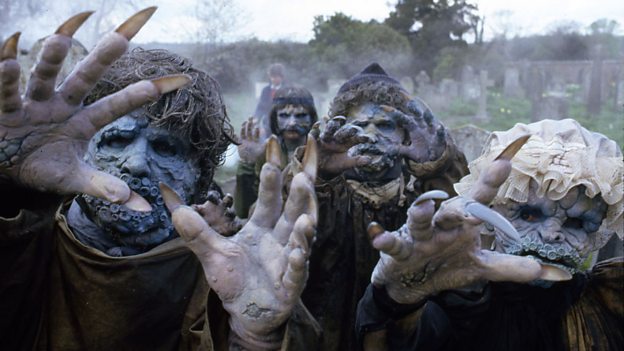
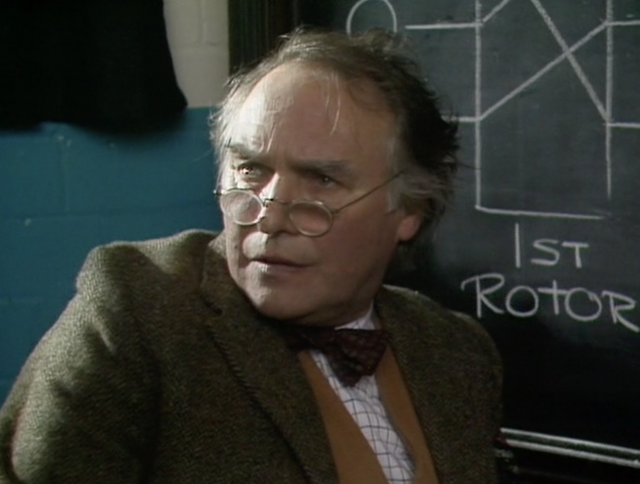
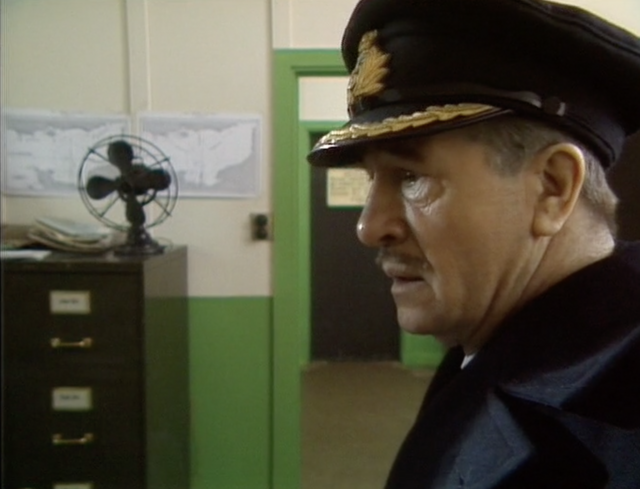
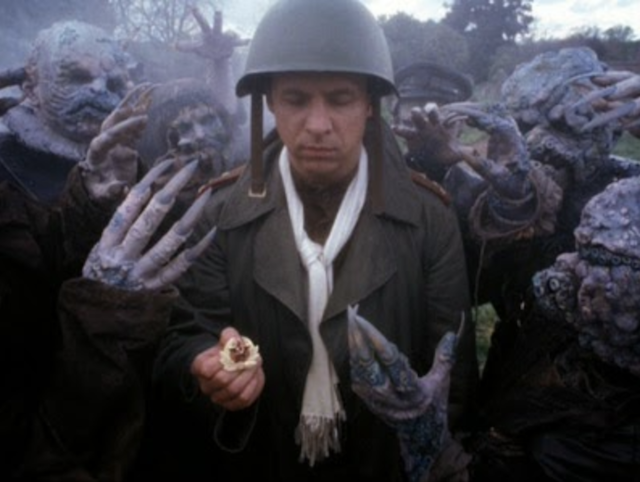
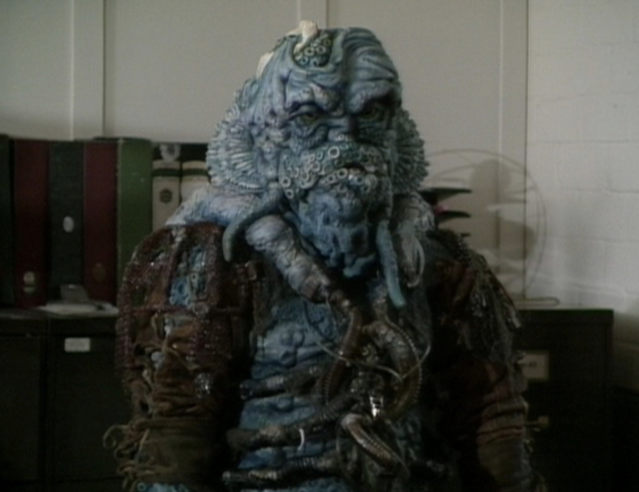
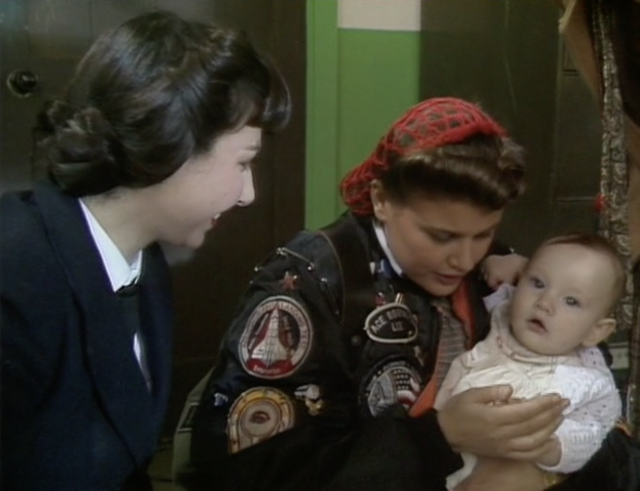
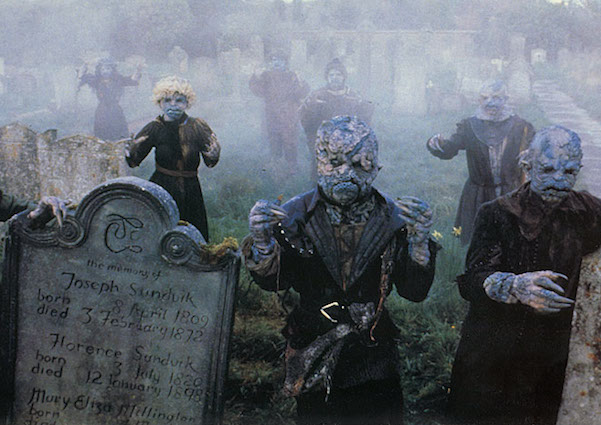
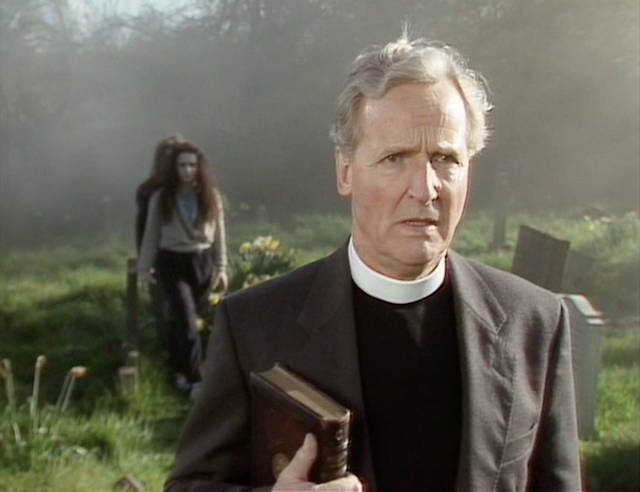


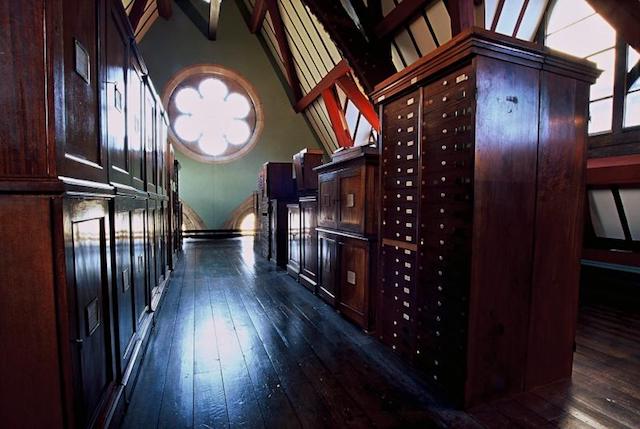
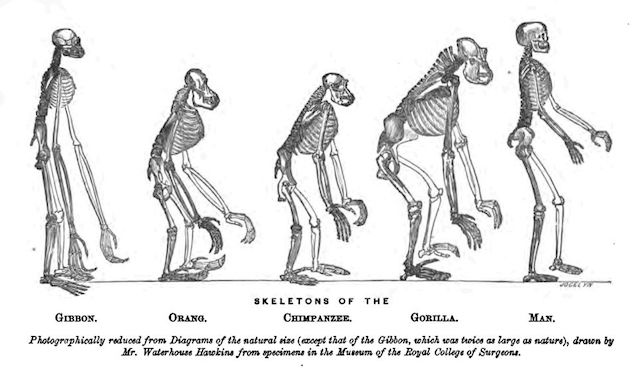

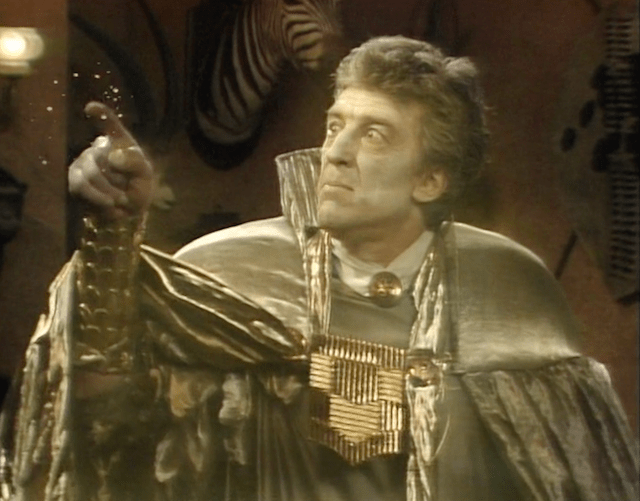


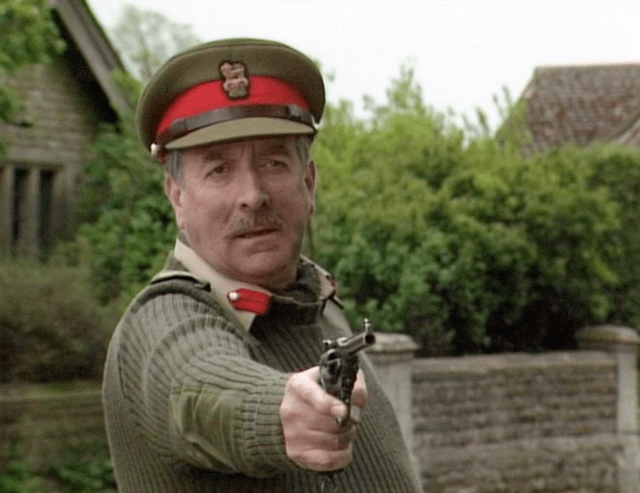
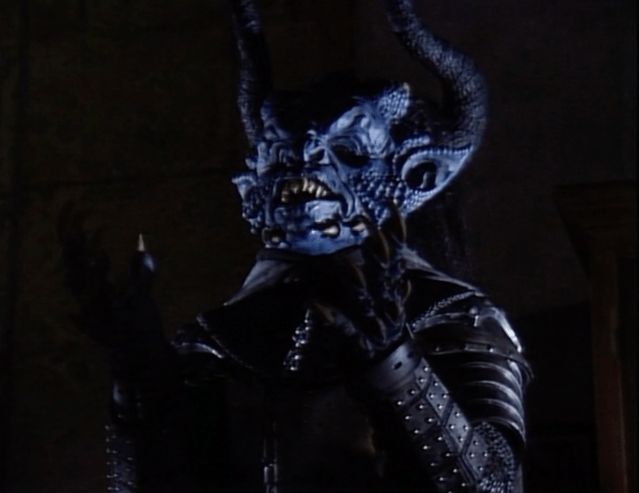


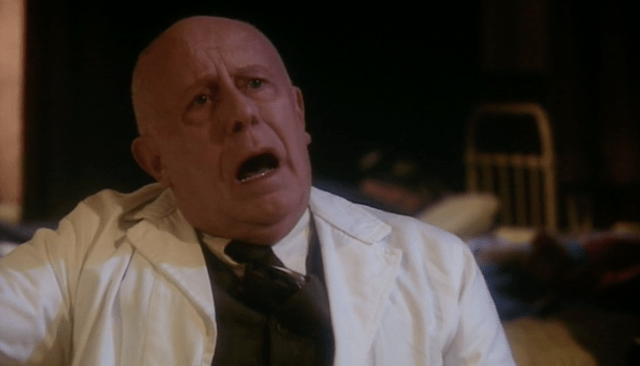
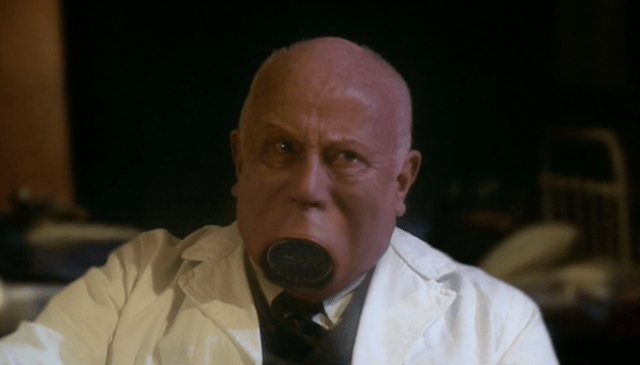




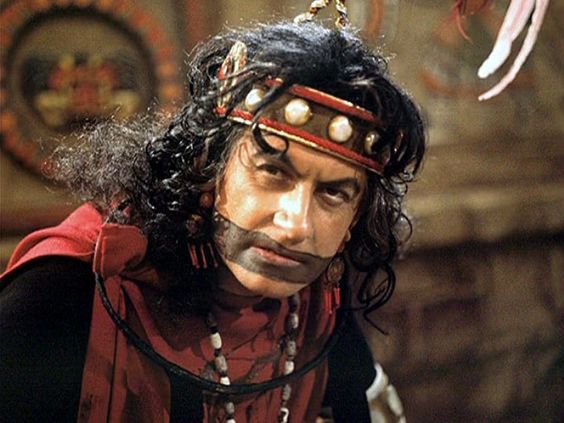


 A Journal of Impossible Things